
Featured Heating Alloys for Ethiopian Heavy Industry
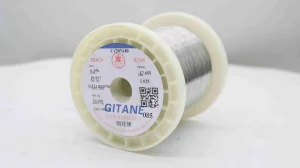


Metallurgical Excellence & Thermal Engineering Leadership for Ethiopia
As Sub-Saharan Africa undergoes an extraordinary industrial metamorphosis, the Federal Democratic Republic of Ethiopia stands at the forefront of East African manufacturing expansion. Driven by mega-infrastructure projects—most notably the 5,150 MW Grand Ethiopian Renaissance Dam (GERD)—the country is rapidly shifting toward high-efficiency, electrified thermal processing. Beijing Shougang Gitane New Materials Co., Ltd., leveraging over 60 years of advanced metallurgical heritage under the state-owned Shougang Group, presents this definitive whitepaper to guide Ethiopian furnace builders, plant managers, industrial park developers, and procurement authorities in selecting, deploying, and optimizing High-Performance Electric Heating Alloys.
Electric resistance heating alloys form the thermal heart of industrial furnaces, kilns, heat-treatment lines, and heavy commercial appliances. Operating in demanding environments up to 1425°C, these materials—broadly categorized into Iron-Chromium-Aluminium (FeCrAl) and Nickel-Chromium (NiCr) systems—must demonstrate unwavering electrical resistivity stability, high temperature oxidation resistance, structural creep resistance, and extended service life. For Ethiopian enterprises operating across varied microclimates—from the high-altitude atmospheric pressures of Addis Ababa (2,350 meters above sea level) to the hot, arid zones of Dire Dawa and Awash—understanding the metallurgical nuances of resistance heating elements is vital for preventing premature line failures and minimizing total cost of ownership (TCO).
Ethiopia’s Industrial Modernization & Electrification Dynamics
Ethiopia's economy is undergoing a structural transition fueled by the Homegrown Economic Reform Agenda and massive state investment in energy infrastructure. The availability of low-cost, green hydroelectricity from GERD provides Ethiopian manufacturers with a decisive comparative advantage: replacing expensive imported fossil fuels (heavy fuel oil, diesel, and liquefied petroleum gas) with direct electric resistance heating systems.
Specialized Industrial Parks Integration
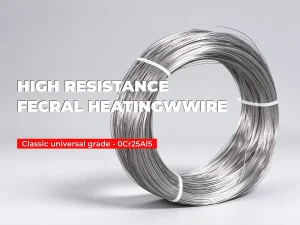
Industrial hubs such as Hawassa Industrial Park, Bole Lemi I & II, Kombolcha, Adama, Kilinto, and Dire Dawa Free Trade Zone are hosting increasingly sophisticated industrial operations. From garment drying and textile heat-setting to electronic assembly and precision component heat treating, high-performance electric heating wire (such as SPARK Cr20Ni80 and 0Cr25Al5) provides clean, contamination-free, localized heat generation essential for international ISO compliance.
Heavy Metallurgy & Construction Materials
Ethiopia's booming construction sector requires massive local output of rebar, structural steel, ceramics, and cement. Steel re-rolling mills around Mojo, Debre Zeit (Bishoftu), and Dukem rely on continuous tempering and annealing furnaces equipped with SPARK SG140 and Cr30Ni70 heavy-gauge strip elements. Furthermore, ceramic and glass tile plants in Debre Birhan utilize high-temperature HRE and SGHYZ 1400°C FeCrAl elements to withstand grueling 24/7 sintering schedules.
FeCrAl vs. NiCr Alloy Systems: A Metallurgical Matrix
Choosing between Iron-Chromium-Aluminium (FeCrAl) and Nickel-Chromium (NiCr) electric heating wire is a fundamental engineering decision. Each alloy system forms a distinct oxide scale mechanism that determines its chemical stability, maximum operating temperature, mechanical hot strength, and life expectancy under specific atmospheric conditions.
1. FeCrAl Systems (SPARK 0Cr25Al5, HRE, SGHYZ, SGHT)
Oxide Scale: Alpha-Alumina ($\alpha\text{-Al}_2\text{O}_3$). Highly adherent, non-porous, electrically insulating layer.
Max Temperature: Up to 1425°C (Powder Metallurgy SGHT grade).
Key Advantages: Higher electrical resistivity ($1.35 - 1.45\ \mu\Omega\cdot\text{m}$), lower density ($7.1\ \text{g/cm}^3$) providing ~15% material weight savings over NiCr, superior resistance to sulfurous gas atmospheres, zero green-rot susceptibility.
Engineering Limit: Lower plastic deformation strength at ultra-high temperatures; elongates and sags if not properly ceramic-supported.
2. NiCr Systems (SPARK Cr20Ni80, Cr30Ni70, Cr20Ni40)
Oxide Scale: Chromia ($\text{Cr}_2\text{O}_3$). Tough, ductile, self-healing scale.
Max Temperature: Up to 1250°C.
Key Advantages: Superior mechanical ductility after long-term service (does not become brittle upon cooling), higher hot yield strength, non-magnetic, outstanding resilience under frequent thermal shock/cycling.
Engineering Limit: Susceptible to "green-rot" intergranular corrosion in reducing/carburizing atmospheres between 800°C–1050°C if unmitigated.
| Alloy Grade | Alloy Family | Max Operating Temp (°C) | Resistivity @ 20°C ($\mu\Omega\cdot\text{m}$) | Density ($\text{g/cm}^3$) | Melting Point (°C) | Primary Industrial Applications in Ethiopia |
|---|---|---|---|---|---|---|
| SPARK SGHT | FeCrAl (Powder Met) | 1425°C | 1.45 | 7.10 | 1500°C | Advanced ceramic sintering, semiconductor, clean laboratory furnaces |
| SPARK SGHYZ | FeCrAl (Rare Earth) | 1400°C | 1.42 | 7.10 | 1500°C | High-temperature industrial kilns, ceramic tile processing (Debre Birhan) |
| SPARK HRE | FeCrAl Premium | 1350°C | 1.42 | 7.15 | 1500°C | Powder metallurgy, fast-heat radiant tubes, annealing furnaces |
| 0Cr25Al5 | FeCrAl Standard | 1250°C | 1.42 | 7.10 | 1500°C | Industrial furnace coils, agricultural drying equipment, domestic heaters |
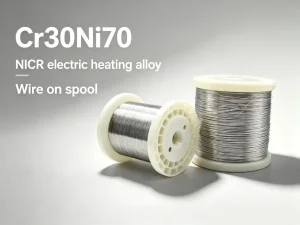
| Cr30Ni70 | NiCr Premium | 1250°C | 1.18 | 8.10 | 1380°C | Industrial heat treating under cycling loads, continuous steel strip tempering |
| Cr20Ni80 | NiCr Standard | 1200°C | 1.09 | 8.40 | 1400°C | Precision lab heaters, plastic extrusion dies, specialized textile machinery |
| Cr20Ni40 | NiCr Economy | 1100°C | 1.04 | 8.60 | 1390°C | Commercial catering equipment, low-temperature drying ovens, defrost heaters |
Localized Application Scenarios across Ethiopian Industries
Every sector of the Ethiopian economy presents distinct environmental and operational challenges for high-temperature electrical heating elements. Shougang Gitane engineers custom resistance wire solutions optimized for the unique regional factors of Horn of Africa installations.
Coffee & Agro-Industrial Dehydration
Ethiopia is Africa's top arabica coffee exporter. Processing plants in Jimma, Sidama, and Yirgacheffe require continuous dry heat to maintain crop quality without smoke contamination. SPARK 0Cr25Al5 ribbon elements are widely integrated into industrial hot-air exchangers, delivering clean, precise temperature regulation that protects aroma profiles.
Mining & Precious Metal Assaying
Gold and mineral exploration projects in Asosa (Benishangul-Gumuz) and Shakiso (Oromia) utilize high-temperature muffle furnaces for cupellation and fire assaying. Operating between 1100°C and 1300°C, these furnaces specify SPARK HRE and SGHYZ wire coils due to their immunity to chemical attack from flux fumes and rapid thermal ramp rates.
Structural Steel Heat Treatment
Steel mills supplying Addis Ababa's sky-scraping real estate developments use continuous heat-treatment furnaces to relieve internal stress in wire rods and rebar. SPARK Cr30Ni70 heavy-gauge coiled elements deliver the structural elasticity needed to absorb mechanical vibration from nearby rolling mills without fracture.
Shougang Gitane Technology Roadmap: Next-Gen Alloys
To maintain long-term competitive advantage in globally traded electric heating alloys, Shougang Gitane invests over 5% of annual revenue into powder metallurgy, rare-earth reactive element additions (RE micro-alloying), and advanced surface finish treatment.
Powder Metallurgy (PM) Dispersion Strengthening
Traditional ingot-melting methods suffer from coarse grain growth at service temperatures exceeding 1300°C, leading to thermal sag and reduced component lifespan. Shougang Gitane’s proprietary SGHT alloy utilizes rapid powder atomization combined with oxide dispersion strengthening (ODS). This process pinches grain boundaries, yielding ultra-fine microstructures that retain high tensile yield strength even at 1425°C.
Reactive Element (RE) Oxide Scale Anchoring
By micro-dosing controlled quantities of Yttrium (Y), Zirconium (Zr), and Cerium (Ce), SPARK FeCrAl alloys form a "pegged" oxide-metal interface. When thermal shock causes differential expansion between the alloy core and the protective $\alpha\text{-Al}_2\text{O}_3$ outer skin, the RE oxide pegs prevent spalling (flaking). This breakthrough extends furnace heating element life by up to 400% under cyclic heating conditions.
Engineering Thermal Load & Voltage Design for Ethiopian Grids
Industrial equipment operating in Ethiopia must account for specific electrical and geographical variables:
1. High-Altitude Convective Heat Compensation
At Addis Ababa’s altitude of ~2,350m, atmospheric pressure drops to approximately 76 kPa (vs. 101.3 kPa at sea level). Air density decreases by roughly 22%, reducing natural convective heat transfer rates from open spiral elements. Engineering thermal calculations must adjust the target Surface Power Density ($W/cm^2$) downward by 10%–15% to prevent element overheating and premature burnout.
2. Power Grid Voltage Fluctuation Allowance
While Ethiopian Electric Power (EEP) delivers cost-effective energy, localized distribution grids may experience voltage fluctuations up to $\pm 12\%$. Because power output scales quadratically with voltage ($P = V^2 / R$), a 10% voltage spike yields a 21% surge in thermal watt-density. SPARK engineers design custom coil pitch distributions and specify thicker wire gauges to absorb transient current overloads safely.
Element Surface Loading Formula ($w$)
To ensure optimal element life, calculate maximum allowable surface load using:
Where: w = Surface load ($\text{W/cm}^2$), P = Element power rating ($\text{W}$), d = Wire diameter ($\text{cm}$), L = Active heated length ($\text{cm}$). For 1200°C electric kilns in Ethiopia, recommend $w_{max} \le 1.8 - 2.2\ \text{W/cm}^2$ for FeCrAl systems.
Complete Heating Wire & Radiant Tube Inventory


Direct Maritime & Logistics Execution to Djibouti & Addis Ababa
As a landlocked nation, Ethiopia relies primarily on the Port of Djibouti for containerized sea freight transit, followed by the Addis Ababa-Djibouti Railway or heavy truck corridors leading through the Galafi border post. Shougang Gitane maintains streamlined export routines ensuring full compliance with Ethiopian Customs Commission regulations and Ethiopian Standards Agency (ESA) specifications.
1. Packaging Standard
Wire products are wound on rigid plastic spools, shrink-wrapped with desiccants, packed in plastic-lined export wooden cases to protect against oceanic salt-spray humidity during maritime transit.
2. Verification & Documentation
Every heat is shipped with Certified Mill Test Reports (MTR) detailing chemical spectro-analysis, resistance per meter ($\Omega/\text{m}$), tensile strength, and elongation according to GB/T 1234-2012.
3. Multimodal Transport
Seamless FOB Tianjin / CIF Djibouti container shipping with direct customs clearance facilitation for inland dry ports such as Mojo Dry Port and Comet Transport Terminal in Addis Ababa.
Frequently Asked Technical Questions by Ethiopian Procurement Engineers
Below are authoritative answers compiled by Shougang Gitane senior metallurgists to address technical, thermal, and commercial queries from Ethiopian clients.
Which heating alloy grade is recommended for high-temperature ceramic kilns operating in Ethiopia?
For continuous ceramic sintering kilns operating between 1250°C and 1380°C (such as those in the Debre Birhan ceramic cluster), we strongly recommend SPARK SGHYZ or HRE FeCrAl alloys. These grades form a dense alpha-alumina ($\alpha\text{-Al}_2\text{O}_3$) scale that resists silica fume attack and thermal cycling better than NiCr wire. If the kiln operates near 1400°C, choose powder-metallurgy SGHT alloy to eliminate thermal creep and sag.
Why is FeCrAl generally preferred over NiCr for heavy industrial furnaces in East Africa?
FeCrAl offers three key commercial and engineering advantages in East Africa: 1) Higher Temperature Rating: Reaches up to 1425°C vs. 1250°C for NiCr. 2) Cost Efficiency: Lower density ($7.10\ \text{g/cm}^3$ vs $8.40\ \text{g/cm}^3$) means you receive ~15% more wire length per kilogram. 3) Atmosphere Immunity: Superior resistance to sulfur compounds often present in regional raw materials.
How does high altitude in Addis Ababa affect heating element selection?
Addis Ababa is located at 2,350m elevation where atmospheric density is lower. Reduced air density lowers natural convective heat transfer away from open elements. Engineers must lower the maximum surface loading density ($W/cm^2$) by 10%–15% compared to sea-level design tables to prevent element skin temperatures from exceeding alloy melting limits.
What international standards do Shougang Gitane SPARK alloys comply with?
SPARK resistance alloys are manufactured under ISO 9001 quality management systems and strictly comply with Chinese National Standard GB/T 1234-2012. They are cross-referenced and fully equivalent to international grades including ASTM B603, DIN 17470, EN 10095, and Kanthal A1/APM equivalents.
Can Shougang Gitane supply pre-wound spiral elements or custom radiant cores?
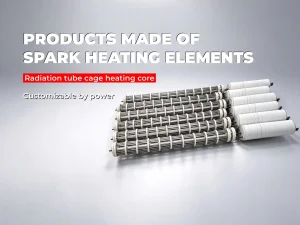
Yes. In addition to round wire, strip, and flat ribbon coils, Shougang Gitane fabricates fully finished electric heating elements. These include pre-formed spiral coils on ceramic tubes, heavy wavy strip elements, and SPARK ceramic radiant tube cores built to custom electrical voltage ($220\text{V}$, $380\text{V}$, $415\text{V}$, $480\text{V}$) and wattage specifications.
What lead time and shipping terms apply for orders bound for Djibouti / Addis Ababa?
Standard production lead times for spooled wire and strip are 14–21 business days from contract deposit. Express shipping via air cargo to Bole International Airport (ADD) takes 3–5 days, while ocean container freight to Port of Djibouti takes approximately 22–30 days transit time from Tianjin/Qingdao ports.
Ready to Optimize Your Industrial Furnace Life in Ethiopia?
Consult with Shougang Gitane’s application engineers today. Get certified mill test reports, technical wire sizing calculations, and competitive FOB/CIF Djibouti factory quotes.