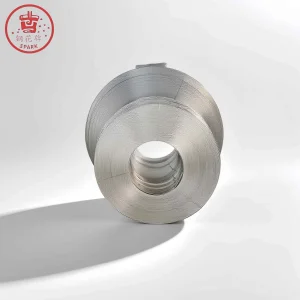
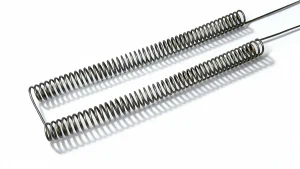
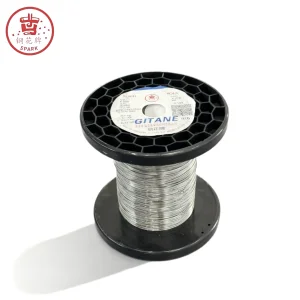
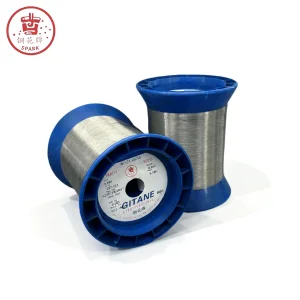
Featured Hot Products: High-Temperature Resistance Alloys & Elements (Part I)
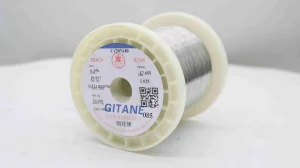
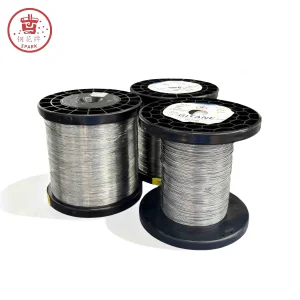
Direct factory supply of precision-drawn wires, engineered heating tubes, oxidation-resistant alloys, and customized industrial furnaces manufactured under ISO 9001 quality controls.






Macro Industry Trends: The Decarbonization of Global Industrial Thermal Processing
Analyzing the shift from fossil fuel combustion to clean electric resistance heating across energy-intensive industries.
The global manufacturing sector is undergoing an unprecedented structural transition driven by strict net-zero carbon targets, fluctuating fossil fuel markets, and stringent environmental regulations. Historically, industrial thermal processing—ranging from steel annealing and ceramic sintering to petrochemical cracking and glass forming—relied heavily on natural gas and oil combustion. However, traditional fuel-fired heating systems suffer from poor energy efficiency (often below 45%), excessive carbon emissions, and uneven spatial heat distribution.
Electric resistance heating alloys have emerged as the foundational technology powering clean industrial decarbonization. By converting electrical energy into thermal energy with nearly 100% efficiency at the point of use, advanced electrothermal alloys enable zero-emission heat generation when paired with renewable energy sources. Furthermore, electric heating provides precise digital temperature control within ±1°C, eliminating thermal gradients and drastically reducing product defect rates in high-value manufacturing environments.
Zero Direct Emissions
Eliminates flue gases, NOx, SOx, and particulate matter, allowing factories to comply with global ESG mandates and carbon border adjustments (CBAM).
Precision Temperature Uniformity
Allows uniform radiant and convective thermal transfer, vital for advanced semiconductor wafer processing, photovoltaic ingot growing, and aerospace alloy aging.
Optimized Operational Cost (TCO)
Higher thermal efficiency and prolonged element service life reduce furnace maintenance shutdowns and lower total life-cycle heating expenditure.
Competitive Advantages of China's Electric Heating Alloy Manufacturing
Why Beijing Shougang Gitane New Materials Co., Ltd. leads the global resistance material landscape through state-owned metallurgical backing, scale, and material innovation.
1. Vertically Integrated Metallurgical Ecosystem
As a core member of the state-owned Shougang Group, Beijing Shougang Gitane benefits from complete vertical integration—from high-purity raw material melting (VIM and ESR refining) to hot rolling, cold drawing, strip rolling, and surface treatment.
- Ultra-low impurity control (minimized Carbon, Sulfur, and Nitrogen content).
- Precise micro-alloying with rare-earth elements (Yttrium, Zirconium, Hafnium, Cerium).
- Homogeneous chemical composition preventing localized hot spots and premature burnout.
2. Advanced Powder Metallurgy Innovation (SGHT & SGHYZ)
Standard cast FeCrAl alloys experience grain growth and creep deformation at temperatures exceeding 1300°C. Shougang Gitane’s proprietary Powder Metallurgy (PM) process overcomes these limitations, pushing maximum service thresholds to 1425°C.
- Fine, dispersed oxide particles prevent high-temperature grain boundary sliding.
- Exceptional sag resistance and mechanical rigidity during horizontal operation.
- Extends heating element lifespan by 150% to 300% under extreme thermal stress.
Strict Adherence to International Standards: All SPARK resistance heating alloys are manufactured in compliance with GB/T 1234-2012 (Chinese National Standard for High-Resistance Electrothermal Alloys), ASTM B603, DIN 17470, and JIS C2520. Certified under ISO 9001:2005 and ISO 14001, every shipment is delivered with traceable Mill Test Certificates (MTC), detailing exact chemical composition, room-temperature electrical resistivity, tensile strength, and temperature-resistance coefficient graphs.
Technical Matrix: FeCrAl Alloys vs. NiCr Alloys
A comprehensive comparison for thermal engineers, furnace designers, and procurement managers selecting optimal heating element grades.
| Alloy Grade / Family | Alloy Category | Max Temp (°C) | Resistivity at 20°C (μΩ·m) | Density (g/cm³) | Primary Oxide Protective Scale | Key Application Environment |
|---|---|---|---|---|---|---|
| SGHT (Powder Met) | Advanced FeCrAl | 1425°C | 1.45 | 7.10 | Al₂O₃ (Alpha-Alumina) | Semiconductor, Advanced Ceramics, Solar Kilns |
| SGHYZ / HRE | Premium FeCrAl | 1400°C / 1350°C | 1.42 | 7.10 | Al₂O₃ (Alpha-Alumina) | Powder Metallurgy, High-Temp Heat Treatment |
| 0Cr25Al5 / 0Cr23Al5 | Standard FeCrAl | 1250°C | 1.35 – 1.42 | 7.15 | Al₂O₃ (Alpha-Alumina) | Industrial Furnaces, Commercial Heating Tubes |
| Cr30Ni70 | High-Temp NiCr | 1250°C | 1.18 | 8.10 | Cr₂O₃ (Chromium Oxide) | Carburizing, Nitriding & Reducing Atmospheres |
| Cr20Ni80 | Standard NiCr | 1200°C | 1.09 | 8.40 | Cr₂O₃ (Chromium Oxide) | Precision Appliances, Frequent On/Off Cycling |
| Cr15Ni60 / Cr20Ni40 | Economic NiCr | 1150°C / 1100°C | 1.04 – 1.11 | 8.20 | Cr₂O₃ (Chromium Oxide) | Domestic Appliances, Defrost Elements, Resistors |
Selection Rule of Thumb: FeCrAl alloys offer higher resistivity, lower density (saving approximately 15% in raw material weight compared to NiCr), higher operating temperatures, and superior resistance to sulfur-containing atmospheres. Conversely, NiCr alloys maintain excellent ductility and mechanical strength post-heating, resist thermal shock during frequent on/off power cycles, and perform exceptionally well in carburizing or moist environments.
Localized Application Scenarios: Engineering Solutions Across Critical Sectors
How SPARK resistance heating alloys and customized heating elements solve extreme thermal challenges in specialized global industries.
1. Photovoltaic & Semiconductor Wafer Fabrication
Silicon ingot growing, diffusion tubes, MOCVD reactors, and epitaxy furnaces demand ultra-clean thermal zones up to 1400°C without metallic vapor contamination.
Solution: SPARK SGHT powder metallurgy wire and pre-formed spiral elements encased in high-purity ceramic supports prevent particulate contamination and maintain ultra-precise thermal equilibrium.
2. Lithium-Ion Battery Cathode Sintering
Roller hearth kilns and rotary calcination furnaces processing NCM, LFP, and solid-state battery active cathode materials generate aggressive corrosive gases (alkali metal vapors, fluorine).
Solution: High-chromium FeCrAl alloys (0Cr25Al5, 0Cr21Al6Nb) form a dense, impermeable $Al_2O_3$ surface oxide layer that resists chemical attack and prevents corrosion-induced wire thinning.
3. Automotive Metallurgical Heat Treatment
Continuous carburizing, quenching, tempering, and powder metallurgy sintering lines require heating elements that withstand gas-carburizing and carbon-potential atmospheres.
Solution: Cr30Ni70 and Cr20Ni80 Nichrome alloys, engineered specifically to resist internal oxidation and "green rot" embrittlement under carbon-rich environments.
4. Petrochemical & Process Gas Superheating
High-pressure process gas heaters, catalyst regeneration units, and hydrogen synthesis furnaces demand specialized heating tube bundles capable of high thermal flux.
Solution: Heavy-gauge SGHT seamless steel heating tubes and tubular heating elements designed for rapid heat exchange under fluid pressure up to 25 MPa.
5. Advanced Technical Ceramics & Glass Forming
Sintering Zirconia ($ZrO_2$), Alumina ($Al_2O_3$), Silicon Nitride ceramics, and architectural glass tempering furnaces operating between 1100°C and 1350°C.
Solution: Heavy-ribbon 0Cr25Al5 and HRE elements engineered with low surface loads ($W/cm^2$) to prevent sag deformation and ensure extended thermal lifespan.
6. High-Efficiency Domestic & Commercial Appliances
Electric water heaters, air fryers, commercial bakery ovens, sauna heaters, and defrost tubes requiring rapid heat response and high moisture isolation.
Solution: Golden-finished SPARK 0Cr20Al6 wire and precision-wound spiral heating elements sealed in stainless steel and Incoloy sheath tubing.
Macro Industry Solutions: Engineering Turnkey Thermal Performance
From raw resistance alloy selection to complete industrial furnace modernization and thermal load modeling.
1. Surface Load Optimization & Thermal Calculations
The operational lifespan of a heating element is directly governed by its surface load ($w$, expressed in $W/cm^2$). If the surface watt loading is set too high, the temperature difference between the inner wire core and the outer surface escalates, accelerating oxidation rate, grain growth, and thermal burnout.
Shougang Gitane’s application engineering team assists global clients in calculating exact surface load thresholds based on specific parameters: furnace operating temperature, heating element geometry, mounting method (embedded in refractory, suspended on ceramic tubes, or ceramic fiber modules), and furnace atmosphere factors.
2. Turnkey Furnace Retrofitting & Energy Savings
Legacy heat treatment furnaces equipped with obsolete nickel-chrome or low-grade iron-chrome heating elements frequently suffer from thermal inefficiency, excessive standby heat losses, and frequent maintenance downtime.
By retrofitting aging equipment with SPARK SGHYZ or SGHT powder metallurgy FeCrAl alloys integrated with low-thermal-mass ceramic fiber insulation modules, industrial plants achieve up to 22% energy savings, faster ramp-up times, and significantly extended maintenance cycles.
Global Enterprise Procurement Needs & Quality Assurance
How Shougang Gitane aligns with international OEM procurement protocols, batch consistency demands, and global supply chain logistics.
Batch-to-Batch Resistivity Consistency
Industrial heating elements connected in parallel or series require rigid electrical resistance tolerances (within ±3% to ±5%). Shougang Gitane uses automated optical wire drawing dies and continuous laser diameter monitoring to guarantee zero electrical hot-spot formation.
Comprehensive Mill Test Documentation
Every procurement batch is delivered with official Mill Test Certificates (MTC) detailing spectroscopic chemical composition, room-temperature resistivity ($\mu\Omega\cdot m$), mechanical tensile strength ($R_m$), elongation percentage ($A$), and 50-hour accelerated life test data.
Custom Delivery Forms & Packaging
Supplied in custom forms tailored to OEM production lines: precision spools (DIN 125, DIN 200, DIN 250), heavy coils up to 500kg, straightened cut lengths, flat ribbon coils, pre-formed wave/spiral elements, and export-grade wooden crate packaging.
Technical Q&A: B2B Procurement & Thermal Engineering Insights
Answering high-intent technical questions asked by furnace engineers, procurement leaders, and heat treatment managers.
What is the maximum operating temperature of SPARK FeCrAl alloys vs NiCr alloys?
Standard FeCrAl alloys such as 0Cr25Al5 and 0Cr23Al5 operate continuously at element temperatures up to 1250°C. Advanced grades like HRE operate up to 1350°C, SGHYZ reaches 1400°C, and powder-metallurgy SGHT grade reaches up to 1425°C. In contrast, premium NiCr alloys (e.g., Cr20Ni80 and Cr30Ni70) have a maximum continuous element temperature rating between 1200°C and 1250°C.
How does the oxide protective layer differ between FeCrAl and Nichrome alloys?
When heated in air, FeCrAl alloys form a dense, adherent layer of Alpha-Alumina ($Al_2O_3$). This alumina scale is electrically insulating, highly non-porous, and exceptionally resistant to high-temperature oxidation up to 1425°C. NiCr alloys form a Chromium Oxide ($Cr_2O_3$) scale. While $Cr_2O_3$ provides superior resistance to mechanical spallation during rapid thermal cycling, it begins to volatilize at temperatures above 1200°C.
Why is FeCrAl considered more cost-effective than NiCr for industrial furnaces?
FeCrAl offers two distinct economic advantages: First, FeCrAl has a lower density ($7.10\ g/cm^3$) compared to NiCr ($8.40\ g/cm^3$), meaning you require approximately 15% less material mass to manufacture an element of identical resistance and wire diameter. Second, FeCrAl eliminates volatile Nickel raw material costs, providing a significantly lower price per kilogram.
What causes "green rot" in Nichrome heating elements and how can it be avoided?
"Green rot" is a severe form of intergranular oxidation that occurs in NiCr alloys operating in carburizing or weakly oxidizing atmospheres between 800°C and 1050°C. Chromium precipitates as chromium carbide along grain boundaries, leaving the nickel matrix unprotected. To prevent green rot, buyers should select high-chromium alloys like Cr30Ni70 or transition to FeCrAl alloys (0Cr25Al5), which are inherently immune to carbon absorption.
What parameters are required to calculate the correct heating element wire gauge?
To design a heating element, our engineers require: (1) Total electrical power input (kW), (2) Supply voltage (V) and phase connection (Single-phase, Star, or Delta), (3) Target furnace operating temperature and atmosphere, (4) Element surface watt loading constraint ($W/cm^2$), and (5) Dimensional envelope within the furnace chamber.
How does powder metallurgy (SGHT grade) solve high-temperature grain growth?
In conventional ingot-cast FeCrAl alloys, thermal exposure above 1300°C causes rapid grain boundary growth, leading to room-temperature brittleness, element sag, and mechanical deformation. Shougang Gitane's SGHT alloy uses powder metallurgy and oxide dispersion strengthening (ODS) to lock grain boundaries in place, dramatically improving creep strength and maintaining structural integrity up to 1425°C.
Which quality certifications and testing reports accompany Shougang Gitane products?
Shougang Gitane holds ISO 9001:2005 quality system certification, ISO 14001 environmental management certification, and produces alloys according to Chinese National Standard GB/T 1234-2012. Every delivery includes an official Mill Test Certificate (MTC) covering chemical heat analysis, electrical resistivity at 20°C, mechanical tensile properties, and wire dimension tolerances.
Featured Hot Products: High-Temperature Resistance Alloys & Elements (Part II)
Explore our complete range of specialized alloy wires, steel tubes, tempering furnace alloys, and custom spiral heating elements.