Featured High-Temperature Alloys & Delivery Forms
Explore our factory-direct industrial resistance heating alloys engineered for extreme thermal environments, available in diverse delivery forms including fine wire, heavy rod, precision strip, and pre-formed spiral elements.


Executive Technical Overview: The Metallurgy of Electric Heating Delivery Forms
In thermal engineering and high-temperature industrial equipment fabrication, the physical delivery form of electrical resistance heating alloys—comprising Iron-Chromium-Aluminum (FeCrAl) and Nickel-Chromium (NiCr) families—is far more than a logistical packaging consideration. It dictates the structural integrity, thermal dissipation dynamics, creep deformation resistance, and electrical load distribution across complex heating chambers.
Beijing Shougang Gitane New Materials Co., Ltd. (SPARK), drawing upon over six decades of advanced metallurgical refining and thermal element fabrication, delivers specialized material delivery configurations engineered to withstand maximum operating temperatures up to 1425°C. Selecting the precise delivery geometry—whether bright-annealed round wire, precision-slitted cold-rolled strip, heavy gauge forged rod, or custom pre-wound helical spirals—directly determines the lifecycle longevity and power efficiency of industrial furnaces.
Comparative Analysis of Delivery Form Geometries & Physical Properties
Each delivery form offers unique physical benefits tailored to specific watt-density constraints, spatial configurations, and structural supporting mechanisms. Understanding the relationship between surface-area-to-cross-section ratios and heat transfer efficiency is paramount for furnace design engineers.
Round Wire (0.05mm - 12.0mm)
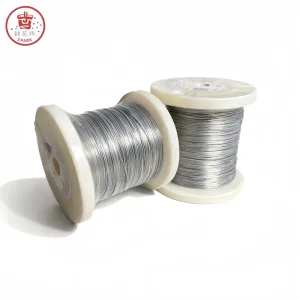
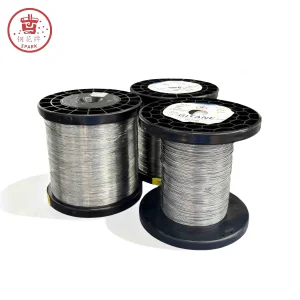
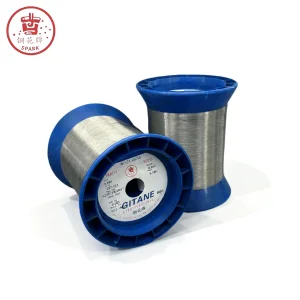
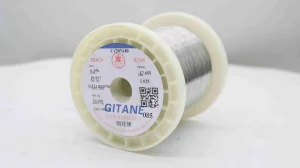
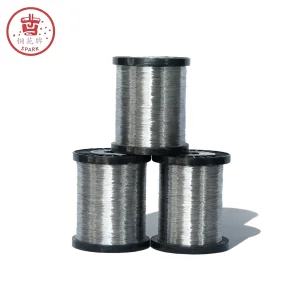
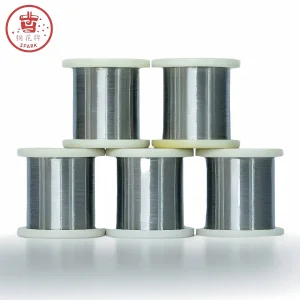
Precision cold-drawn round wire provides optimal uniform omnidirectional heat radiation. Supplied on standardized spools (DIN100, DIN200, DIN355) or carrier coils, it is ideal for coiling into helical spirals or automatic winding into suspended element ceramics.
Flat Wire & Precision Strip
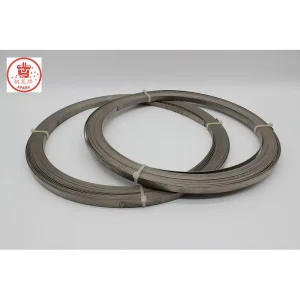
Cold-rolled strip (thickness 0.1mm - 5.0mm, width 1.0mm - 200mm) offers high surface area per unit volume. This geometric advantage enhances convective and radiant heat dissipation, reducing core element operating temperatures and preventing local burnouts.
Pre-Formed Elements & Rods
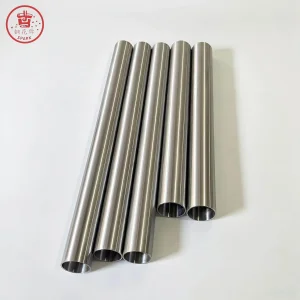
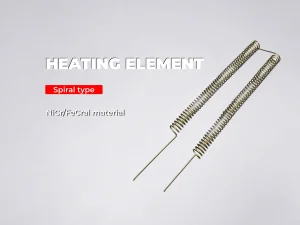
Heavy-section forged rods (10mm - 30mm) and pre-fabricated wavy meander/ROB (Rod-Over-Bend) elements minimize installation down-time. Pre-oxidized with stable α-Al₂O₃ layers, they withstand severe sagging and mechanical vibration in heavy industrial kilns.
Technical Specification Matrix: Alloy Delivery Forms & Operational Parameters
To streamline industrial procurement and precise engineering calculations, the following table summarizes key alloy grades, chemical composition focuses, maximum operating temperatures, physical delivery dimensions, and electrical resistivities compliant with GB/T 1234-2012 and international standards.
| Alloy Grade | Alloy Family | Max Temp (°C) | Resistivity (μΩ·m, 20°C) | Available Delivery Forms | Core Application Domain |
|---|---|---|---|---|---|
| SGHT (PM) | Powder Metallurgy FeCrAl | 1425°C | 1.45 ± 0.05 | Wire, Rod, Heavy Strip | Semiconductor, High-purity ceramic sintering |
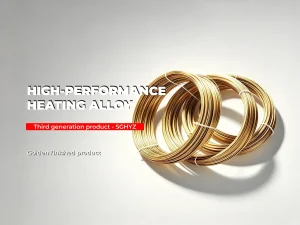
| SGHYZ | Ultra-High Temp FeCrAl | 1400°C | 1.42 ± 0.04 | Wire (0.5-10mm), Pre-coiled Spirals | Diffusion furnaces, industrial heat treating |
| 0Cr25Al5 | Standard Industrial FeCrAl | 1250°C | 1.42 ± 0.05 | Round Wire, Slit Strip, Ribbon | Kilns, domestic appliances, radiant tubes |
| 0Cr21Al6Nb | Niobium-doped FeCrAl | 1350°C | 1.45 ± 0.05 | Wire, Large Diameter Rod | High-temperature industrial furnaces |
| Cr20Ni80 | Premium NiCr Alloy | 1200°C | 1.09 ± 0.03 | Fine Wire, Ribbon, Spirals | Precision medical, aerospace, thermal cycling |
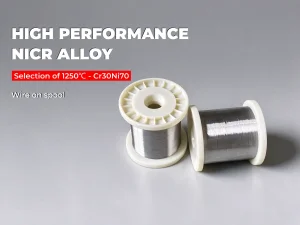
| Cr30Ni70 | High-Chrome NiCr Alloy | 1250°C | 1.18 ± 0.04 | Strip, Wire, Fabricated Elements | Carburizing atmospheres, heavy industrial ovens |
Macro-Industry Solutions: Matching Delivery Forms to Thermal Architectures
Industrial heat treatment is not a one-size-fits-all engineering discipline. Thermal process engineers must balance atmosphere reactivity, watt density limits, mechanical support configurations, and thermal shock frequencies. Below are tailored macro-industry solutions demonstrating how specific material delivery forms optimize operational performance.
1. Semiconductor & Photovoltaic Wafer Processing
Solution: SGHT Powder Metallurgy FeCrAl Wire & Heavy Rod.
Engineering Rationale: Semiconductor horizontal/vertical diffusion and PECVD furnaces operate continuously above 1300°C. Traditional alloys suffer from thermal creep and grain growth, leading to sag and localized hot spots. SGHT produced via dispersion-strengthened powder metallurgy maintains exceptionally high hot-yield strength, resisting creep while forming a non-flaking α-Al₂O₃ scale that prevents particulate contamination on high-purity silicon wafers.
2. Automotive Continuous Heat Treatment & Fastening
Solution: Pre-Formed Heavy Gauge 0Cr21Al6Nb Wavy Meander Elements.
Engineering Rationale: Continuous mesh-belt carburizing and hardening furnaces require fast maintenance turnaround and high power densities. Pre-formed meander elements constructed from niobium-doped FeCrAl offer enhanced resistance to carbon pickup and thermal fatigue, delivering predictable heat distribution across wide belt beds.
3. Petrochemical & Hydrogen Thermal Reformers
Solution: Cr30Ni70 High-Chromium Nickel Strip & Heavy Ribbon.
Engineering Rationale: Hydrogen production units and petrochemical cracking ovens operate under highly corrosive gas streams. Cr30Ni70 forms a tenacious chromium oxide layer ($Cr_2O_3$) that remains stable in reducing, nitrogenous, and sulfur-bearing environments where iron-rich alloys undergo destructive Green Rot oxidation.
China Industry 4.0: Metallurgical Precision & Supply Chain Resilience
As part of the renowned Shougang Group, Beijing Shougang Gitane New Materials Co., Ltd. represents the apex of integrated Chinese advanced manufacturing. Our 88,000 square meter Shahe production complex in Beijing houses end-to-end manufacturing workflows—from vacuum induction melting (VIM) and electroslag remelting (ESR) to automated multi-pass wire drawing, precision strip rolling, and digital optical inspection.
Quality Assurance Architecture & Zero-Defect Manufacturing
The structural performance of high-temperature delivery forms depends on ultra-clean alloy chemistry. Trace impurity elements such as sulfur, phosphorus, and lead are kept below strict micro-ppm thresholds using secondary refining techniques. Rare earth elements (Yttrium, Zirconium, Hafnium) are precisely micro-alloyed to optimize the grain-boundary adhesion of protective surface oxide scales.
Vacuum Refining & ESR
Ultra-pure liquid metal synthesis eliminates non-metallic inclusions, ensuring uniform electrical resistivity throughout extended wire spools and continuous strip rolls.
Laser-Guided Cold Drawing
Continuous online laser micrometers enforce dimensional tolerances within ±0.002mm on fine wires, guaranteeing consistent electrical resistance per linear meter.
Controlled Atmosphere Annealing
Continuous hydrogen bright annealing furnaces eliminate surface contamination, delivering bright, oxide-free wire and strip ready for automated element coiling.
Global Procurement Framework: Commercial Cost Mechanics & Quotes
For global procurement directors, OEM engineering teams, and factory managers, evaluating RFQs (Request for Quotes) for industrial resistance heating alloys requires analyzing Total Cost of Ownership (TCO) beyond initial material unit price. Cost mechanics are governed by raw material raw indices (LME Nickel, Ferro-Chromium, Pure Aluminum), delivery form processing steps, and long-term element longevity.
Cost Drivers & Procurement Optimization Strategies
- Raw Material Indexing & Hedging: NiCr alloys carry higher cost volatility tied to LME Nickel markets. FeCrAl alloys offer significant cost savings per kilogram while delivering superior maximum operating temperatures.
- Density Advantage of FeCrAl: FeCrAl alloys possess a density approximately 15% lower than NiCr alloys (e.g., 7.10 g/cm³ vs 8.40 g/cm³). Procuring FeCrAl wire yields ~15% more linear meters per kilogram compared to NiCr wire of identical diameter.
- Packaging & Export Protection: Precision spools (DIN, PT plastic spools) wrapped in vacuum-sealed moisture-proof aluminum foil inside heat-treated wooden crates prevent sea-freight oxidation and mechanical distortion during transit.
Technological Roadmap (2025–2035): Next-Generation Heating Alloys
The global transition toward green industrial electrification—replacing fossil-fuel gas burners with high-efficiency electric furnace architectures—demands resistance heating materials capable of higher watt densities, longer service lifecycles, and compatibility with artificial intelligence thermal controllers.
Nano-Pre-Oxidation Technology
Developing factory-applied pre-oxidation protocols that grow ultra-dense, self-healing $α-Al_2O_3$ nanolayers prior to shipping, reducing field commissioning times for industrial customers.
3D Printable Alloy Formations
Pioneering spherical FeCrAl and NiCr alloy powders for additive manufacturing, enabling complex, lattice-structured heating elements impossible through conventional wire drawing.
Smart Sensor Integration
Embedding micro-thermocouples and resistance-drift monitoring leads directly into heavy element terminal leads for predictive maintenance analytics in Industry 4.0 smart factories.
Localization Support & International Technical Compliance
To serve seamless global supply chains across Europe, North America, Southeast Asia, and the Middle East, Beijing Shougang Gitane maintains comprehensive international compliance frameworks. Each material shipment is accompanied by standardized EN 10204 3.1 Mill Test Certificates detailing exact heat chemistry, mechanical tensile limits, and room-temperature electrical resistance measurements.
ISO 9001:2015 & ISO 14001
Fully certified quality and environmental management systems governing every stage of production from raw melt to finished delivery form packaging.
RoHS & REACH Compliance
All SPARK brand alloys strictly comply with EU REACH regulations and RoHS directives, ensuring non-hazardous, eco-friendly industrial manufacturing.
Custom Cross-Border Logistics
Dedicated export support delivering flexible Incoterms (FOB, CIF, DDP) with custom customs documentation and localized technical engineering assistance.
Frequently Asked Questions (Technical & Procurement FAQ)
FeCrAl alloys have lower ductility after high-temperature exposure and tend to become brittle upon cooling due to grain growth. Therefore, FeCrAl elements are best installed in pre-coiled, pre-formed shapes or thick wire gauges supported by ceramic tubes. NiCr alloys retain good cold ductility after heating cycles, making NiCr wire and strip easier to rewind, repair, or modify directly inside the furnace chamber.
Consistent tension, uniform pitch winding, and unvarying wire yield strength are essential for automated high-speed element coiling. Shougang Gitane supplies wire on precision plastic spools (DIN 200, DIN 250, DIN 355) with zero cast-and-helix distortion, preventing machine jamming and ensuring uniform coil outer diameters and resistance values.
Yes. Beyond standard stock gauges compliant with GB/T 1234, our factory provides custom precision slitting (strip down to 1.0mm width) and custom cold drawing (wires down to 0.05mm or fractional millimeter sizes). Custom orders include tailored resistance tolerances as tight as ±1.5% upon request.
Standard mill stock wires and strips are available for immediate shipment within 3 to 7 business days. Custom alloy melting, specialized cold drawing, slitting, or pre-formed element fabrication typically requires 15 to 25 calendar days depending on order tonnage and technical specifications.
Complete Product Portfolio & Direct Factory Ordering
Select from our extended catalogue of premium electric resistance alloys, high-temperature tubing materials, specialized furnace wires, and custom-engineered heat-treating equipment.