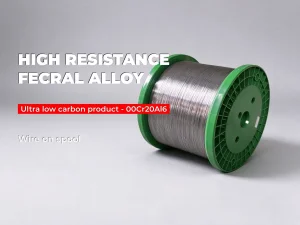
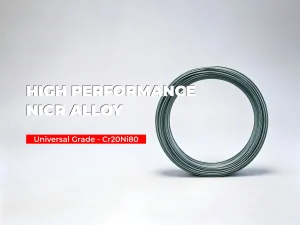
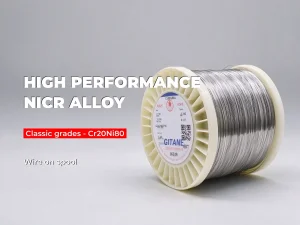
Featured High-Temperature Heating Alloys & Components
Explore top-grade electrothermal alloy wires, tubes, elements, and industrial furnace materials manufactured directly by certified Chinese precision metallurgical facilities.


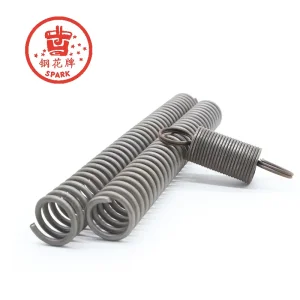
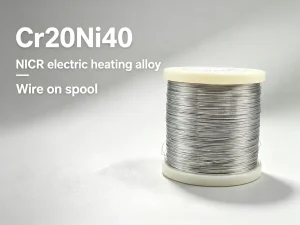

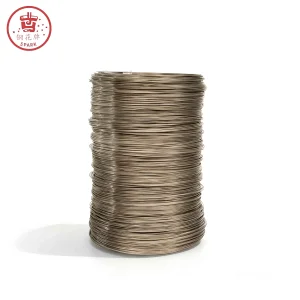

1. Global Nickel-Chromium (Ni-Cr) Alloy Industry & Market Dynamics
Nickel-Chromium (Ni-Cr) alloys, commonly referred to as Nichrome, represent the apex of electrical resistance heating materials across high-temperature industrial, commercial, and laboratory applications. Characterized by exceptionally high electrical resistivity, outstanding oxidation resistance at elevated temperatures, high hot strength, and superior mechanical ductility post-heating, Ni-Cr system alloys are vital components in modern thermal processing equipment.
As global industries accelerate decarbonization, the industrial sector is undergoing a massive shift from fossil-fuel combustion heating to high-efficiency electric thermal infrastructure. This macro-level transition has driven unprecedented demand for premium nickel-chromium resistance elements capable of operating reliably at continuous temperatures ranging from 900°C up to 1250°C without mechanical sagging or premature oxidation failure.
2. China's Manufacturing Efficiency & Supply Chain Economics
China has established itself as the world’s premier manufacturing powerhouse for electrical heating alloys. The economic efficiency of Chinese Ni-Cr alloy factories is derived from total vertical integration—from raw material refining and Vacuum Induction Melting (VIM) to micro-alloying control, continuous hot/cold rolling, precision wire drawing, and bright hydrogen annealing.
Vertical Raw Material Integration
Leading Chinese factories maintain direct equity or strategic long-term off-take agreements with high-purity electrolytic nickel and ferro-chrome suppliers. By hedging against London Metal Exchange (LME) nickel price fluctuations, Chinese producers provide global OEMs with transparent, stable, and highly competitive pricelists.
Advanced VIM & ESR Melting Capabilities
Modern Chinese alloy manufacturing plants utilize ultra-high-vacuum induction melting (VIM) coupled with Electro-Slag Remelting (ESR). This advanced metallurgical processing eliminates dissolved gases (O₂, N₂, H₂) and non-metallic inclusions, delivering exceptional chemical homogeneity and ultra-consistent electrical resistance tolerances across production batches.
High-Speed Precision Wire Drawing
Leveraging multi-pass diamond-die automated wire drawing machines equipped with online laser micrometers, Chinese factories yield ultra-fine resistance wires down to Ø 0.05 mm with diameter tolerances maintained within ±0.002 mm, ensuring exact wattage ratings for downstream equipment builders.
3. Comprehensive Metallurgical Comparison & Engineering Datasheet
Selecting the optimal Ni-Cr alloy grade requires evaluating chemical composition, maximum service temperature, atmospheric compatibility, and specific electrical resistivity. Below is the definitive engineering comparison matrix compliant with International (ASTM B344, DIN 17474) and Chinese National Standards (GB/T 1234-2012).
| Alloy Grade | Nominal Chemical Composition | Max Temp (°C) | Resistivity at 20°C (μΩ·m) | Density (g/cm³) | Microstructure & Atmosphere Suitability |
|---|---|---|---|---|---|
| Cr20Ni80 (Nichrome 80) | 80% Ni, 20% Cr | 1,200 °C | 1.09 ± 0.05 | 8.40 | Austenitic; Supreme oxidation resistance in air, inert gas, vacuum. Excellent post-service ductility. |
| Cr30Ni70 | 70% Ni, 30% Cr | 1,250 °C | 1.18 ± 0.05 | 8.10 | Ultra-high Cr content forms dense Cr₂O₃ protective oxide layer. Ideal for sulphur-free oxidizing atmospheres. |
| Cr15Ni60 (Nichrome 60) | 60% Ni, 15% Cr, Bal. Fe | 1,150 °C | 1.11 ± 0.05 | 8.20 | Good corrosion resistance and electrical stability. Highly cost-effective for domestic heating appliances. |
| Cr20Ni40 | 40% Ni, 20% Cr, Bal. Fe | 1,100 °C | 1.04 ± 0.05 | 7.90 | Economical intermediate grade. High mechanical strength; suitable for industrial heat treatment furnaces up to 1100°C. |
| Cr20Ni35 / Cr20Ni30 | 35-30% Ni, 20% Cr, Bal. Fe | 1,050 °C | 1.00 ± 0.04 | 7.90 | Budget-conscious heating alloy for low-temperature industrial baking ovens and heating elements. |
When exposed to elevated temperatures in oxidizing environments, Nickel-Chromium alloys spontaneously generate a continuous, adhesive, scale-resistant surface film predominantly composed of Chromium Oxide ($\text{Cr}_2\text{O}_3$). When micro-alloyed with rare earth elements such as Yttrium (Y), Cerium (Ce), or Zirconium (Zr), the adherence of this oxide layer to the metallic substrate is exponentially improved, preventing oxide spalling during intense thermal cycling.
4. Application Engineering: Where Ni-Cr Alloys Outperform
Thanks to their high structural stability, resistance to hot deformation, and non-magnetic properties (specifically Cr20Ni80), Ni-Cr alloys are specified across diverse industrial sectors worldwide.
Industrial Heat-Treating Furnaces
In atmosphere-controlled heat treatment furnaces (carburizing, nitriding, annealing, and tempering kilns), Cr20Ni80 elements resist carbon pickup significantly better than iron-based alloys. They prevent internal oxidation ("green rot") when operated in carbon-rich environments with low oxygen partial pressure.
Petrochemical & Energy Infrastructure
High-performance SGHT steel tubes and Cr20Ni40 heavy ribbon elements are deployed in process fluid heaters, crude oil pipeline trace heating, and refinery reboilers where constant mechanical vibration and high thermal shock would cause brittle FeCrAl elements to snap.
Semiconductor & Cleanroom Kilns
Because Nichrome 80/20 does not shed micro-spall particles or ceramic oxide flakes like iron-based alloys, it is the alloy of choice for cleanroom quartz tube heaters, semiconductor wafer diffusion furnaces, and high-purity medical ceramic sintering equipment.
5. Ni-Cr Alloys Pricelist Analysis & Sourcing Cost Drivers
Understanding the commercial pricing breakdown of Ni-Cr electrothermal alloys is critical for enterprise procurement officers and supply chain directors. Unlike commodity steel, the final FOB/CIF quotation for Ni-Cr resistance wire or strip is governed by three primary cost vectors:
1. Raw Material Indexing (LME Nickel & Chrome)
Nickel comprises up to 80% of the material weight in Cr20Ni80. Consequently, direct raw material costs account for 65–75% of total factory output value. Leading Chinese factories offer flexible pricing models, including LME-linked floating formula pricing or fixed-price hedging contracts for 6–12 month supply terms.
2. Processing & Gauge Conversion Premium
Wire drawing conversion costs increase exponentially as wire diameter decreases. Fine wires (Ø < 0.10 mm) require multiple diamond-die drawing steps, intermediate bright anneals, and strict spooling quality control, commanding higher per-kilogram premium over heavy gauge rod (Ø 5.0–10.0 mm) or hot-rolled strip.
3. Surface Treatment & Delivery Form
Delivery form impacts handling efficiency: Bright Annealed (Clean/Shiny finish), Oxidized (Green/Black oxide layer pre-formed for immediate oxidation protection), or Golden Finished. Precision spooling (DIN160, DIN200, DIN250) or custom coiled spirals adds nominal processing fees but optimizes automated OEM assembly lines.
6. Future Industry Trends & Technological Innovations
The electrical resistance heating industry is undergoing rapid technological advancements driven by extreme temperature processing requirements, energy efficiency mandates, and smart industrial automation.
Rare-Earth Element (REE) Nano-Doping
Chinese metallurgical research institutes and premier manufacturers are pioneering controlled additions of Yttrium, Hafnium, and Cerium at the ppm scale. This nano-doping anchors the protective oxide layer to grain boundaries, preventing scale spalling under thermal shock conditions up to 1250°C.
Powder Metallurgy (PM) Ni-Cr Synthesis
Next-generation resistance alloys are being produced via powder metallurgy atomization and hot isostatic pressing (HIP). PM processing eliminates coarse grain growth during high-temperature service, yielding unmatched creep resistance and tensile strength at temperature.
Eco-Friendly Bright Hydrogen Annealing
Modern factory lines feature continuous closed-loop hydrogen bright annealing furnaces powered by clean energy. This ensures pristine, carbon-free wire surfaces with zero oil contamination, critical for medical, semiconductor, and vacuum furnace applications.
7. Frequently Asked Questions (FAQ) & Technical Guidance
Find authoritative, engineering-backed answers to the most common questions regarding Ni-Cr alloy selection, commercial pricelists, and factory procurement.
Complete Resistance Wire & Industrial Heating Catalog
Browse our extended product line of FeCrAl and NiCr heating elements, spiral elements, and industrial furnace materials ready for direct export worldwide.