
Featured Functional Alloys & Resistance Heating Elements
Explore our primary portfolio of precision-engineered electrothermal wires, strips, and high-temperature furnace alloys engineered for critical industrial applications.




Engineering Functional Alloys: Metallurgy, Phase Stability, and Electrothermal Efficiency
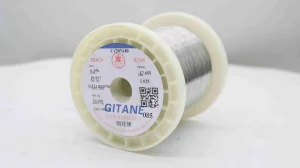
In thermal processing engineering, the selection of a reliable FUNCTIONAL ALLOY supplier dictates system efficiency, longevity, and overall operational expenditure. Functional alloys—specifically electrothermal resistance materials—are specialized metallic formulations engineered to convert electrical energy into thermal energy predictably while maintaining high structural integrity, oxidation resistance, and physical stability under extreme operating environments.
From an advanced metallurgical perspective, functional resistance alloys are principally subdivided into two primary alloy families: Iron-Chromium-Aluminum (FeCrAl) alloys and Nickel-Chromium (NiCr / NiCr-Fe) alloys. Each material system exhibits distinct phase transformations, oxide scale growth dynamics, and electrical resistivity profiles across elevated operating temperature spectrums.
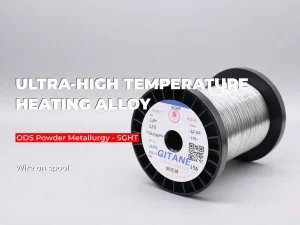
FeCrAl Alloy System (e.g., 0Cr25Al5, SGHYZ, SGHT)
Ferritic microstructures operating up to 1425°C. FeCrAl alloys form a self-healing, highly protective, adhesive alpha-alumina ($\alpha\text{-Al}_2\text{O}_3$) oxide layer. Characterized by higher electrical resistivity, lower specific density, and superior oxidation resistance compared to nickel-based alternatives.
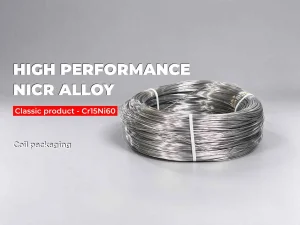
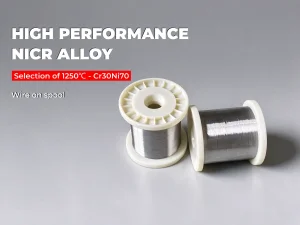
NiCr Alloy System (e.g., Cr20Ni80, Cr15Ni60, Ni70Cr30)
Austenitic microstructures offering exceptional mechanical hot strength, high ductility after prolonged high-temperature exposure, and superior resistance to thermal shock. NiCr alloys develop a protective chromia ($\text{Cr}_2\text{O}_3$) surface layer, making them the preferred choice for cyclic operations and demanding mechanical environments.
Oxidation Thermodynamics and Surface Scale Growth Kinetics
The lifetime of an electrothermal heating element is fundamentally governed by the thermodynamics of its protective oxide film. When exposed to oxidizing atmospheres at temperatures exceeding 900°C, the aluminum content in FeCrAl alloys selectively migrates to the surface, reacting with oxygen to form a continuous, thermodynamically stable $\alpha\text{-Al}_2\text{O}_3$ scale. This scale exhibits exceptionally low ionic diffusion rates, effectively isolating the underlying metallic matrix from further oxidation.
However, thermal cycling induces thermal expansion mismatch stresses between the oxide scale and the parent alloy. Advanced functional alloy suppliers like Beijing Shougang Gitane New Materials Co., Ltd. incorporate precision micro-alloying additives—such as Yttrium (Y), Zirconium (Zr), Hafnium (Hf), and Rare Earth Elements (RE)—to anchor the oxide layer at grain boundaries, dramatically mitigating scale spallation during rapid thermal transients.
Technical Specification Matrix: FeCrAl vs. NiCr Alloys
Comparative physical and electrothermal parameters according to GB/T 1234-2012 and global manufacturing benchmarks.
| Alloy Grade | Alloy System | Max Temp (°C) | Resistivity at 20°C ($\mu\Omega\cdot\text{m}$) | Density ($\text{g/cm}^3$) | Melting Point (°C) | Primary Industrial Application |
|---|---|---|---|---|---|---|
| SPARK SGHT | FeCrAl (PM) | 1425°C | 1.45 ± 0.07 | 7.10 | 1500 | Semiconductor, High-Temp Ceramic Sintering |
| SPARK SGHYZ | FeCrAl (Micro-alloyed) | 1400°C | 1.42 ± 0.07 | 7.10 | 1500 | Powder Metallurgy, Diffusion Furnaces |
| 0Cr25Al5 | FeCrAl Standard | 1250°C | 1.42 ± 0.05 | 7.10 | 1500 | Industrial Kilns, Radiant Tube Heaters |
| 0Cr23Al5 | FeCrAl Standard | 1250°C | 1.35 ± 0.05 | 7.25 | 1500 | Heat Treatment Furnaces, Domestic Heating |
| Cr20Ni80 | NiCr Austenitic | 1200°C | 1.09 ± 0.05 | 8.40 | 1400 | Precision Appliances, Nitriding Furnaces |
| Cr30Ni70 | NiCr Austenitic | 1250°C | 1.18 ± 0.05 | 8.10 | 1380 | Chemical Processing Heaters, Heavy Duty Elements |
| Cr15Ni60 | NiCrFe Ferritic-Austenitic | 1150°C | 1.12 ± 0.05 | 8.20 | 1390 | Rheostats, Braking Resistors, Appliances |
Why Sourcing Functional Alloys from Leading China Factories Delivers Competitive Advantage
In the modern industrial procurement landscape, procurement officers and furnace design teams require more than just material supply—they require integrated manufacturing expertise, reliable metallurgical consistency, and long-term cost predictability. China’s advanced functional alloy manufacturing sector, anchored by tier-one producers like Beijing Shougang Gitane New Materials Co., Ltd. (a key member enterprise of the state-owned Shougang Group), offers distinct structural advantages:
1. Fully Integrated Metallurgical Processing
From initial iron ore processing and melt refining in Vacuum Induction Melting (VIM) and Electroslag Remelting (ESR) furnaces, down to hot rolling, cold wire drawing, and bright annealing, vertical integration eliminates intermediate supply chain friction and guarantees batch-to-batch chemical homogeneity.
2. Strict Dimensional & Resistivity Tolerances
State-of-the-art continuous wire drawing lines equipped with laser micrometers ensure dimensional tolerances within ±0.01mm. Resistance variation along continuous coils is maintained well within GB/T 1234-2012 limits, eliminating localized hotspot formation in wound element coils.
3. Total Cost of Ownership (TCO) Optimization
FeCrAl alloys produced in China offer approximately 15% lower density compared to equivalent European or American NiCr formulations. Combined with competitive raw material sourcing and scale economies, global OEMs achieve up to 30% savings in raw material weight per kilowatt of thermal output.
Global Functional Alloy Industry Trends & Next-Gen Technological Shift
The global transition toward industrial electrification, carbon-neutral manufacturing, and high-precision semiconductor processing is fundamentally reshaping functional alloy requirements. Major industry trends driving next-generation electrothermal materials include:
-
1. Decarbonization of Industrial Process Heating
Heavy industries—including steelmaking, glass processing, and ceramic firing—are aggressively replacing gas-fired burner systems with high-efficiency electric heating elements. This shift demands functional alloys capable of sustaining power densities exceeding 3.0 W/cm² in oxidizing and mixed atmosphere conditions. -
2. Powder Metallurgy (PM) Microstructure Refinement
Conventional ingot metallurgy suffers from grain growth and sag at temperatures above 1300°C. Advanced powder metallurgy processes—pioneered in grades like SPARK SGHT (1425°C)—utilize rapid solidification to distribute dispersoid oxide particles uniformly throughout the matrix, yielding exceptional high-temperature creep resistance and shape stability. -
3. Specialized Atmospheres and Reactive Gas Protection
Modern heat-treatment environments increasingly utilize controlled atmospheres, including hydrogen ($\text{H}_2$), nitrogen/hydrogen mixtures, dissociated ammonia, and vacuum systems. Functional alloy compositions are continuously refined to prevent nitrogen pickup, carburization, and green-rot attack in NiCr alloys operating in carbonaceous environments.
Macro Industry Solutions & Precision Application Scenarios
Engineering tailored functional alloy solutions engineered to address strict operational requirements across key industrial sectors.
Semiconductor & Photovoltaic (PV) Wafer Processing
Diffusion furnaces, crystal pulling machinery, and PECVD deposition systems require ultra-clean, contamination-free heating environments. SPARK SGHT and SGHYZ FeCrAl wires prevent heavy metal flaking and maintain strict thermal uniformity across silicon ingot growth zones.
Automotive & EV Battery Production
Continuous mesh belt furnaces for press-hardening automotive steel sheets, lithium battery cathode material calcination, and brake disc sintering depend on heavy-gauge 0Cr25Al5 strip and SPARK Cr20Ni80 elements designed for 24/7 continuous duty cycles.
Heavy Metallurgy & Heat Treatment Kilns
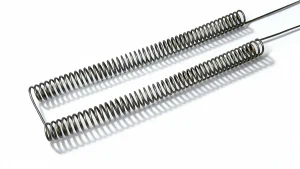
Large-scale annealing, carburizing, and tempering furnaces utilize heavy spiral heating elements, meander-shaped ribbon heaters, and radiant tube assemblies capable of delivering tens of megawatts of thermal energy with zero physical distortion.
Precision Consumer & Commercial Equipment
From industrial ovens, air preheaters, and commercial steam generators to high-precision laboratory tubular furnaces, our fine and medium wire gauges offer matched resistance specifications for precise digital PID controllers.
Engineering Guidelines for Global Functional Alloy Procurement
To ensure optimal performance and avoid premature element failure, global purchasing teams and design engineers should evaluate functional alloy suppliers based on five essential metallurgical criteria:
- Chemical Purity & Traceability: Ensure raw material heats are melted under vacuum conditions and backed by EN 10204 3.1 Mill Test Certificates detailing exact percentages of primary elements ($\text{Cr}, \text{Al}, \text{Ni}$) and trace elements ($\text{C}, \text{S}, \text{P}, \text{Fe}$).
- Specific Surface Load Optimization ($W/\text{cm}^2$): Element surface load must be calculated based on furnace operating temperature, element geometry, and atmosphere. Overloading leads to localized overheating and rapid oxide film breakdown.
- Coiling and Fabrication Ductility: Verify that FeCrAl alloys undergo proper soft-annealing treatments prior to shipment, enabling high-speed automatic coiling without wire fracturing or surface micro-cracking.
- Resistance Uniformity: Confirm that electrical resistance per meter remains consistent throughout whole spools, avoiding dangerous hot-spots along wound element coils.
- Compliance with National & International Standards: Material must strictly conform to standards such as GB/T 1234-2012, ASTM B603, ASTM B344, or DIN 17470.
Frequently Asked Questions (Q&A)
Technical and procurement inquiries regarding functional resistance alloys, grade selection, and factory sourcing.
Complete Functional Alloy & Furnace Element Catalog
Browse additional specialized electrothermal wires, strips, custom furnace heating elements, and industrial equipment options.



Partner with China's Premier Functional Alloy Manufacturer
Whether you are designing next-generation semiconductor furnaces, upgrading industrial heat treatment lines, or sourcing high-volume electrothermal wires, our technical engineering team is ready to assist with material selection, thermal calculations, and custom fabrication drawings.