
High-Performance Materials & Components (Part I)
Direct factory supply of certified FeCrAl alloys, pure nickel materials, specialized heat exchanger tubing, and precision analytical equipment.
Global Industrial Procurement Dynamics for Advanced Resistance Materials
Decoding the shifts in energy transition, thermal efficiency mandates, and heavy manufacturing infrastructure across international markets.
Energy Transition & Decarbonization
Global heavy industries are aggressively replacing fossil-fuel combustion burners with clean, high-efficiency electric thermal conversion systems. This shift has driven unprecedented demand for premium FeCrAl and NiCr alloys capable of continuous operation up to 1425°C without thermal degradation.
- Elimination of direct carbon emissions at thermal processing sites
- Over 98% electrical-to-thermal energy conversion efficiency
- Drastic reduction in localized particulate pollution and atmospheric nitrogen oxides
Precision Temperature Control Standards
Modern semiconductor fabrication, solar photovoltaic wafer production, and advanced powder metallurgy require spatial thermal uniformity within ±1°C. Custom electric heating elements and calibrated alloy wires provide the essential foundation for strict process yields.
- Minimized thermal drift over extended operating cycles
- Enhanced resistance against aggressive chemical atmospheres
- Optimized wire cross-section consistency for precise electrical resistance
Supply Chain Resilience & Compliance
Tier-1 industrial buyers require full metallurgical traceability, certified raw material purity (e.g., 99.99% Electrolytic Nickel), and rigorous quality compliance under ISO9001:2005 and GB/T 1234-2012 standards to safeguard global supply continuity.
- Traceable heat-treatment and vacuum induction melting records
- Strict compliance with REACH, RoHS, and international tariff norms
- Standardized packaging (e.g., sea-worthy wooden cases, vacuum plastic foil)
Metallurgical Innovation Roadmap & Microstructure Design
Analyzing the phase transformations, oxide scale formation dynamics, and micro-alloying mechanisms behind high-performance resistance heating materials.
FeCrAl Alloy System Kinetics
Ferritic Iron-Chromium-Aluminum alloys (such as 0Cr25Al5 and 0Cr23Al5) form an adherent, protective alpha-alumina ($\alpha\text{-Al}_2\text{O}_3$) scale when exposed to air above 1000°C. This scale acts as an electrical insulator and thermal shield, slowing oxidation rates dramatically.
- High electrical resistivity up to $1.45\,\mu\Omega\cdot\text{m}$
- Lower density ($7.10\,\text{g/cm}^3$) yields material weight savings over NiCr
- Addition of Yttrium (Y) and Zirconium (Zr) prevents oxide spallation
NiCr Austenitic Stability
Nickel-Chromium alloys (e.g., Cr20Ni80, Cr30Ni70) feature a stable austenitic structure that retains excellent hot strength and ductility even after prolonged exposure to high temperatures. They resist thermal cycling and thermal shock better than ferritic alloys.
- Non-magnetic properties ideal for high-frequency induction applications
- Superior post-heating ductility prevents brittle fracture during maintenance
- Robust performance in carburizing and reducing atmospheres
Powder Metallurgy (PM) SGHT Series
Through advanced powder metallurgy techniques, the SGHT ultra-high-temperature FeCrAl alloy achieves grain-boundary dispersion strengthening. This eliminates rapid grain growth at temperatures up to 1425°C, extending element lifespan by 200–300% in industrial kilns.
- Exceptional resistance to high-temperature sagging and deformation
- Pore-free microstructure achieved via hot isostatic pressing (HIP)
- Optimized for continuous ceramic sintering and crystal growing
Metallurgical & Physical Performance Comparison
Empirical technical values for principal heating alloy grades produced to GB/T 1234-2012 and international standards.
| Alloy Grade / Material | Alloy Type | Max. Temp (°C) | Resistivity at 20°C ($\mu\Omega\cdot\text{m}$) | Density ($\text{g/cm}^3$) | Thermal Expansion ($10^{-6}/\text{K}$) | Primary Industrial Use |
|---|---|---|---|---|---|---|
| SGHT Ultra-High | PM FeCrAl | 1425°C | 1.45 | 7.10 | 15.4 | Ceramic sintering, Semiconductor diffusion |
| HRE / 0Cr27Al7Mo2 | Advanced FeCrAl | 1350°C | 1.45 | 7.10 | 15.0 | Powder metallurgy kilns, High-temp furnaces |
| 0Cr25Al5 | Standard FeCrAl | 1250°C | 1.42 | 7.10 | 14.7 | Industrial heating elements, Brakes, Heaters |
| 0Cr23Al5 | Standard FeCrAl | 1250°C | 1.35 | 7.25 | 14.5 | Heat treatment furnaces, Home appliances |
| Cr20Ni80 (Nichrome) | Ni-Cr Alloy | 1200°C | 1.09 | 8.40 | 18.0 | Precision resistors, Vacuum furnaces, Medical |
| Cr30Ni70 | High-Ni Alloy | 1250°C | 1.18 | 8.10 | 17.5 | Chemical processing, Heavy duty elements |
| St35.8 / ASTM A179-C | Carbon Steel Tubing | 550°C | N/A (Structural) | 7.85 | 12.0 | High-pressure heat exchangers, Petrochemical |
High-Temperature Applications in Critical Industries
Custom metallurgical formulations and finished element geometries for extreme operating environments.
Photovoltaic & Semiconductor Processing
Diffusion furnaces, PECVD equipment, and single-crystal silicon growth systems require contamination-free heating environments. SPARK brand ultra-high-temperature FeCrAl elements prevent heavy-metal outgassing, guaranteeing higher wafer yield rates.
Petrochemical & High-Pressure Boilers
Utilizing seamless heat-exchanger tubing such as St35.8 DIN17175 and ASTM A179-C allows thermal transfer systems to operate safely under extreme internal pressures and corrosive fluid flows, minimizing plant shutdown risks.
Advanced Microelectronics & RF Inductors
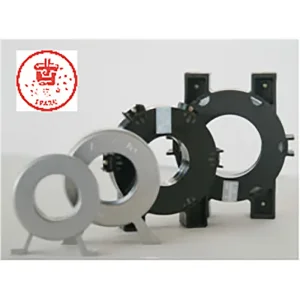
Precision-wound choke coils, surface mount chip inductors, and specialized foil alloys provide essential power regulation and noise filtering for industrial power electronics and automated process controllers.
Global Quality Systems & Custom Manufacturing Protocols
Stringent metallurgical inspection processes from raw melt to finished spools, strips, and built-to-order heating elements.
ISO 9001:2005 Quality Assurance
Every heat of material undergoes Spectrographic Optical Emission Analysis, digital resistance measuring, continuous dimensional laser gauging, and microscopic grain boundary evaluations. Mill Test Certificates (MTC) accompany every export container.
Custom Mechanical Delivery Forms
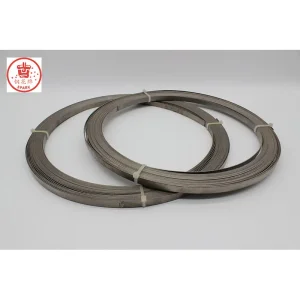
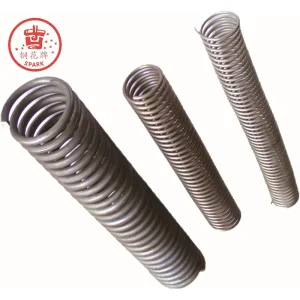
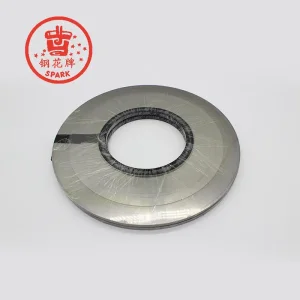
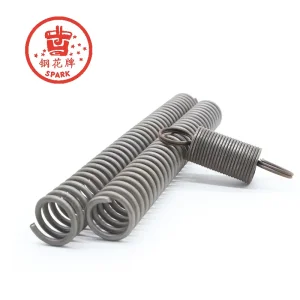
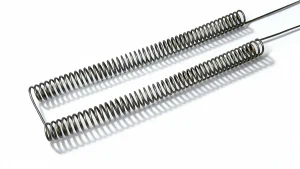
Engineered to buyer exact specifications: fine wire diameters from 0.05mm up to 12.0mm, cold-rolled strip, flat ribbon, pre-wound spiral coils with ceramic mounting tubes, or heavy-duty rod elements with welded terminal leads.
Worldwide Logistics & Export Support
Comprehensive export packaging featuring vacuum sealed anti-tarnish wrapping, shock-absorbing inner buffers, and ISPM-15 compliant heat-treated wooden crates. Full assistance for custom documentation and trade clearance.
High-Performance Materials & Components (Part II)
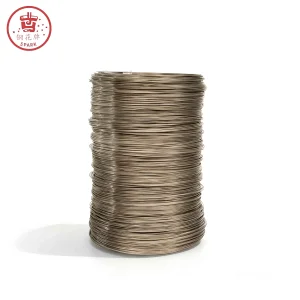
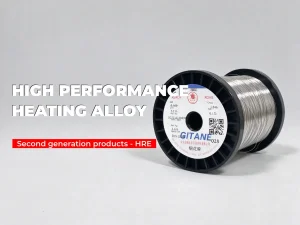
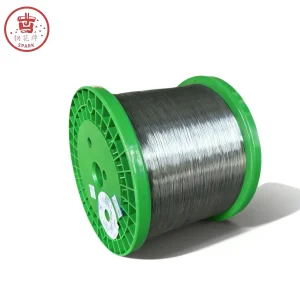
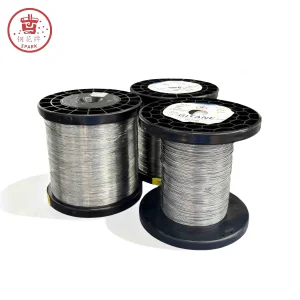
Explore specialized industrial heating strips, premium gold-finish wires, SGHT ultra-high-temp elements, and petrochemical steel tubes.
Frequently Asked Technical & Sourcing Questions
In-depth answers addressing engineering design, alloy selection, surface loading, atmospheric limitations, and order logistics.
FeCrAl alloys (such as 0Cr25Al5 and 0Cr23Al5) feature a ferritic crystal structure with higher electrical resistivity ($1.35-1.45\,\mu\Omega\cdot\text{m}$) and lower density ($7.10\,\text{g/cm}^3$), making them lighter and more cost-effective for ultra-high operating temperatures up to 1425°C. They form an insulating $\alpha\text{-Al}_2\text{O}_3$ scale. Conversely, NiCr alloys (e.g., Cr20Ni80) have an austenitic structure with higher hot strength, non-magnetic properties, and superior post-heating ductility, making them ideal for frequent thermal cycling and heavy vibration environments up to 1200°C.
Atmosphere composition significantly alters oxidation kinetics. In pure Hydrogen ($\text{H}_2$) or reducing atmospheres, protective oxide films cannot form naturally; therefore, elements must be pre-oxidized in dry air at 1050°C for 8–12 hours before installation. NiCr alloys resist nitriding better than FeCrAl in high-nitrogen gas blends. For carburizing atmospheres, FeCrAl alloys offer superior protection due to the dense alumina oxide barrier which prevents carbon penetration and "green rot" corrosion.
Surface loading represents the electrical power emitted per unit surface area of the heating wire ($\text{Watts per cm}^2$). Operating at an excessively high surface load causes element overheating, rapid scale spallation, and premature burn-out. For industrial furnaces operating at 1200°C, typical recommended surface loads range between $1.2\text{ to }2.5\,\text{W/cm}^2$ for FeCrAl alloys, depending on the furnace construction and heat dissipation capabilities.
All shipments are manufactured under strict ISO 9001 quality management protocols. Each batch includes a comprehensive Mill Test Certificate (MTC) stating the chemical composition (analyzed via optical emission spectrometry), physical dimensions and tolerances, electrical resistance per meter at 20°C, tensile strength, elongation percentages, and batch traceability from the original heat melt.
Conventional ingot melting of high-aluminum FeCrAl alloys leads to coarse grain structure and brittleness at elevated temperatures. The SGHT powder metallurgy process utilizes ultra-fine atomized powders combined with Hot Isostatic Pressing (HIP). This creates a fine, homogeneous grain distribution with dispersed oxides that restrict grain boundary sliding, providing unprecedented high-temperature creep strength up to 1425°C.
Request Technical Specs & Direct Factory Quotations
Partner with a leading manufacturer of high-resistance electrothermal alloys, seamless tubes, and industrial heating elements. Custom wire drawing, flattening, and coil winding to drawing.
Contact Our Metallurgical Engineering Team