
Featured High-Temperature Furnace Wires & Alloys
Explore our flagship SPARK brand FeCrAl and Nichrome electric heating wires manufactured under stringent ISO9001:2005 metallurgic standards for extreme thermal industrial applications.
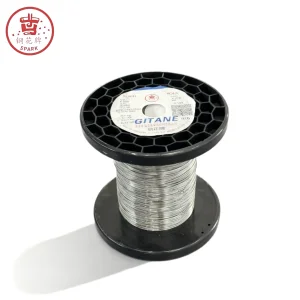
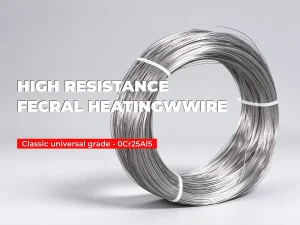
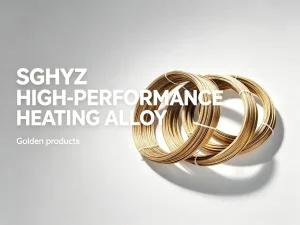

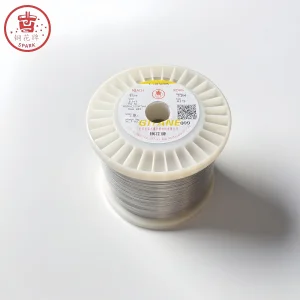

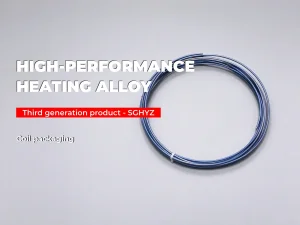
Global Industrial Footprint & Manufacturing Heritage
As a direct core enterprise under the state-owned Shougang Group, Beijing Shougang Gitane New Materials Co., Ltd. represents over 60 years of advanced metallurgical melting, wire drawing, and thermal material innovation.
1. Global Industrial Landscape & Thermal Alloy Market Dynamics
Industrial thermal processing systems form the backbone of modern heavy manufacturing, semiconductor fabrication, ceramic sintering, and automotive metallurgy. Within high-temperature electric kilns and industrial resistance furnaces, the selection of resistance wire alloys dictates energy efficiency, operational longevity, and maintenance cycle intervals. The SPARK brand electric furnace wire series, manufactured by Beijing Shougang Gitane New Materials Co., Ltd., represents the pinnacle of Chinese metallurgical expertise in Iron-Chromium-Aluminum (FeCrAl) and Nickel-Chromium (NiCr) electric heating alloys.
Across global industrial sectors, decarbonization mandates are driving a massive transition from traditional gas-fired combustion heating to clean, controllable electric heating elements. Electric resistance wire operates by converting direct or alternating current electrical energy into thermal kinetic energy via Joule heating ($P = I^2 R$). However, maintaining geometric integrity, electrical stability, and resistance to high-temperature oxidative degradation at continuous temperatures exceeding 1200°C requires precise alloy chemistry control and advanced thermomechanical processing.
Information Gain Insight: The SPARK alloy development team utilizes specialized Vacuum Induction Melting (VIM) coupled with Electroslag Remelting (ESR) to minimize trace element impurities (such as Sulfur, Phosphorus, and low-melting-point tramp metals), thereby drastically reducing grain-boundary embrittlement and elevating thermal fatigue resistance under intense cyclic loading.
2. Metallurgical Chemistry & Thermodynamic Performance Matrix
The performance of SPARK brand electric heating wires is governed by two fundamentally distinct alloy families: FeCrAl alloys (such as 0Cr25Al5, 0Cr23Al5, HRE, SGHYZ, and powder-metallurgy SGHT) and NiCr alloys (such as Cr20Ni80, Cr30Ni70, and Cr15Ni60). Selecting the optimal heating wire requires a deep understanding of high-temperature oxidation kinetics, hot strength, and phase stability.
2.1 Oxide Scale Formation Dynamics: Alumina ($\alpha\text{-Al}_2\text{O}_3$) vs. Chromia ($\text{Cr}_2\text{O}_3$)
When exposed to elevated temperatures in oxidizing atmospheres, SPARK FeCrAl alloys form a dense, thermodynamically stable surface scale consisting primarily of alpha-alumina ($\alpha\text{-Al}_2\text{O}_3$). This scale possesses an extremely low oxygen diffusion coefficient, providing extraordinary protection up to 1425°C. In contrast, NiCr alloys rely on a chromia ($\text{Cr}_2\text{O}_3$) scale. While chromia scales exhibit exceptional mechanical flexibility and resistance to thermal shock, chromia begins to volatile as gaseous $\text{CrO}_3$ at temperatures above 1200°C, limiting maximum continuous operation.
| SPARK Alloy Grade | Alloy Type | Nominal Composition (%) | Max Temp (°C) | Resistivity at 20°C ($\mu\Omega\cdot\text{m}$) | Density ($\text{g/cm}^3$) |
|---|---|---|---|---|---|
| SPARK SGHT | PM FeCrAl (ODS) | Fe-Bal, Cr 24-26, Al 6.5-7.5 + Rare Earths | 1425°C | 1.45 | 7.10 |
| SPARK SGHYZ | Ultra-High FeCrAl | Fe-Bal, Cr 23-26, Al 6.0-6.8 + Y/Zr | 1400°C | 1.42 | 7.10 |
| SPARK 0Cr25Al5 | Standard FeCrAl | Fe-Bal, Cr 23-26, Al 4.5-5.5 | 1250°C | 1.42 | 7.10 |
| SPARK Cr20Ni80 | Premium NiCr | Ni ~80, Cr 20-23, Si 1.0-1.5 | 1200°C | 1.09 | 8.40 |
| SPARK Cr30Ni70 | High-Cr NiCr | Ni ~70, Cr 28-31, Si 1.0-1.5 | 1250°C | 1.18 | 8.10 |
2.2 High-Temperature Creep Resistance & Rare Earth Doping
A fundamental physical limitation of conventional FeCrAl wire at temperatures above 1100°C is its tendency to experience grain growth, resulting in low hot tensile strength and sag failure under its own weight. SPARK brand advanced grades (SGHYZ and SGHT) overcome this through reactive element addition (Yttrium, Zirconium, and Hafnium micro-alloying). These rare earth elements precipitate along grain boundaries, locking lattice dislocation movement and suppressing grain boundary sliding—a process known as grain boundary pinning. This yields exceptional sag resistance in vertical helical coil installations.
3. Engineering Surface Load ($W/cm^2$) & Service Life Extrapolation
The operational lifespan of an electric furnace heating wire is heavily dictated by the applied surface power density, defined as $w = P / A$ (watts per square centimeter of wire surface area). Exceeding critical surface load thresholds causes thermal runaway, accelerating localized oxidation scale degradation and leading to premature burnout.
3.1 Mathematical Calculation Framework
To optimize furnace wire design, thermal design engineers utilize the following governing equations:
- Total Resistance required ($R$): $R = \frac{U^2}{P}$ (where $U$ is supply voltage, $P$ is targeted heater wattage)
- Wire Surface Area ($A$): $A = \pi \cdot d \cdot L$ (where $d$ is wire diameter, $L$ is wire length)
- Surface Load ($w$): $w = \frac{P}{\pi \cdot d \cdot L} = \frac{U^2 \cdot d}{4 \cdot \rho \cdot L^2}$
For standard industrial heat-treatment furnaces operating in air atmospheres, SPARK FeCrAl wires typically operate at surface loads between 1.5 to 2.5 $W/cm^2$ at 1200°C. Lowering the surface load directly extends element longevity exponentially following an Arrhenius rate relation.
Localized Application Scenarios & Atmosphere Compatibility
Detailed technical suitability for diverse thermal environments, atmosphere compositions, and severe operational regimes across global industries.
Semiconductor & Crystal Growth
Diffusion furnaces, LPCVD tooling, and single-crystal silicon pulling furnaces demand ultraclean operation. SPARK SGHT powder-metallurgy FeCrAl wire eliminates heavy metal particle spallation, operating reliably at 1350°C–1400°C under ultra-pure inert gas or oxidizing environments.
Automotive Thermal Processing
Carburizing, nitriding, and continuous quench-hardening lines for gears and drivetrains. In carburizing atmospheres (high carbon activity $a_c$), SPARK Cr20Ni80S or SPARK SGHYZ wires withstand green-rot corrosion and carbon embrittlement through dense oxide film passivation.
Photovoltaic Polysilicon Sintering
High-capacity tube furnaces for PV wafer processing requiring tight thermal uniformity within ±1°C. Large-diameter SPARK 0Cr25Al5 heating coils deliver maximum electrical efficiency and resistance consistency across multi-zone control panels.
Ceramics & Technical Glass Annealing
Sintering structural ceramics ($\text{ZrO}_2$, $\text{Al}_2\text{O}_3$) and glass melting. SPARK 1400°C grade wire products deliver outstanding thermal shock durability during rapid heating and cooling cycles inherent to high-throughput tunnel kilns.
Vacuum Heat Treatment & Brazing
Operation under medium vacuum ($10^{-1}$ to $10^{-3}$ Pa). Because Chromium has a relatively high vapor pressure at high temperatures, SPARK FeCrAl wire is highly recommended over NiCr to prevent metal volatilization and furnace chamber contamination.
4. Metallurgy Technology Roadmap: Vision 2030 & Beyond
Driven by energy efficiency mandates and demanding material performance requirements in next-generation green industries, Beijing Shougang Gitane New Materials Co., Ltd. has established a clear technical evolution roadmap for SPARK brand heating products:
- Powder Metallurgy (PM) Expansion: Scaling up production of oxide dispersion strengthened (ODS) FeCrAl alloys to increase maximum continuous service limit to 1450°C, challenging expensive molybdenum disilicide ($\text{MoSi}_2$) and silicon carbide ($\text{SiC}$) heating elements.
- Nanoscale Surface Pre-Oxidation Treatments: Factory-applied pre-oxidation protocols establishing an optimized, stress-relieved $\alpha\text{-Al}_2\text{O}_3$ scale prior to customer delivery, reducing initial power-on degradation and commissioning time.
- Advanced Geometry Strips & Ribbons: Development of ultra-thin, high-width precision cold-rolled ribbons with tight resistance tolerances ($\pm 2\%$) for compact heat exchangers and automotive PTC heating assemblies.
- AI-Driven Alloy Composition Optimization: Utilizing thermodynamic computational tools (CALPHAD) to model micro-alloying effects, optimizing trace additions of Rare Earth Elements (REE) to suppress Kirkendall void formation during thermal cycling.
Industrial Furnaces, Coils & Custom Wire Solutions
Explore our complete range of customized industrial furnaces, pre-wound heating element coils, bare alloy wires, and specialized high-nickel resistance alloys.




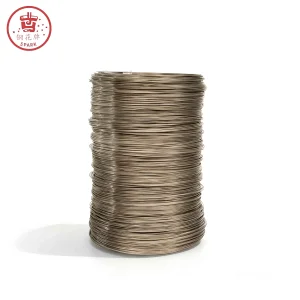

Frequently Asked Questions: SPARK Furnace Wire Engineering
Comprehensive answers from our chief metallurgists regarding grade selection, technical specifications, quotes, and installation best practices.
What is the main difference between FeCrAl and NiCr electric furnace wires?
FeCrAl alloys (such as SPARK 0Cr25Al5, SGHYZ, and SGHT) offer higher maximum continuous operating temperatures (up to 1425°C), higher electrical resistivity ($\sim 1.42-1.45\ \mu\Omega\cdot\text{m}$), lower material density ($\sim 7.10\ \text{g/cm}^3$), and superior resistance to sulfur-containing atmospheres. NiCr alloys (such as SPARK Cr20Ni80 and Cr30Ni70) provide higher hot mechanical strength, excellent ductility after long-term thermal exposure (making element re-coiling or repair possible), superior thermal shock resistance, and non-magnetic properties above Curie point.
How do I request an accurate wholesale price quote for SPARK furnace wire?
To receive a binding technical quotation, please provide your exact specifications: (1) Alloy grade (e.g., 0Cr25Al5, SGHYZ, Cr20Ni80), (2) Delivery form (round wire diameter, strip width $\times$ thickness, or pre-wound helical coil dimensions), (3) Total quantity or coil weight required, and (4) Intended continuous operating temperature and atmosphere type. Direct inquiries can be submitted through our RFQ portal or sent to our engineering sales team.
Why is SPARK SGHYZ recommended over standard 0Cr25Al5 for 1350°C–1400°C kilns?
While standard 0Cr25Al5 is an economical solution up to 1250°C, operating near 1350°C causes rapid grain growth and creep elongation. SPARK SGHYZ is specifically micro-alloyed with reactive rare earth elements (Yttrium/Zirconium). These additions form a denser, non-spalling $\alpha\text{-Al}_2\text{O}_3$ scale and pin grain boundaries, delivering up to 300% longer lifetime and significantly higher sag resistance at 1400°C.
What wire diameters and physical delivery forms does Beijing Shougang Gitane supply?
We produce round wire ranging from fine wire ($\Phi 0.05\text{ mm}$) up to heavy industrial rod ($\Phi 12.0\text{ mm}$), cold-rolled flat wire and strip (thickness $0.1\text{ mm}$ to $4.0\text{ mm}$, width $2.0\text{ mm}$ to $200\text{ mm}$), as well as custom-wound single or multi-strand helical heating element coils complete with terminal lead-out rods.
What quality certifications and mill test reports (MTR) accompany shipments?
All SPARK electric furnace wire products are manufactured under strict compliance with ISO9001:2005 quality assurance systems and Chinese national standard GB/T 1234-2012. Every shipment is dispatched with an official Mill Test Report detailing exact heat number chemical composition (spectrometric analysis), ambient electrical resistance, tensile strength, elongation percentage, and dimensional tolerance checks.
How should high-temperature furnace wire be installed to prevent premature burnouts?
Ensure that (1) Helical coils are evenly stretched to maintain consistent pitch (gap between turns should ideally be $2\times$ to $3\times$ wire diameter), (2) Ceramic support hooks or grooves are made from high-purity alumina ceramic ($>95\%\ \text{Al}_2\text{O}_3$) to prevent low-melting eutectic reactions, (3) Terminal leads passing through insulation have at least $3\times$ the cross-sectional area of the heating element to minimize localized lead overheating, and (4) Elements are subjected to a slow initial pre-oxidation burn-in cycle in clean air.
Request Custom Furnace Wire Technical Quotes
Partner with Beijing Shougang Gitane New Materials Co., Ltd. for factory-direct quotes, engineering technical support, custom alloy development, and reliable global delivery schedules.