
Featured Industrial Electric Heating Elements (Part I)
Explore our top-tier precision resistance wire solutions, ultra-high temperature heating tubes, and furnace heating cores direct from Shougang Gitane manufacturing facilities.
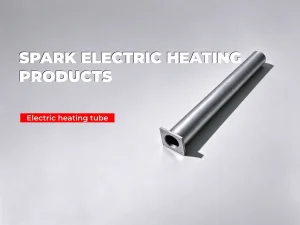
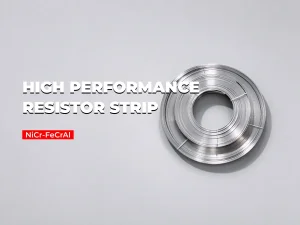
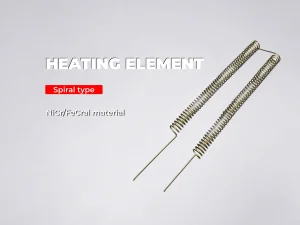
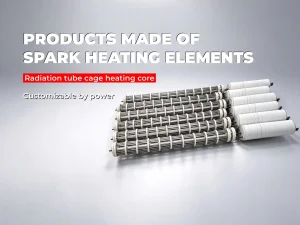
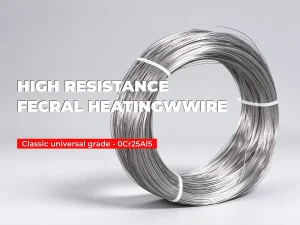


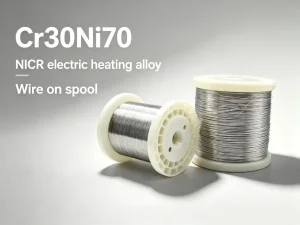
Metallurgical Science & Engineering Standards of Electric Heating Elements
Electric resistance heating transforms electrical energy directly into thermal energy via Joule heating ($P = I^2 R$). However, operating an electric heating element at continuous high temperatures (ranging from 900°C to 1425°C) requires more than standard electrical conductivity—it demands advanced surface thermodynamics, mechanical structural integrity, and exceptional hot-creep resistance.
At Beijing Shougang Gitane New Materials Co., Ltd. (SPARK), our metallurgical engineering focuses on two primary alloy families: Iron-Chromium-Aluminum (FeCrAl) and Nickel-Chromium (NiCr). The operational longevity of an industrial heating element hinges primarily on the continuous formation of a self-healing, adherent, protective oxide scale during thermal cycling.
Alpha-Alumina Oxide Scale ($Al_2O_3$)
FeCrAl alloys (such as 0Cr25Al5, HRE, and SGHT) rely on the diffusion of aluminum ions to the element surface, creating a microscopic, non-porous layer of $\alpha-Al_2O_3$. This scale provides superior chemical protection up to 1425°C and resists aggressive oxidizing environments, reducing alloy degradation over extended operating campaigns.
Chromium Oxide Protective Film ($Cr_2O_3$)
NiCr alloys (including Cr20Ni80 and Cr30Ni70) develop a dense layer of chromium oxide. While capped at slightly lower maximum service temperatures (1200°C–1250°C), $Cr_2O_3$ scales demonstrate extraordinary mechanical ductility, preventing spalling during rapid cooling and heating cycles in precision industrial heat-treating.
Rare-Earth Dopants (RE Micro-Alloying)
SPARK integrates trace additions of Yttrium (Y), Zirconium (Zr), and Hafnium (Hf). This reactive-element technology pins grain boundaries, dramatically lowering oxide growth rates and eliminating micro-void formation at the metal-scale interface for enhanced creep life.
Comprehensive Material Technical Matrix (GB/T 1234-2012 vs International Standards)
Selecting the optimal resistance heating alloy requires analyzing electrical resistivity, density, maximum continuous operating temperature, and thermal expansion properties. The following whitepaper reference table outlines standard SPARK material grades:
| Alloy Grade | Metallurgical Family | Max Service Temp (°C) | Electrical Resistivity (μΩ·m, 20°C) | Density (g/cm³) | Melting Point (°C) | Key Industrial Applications |
|---|---|---|---|---|---|---|
| SPARK SGHT | FeCrAl (Powder Metallurgy) | 1425°C | 1.45 | 7.10 | 1500 | Semiconductor diffusion, ceramic sintering, high-temperature kilns |
| SPARK SGHYZ | FeCrAl (Ultra-High Temp) | 1400°C | 1.43 | 7.15 | 1500 | Heavy-duty continuous industrial furnaces, radiant tube cores |
| HRE | FeCrAl (High Performance) | 1350°C | 1.42 | 7.20 | 1500 | Powder metallurgy furnaces, rod-frame heating elements |
| 0Cr25Al5 | FeCrAl Standard Grade | 1250°C | 1.42 | 7.25 | 1500 | Industrial heat treating, ceramic heaters, electrical appliances |
| 0Cr23Al5 | FeCrAl Commercial Grade | 1250°C | 1.35 | 7.25 | 1500 | General industrial ovens, air heaters, resistance coils |
| Cr20Ni80 | Nichrome (80/20) | 1200°C | 1.09 | 8.40 | 1400 | Precision appliances, medical equipment, nitrogen furnace elements |
| Cr30Ni70 | Nichrome (70/30) | 1250°C | 1.18 | 8.10 | 1380 | High-end thermal processing equipment, chemical heating cores |
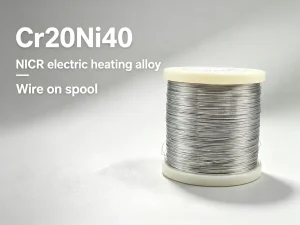
| Cr20Ni40 | Nickel-Iron-Chromium | 1100°C | 1.04 | 8.60 | 1390 | Night storage heaters, low-temp industrial convection ovens |
Shougang Gitane Engineering Authority & Scale
Why Source Electric Heating Elements from China & Shougang Gitane
Global OEM buyers, industrial furnace builders, and plant procurement engineering teams face continuous pressure to balance technical risk, heating element service life, and total operational expense. Sourcing resistance alloys directly from China's primary manufacturer—Beijing Shougang Gitane New Materials Co., Ltd.—delivers distinct metallurgical and commercial advantages:
Vertically Integrated Steel-to-Wire Production
As a subsidiary of the state-owned Shougang Group, Gitane controls the complete production value chain—from high-purity vacuum induction melting (VIM) and electroslag remelting (ESR), to hot rolling, precision wire drawing, cold strip rolling, and final spiral forming. This guarantees consistent chemical homogeneity across all batches.
Powder Metallurgy (PM) Technological Edge
For demanding 1400°C+ applications, our SPARK SGHT grade is produced via advanced powder metallurgy. This eliminates traditional casting segregation, resulting in ultra-fine grain structures with exceptionally high hot-yield strength and low sagging rate under horizontal orientation.
Superior TCO & Mass-to-Power Efficiency
FeCrAl alloys possess a lower density (7.10 - 7.25 g/cm³) than NiCr alloys (8.40 g/cm³). Purchasing FeCrAl resistance elements from China provides up to 20% weight reduction for equivalent electrical resistance, dramatically lowering raw material procurement costs per kilowatt of thermal output.
Global Industry Trends & Macro Thermal Processing Solutions
The transition toward zero-carbon manufacturing is accelerating the electrification of industrial heating processes globally. Gas-fired burners are increasingly replaced by high-density electric radiant tube heating systems and ceramic bundle elements driven by renewable energy sources.
1. Semiconductor Wafer & Solar Photovoltaic Cell Production
Photovoltaic silicon ingot growth, diffusion furnaces, and thermal annealing chambers demand non-contaminating, ultra-pure heating elements. SPARK SGHT powder-metallurgy FeCrAl tubular and spiral elements maintain dimensional stability without shedding oxide particles, protecting ultra-clean semiconductor processing environments.
2. Automotive Lightweighting & Lithium Battery Cathode Sintering
Continuous roller hearth kilns used for sintering lithium battery cathode powders (NMC/LFP) require precise multi-zone temperature control between 800°C and 1150°C. SPARK 0Cr25Al5 and HRE ribbon heating elements offer high watt-density capability while enduring corrosive chemical vapors generated during calcination.
3. Green Hydrogen & Clean Energy Thermal Energy Storage
Electrolyzer pre-heating systems and thermal energy storage (TES) plants utilize heavy-gauge SPARK FeCrAl resistance strips formed into high-capacity ceramic supported banks, accommodating rapid power modulation and frequent cycling from intermittent wind and solar feeds.
Local Application Scenarios & Field Engineering Guide
Proper engineering of an electric heating element requires matching the physical geometry and surface load ($W/cm^2$) to the furnace atmosphere and support medium. The following scenarios illustrate field-proven implementations:
Ceramic Bundle Rod Heaters
Scenario: Horizontal radiant tubes in steel annealing lines.
Engineering Design: SPARK HRE or 0Cr25Al5 heavy wire coils installed around ceramic insulating spools. Provides high voltage insulation, simple maintenance replacement, and maximum radiant heat transfer up to 1250°C furnace interior temperature.
Corrugated Strip Elements
Scenario: Wall-mounted industrial heat-treatment furnaces.
Engineering Design: Cold-rolled SPARK FeCrAl resistance ribbons formed into sinusoidal corrugated profiles and secured via ceramic holding hooks. Maximizes exposed surface area for convective and radiant heat dissipation while avoiding hot spots.
Precision Open-Coil Spirals
Scenario: Air heaters, duct heating systems, and ovens.
Engineering Design: Coiled Cr20Ni80 or 0Cr23Al5 wire stretched on ceramic rods or suspended in quartz tubes. Ensures minimal airflow restriction, instant thermal response, and long cycle life under rapid switching loads.
Engineering Formula: Surface Load ($W/cm^2$) Calculation
To calculate the permissible power loading on a wire heating element to prevent premature burnout, apply the surface load formula:
Where p is the surface load ($W/cm^2$), P is total power output (Watts), d is wire diameter ($cm$), and L is total active wire length ($cm$). Recommended maximum surface load values:
- Continuous Industrial Furnaces (1100°C - 1300°C): 1.5 to 2.5 $W/cm^2$
- Forced Air Heating Elements: 3.0 to 5.0 $W/cm^2$
- Intermittent Appliance Elements: 6.0 to 9.0 $W/cm^2$
Frequently Asked Questions (FAQ) for Global Buyers & Engineers
Addressing critical technical, commercial, and operational queries encountered during procurement and furnace design engineering.
Featured Industrial Electric Heating Elements (Part II)
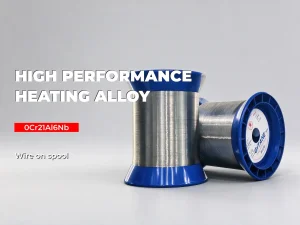
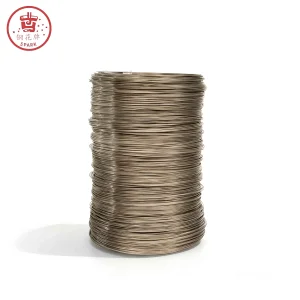
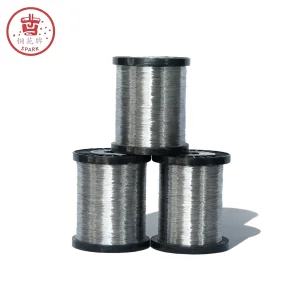
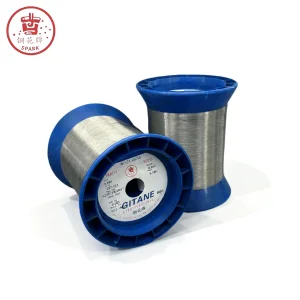
Select from our comprehensive inventory of specialized high-performance electrothermal alloy wires, nickel-chrome coils, and high-resistance heating elements.


Partner with China's Premier Heating Alloy Manufacturer
Whether designing a 1425°C semiconductor kiln, upgrading steel annealing radiant tubes, or sourcing high-volume appliance resistance wire, Shougang Gitane engineering specialists provide tailored alloy selection, surface-load calculations, and factory-direct pricing.