
Featured High-Performance Resistance Alloys & Heating Components
Explore our flagship nickel-chromium (NiCr) and iron-chromium-aluminum (FeCrAl) resistance heating wire products, manufactured under strict metallurgical controls for global industrial thermal applications.



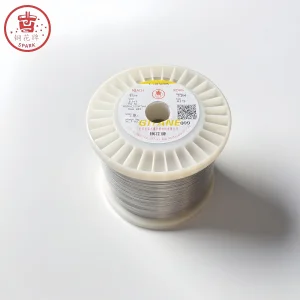

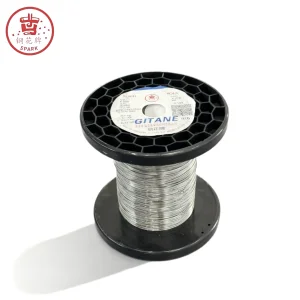
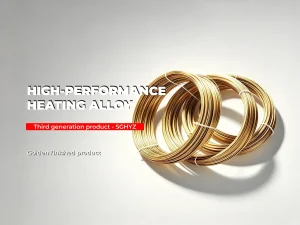
Macro-Industrial Landscape: The Pivotal Role of NiCr Alloys in Global Decarbonization
As global heavy industries undergo an unprecedented transition toward net-zero carbon emissions, industrial thermal processing is experiencing a fundamental structural shift. Gas-fired combustion kilns and fossil-fueled heating chambers are increasingly being replaced by ultra-precise, zero-emission electric resistance heating systems. At the center of this technological overhaul is Nickel-Chromium (NiCr) heating wire—a foundational electrothermal alloy engineered to withstand extreme thermal stress, aggressive chemical oxidation, and continuous thermal cycling.
Nickel-Chromium alloys, commercially categorized under standard designations such as Cr20Ni80 (Nichrome 80/20), Cr15Ni60 (Nichrome 60/15), and specialized variant formulations like Cr20Ni80S, represent the gold standard for high-reliability heating elements. Their unique combination of microstructural ductility, high electrical resistivity, excellent hot-yield strength, and non-magnetic behavior makes them indispensable across advanced manufacturing ecosystems, including semiconductor crystal pulling, EV lithium-battery cathode sintering, aerospace heat treating, petrochemical process heating, and precision medical devices.
High Electrical Resistivity
NiCr alloys possess high specific resistivity (approx. 1.09 to 1.18 μΩ·m at 20°C), enabling compact, energy-dense furnace design without requiring excessively long wire coil footprints.
Self-Healing Passivation Scale
Upon heating in air above 600°C, NiCr wire forms a dense, adherent layer of chromium oxide ($\text{Cr}_2\text{O}_3$), preventing deep chemical corrosion and extending operational lifecycle.
Superior Ductility Post-Service
Unlike Iron-Chromium-Aluminum (FeCrAl) alloys which embrittle after prolonged high-temperature exposure, NiCr maintains excellent room-temperature ductility, permitting easy maintenance and element repair.
Metallurgical Architecture & Engineering Performance Specifications
The operational longevity and thermodynamic performance of NiCr heating wire stem from precise vacuum-melting control and micro-alloying optimization. By balancing essential constituents—specifically Nickel ($\text{Ni}$), Chromium ($\text{Cr}$), Iron ($\text{Fe}$), and active rare-earth additions such as Yttrium ($\text{Y}$) and Cerium ($\text{Ce}$)—our manufacturing process ensures extreme batch-to-batch uniformity in electrical resistance and thermal expansion properties.
| Alloy Designation | Chemical Composition (%) | Max Temp (In Air) | Resistivity @ 20°C (μΩ·m) | Density (g/cm³) | Thermal Expansion Coeff. (20-1000°C) |
|---|---|---|---|---|---|
| Cr20Ni80 (Nichrome 80) | Ni: Bal, Cr: 20.0-23.0, Fe: ≤ 1.0 | 1200°C (2190°F) | 1.09 ± 0.05 | 8.40 | 18.0 × 10⁻⁶ / K |
| Cr20Ni80S (Special Grade) | Ni: Bal, Cr: 20.5-23.5, Rare Earths added | 1250°C (2280°F) | 1.12 ± 0.04 | 8.45 | 17.8 × 10⁻⁶ / K |
| Cr15Ni60 (Nichrome 60) | Ni: 55.0-61.0, Cr: 15.0-18.0, Fe: Bal | 1150°C (2100°F) | 1.11 ± 0.05 | 8.20 | 17.0 × 10⁻⁶ / K |
| Cr30Ni70 (Nichrome 70) | Ni: Bal, Cr: 28.0-31.0, Fe: ≤ 1.0 | 1250°C (2280°F) | 1.18 ± 0.05 | 8.10 | 16.5 × 10⁻⁶ / K |
| SGHT / SGHYZ (Advanced FeCrAl) | Fe: Bal, Cr: 24.0-27.0, Al: 6.0-7.5 | 1400°C - 1425°C | 1.45 ± 0.06 | 7.10 | 15.0 × 10⁻⁶ / K |
Thermodynamic Surface Load Calculations
For industrial element designers, selecting the proper wire diameter is governed by the allowable maximum surface load ($W/cm^2$). Applying an excessive watt-density accelerates thermal degradation and wire sag. For continuous duty in clean air environments, the recommended surface load for Cr20Ni80 wire typically ranges between 1.5 and 3.5 W/cm² depending on operating element temperature.
Atmospheric Compatibility & Chemical Resistance
NiCr alloys display superior performance in oxidizing atmospheres and are exceptionally stable in nitrogen and ammonia-containing gases where FeCrAl alloys can form brittle nitrides. However, in sulfur-bearing gas environments (such as $\text{H}_2\text{S}$ or $\text{SO}_2$), unshielded NiCr wire must be monitored due to the risk of nickel-sulfide eutectic formation at temperatures above 645°C.
Localized Application Engineering & Industry Scenarios
Our custom NiCr heating wire, ribbon, and pre-formed helical coils are deployed across demanding industrial domains worldwide. Each sector imposes specific physical and electrical boundary conditions:
Semiconductor Processing
In wafer diffusion furnaces, crystal pulling apparatus, and CVD reaction chambers, ultra-pure Cr20Ni80 wire delivers ripple-free, highly uniform zone heating up to 1150°C without shedding particulate contamination.
EV Lithium Battery Production
Roller hearth kilns and rotary furnaces used for calcining LFP and NCM cathode powders demand reliable, continuous thermal output. Our specialized Cr20Ni80S wire provides exceptional creep resistance under heavy cyclic loading.
Petrochemical & Gas Heaters
Process gas heaters, explosion-proof inline fluid heat exchangers, and catalytic cracking regeneration systems rely on nickel-chromium ribbons for high thermal conductivity and burst-proof mechanical strength.
Aerospace & Defense Metallurgy
Vacuum heat-treating furnaces, solution-annealing systems, and titanium stress-relieving kilns rely on heavy-gauge NiCr elements for strict temperature uniformity compliance (AMS 2750 standard).
Glass & Ceramics Manufacturing
Tempering ovens, glass bending furnaces, and ceramic tile glazers benefit from the non-magnetic nature and thermal shock resistance of Nichrome 80/20 during rapid cooling and heating cycles.
Precision Analytical Instruments
Micro-heating coils for gas chromatography, mass spectrometry sample ionization, and high-accuracy Raman CCD spectrometer temperature stabilization demand micro-sized NiCr wire drawn down to tight tolerances.
Metallurgical Roadmap & Future Outlook: Powder Metallurgy & Rare-Earth Dopants
As industrial processes push toward operating temperatures exceeding 1300°C and 1400°C, traditional melt-drawn resistance wire reaches its physical limitations regarding grain-growth embrittlement and high-temperature creep. Our R&D division, backed by 60+ years of state-owned steel group heritage, is advancing next-generation alloy fabrication pathways:
1. Powder Metallurgy (PM) Dispersion Strengthening
By shifting from conventional induction melting to gas atomization and hot isostatic pressing (HIP), alloys like our SGHT and SGHYZ series achieve ultra-fine grain microstructures locked by nano-scale oxide dispersions ($\text{Y}_2\text{O}_3$ and $\text{ZrO}_2$). This eliminates rapid sag during vertical mounting and extends wire life up to 300% in heavy-duty furnaces operating up to 1425°C.
2. Reactive Element Addition (RE Micro-Alloying)
Precise additions of Rare Earth (RE) elements alter the oxidation kinetic mechanisms. Rather than forming coarse, flaky scale, the RE dopants act as anchors at the metal-oxide interface ("pegging effect"), resulting in a non-spalling, glass-smooth protective oxide sheath that resists thermal spallation during rapid thermal cycling.
Global Compliance, Testing Standards & Quality Control Framework
To guarantee complete compliance for tier-1 OEM manufacturers and multinational industrial furnace builders, every batch of SPARK brand NiCr heating wire undergoes rigorous quality control inspections adhering to major international engineering standards:
International Standard Alignment
Fully compliant with GB/T 1234-2012, ASTM B344-20 (Standard Specification for Drawn or Rolled Nickel-Chromium and Nickel-Chromium-Iron Alloys for Electrical Heating Elements), and DIN 17474.
Non-Destructive Flaw & Resistance Testing
100% online continuous eddy-current testing verifies wire surface smoothness and radial consistency. Precision micro-ohmmeters confirm resistance tolerances within strict ±3% limits.
Accelerated Life Testing (Bash & Harsch)
Randomly selected coil samples undergo rigorous accelerated burn-in lifecycle tests according to ASTM B78 guidelines to ensure maximum service longevity before shipment.
Additional Resistance Heating Alloys, Elements & Raw Materials
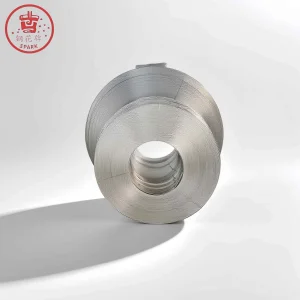
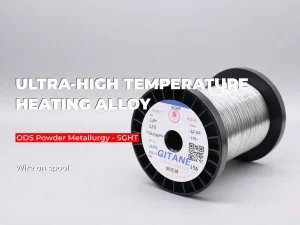
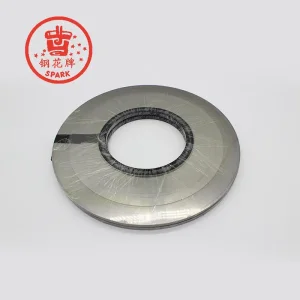
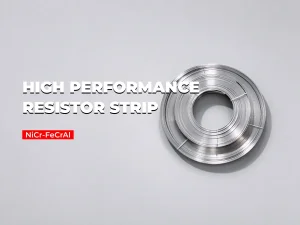
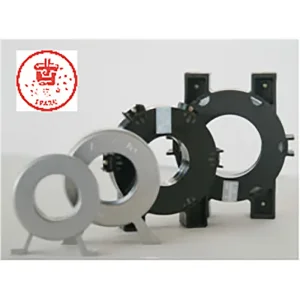
Explore our full range of industrial electrothermal tubes, furnace strip ribbons, specialized high-purity nickel materials, and furnace heating elements.


Frequently Asked Questions & Technical Diagnostic Guide
Consult our expert metallurgical engineering responses to critical selection, maintenance, and operational queries for nickel-chromium and iron-chromium-aluminum heating wires.
- Maximum Operating Temperature: FeCrAl alloys (such as SGHT and SGHYZ) reach higher peak temperatures (up to 1425°C) compared to NiCr (max ~1250°C).
- Post-Service Ductility: NiCr alloys retain room-temperature flexibility after extended high-temperature exposure, allowing elements to be unwound, inspected, or repaired. FeCrAl becomes brittle after cooling due to rapid grain growth, making post-service mechanical deformation impossible without fracture.
- Density & Material Weight: FeCrAl has a lower density (~7.1 g/cm³) than NiCr (~8.4 g/cm³), yielding approximately 15-18% more length per kilogram of wire for equivalent diameters.
- Atmospheric Stability: NiCr excels in nitrogen, ammonia, and vacuum systems, whereas FeCrAl is superior in oxidizing and sulfur-bearing atmospheres due to its protective alumina ($\text{Al}_2\text{O}_3$) outer scale.
Partner with a Premier Electrothermal Alloy Manufacturer
Whether you are designing a high-precision semiconductor furnace, upgrading an EV battery cathode sintering line, or sourcing batch resistance wires, our engineering team is ready to deliver tailored thermal solutions.