
High-Performance Electrothermal & Amorphous Materials
Explore our precision-engineered resistance heating wires, powder metallurgy alloys, and custom industrial elements manufactured under strict ISO 9001 and GB/T 1234-2012 quality protocols.




State of Amorphous Alloys and Advanced Electrothermal Science
The evolution of high-efficiency thermal engineering and electromagnetic energy conversion relies heavily on non-crystalline amorphous materials, micro-alloyed FeCrAl systems, and powder metallurgy resistance alloys.
1. Executive Summary & Market Drivers
In modern industrial thermal processing, decarbonization and energy efficiency demand materials that operate at higher temperatures, possess higher resistivity, and resist catastrophic oxidation over extended lifecycle cycles. Amorphous products and rapidly solidified metallic glasses represent a paradigm shift in material physics. Unlike traditional crystalline alloys which contain long-range periodic lattice order, amorphous alloys are rapidly quenched at cooling rates exceeding 105 to 106 K/s. This yields a non-crystalline, liquid-like atomic structure devoid of grain boundaries, dislocations, and stacking faults.
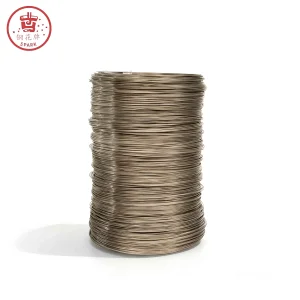
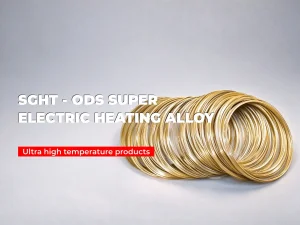
Simultaneously, in high-temperature electrothermal alloy applications—such as semiconductor wafer sintering, photovoltaic crystal growth, and industrial heat treatment furnaces—our advanced FeCrAl (Iron-Chromium-Aluminum) and NiCr (Nickel-Chromium) systems establish the industry benchmark. By integrating micro-alloyed rare earth elements (Yttrium, Zirconium, Lanthanum) and leveraging powder metallurgy consolidation (SGHT series), we eliminate the traditional constraints of thermal creep, sag, and premature intergranular oxidation.
2. Microstructural Science: Amorphous vs. Crystalline Dynamics
The structural absence of grain boundaries in amorphous soft magnetic materials eliminates magnetocrystalline anisotropy, yielding exceptionally low coercivity and near-zero hysteresis loss. When applied to high-frequency power electronics, distribution transformer cores, and common-mode chokes, amorphous ribbons drastically lower core losses by up to 70–80% compared to conventional grain-oriented silicon steel.
In thermal resistance alloys, the formation of a self-healing, thermodynamically stable surface film is paramount. For FeCrAl alloys operating up to 1425°C, the chemical reaction forms a dense alpha-alumina (α-Al2O3) oxide scale. This layer acts as an impervious barrier against continuous oxygen ingress and aggressive chemical environments. The rare earth additions act via the "Reactive Element Effect" (REE), pegging the oxide scale to the alloy substrate and preventing spallation during rapid thermal cycling.
Technical Comparison of Industrial Electrothermal & Amorphous Alloys
Detailed mechanical, electrical, and physical property benchmarks compliant with GB/T 1234-2012, ASTM, and international standards.
| Alloy Grade / Family | Composition Class | Max Temp (°C) | Resistivity (μΩ·m, 20°C) | Density (g/cm³) | Primary Industrial Application |
|---|---|---|---|---|---|
| SPARK SGHT (PM) | FeCrAl + REE (Powder Metallurgy) | 1425°C | 1.45 | 7.10 | Semiconductor, ceramic sintering, high-vacuum furnaces |
| SPARK SGHYZ | FeCrAl Ultra-Pure Derivative | 1400°C | 1.42 | 7.10 | Continuous high-temperature kilns, diffusion furnaces |
| SPARK HRE | FeCrAl + Yttrium Doped | 1350°C | 1.40 | 7.15 | Powder metallurgy sintering, heavy industrial elements |
| 0Cr25Al5 | Standard High-Temp FeCrAl | 1250°C | 1.42 | 7.10 | Industrial furnaces, radiant tubes, ceramic heaters |
| 0Cr23Al5 | Standard Industrial FeCrAl | 1250°C | 1.35 | 7.25 | Heat treatment equipment, brake resistors |
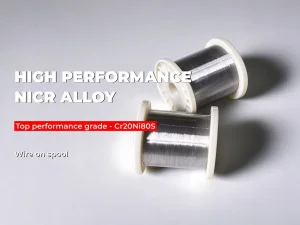
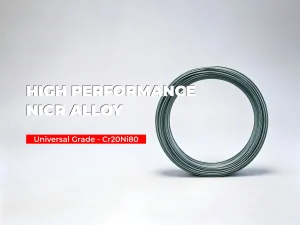
| Cr20Ni80 (Nichrome) | 80/20 Nickel-Chromium System | 1200°C | 1.09 | 8.40 | Precision elements, appliances, cyclic thermal systems |
| Cr30Ni70 | 70/30 High-Cr Nichrome | 1250°C | 1.18 | 8.10 | Carburizing atmospheres, medical heating elements |
| Fe-Based Amorphous Ribbon | Fe-Si-B Metallic Glass | 150°C (Curie ~415°C) | 1.30 | 7.18 | High-frequency transformers, power grid cores, reactors |
Global Deployment Across Critical High-Tech Sectors
From energy distribution grids to microelectronics manufacturing, our amorphous materials and specialized heating elements drive operational efficiency.
Semiconductor & Solar Photovoltaics
High-purity quartz tube heating systems, diffusion furnaces, and single-crystal silicon growth kilns utilize SPARK SGHT powder metallurgy wires to prevent contamination and sustain continuous 1400°C+ thermal profiles.
Green Power & Smart Grid Core Distribution
Amorphous metal ribbons serve as ultra-low loss cores for energy-efficient transformers, solar inverters, and EV charging stations, reducing no-load losses by over 75% compared to traditional silicon steel.
Automotive & EV Heat Treatment
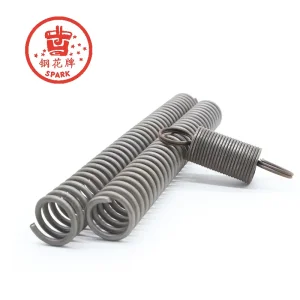
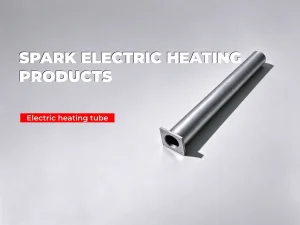
Continuous tempering furnaces, vacuum carburizing lines, and lithium-battery cathode sintering kilns demand strict temperature uniformity provided by customized spiral and tubular heating elements.
Aerospace & Advanced Defense Systems
High-stress thermal testing chambers, specialized alloy annealing systems, and environmental simulation cells utilize Cr20Ni80S and Cr30Ni70 wires for superior ductility and cyclic stability.
Precision Domestic & Medical Appliances
Low-mass ceramic fiber heating plates, rapid response water heating modules, and medical sterilizers incorporate fine-gauge NiCr and FeCrAl resistance wire coils for instant thermal transfer.
Custom Industrial Furnace Engineering
Turnkey furnace design combining specialized refractory linings, intelligent power controllers, and optimized surface-load heating elements tailored to client metallurgical specifications.
Full Traceability, Certification, and Localized Support
Backing global manufacturing partners with robust quality management, technical documentation, and direct metallurgical support.
Quality System Compliance
Operational compliance certified to ISO 9002 (since 1996) and ISO 9001 (since 2003). Every production batch undergoes spectral analysis, electrical resistance verification, and accelerated life testing per GB/T 1234-2012.
Mill Test Reports (MTC)
Full material traceability from vacuum induction melting (VIM) and electroslag remelting (ESR) through final cold drawing and annealing. Each shipment includes certified chemical and physical MTC documents.
Global Logistics & Localized Engineering
Multi-lingual technical sales engineers deliver rapid surface-load calculations (W/cm²), coil dimensional modeling, and localized compliance guidance across Europe, the Americas, and Asia-Pacific.
Next-Generation Amorphous & Electrothermal Innovation
Pioneering advancements in powder metallurgy, nano-crystalline ribbons, and additive manufacturing elements for zero-carbon industrial processing.
1. Nanocrystalline Soft Magnetic Ribbons with Ultra-Low Coercivity
By refining melt-spinning crystallization techniques, next-generation nanocrystalline alloys achieve grain sizes under 10 nanometers. This structural refinement drives saturation induction up to 1.7T while maintaining near-zero magnetostriction—essential for next-generation EV traction motor chokes and aerospace power conversion.
2. Additive Manufacturing (3D Printing) of Complex Heating Elements
Extending powder metallurgy beyond traditional wire drawing, 3D printing of FeCrAl-RE alloys allows complex internal cooling channels and variable-cross-section heating profiles. This eliminates localized hot-spots and extends heating element operational lifespans in extreme vacuum furnaces.
3. Green Hydrogen Atmosphere Compatibility
As industrial furnaces transition from fossil fuels to hydrogen combustion and 100% H2 reducing atmospheres, our R&D center is formulating specialized micro-alloyed coatings that prevent hydrogen embrittlement and catastrophic oxide scale reduction in high-temperature elements.
Industrial Heating Elements, Alloys & Custom Furnaces
Browse our secondary selection of specialized alloys, furnace components, and customized thermal equipment.



Frequently Asked Questions for Engineering & Procurement Teams
Detailed technical guidance to support element selection, thermal design, and procurement decisions.
1. What distinguishes amorphous alloy ribbons from conventional crystalline electrical steels? +
2. When should an engineer specify FeCrAl over NiCr resistance heating alloys? +
3. How does the SPARK SGHT powder metallurgy FeCrAl wire achieve a 1425°C rating? +
4. What is Surface Load (W/cm²) and why is it critical in element design? +
5. What atmosphere precautions are necessary when operating FeCrAl and NiCr elements? +
6. What dimensional delivery forms are available for SPARK electrothermal alloys? +
7. How does Shougang Gitane guarantee batch-to-batch electrical resistance consistency? +
8. What documentation is provided for international custom clearance and quality verification? +
Optimize Your High-Temperature Thermal Systems Today
Consult with Beijing Shougang Gitane's senior metallurgical engineers for custom alloy selection, surface load calculations, or factory direct pricing on amorphous ribbons and electrothermal elements.