
Featured High Performance Heating Alloys (Catalog Part I)
Explore our primary industrial resistance heating elements, precision wire foils, and custom-engineered furnace heating cores built under certified ISO 9001:2005 quality standards.




1. Executive Whitepaper: Global Industrial Landscape of Electric Heating Alloys
In an era defined by industrial decarbonization, precise thermal processing, and high-efficiency electrification, High Performance Electric Heating Alloys represent the fundamental backbone of modern thermal energy transformation. As heavy industries shift away from fossil-fuel combustion toward zero-emission electrical resistance heating systems, demand for high-purity, long-lifecycle, and elevated-temperature electrothermal materials has accelerated across North America, Western Europe, and Asia-Pacific.
Global commercial consumption of resistance heating alloys—primarily categorized into Iron-Chromium-Aluminum (FeCrAl) and Nickel-Chromium (NiCr/NiCr-Fe) systems—is expanding at a compound annual growth rate (CAGR) driven by the semiconductor manufacturing boom, photovoltaic silicon production, EV lithium-battery cathode sintering, and green steel thermal treatment. Enterprise engineering teams demand heating alloys that maintain metallurgical stability under extreme thermal cycling, aggressive atmospheric conditions, and operating temperatures exceeding 1400°C.
The primary challenge facing thermal design engineers is balancing high specific electrical resistivity, resistance to oxidation scale spallation, room-temperature workability, and high-temperature creep resistance. Achieving these parameters requires strict control over alloy chemistry, vacuum induction melting (VIM) refining, trace rare-earth additions (such as Yttrium, Zirconium, and Cerium), and precise cold-drawing process control.
2. Metallurgical Science: Comparative Analysis of FeCrAl vs. NiCr Alloys
Selecting the optimal high-performance electric heating alloy requires a granular understanding of physical, chemical, and mechanical behavior under thermal load. The two dominant alloy families exhibit distinct oxidation mechanisms, density metrics, and structural phase stability.
FeCrAl Alloys (e.g., 0Cr25Al5, HRE, SGHT)
FeCrAl alloys form a self-healing, thermodynamically stable Alpha-Alumina (α-Al₂O₃) protective oxide scale at elevated temperatures. This layer acts as an exceptional barrier against further oxidation and chemical attack in air and oxidizing environments up to 1425°C. FeCrAl features higher electrical resistivity (up to 1.45 μΩ·m) and lower density (approx. 7.10 g/cm³) than NiCr, yielding material weight savings of up to 15-20% for identical electrical power resistance output.
NiCr Alloys (e.g., Cr20Ni80, Cr30Ni70)
NiCr alloys generate a tenacious Chromium Oxide (Cr₂O₃) scale. While limited to maximum operating temperatures of ~1200°C to 1250°C, NiCr systems excel in mechanical ductility after prolonged thermal exposure. Unlike FeCrAl, which undergoes grain growth and room-temperature embrittlement post-heating, NiCr elements remain ductile, allowing easy repair, reshaping, and handling. NiCr also exhibits superior hot yield strength, preventing sagging in vertically hung element configurations.
Powder Metallurgy PM Alloys (SGHT)
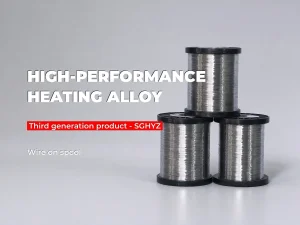
Produced via advanced dispersion-strengthened powder metallurgy, SGHT represents the apex of FeCrAl technology. By dispersing fine rare-earth oxide particles (such as Y₂O₃) throughout the metallic matrix, SGHT prevents catastrophic high-temperature grain elongation and creep sagging, maintaining structural integrity up to 1425°C in continuous industrial kilns.
Comprehensive Technical Performance Comparison Matrix
| Alloy Family & Grade | Max Element Temp (°C) | Resistivity @ 20°C (μΩ·m) | Density (g/cm³) | Oxide Scale Composition | Ductility After Heating | Primary Industrial Suitability |
|---|---|---|---|---|---|---|
| SGHT (Powder Metallurgy FeCrAl) | 1425°C | 1.45 | 7.10 | α-Al₂O₃ (Ultra-Dense) | Moderate | Semiconductor, High-Temp Kilns |
| SGHYZ / HRE (High-Temp FeCrAl) | 1350°C - 1400°C | 1.42 - 1.45 | 7.10 | α-Al₂O₃ Adherent Scale | Low (Brittle cold) | Diffusion Furnaces, Powder Metallurgy |
| 0Cr25Al5 / 0Cr23Al5 (Standard FeCrAl) | 1250°C | 1.35 - 1.42 | 7.15 | α-Al₂O₃ Standard Scale | Low (Brittle cold) | Industrial Heat Treatment, Ceramics |
| Cr20Ni80 (Premium Nichrome) | 1200°C | 1.09 | 8.40 | Cr₂O₃ Protective Film | Excellent (Ductile) | Precision Lab Furnaces, Appliances |
| Cr30Ni70 (High Chromium Nichrome) | 1250°C | 1.18 | 8.10 | Cr₂O₃ Dense Oxide | Very Good | Carburizing Atmospheres, Heavy Duty |
3. Manufacturing Excellence & China Supply Chain Efficiency
The competitive advantage of China's tier-1 electric heating alloy manufacturers lies in complete vertical integration—from raw material melting and vacuum degassing to ultra-fine wire drawing, continuous bright annealing, and automated spiral coil winding. By controlling every phase of metallurgical production under one manufacturing roof, Chinese factories deliver uncompromised quality control alongside significant cost efficiencies.
Advanced Vacuum Induction & ESR Melting
Our state-of-the-art facilities utilize Vacuum Induction Melting (VIM) combined with Electroslag Remelting (ESR). This process eliminates non-metallic oxide inclusions, minimizes dissolved gas impurities (Hydrogen, Nitrogen, Oxygen), and ensures tightly controlled chemical tolerances (±0.2% for Chromium and Aluminum content), guaranteeing uniform electrical resistance across thousands of meters of wire.
Precision Wire Drawing & Continuous Annealing
Utilizing diamond wire drawing dies and inline hydrogen-atmosphere continuous bright annealing furnaces, our production lines achieve wire diameter tolerances down to ±0.005 mm. The bright annealing process yields a spotless, oil-free surface finish that accelerates the formation of a homogeneous protective oxide scale during initial thermal commissioning.
100% Quality Verification & Traceability
Every master coil and spool undergoes eddy-current flaw detection, laser micrometer sizing, and precise resistance per meter measurement (Ω/m). Fully certified EN 10204 3.1 chemical and mechanical mill test reports accompany all shipments, ensuring total regulatory compliance for international OEM buyers.
4. Mission-Critical Localized Industrial Applications
High performance electric heating alloys are engineered for tailored performance across specialized industrial manufacturing environments. Each application imposes unique thermal stress, atmospheric conditions, and surface load density requirements.
Photovoltaic Silicon & Semiconductor Processing
In monocrystalline silicon crystal growth pullers (Czochralski process) and semiconductor wafer thermal oxidation/diffusion tubes, temperature uniformity within ±0.5°C is essential. Ultra-pure SGHT and SGHYZ FeCrAl heating elements operate up to 1350°C-1400°C without shedding oxide particles, preventing delicate semiconductor wafer contamination.
Lithium-Ion Battery Cathode Material Sintering
Roller hearth kilns (RHK) for synthesizing NMC and LFP cathode active materials require continuous operation under oxygen-enriched atmospheres. SPARK 0Cr25Al5 and HRE heating coils maintain structural resistance against volatile lithium vapor corrosion and oxidation, maximizing roller kiln uptime.
Industrial Heat Treatment & Carburizing Furnaces
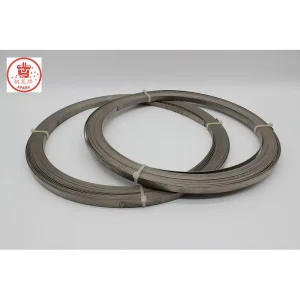
For automotive gear tempering, steel annealing, and ceramic fiber heating panels, Cr20Ni80 and Cr30Ni70 heating ribbons offer robust mechanical resistance against mechanical shock and vibration. In carbon-rich carburizing gas environments, specialized NiCr-Fe grades resist green-rot corrosion and carbon penetration embrittlement.
5. Future Industry Trends & Technical Innovations
The electric heating alloy industry is undergoing rapid technical evolution driven by industrial thermal efficiency demands and new manufacturing technologies. Key technology vectors include:
Nanostructure Dispersion & Rare-Earth Micro-Alloying
Integrating nanometer-scale Yttrium and HAFNIUM oxides (Y₂O₃ / HfO₂) into FeCrAl matrices dramatically enhances keyhole oxide scale locking. This nano-pinning effect prevents oxide scale flaking during rapid heating-cooling cycles, extending element service life by over 40% in fast-cycling industrial processes.
Green Hydrogen & Clean Fuel Atmosphere Compatibility
As industrial furnaces transition to green hydrogen combustion and hybrid electrical-hydrogen heating systems, heating alloys must resist high moisture and hydrogen embrittlement. Modern FeCrAl formulations maintain oxide scale integrity even in elevated water vapor (H₂O) concentration atmospheres.
Digital Twin Thermal Modeling & Custom Geometry
OEM furnace builders increasingly rely on finite element analysis (FEA) to calculate precise surface load watt densities (W/cm²). Advanced alloy strip and pre-formed radiant tube heating elements are designed with non-uniform pitch coils to offset edge thermal dissipation, ensuring perfect temperature field homogeneity.
6. Global B2B Enterprise Procurement Selection Criteria
When sourcing enterprise-grade resistance heating alloys, engineering procurement officers must evaluate suppliers across five crucial operational and technical dimensions:
1. Electrical Resistance Stability
Verify batch-to-batch electrical resistivity tolerance (±3% max deviation). Consistent resistivity ensures balanced electrical phase loading in three-phase industrial furnace power supply systems.
2. Max Surface Watt Load Capacity
Evaluate maximum allowable surface power loading (W/cm²). Higher surface watt load capabilities allow smaller heating element footprint designs while maintaining rapid thermal ramp rates.
3. Mechanical Workability & Formability
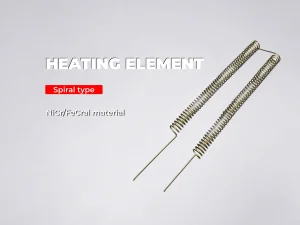
Ensure wire and strip stock exhibit adequate cold ductility for automated winding into tightly pitched spiral coils or bending into meander-pattern heating waves without surface micro-cracking.
4. Standard Certification Compliance
Demand compliance with international and national metallurgical standards including GB/T 1234-2012, ASTM B603 (FeCrAl), ASTM B344 (NiCr), and DIN 17470, backed by full 3.1 chemical analysis certification.
5. Total Lifecycle Cost (TCO)
Analyze total lifecycle value over upfront purchase price. Alloys with superior oxide scale adherence reduce element burnout frequency, furnace downtime, and expensive production stoppages.
Featured High Performance Heating Alloys (Catalog Part II)
Explore our complete range of high-temperature resistance wires, ceramic radiant cores, and specialized alloy strips designed for heavy-duty industrial processing equipment.


7. Industrial Technical FAQ: Frequently Asked Engineering Questions
Find detailed metallurgical answers to critical procurement and operational questions regarding electric heating alloys.
Q1: What is the maximum continuous operating temperature difference between standard FeCrAl and NiCr alloys?
Standard FeCrAl alloys (such as 0Cr25Al5 and 0Cr23Al5) reach maximum continuous operating temperatures of 1250°C, while premium FeCrAl grades (HRE, SGHYZ) achieve 1350°C-1400°C, and powder metallurgy grades (SGHT) reach 1425°C. In contrast, standard NiCr alloys (Cr20Ni80) are generally capped at 1200°C due to the thermal oxidation limitations of chromium oxide scales compared to aluminum oxide scales.
Q2: Why does FeCrAl alloy wire become brittle after thermal commissioning?
FeCrAl alloys undergo rapid grain growth when exposed to temperatures exceeding 900°C-1000°C. Upon cooling to room temperature, coarse ferrite grain boundaries reduce cold ductility, making the wire brittle if subjected to bending or mechanical impact. Therefore, FeCrAl heating elements should be pre-formed into coils or shapes before initial firing, and handling after thermal operation should be minimized.
Q3: How do furnace atmospheres (Hydrogen, Nitrogen, Vacuum, Carburizing) affect heating alloy lifespan?
In dry Hydrogen or vacuum, FeCrAl cannot form its protective alumina scale, reducing its maximum usable temperature unless pre-oxidized in air. In Nitrogen-containing atmospheres, FeCrAl can form aluminum nitrides (AlN), causing embrittlement; NiCr alloys are generally preferred in pure Nitrogen. In reducing or carburizing atmospheres, NiCr alloys are susceptible to "green rot" corrosion; specialized high-chromium or silicon-modified alloys are required.
Q4: What surface watt density (W/cm²) should be used when designing industrial furnace elements?
Surface watt load selection depends on operating temperature, element diameter, and thermal transfer mode (radiation vs. convection). For continuous industrial kilns operating at 1200°C, typical recommended surface loads range between 1.5 and 2.5 W/cm² for FeCrAl coils. Exceeding recommended watt density leads to premature hot spots, thermal sag, and element burnout.
Q5: What delivery forms are available from SPARK manufacturing facilities?
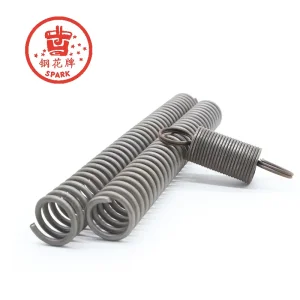
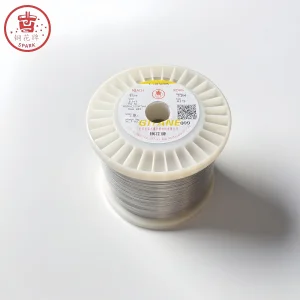
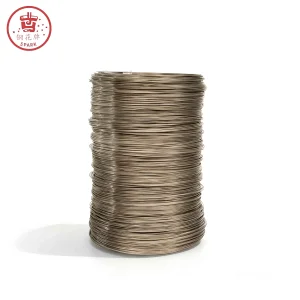
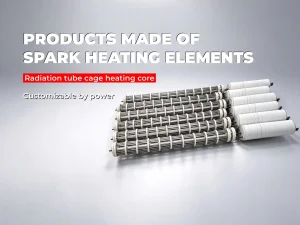
We supply high-performance heating alloys in round wire (0.05mm to 12.0mm diameter), flat ribbon/strip (thickness 0.1mm to 6.0mm, width up to 250mm), wound spiral coils, ceramic tube heating cores, meander heating elements, and custom-fabricated ceramic fiber heating plates.
Request Engineering Pricing & Technical Datasheets Today
Partner with China's leading metallurgical manufacturer for high-performance resistance heating alloys. Get mill-direct pricing, customized coil drawings, and technical support for your furnace project.
Contact Engineering Sales