
Featured Electric Heating Alloy Products & Solutions
Explore our premium FeCrAl and NiCr alloy wires, spiral heating elements, and ceramic cores manufactured to lower furnace CapEx and operational costs.



Executive Summary: The Strategic Economics of Auxiliary Equipment Reduction
An engineering insight into how selecting high-resistivity, high-temperature resistance alloys directly slashes capital expenditures (CapEx) and operational overheads (OpEx) across industrial thermal systems.
In modern industrial thermal processing—ranging from powder metallurgy sintering and semiconductor wafer fabrication to automotive heat treatment—capital expenditures are rarely limited to the thermal chamber itself. A major portion of capital budget is consumed by auxiliary equipment investments, including step-down transformers, high-amperage SCR power controllers, heavy copper busbar networks, water-cooling circuits, and structural mounting frameworks.
By specifying resistance alloys engineered with a well-balanced performance profile, plant managers, original equipment manufacturers (OEMs), and procurement specialists can optimize surface load distribution (W/cm²), lower total system weight, and eliminate excessive auxiliary thermal management overheads. Beijing Shougang Gitane New Materials Co., Ltd. (SPARK brand), leveraging over 60 years of metallurgical heritage under the Shougang Group, provides high-purity electrothermal alloys engineered specifically to optimize system design aesthetics, operational longevity, and economic returns.
Lowering Auxiliary Equipment Investment: Mechanics & Technical Proof
How physical and chemical alloy properties translate into direct balance-sheet savings for global furnace builders and industrial operators.
1. High Resistivity Reduces Transformer & Transformer Cabling Costs
FeCrAl alloys exhibit a physical resistivity of ~1.45 μΩ·m compared to ~1.09 μΩ·m for standard Cr20Ni80. Higher electrical resistance allows heating elements to operate at higher voltage levels for a given power requirement. Consequently, operating currents are significantly lower, allowing system designers to specify smaller step-down transformers, lighter gauge wiring, and lower-cost solid-state relays (SSRs).
2. Lower Specific Gravity Minimizes Structural & Insulation Load
With a density of ~7.10 g/cm³ (FeCrAl) compared to ~8.40 g/cm³ (NiCr), SPARK FeCrAl alloys offer a weight reduction of approximately 15%. Reduced mass minimizes heavy ceramic support structures, refractory bricks, and metal furnace casing frames, lowering auxiliary mechanical fabrication costs while improving dynamic thermal responsiveness.
3. Extended Creep Life Reduces Thermal Stress & Cooling Capital
Advanced powder-metallurgy processing (SGHT series) delivers exceptional sag resistance and hot strength at ultra-high operating temperatures up to 1425°C. Lower element deformation eliminates the need for expensive internal water-cooled support jackets or complex auxiliary ceramic holding clips, keeping maintenance overhead at a minimum.
| Performance / Material Parameter | Standard NiCr (Cr20Ni80) | Standard FeCrAl (0Cr25Al5) | SPARK High-Temp FeCrAl (SGHT / HRE) | Auxiliary CapEx Impact |
|---|---|---|---|---|
| Max Operating Temp (°C) | 1200°C | 1250°C | 1350°C - 1425°C | Eliminates specialized atmosphere booster cooling |
| Resistivity at 20°C (μΩ·m) | 1.09 ± 0.05 | 1.42 ± 0.07 | 1.45 ± 0.07 | Direct 20%+ reduction in transformer size & copper busbars |
| Density (g/cm³) | 8.40 | 7.10 | 7.10 | 15% lighter elements = reduced structural framing steel |
| Oxide Scale Layer Composition | Cr₂O₃ (Chromia) | Al₂O₃ (Alumina) | Pure Alpha-Al₂O₃ + Rare Earth | Extends element life 2-3x, reducing replacement downtime |
| Relative Raw Material Cost | High (Volatility in Nickel) | Economical | Highly Cost-Effective | Lower initial material acquisition CapEx |
China Supply Chain Integration & Shougang Gitane Manufacturing Mastery
Unmatched authority, quality control, and vertical integration derived from decades of state-of-the-art metallurgical innovation in Beijing.
Shougang Group Synergy & Raw Material Purity
As a key enterprise under the state-owned Shougang Group, Beijing Shougang Gitane New Materials Co., Ltd. controls the manufacturing lifecycle from raw liquid alloy melting to continuous precision wire drawing and strip cold-rolling. This vertical control shields global buyers from market supply volatility while enforcing strict micro-alloy purity limits (S < 0.005%, P < 0.015%).
Rare Earth (RE) Micro-Alloying Breakthroughs
SPARK alloys incorporate precise additions of Yttrium (Y), Zirconium (Zr), and Reactive Elements. During high-temperature thermal cycling, these elements migrate to grain boundaries, keying the protective α-Al₂O₃ oxide layer to the metallic substrate. This eliminates spallation, prevents internal oxidation, and dramatically extends operating lifespans.
Rigorous Quality Assurance Standards
Certified under ISO 9001 since 2003 (and ISO 9002 since 1996), every batch of SPARK wire, ribbon, and heating element complies with GB/T 1234-2012, ASTM B603, and DIN 17470. Comprehensive Mill Test Reports (3.1/3.2) detailing optical emission spectroscopy chemical analysis and room-temperature electrical resistance accompany all shipments.
Typical Applications & Localized Industrial Scenarios
Thanks to its well-balanced performance profile, SPARK electric heating alloys power critical thermal processes across globally dominant manufacturing sectors.
1. Powder Metallurgy & Sintering Furnaces
High-density component sintering requires continuous operation between 1100°C and 1350°C. SPARK HRE and 0Cr25Al5 elements offer high surface load capacity, resisting carbon deposition and atmospheric attack in hydrogen, nitrogen, or endothermic gas environments.
2. Photovoltaic & Semiconductor Thermal Processing
Diffusion, oxidation, and annealing processes in solar cell wafer manufacturing demand ultra-clean thermal profiles. SPARK SGHT powder-metallurgy FeCrAl elements prevent heavy metal contamination while operating reliably up to 1425°C.
3. Automotive Heat Treatment & Glass Tempering
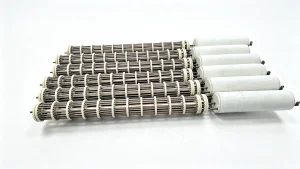
From gear gas carburizing to windshield bending kilns, radiant tubes equipped with SPARK Cr20Ni80 or Ceramic Bundle Rod cores ensure uniform temperature distribution, reducing product warpage and rejected parts.
4. Commercial & High-End Domestic Appliances
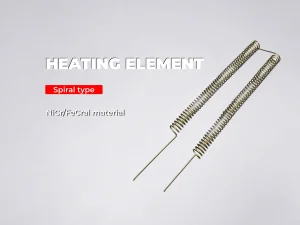
Precision-wound SPARK spiral heating elements are widely deployed in commercial ovens, instant water heaters, and industrial duct heaters, offering rapid thermal response and long-term mechanical ductility.
Global Enterprise Procurement, Localized Support & Compliance
Streamlined international supply logistics, customized spooling packaging, and full environmental/regulatory compliance for global EPC buyers.
Procurement teams managing multi-national industrial furnace installation projects require supplier transparency, standardized quality documentation, and flexible logistics. Shougang Gitane provides end-to-end global service capabilities tailored for international enterprise requirements:
Full Regulatory Compliance
All SPARK heating alloys strictly comply with EU RoHS 3 (Directive 2015/863) and REACH (EC 1907/2006) regulations, containing zero restricted heavy metal toxins or hazardous chemical substances.
Customized Delivery Formats
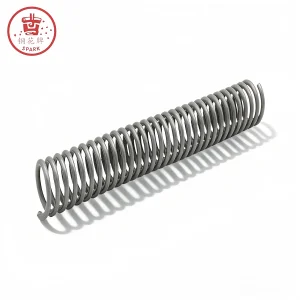
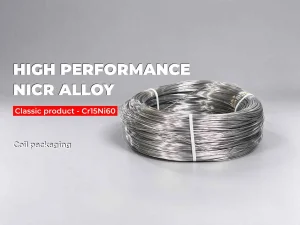
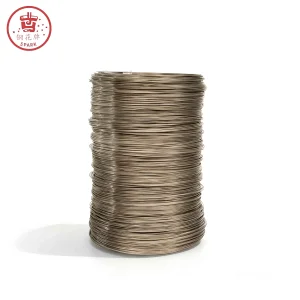
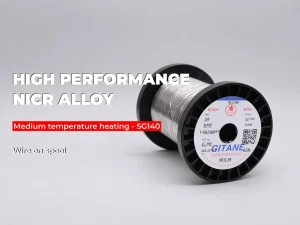
Supplied in precision round wire (0.05mm to 10.0mm), flat strip/ribbon, cold-rolled foil, pre-formed spiral coils, and fully engineered bundle rod radiant tube assemblies ready for immediate installation.
Future Industry Trends: Electrification & Hydrogen Heating
Leading the green industrial revolution through advanced resistance heating alloys compatible with decarbonized manufacturing atmospheres.
As global manufacturing pivots toward carbon neutrality, fossil-fuel-fired industrial kilns are rapidly being replaced by high-efficiency electric heating systems. Furthermore, the integration of green hydrogen (H₂) atmospheres in green steel and sintering processes introduces aggressive chemical reduction environments.
Shougang Gitane is at the forefront of this transformation. Our latest generation SGHT powder metallurgy FeCrAl alloys demonstrate superior thermodynamic stability against hydrogen embrittlement and vacuum volatilization. By increasing element service life in clean-energy electric kilns, SPARK alloys eliminate frequent shutdown cycles, enabling industrial operators to meet zero-emission targets while lowering overall life-cycle maintenance investments.
Frequently Asked Questions (Q&A) for Engineering & Procurement
Expert answers addressing alloy selection, CapEx optimization, atmosphere compatibility, and supply chain logistics.
How does specifying high-resistivity FeCrAl alloy lower auxiliary equipment investment?
What is the key difference between SPARK SGHYZ and SGHT alloy series?
When should an engineer select NiCr (e.g., Cr20Ni80) over FeCrAl alloys?
What quality certifications accompany SPARK electric heating alloy shipments?
How does the protective oxide scale on SPARK FeCrAl alloys work?
Can SPARK heating elements be supplied custom-wound or pre-formed?
Complete Electric Furnace Alloys & Core Components
Explore our extended range of customized industrial furnaces, high-purity nickel materials, glass tempering wires, and petrochemical tubing.




Optimize Your Thermal System CapEx with SPARK Alloys
Contact our metallurgical application engineers today for technical consultation, tailored resistance wire sizing, wholesale price lists, and certified sample kits.