Featured Heating Elements & Resistance Alloy Solutions
Factory-direct electric heating wires, spiral coils, and customized alloy components engineered for structural stability and extreme temperature tolerance.


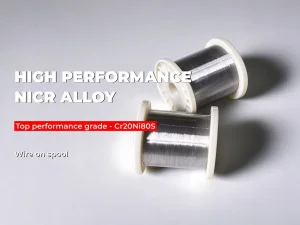

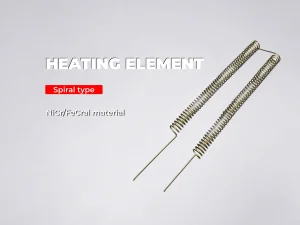

Global Commercial & Industrial Status of Electric Heating Components
The global industrial heating sector is undergoing an unprecedented technological pivot driven by carbon-neutrality mandates, energy efficiency imperatives, and advanced material processing demands.
Industrial Decarbonization & Electrification
Global manufacturing industries are replacing fossil-fuel combustion burners with precise electric heating components. From heavy metallurgical heat treatment to micro-electronics annealing, electric resistance heating offers up to 98% thermal efficiency, zero local emissions, and exact closed-loop temperature control impossible with gas-fired furnaces.
Emerging High-Tech Thermal Requirements
Advanced industries—including semiconductor wafer fabrication, lithium-ion battery cathode sintering, and photovoltaic silicon crystal pulling—demand thermal consistency within ±1°C. Standard off-the-shelf resistance heating wire cannot handle the aggressive thermal cycling, corrosive off-gassing, and elevated temperature thresholds (1200°C–1425°C) required by modern cleanroom kilns.
Supply Chain Resilience & Material Standardization
Procurement teams across Europe, North America, and Southeast Asia face severe volatility in raw nickel and chromium markets. Securing reliable, factory-direct suppliers who guarantee strict chemical composition (such as ultra-low carbon FeCrAl and homogenized NiCr micro-structures) has become a key strategic priority to prevent costly furnace shutdowns and element burnout.
China Manufacturing Advantage: The Shougang Gitane Legacy
As a premier enterprise under the Shougang Group, Beijing Shougang Gitane New Materials Co., Ltd. combines over 60 years of metallurgical heritage with state-of-the-art wire drawing and rolling technologies.
Fully Integrated Vertical Manufacturing Efficiency
Unlike simple downstream processing workshops, Shougang Gitane operates an end-to-end metallurgical production chain. From Vacuum Induction Melting (VIM) and Electroslag Remelting (ESR) to hot rolling, precision wire drawing, continuous bright annealing, and automated coil winding, every step occurs under stringent ISO 9001 quality supervision. This vertical integration reduces raw material waste, dramatically shortens delivery lead times, and guarantees lot-to-lot electrical resistance consistency within ±3% tolerances.
Advanced Micro-Alloying & Rare Earth Doping
Our proprietary SPARK series utilizes advanced micro-alloying techniques—incorporating precise additions of rare-earth elements like Yttrium (Y), Zirconium (Zr), Hafnium (Hf), and Niobium (Nb). This micro-alloying breakthrough refines grain boundaries during prolonged elevated exposure, preventing rapid sag and creep while fostering a dense, adherent, self-healing Alpha-Alumina (α-Al₂O₃) protective oxide scale that dramatically extends component working lifespans.
Engineering Deep-Dive: Material Science of Resistance Alloys
Understanding the thermodynamic and metallurgical distinctions between Iron-Chromium-Aluminum (FeCrAl) and Nickel-Chromium (NiCr) alloys is critical for optimizing thermal efficiency and element longevity.
| Alloy Family / Grade | Alloy Category | Max Working Temp (°C) | Resistivity at 20°C (μΩ·m) | Density (g/cm³) | Oxide Film Composition | Primary Industrial Applications |
|---|---|---|---|---|---|---|
| SGHT / SGHYZ | FeCrAl (PM / RE) | 1400°C – 1425°C | 1.45 ± 0.05 | 7.10 | Dense α-Al₂O₃ Scale | Semiconductor diffusion, ceramic sintering, high-temp kilns |
| SPARK 0Cr25Al5 | FeCrAl Standard | 1250°C | 1.42 ± 0.05 | 7.10 | Al₂O₃ Protective Layer | Industrial heat treatment furnaces, radiant tube heaters |
| SPARK 0Cr23Al5 | FeCrAl Medium | 1250°C | 1.35 ± 0.05 | 7.25 | Al₂O₃ Protective Layer | Tempering furnaces, home heating appliances, duct heaters |
| SPARK Cr20Ni80 | NiCr Premium | 1200°C | 1.09 ± 0.05 | 8.40 | Cr₂O₃ Adherent Scale | Precision medical heaters, rapid thermal cycling, appliances |
| SPARK Cr30Ni70 | NiCr High-Cr | 1250°C | 1.18 ± 0.05 | 8.10 | Cr₂O₃ Rich Scale | Corrosive atmospheres, industrial ovens, sulfur-free kilns |
| Cr15Ni60 (NiCrFe) | NiCrFe Economy | 1150°C | 1.12 ± 0.05 | 8.20 | Complex Oxide Layer | Domestic water heaters, storage heaters, rheostats |
FeCrAl Alloys: High Temperature & Higher Resistivity
FeCrAl alloys exhibit a higher resistivity than NiCr alloys, enabling design engineers to use larger wire cross-sections for the same resistance, thereby significantly increasing element working lifespan. Furthermore, FeCrAl has approximately 15% lower density than NiCr, translating directly to substantial material weight savings and lower procurement costs per heating element. The protective α-Al₂O₃ scale forms rapidly above 1000°C, providing exceptional resistance to carburizing, oxidizing, and sulfur-containing atmospheres.
NiCr Alloys: Superior Hot Strength & Ductility
Nickel-Chromium alloys retain high ductility after extended high-temperature usage, making them vastly easier to service, repair, or reshape without brittle fracture. NiCr elements possess superior wet-strength properties and do not suffer from room-temperature embrittlement like FeCrAl can after long-term thermal exposure. They perform exceptionally well in rapid cyclic heating/cooling operations and nitrogen-rich atmospheres, maintaining structural integrity under severe mechanical vibration.
Localized Application Scenarios & Industry Integration
Customized thermal component design tailored to precise industrial environment demands, atmosphere conditions, and power density requirements.
Automotive & Aerospace Metallurgy
Continuous mesh-belt furnaces, annealing lines, carburizing chambers, and aluminum alloy heat-treatment equipment. Utilizing SPARK 0Cr25Al5 and SG140 heavy gauge strip to ensure uniform thermal transfer across large workpiece surface areas.
Photovoltaic & Semiconductor Cleanrooms
High-purity quartz tube diffusion furnaces, monocrystalline silicon ingot growers, and PECVD processing stations. Employing SGHT powder-metallurgy FeCrAl wire to avoid trace metal contamination and eliminate element droop at 1350°C+.
Petrochemical & Energy Infrastructure
Heavy-duty explosion-proof process heaters, flue gas reheaters, catalyst regeneration kilns, and high-pressure steam boilers. Utilizing SGHT alloy tubes and thick-gauge spiral elements resistant to thermal shock and chemical attack.
Global Enterprise Procurement Requirements & Quality Assurance
Strict technical compliance, traceable mill test reports, and customized delivery parameters designed for seamless B2B sourcing integration.
Traceable Metallurgical Certification
Every wholesale shipment of SPARK resistance wire or component elements includes comprehensive Mill Test Certificates (MTC) detailing exact ladle chemistry, 20°C electrical resistivity, tensile strength, elongation percentages, and dimensional tolerance checks compliant with GB/T 1234-2012, ASTM, and DIN standards.
Precision Spooling & Surface Finish
To support automated OEM element winding machines, wire must possess uniform spool tension, zero wire crossovers, and defect-free surface finishes (bright annealed or oxidized). Our precision spooling systems prevent snagging and wire breakage during rapid high-speed customer coiling operations.
Export Packaging & Ocean Logistics
High-value resistance alloys are vulnerable to salt-spray corrosion and physical deformation during transoceanic transit. We employ desiccated vacuum sealing, anti-rust oil coatings, heavy-duty ABS spools, and reinforced, IPPC-certified wooden crates to guarantee pristine product arrival worldwide.
Industry Trends: The Next Decade of Industrial Heating (2025–2035)
Pioneering powder metallurgy innovations, green hydrogen furnace integration, and smart ceramic heating modules.
1. Powder Metallurgy (PM) FeCrAl Dominance
Traditional melting processes reach their physical limits at 1350°C due to rapid grain growth and mechanical sagging. Powder Metallurgy alloys, such as SPARK SGHT, utilize nano-oxide dispersion strengthening (ODS) to maintain exceptional creep resistance and structural rigidity up to 1425°C, revolutionizing ultra-high temperature industrial processing.
2. Green Hydrogen Atmosphere Compatibility
As steelmakers and chemical plants switch from natural gas to pure green hydrogen fuel atmospheres, heating elements must withstand high moisture vapor levels ($H_2O$) and aggressive hydrogen reduction. Shougang Gitane is developing specialized alloy surfaces pre-oxidized to resist hydrogen embrittlement and scale breakdown.
Frequently Asked Questions (FAQ) & Technical Knowledge Base
Expert engineering answers addressing common alloy selection, surface load calculations, component life extension, and wholesale ordering queries.
High-Temperature Resistance Alloys & Specialized Component Series
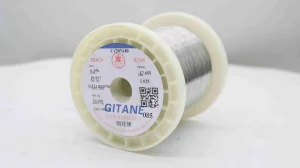
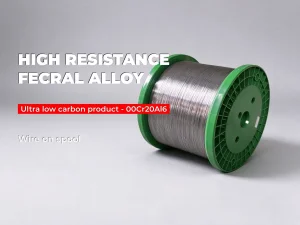
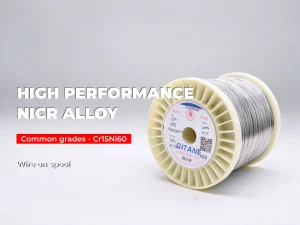
Explore our extended catalog of high-resistance FeCrAl wires, low-carbon variants, NiCr bright spools, and heavy-duty structural tubes.