
High-Performance Custom Electric Heating Elements & Alloys
Explore precision-rolled FeCrAl and NiCr heating alloys engineered for severe thermal cycles, extreme oxidation resistance, and elevated operating temperatures up to 1425°C.
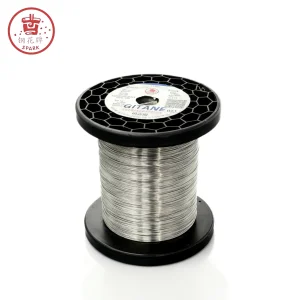
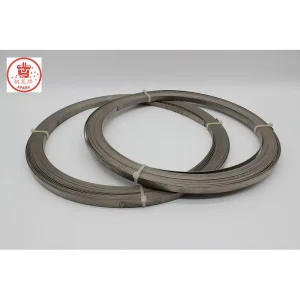
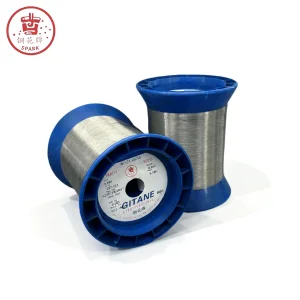
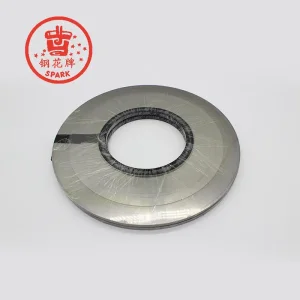
The Metallurgical Science & Global Procurement Landscape of Custom Heating Elements
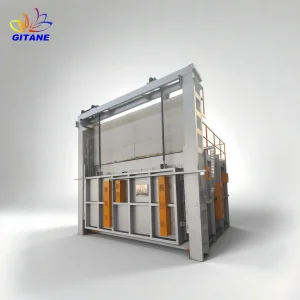
In modern high-temperature process manufacturing, electric heating elements serve as the primary energetic engine. Whether engineered as wound wire coils, coiled ceramic bundle rods, heavy-gauge strip serpentine elements, or encapsulated tubular heaters, custom heating elements determine the efficiency, thermal uniformity, and operational lifespan of industrial furnaces, semiconductor processing units, and specialized thermal processing rigs.
Procuring wholesale custom heating elements requires an in-depth evaluation of solid-state physical chemistry, crystal lattice dynamics, and high-temperature corrosion science. Primary resistance heating alloys fall into two fundamental metallurgical families: Iron-Chromium-Aluminum (FeCrAl) and Nickel-Chromium (NiCr) alloys. Each alloy class exhibits distinct thermal, mechanical, and electrical phenomena under continuous duty cycle conditions.
FeCrAl Alloys: Extreme Temperature & Oxidation Protection
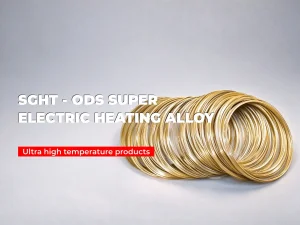
FeCrAl alloys (such as 0Cr25Al5, 0Cr21Al6Nb, HRE, SGHYZ, and PM-processed SGHT) develop a self-healing, highly protective adhesive layer of alpha-alumina (α-Al2O3) when exposed to temperatures exceeding 1000°C. This dielectric ceramic scale protects the underlying metal matrix against rapid oxidation, enabling operating temperatures up to 1425°C.
NiCr Alloys: High Hot Strength & Ductility Retention
NiCr alloys (such as Cr20Ni80, Cr20Ni80S, and Cr30Ni70) rely on a chromia oxide (&Cr2O3) scale. While rated to slightly lower maximum operating temperatures (1200°C–1250°C), NiCr maintains exceptional mechanical ductility after prolonged heating. It resists sag, thermal shock, and mechanical distortion, making it ideal for high-cycle start-stop operations.
Powder Metallurgy (PM) Advancements
Advanced powder metallurgy techniques eliminate macro-segregation and refine grain structures by micro-alloying with rare earth elements (Yttrium, Zirconium, Niobium). Alloys like SGHT maintain near-zero creep deformation and exceptional hot strength under continuous heavy thermal stress.
Custom Heating Element Engineering: Surface Load Dynamics & Lifetime Optimization
Designing a custom industrial heating element is a balance of thermal watt density, electrical resistivity, mechanical support, and operating atmosphere dynamics. Selecting the correct element geometry ensures long service life without localized hotspot burnout or catastrophic creep sag.
1. Surface Load Density (Watt Loading $W/cm^2$) Analysis
Surface load density ($p$) represents the thermal power dissipated per unit area of the heating wire or strip surface:
Where P is total power (Watts), d is wire diameter (cm), and L is the active heating length (cm). Exceeding maximum recommended watt densities causes thermal energy to accumulate inside the core, elevating the internal wire temperature far above the ambient furnace temperature and accelerating grain growth and premature element failure.
2. Technical Specifications Comparison Table
The table below summarizes essential physical, electrical, and thermal properties for primary resistance heating alloys used in custom element fabrication:
| Alloy Grade | Metallurgical Class | Max Temp (°C) | Resistivity @ 20°C (μΩ·m) | Density (g/cm³) | Primary Oxide Layer | Recommended Application |
|---|---|---|---|---|---|---|
| SGHT (PM) | PM FeCrAl + Rare Earth | 1425°C | 1.45 | 7.10 | α-Al2O3 (Pore-Free) | Semiconductor, Ceramic Sintering, Cleanroom |
| SGHYZ | High-Purity FeCrAl | 1400°C | 1.42 | 7.15 | α-Al2O3 Dense Scale | Ultra-High Temp Kilns, Powder Metallurgy |
| HRE | FeCrAl High-Resistance | 1350°C | 1.40 | 7.20 | α-Al2O3 Scale | Industrial Heat Treating, Radiant Tubes |
| 0Cr25Al5 | Standard FeCrAl | 1250°C | 1.42 | 7.10 | Alumina Scale | Industrial Furnaces, Commercial Heaters |
| 0Cr21Al6Nb | Nb-Modified FeCrAl | 1300°C | 1.45 | 7.10 | Alumina + Nb Nitride | Heavy Industrial Annealing, Salt Baths |
| Cr20Ni80S | Special NiCr Alloy | 1200°C | 1.09 | 8.40 | Cr2O3 Scale | High-Cycle Appliances, Lab Furnaces |
| Cr30Ni70 | High-Cr NiCr Alloy | 1250°C | 1.18 | 8.10 | Chromia-Rich Scale | Aggressive Atmospheres, Chemical Heating |
3. Coil Pitch & Stretch Ratio
For spiral coiled elements, the stretch ratio (distance between adjacent turns divided by wire diameter) should typically range between 2.0 and 4.5. Close coiling creates severe localized radiant shielding, driving wire core temperatures beyond critical thresholds.
4. Cold Terminal Lead Design
Terminal leads passing through insulation walls must possess a cross-sectional area 2 to 3 times larger than the furnace element wire. This reduces electrical resistance, preventing terminal overheating and terminal wall breakdown.
China Factory Supply Chain Advantages: End-to-End Vertical Integration
China's industrial heating alloy manufacturing cluster—led by established enterprises such as Beijing Shougang Gitane New Materials Co., Ltd.—delivers unmatched competitive advantages for global B2B procurement. By combining raw alloy smelting, hot rolling, wire drawing, cold rolling, rare earth micro-alloying, and element fabrication within a unified production ecosystem, China's heating alloy sector provides technical reliability, rapid prototyping, and cost optimization.
Vacuum Induction Smelting & ESR Refining
Sub-ppm control over tramp elements (Sulfur, Phosphorus, Lead) via Vacuum Induction Melting (VIM) and Electroslag Remelting (ESR). Clean melt metallurgy prevents premature grain boundary degradation under extreme thermal loads.
Precision Cold Drawing & Continuous Annealing
Fully automated multi-pass wire drawing lines equipped with laser diameter monitoring ensure tight dimensional tolerances (±0.01mm) and consistent linear electrical resistance throughout multi-ton master spools.
Scalability & Cost-Efficiency
Direct access to upstream primary steel and alloy production drastically minimizes raw material lead times and logistical overheads, yielding a 15% to 30% total cost advantage compared to European or North American producers.
Global Enterprise Procurement Dynamics: Commercial Wholesale Pricelist Framework
Procurement directors and engineering teams must navigate raw material price volatility, minimum order quantities (MOQ), and custom tooling expenses when sourcing industrial heating elements on a wholesale basis. Pricing structures depend on key commercial parameters:
1. Raw Metal Market Indexing
Heating alloy pricing closely follows global commodity exchanges (London Metal Exchange - LME) for Nickel, Chromium, and Aluminum. NiCr alloys (Cr20Ni80) carry higher cost sensitivity due to base Nickel price fluctuations, whereas FeCrAl alloys offer a more stable, cost-effective baseline for large volume installations.
2. Custom Fabrication Complexity
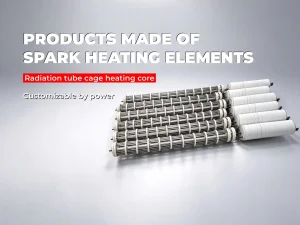
Unprocessed master spools of wire or cold-rolled strip carry lower processing markups. Custom-formed heating elements—such as ceramic bundle rod radiant cores, pre-grooved refractory tiles, multi-leg serpentine ribbon arrays, and heavy-gauge welded terminals—are priced based on precise CAD drawing requirements, tight resistance tolerances, and manual craftsmanship.
3. Quantity Tiering & Annual Contracts
Wholesale volume pricing is structured across order tiers: Sample Prototype (1–10 kg), Production Batch (100–500 kg), and Master OEM Supply Tiers (>1,000 kg). Establishing annual blanket purchase agreements allows global buyers to lock in alloy surcharge caps and ensure stock buffering in factory warehouses.
Localization Support, Regulatory Compliance, and Regional Electrical Grids
Exporting custom industrial heating elements to European, North American, and Asia-Pacific markets requires strict adherence to international electrical safety directives, material compliance standards, and regional line voltage variations.
International Material & Safety Compliance
All heating elements manufactured by accredited Chinese suppliers comply with ISO 9001:2015 quality management systems, ISO 14001 environmental protocols, and GB/T 1234-2012 national standards for resistance alloys. Export products meet CE Directives (Low Voltage Directive 2014/35/EU), UL 499 safety requirements for electric heating, and full RoHS / REACH environmental restriction directives.
Regional Voltage & Grid Customization
Industrial electrical grids vary widely by geographic region. Custom heating elements must be wired and calculated to match local supply configurations: 480V 3-Phase (North America), 400V 3-Phase / 230V 1-Phase (Europe & UK), or 200V / 380V (Japan & East Asia). Elements can be designed in Star (Δ), Delta (Y), or dual-voltage series-parallel arrangements to match local thyristor/SCR power controllers.
Localized Field Service & Rapid Logistics
Top-tier suppliers provide comprehensive export support, including DDP shipping, customs clearing documentation, certified mill test reports (MTR) according to EN 10204 3.1, and technical field assistance for initial on-site burnout and pre-oxidation commissioning.
Next-Generation Application Scenarios for Custom Heating Elements
From advanced clean tech manufacturing to foundational heavy industries, custom electric heating elements are critical across high-value thermal processing sectors:
Semiconductor & Electronics Processing
Cleanroom-grade powder metallurgy SGHT heating cores power diffusion furnaces, LPCVD reactors, and silicon wafer annealing tools. Extremely low particle shedding and tight resistance tolerances prevent semiconductor contamination.
EV Battery Cathode Sintering
Roller hearth kilns (RHK) for manufacturing Lithium Iron Phosphate (LFP) and Nickel Manganese Cobalt (NMC) cathode materials require heavy-duty FeCrAl spiral coils capable of withstanding corrosive, alkaline atmospheres continuously up to 1200°C.
Solar PV Silicon Crystal Growth
High-purity graphite heaters and ceramic bundle rod radiant tubes operate inside monocrystalline Czochralski (CZ) pullers, ensuring ultra-uniform radial thermal gradients for crystal growth.
Green Hydrogen & Decarbonized Steel
As the steel industry transitions from fossil fuel combustion to electric arc heating and hydrogen direct reduction (DRI), ultra-high-temperature SGHYZ heating elements power large-scale continuous strip annealing lines.
Aerospace Vacuum Heat Treating
Precision NiCr (Cr30Ni70) ribbon arrays and ceramic-insulated heating modules provide rapid response and stable thermal output inside high-vacuum brazing and titanium stress-relieving furnaces.
Industry Development Trends: The Future of Industrial Electric Thermal Systems
Driven by global carbon neutrality mandates, industrial electrification, and the expansion of advanced materials manufacturing, the custom heating element industry is evolving rapidly along three technological vectors:
1. Decarbonization & Direct Electrification
Global industrial manufacturers are replacing fossil fuel burners (gas/oil) with electric heating element arrays. Electric heating achieves up to 98% energy conversion efficiency, zero direct site carbon emissions, and tight digital temperature control impossible with gas flame combustion.
2. Nano-Dispersed Powder Metallurgy Alloys
Next-generation alloys utilize oxide dispersion strengthening (ODS) and nano-scale rare-earth precipitation. These advanced metals maintain structural integrity and resist sag or creep deformation even when operating near their physical melting points.
3. Smart Thermal Sensors & Predictive Maintenance
Modern custom heating elements are increasingly integrated with embedded thermocouples, fiber-optic temperature sensors, and real-time electrical resistance monitoring. Changes in element resistance signal micro-cracking or oxide scale spallation, enabling predictive maintenance before element failure occurs.
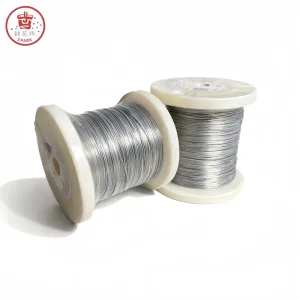
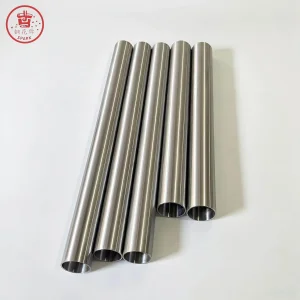
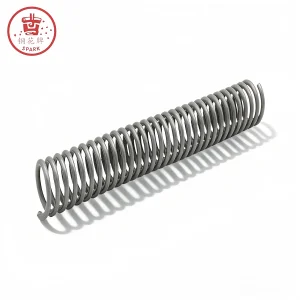
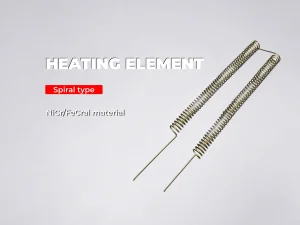
Specialized Heating Alloys, Tubes & Custom Elements
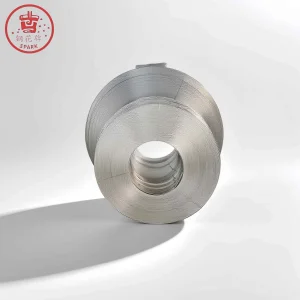
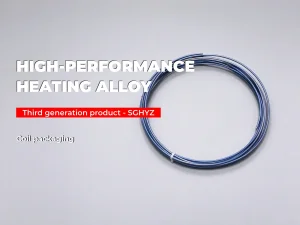
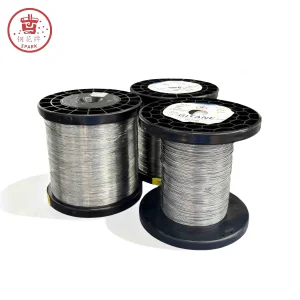
Review additional custom alloy wire configurations, high-performance SGHT steel tubes, and pre-formed heating coils engineered for extreme thermal environments.
Frequently Asked Questions (FAQ) for Procurement & Engineering Teams
Find answers to common technical, manufacturing, and commercial inquiries regarding custom electric heating elements and alloy selection.
How do I choose between FeCrAl and NiCr alloys for my custom heating elements?
Selection depends primarily on maximum operating temperature, power density, operating atmosphere, and mechanical duty cycle:
- Choose FeCrAl (0Cr25Al5, HRE, SGHYZ, SGHT): If your system requires operating temperatures between 1200°C and 1425°C, high electrical resistivity, and lower material weight. FeCrAl alloys form an alpha-alumina scale that excels in oxidizing, sulfurous, and neutral atmospheres.
- Choose NiCr (Cr20Ni80, Cr30Ni70): If your furnace experiences rapid thermal cycling (start-stop operation), physical vibration, or requires post-heating ductility for maintenance servicing. NiCr excels in reducing atmospheres, moist air, and nitrogen-rich environments up to 1250°C.
What technical parameters are needed to request a custom heating element quotation?
To provide an exact engineering quote and CAD validation, our technical team requires:
- Desired total electrical power rating (Watts/kW) and available line voltage (V).
- Maximum operating furnace chamber temperature and target element temperature (°C).
- Atmosphere environment (Air, Vacuum, Hydrogen, Nitrogen, Endothermic gas).
- Dimensional constraints (Coil outer diameter, wire gauge, strip width/thickness, terminal length).
- Element physical form (Wound spiral coil, radiant tube core, wavy strip serpentine, ceramic bundle rod).
Why is Powder Metallurgy (PM) SGHT wire superior for ultra-high-temperature industrial furnaces?
Standard ingot-cast FeCrAl alloys experience dramatic grain growth and thermal creep (sagging) when held above 1300°C for extended periods. Powder Metallurgy (PM) SGHT alloy is produced via atomized alloy powder compaction and micro-alloyed with rare-earth dispersion agents. This prevents grain boundary movement, yielding up to 4x higher creep resistance, zero premature sagging, and extended continuous service life up to 1425°C.
What is the typical manufacturing lead time and MOQ for wholesale custom element orders?
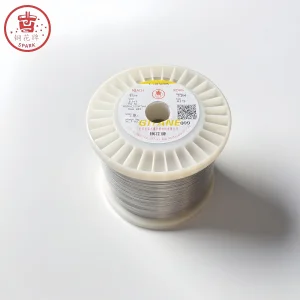
Standard wire diameters (e.g., 2.00mm 0Cr25Al5 or Cr20Ni80) are maintained in master spool stocks, enabling dispatch within 5–7 business days. Custom element fabrications (wound spiral coils, radiant tube cores, custom ceramic assemblies) typically require 14 to 21 calendar days depending on order volume and blueprint complexity. Minimum order quantities start as low as 10 kg for sample prototypes and 100 kg for custom production runs.
What mill test certifications and compliance documentation accompany shipments?
Every wholesale batch shipped from our factory is supplied with a comprehensive EN 10204 3.1 Certified Mill Test Report (MTR) detailing chemical composition (spectral analysis), electrical resistivity (μΩ·m), tensile strength, elongation percentage, and dimensional tolerances. Shipments include full RoHS, REACH, CE, and ISO 9001 compliance documentation.
Accelerate Your High-Temperature Thermal Systems Today
Partner with China's premier metallurgical heating alloy manufacturer. Our senior engineering team is ready to review your CAD drawings, calculate surface load dynamics, and provide a competitive factory-direct quotation.
Submit Engineering Inquiry & Request Pricelist