
Featured High-Ductility Heating Elements & Wires
Direct factory supply featuring optimized micro-structures for severe thermal cycling, resistance to embrittlement, and extended service life.
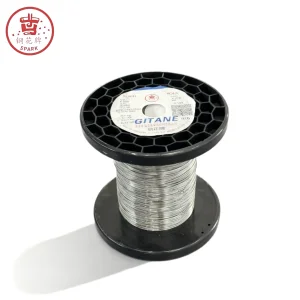
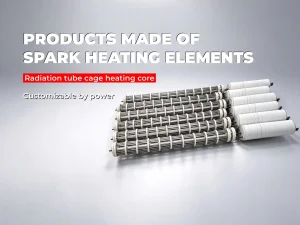
Wholesale SPARK Ceramic Radiant Tube Heating Core | High-Precision Industrial Furnace Element
View Product Specs
China High-Temperature Electric Heating Wire HRE 1350℃ Alloy Resistance Heating Solutions
View Product Specs
China High-Performance 0Cr25Al5 Electric Heating Wire Trusted Factory Resistance Wire
View Product Specs
SPARK Cr20Ni80 Electric Heating Wire / Resistance Wire for High-Temperature Applications
View Product Specs
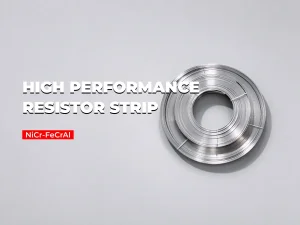
China FeCrAl & NiCr Resistance Strips | High Temperature Industrial Heating Ribbons
View Product SpecsUnderstanding High-Temperature Embrittlement & How Advanced Alloying Eliminates Post-Use Fracture
A comprehensive technical analysis of why conventional FeCrAl alloys become glass-brittle after thermal exposure, and how rare-earth grain boundary engineering preserves long-term ductility.
In high-temperature electric heating systems, the premature degradation of heating elements represents one of the largest contributors to operational downtime and maintenance costs. For decades, industrial furnace engineers have struggled with a fundamental physical limitation of conventional Iron-Chromium-Aluminum (FeCrAl) alloys: post-service embrittlement. When standard FeCrAl elements operate at elevated temperatures above 1000°C for extended durations, rapid grain growth occurs. Upon cooling back to ambient temperature, these coarsened grains exhibit extreme brittle fracture sensitivity. Routine furnace maintenance, minor mechanical vibration, or coil re-alignment frequently results in catastrophic cracking and element snap.
1. Metallurgical Failure Analysis: Why Conventional Alloys Crack
To understand how non-brittle alloys are engineered, one must examine the microstructural transition occurring during thermal aging:
- Grain Coarsening & Hall-Petch Softening: At temperatures above 1100°C, iron-chromium aluminum matrices undergo uncontrolled grain boundary migration. According to the Hall-Petch relationship, larger grain sizes drastically reduce yield strength and fracture toughness at room temperature.
- Intergranular Oxide Precipitation: Uncontrolled oxidation causes chromium and aluminum oxides to precipitate along internal grain boundaries rather than forming a pure, cohesive surface scale. These precipitates act as micro-notch stress concentrators.
- Sigma Phase Formation in NiCr Systems: In nickel-chromium alloys exposed to specific temperature bands (600°C–800°C), brittle intermetallic sigma phases can precipitate if the stoichiometry is poorly balanced, leading to low-temperature shock failure.
2. Micro-Alloying & Dispersion Strengthening Mechanisms
Beijing Shougang Gitane New Materials Co., Ltd. has pioneered the commercial production of anti-embrittlement alloys under the SPARK brand. By controlling interstitial impurites (Carbon, Nitrogen, Oxygen, Sulfur) to sub-ppm levels and utilizing precise Rare Earth Element (REE) doping, the microstructural evolution is fundamentally altered:
- Grain Boundary Pinning (Zener Drag Effect): Sub-micron oxide particles dispersed uniformly throughout the matrix physically pin grain boundaries, restricting grain growth even during continuous operation at 1350°C–1400°C.
- Adherent α-Al2O3 Scale Formation: Rare earth additions promote the rapid formation of an ultra-dense, self-healing Alpha-Alumina surface layer. This protective barrier stops inward oxygen diffusion, preserving the unoxidized ductile metallic core.
- Elongation Maintenance: While standard 0Cr25Al5 wire drops to under 1% elongation after 500 hours at 1200°C, SPARK's advanced SGHYZ and PM-based SGHT grades retain post-service elongation levels of 8% to 14%, permitting cold bending and maintenance adjustments without fracturing.
Alloy Specification & Post-Thermal Ductility Benchmark Matrix
Direct comparative data for furnace design engineers, procurement specialists, and quality control personnel.
| Alloy Grade / Brand | Base Composition | Max Element Temp (°C) | Resistivity @20°C (μΩ·m) | Post-Thermal Ductility (Elongation %) | Primary Resistance Mechanism |
|---|---|---|---|---|---|
| SPARK SGHT (Powder Met) | Fe-Cr-Al-RE-PM | 1425°C | 1.45 ± 0.05 | 10% - 15% (Superior) | ODS Grain Pinning & Zero Grain Coarsening |
| SPARK SGHYZ | Fe-25Cr-6Al-Zr-Y | 1400°C | 1.42 ± 0.04 | 8% - 12% (High) | Active Zr/Y Oxide Scale Anchor |
| SPARK HRE 1350 | Fe-23Cr-5.5Al-RE | 1350°C | 1.40 ± 0.04 | 6% - 10% (Good) | Dense α-Al2O3 Scale Growth |
| Standard 0Cr25Al5 | Fe-25Cr-5Al | 1250°C | 1.42 ± 0.05 | < 1.5% (Brittle) | Uncontrolled Grain Growth |
| SPARK Cr20Ni80 | Ni-20Cr-Balance Ni | 1200°C | 1.09 ± 0.03 | 18% - 25% (Extremely High) | Austenitic Matrix Stability |
| SPARK Cr30Ni70 | Ni-30Cr-Balance Ni | 1250°C | 1.18 ± 0.03 | 16% - 22% (Extremely High) | Enhanced Green-Rot Resistance |
Technology Roadmap & Future Outlook (2025–2030)
Pioneering the next era of super-alloy resistance elements for ultra-clean, carbon-neutral thermal processing.
1. Powder Metallurgy (PM) Scaling
Expanding inert gas atomization facilities to scale the production of PM-FeCrAl (SGHT grade). Powder metallurgy bypasses conventional ingot segregation, producing homogeneous fine-grained structures capable of surviving 1450°C localized hotspot spikes.
2. Hydrogen Atmosphere Compatibility
As global industry transitions to green hydrogen for steel and ceramic processing, resistance wires must withstand intense hydrogen embrittlement. Development of non-porous passivation coatings ensures zero hydrogen absorption into the metal lattice.
3. Nano-Dispersed ODS Alloys
Integration of Yttrium Oxide (Y2O3) nanoparticles via mechanical alloying. Oxide Dispersion Strengthened (ODS) wire will offer near-zero creep deformation over 10,000 hours of continuous high-load industrial heating.
Macro Industry Solutions: Engineering Precision Across Strategic Sectors
Tailored resistance heating technologies designed to satisfy demanding processing environments in high-tech manufacturing.
Semiconductor & Wafer Fabrication
Vertical diffusion furnaces and oxidation tubes require ultra-pure heating materials with zero outgassing and extreme temperature uniformity (±0.5°C). SPARK SGHT wire and ceramic radiant heating cores prevent particle contamination while maintaining thermal geometry over thousands of furnace runs.
Photovoltaic Solar Silicon Production
Monocrystalline ingot pullers and polysilicon reduction furnaces operate under rigorous vacuum and inert gas conditions at 1350°C–1400°C. Non-brittle SGHYZ strip and heavy-gauge wire eliminate unexpected element sag and brittle fracture during crystal pulling cycles.
Lithium Battery Cathode Calcination
Roller hearth kilns calcining LFP and NCM cathode powders present aggressive corrosive atmospheres rich in lithium vapor and fluorine compounds. Specialized NiCr (Cr30Ni70) ribbons resist chemical attack while maintaining the structural ductility required for maintenance access.
Heavy Automotive & Aerospace Heat Treatment
Car-bottom and continuous quenching furnaces require robust, heavy-strip heating elements capable of taking mechanical impacts during loading. SPARK FeCrAl and NiCr strips offer high mechanical resilience and zero cracking during rapid heating cycles.
China Factory 4.0: Metallurgical Precision & Supply Chain Resilience
Inside Beijing Shougang Gitane New Materials: 88,000 m² of integrated manufacturing capacity delivering fully traceable, world-class heating alloys.
Vacuum Induction Melting (VIM) & ESR
Double-vacuum refining removes non-metallic inclusions, controlling tramp elements (P, S, Pb, Bi) to ultra-low thresholds, laying the microstructural foundation for high elongation and fatigue resistance.
Automated Precision Drawing & Rolling
Computer-controlled multi-pass drawing with online laser measurement guarantees wire diameter tolerances down to ±0.002 mm, ensuring consistent electrical resistance per meter.
Continuous Hydrogen Bright Annealing
100% pure hydrogen atmosphere bright annealing ensures a mirror-clean surface finish, free from surface carbon contamination, optimizing oxide layer formation in initial customer commissioning.
Global Procurement, Sourcing Strategy & Factory Pricelist Structure
A transparent guide to alloy cost drivers, minimum order quantities (MOQ), packaging formats, and price benchmarks.
When procuring high-temperature resistance wire and strip from China, international buyers must evaluate Total Cost of Ownership (TCO) rather than raw material price per kilogram alone. High-ductility alloys drastically reduce premature replacement cycles and eliminate line-stoppage expenses.
1. Key Cost Drivers in Resistance Alloy Production
- Raw Material Indexing: Nickel prices (LME Nickel index) heavily influence NiCr alloys (Cr20Ni80, Cr30Ni70). FeCrAl alloys offer significant raw material cost stability due to their iron-rich base.
- Refining & Purity Standards: Alloys subjected to VIM + ESR double vacuum melting carry a slight premium but yield 3x longer thermal fatigue life.
- Processing Formats: Fine wire (< 0.10 mm) and thin ribbon (< 0.05 mm) require multiple intermediate annealing steps, increasing labor and processing cost per kg relative to heavy rod (6.0 mm - 10.0 mm).
2. Representative Factory Benchmark Pricelist (Indicative)
Note: Actual FOB/CIF quotes vary based on LME metal price fluctuations, wire diameter, total order volume, and packaging specs. Contact sales for live quotes.
| Alloy Grade | Standard Delivery Form | Diameter / Size Range | Typical MOQ | Price Benchmark (USD / kg) |
|---|---|---|---|---|
| 0Cr25Al5 | Spooled Wire / Coil | 1.0 mm – 6.0 mm | 100 kg | $8.50 – $14.00 / kg |
| 0Cr23Al5 | Coil / Strip | 0.5 mm – 4.0 mm | 100 kg | $8.00 – $13.50 / kg |
| HRE 1350℃ | Precision Spooled Wire | 0.2 mm – 3.0 mm | 50 kg | $16.00 – $26.00 / kg |
| SGHYZ 1400℃ | Wire / Flat Ribbon | 0.5 mm – 8.0 mm | 50 kg | $22.00 – $38.00 / kg |
| SGHT PM Grade | Wire / Rod / Strip | 1.0 mm – 10.0 mm | 25 kg | $45.00 – $75.00 / kg |
| Cr20Ni80 | Spooled Wire / Ribbon | 0.1 mm – 5.0 mm | 50 kg | $28.00 – $42.00 / kg |
| Cr30Ni70 | Heavy Strip / Wire | 0.5 mm – 6.0 mm | 50 kg | $32.00 – $48.00 / kg |
Localization Support, Compliance & Quality Assurance
Meeting rigorous international engineering specifications with full international certification and local technical presence.
Certified Quality Systems
Certified under ISO 9001, ISO 14001, and ISO 45001. All products comply with Chinese National Standard GB/T 1234-2012, ASTM B603, DIN 17470, and JIS C2520.
Environmental & Chemical Compliance
Full compliance with EU REACH and RoHS directive standards. Every shipment is accompanied by a 3.1 Mill Test Certificate (MTC) detailing spectroscopic chemical composition and mechanical tensile results.
Custom OEM Fabrication & Packaging
Custom spooling (DIN 125, DIN 200, DIN 250, DIN 355), vacuum plastic wrapping, and sea/air export-worthy wooden case packaging to prevent transit oxidation or mechanical damage.
Specialized Resistance Alloys & Custom Heating Element Products
Explore our specialized alloys, precision resistance strips, and custom industrial heating tube configurations.

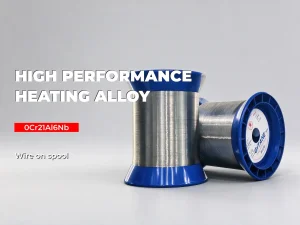
Wholesale 0Cr21Al6Nb High Performance Fe-Cr-Al Electric Heating Alloy 1350°C Grade
View Product Specs
Wholesale High-Performance SGHT Steel Tubes for Energy and Petrochemical Industries
View Product Specs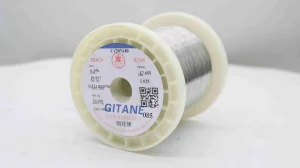
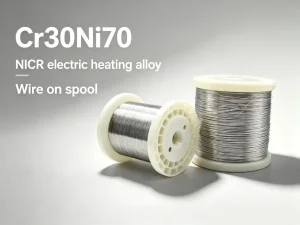
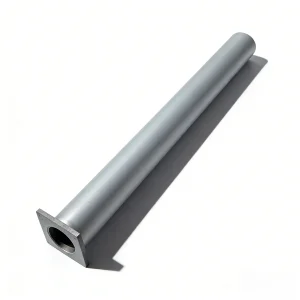
Wholesale High-Quality Electric Heating Tubes Efficient Heating Solutions by Leading Factory
View Product Specs
Wholesale 1350℃ High-Temperature Electric Heating Wire HRE Alloy for Powder Metallurgy
View Product SpecsFrequently Asked Questions: Post-Service Ductility & Selection
Direct answers to technical procurement questions from furnace designers and industrial equipment engineers.
Why do standard FeCrAl wires become extremely brittle after exposure to temperatures above 1000°C?
At temperatures above 1000°C, un-modified FeCrAl alloys undergo rapid recrystallization and grain growth. As grain size increases, the Room Temperature (RT) fracture toughness decreases dramatically. Upon cooling to room temperature, any slight mechanical shock or bending stress triggers cleavage cracking along grain boundaries, resulting in brittle fracture. Advanced SPARK grades solve this by introducing grain boundary pinning agents (Y, Zr, Hf) that suppress grain growth.
What is the difference between SPARK SGHYZ and Powder Metallurgy SGHT grade?
SGHYZ is an ingot-melted high-purity Fe-Cr-Al alloy doped with Zirconium and Yttrium, rated for continuous operation up to 1400°C with high ductility retention. SGHT is manufactured via Powder Metallurgy (PM). Bypassing conventional liquid ingot casting eliminates macro-segregation, allowing SGHT to handle temperatures up to 1425°C with near-zero creep deformation over multi-year continuous furnace cycles.
How does post-use ductility retention save money in industrial furnace operations?
When furnace heating elements maintain 8%–14% elongation post-thermal service, maintenance teams can safely perform kiln brick repairs, element re-positioning, or localized terminal welding without snapping adjacent wire loops. This eliminates unnecessary partial element replacements, reducing maintenance labor hours and furnace downtime by over 60%.
Should I choose FeCrAl or NiCr wire for cycling electric heating applications?
FeCrAl alloys offer higher maximum operating temperature (up to 1425°C), higher electrical resistivity, lower material density (15% lighter than NiCr), and higher surface load capability. NiCr alloys (Cr20Ni80) exhibit superior hot strength, intrinsic austenitic ductility, and resistance to frequent rapid cooling/heating thermal shock. For continuous high-temp furnaces, FeCrAl (SGHYZ/SGHT) is preferred; for rapid thermal cycling appliances, NiCr is ideal.
What quality testing and documentation are supplied with each factory shipment?
Every shipment from Beijing Shougang Gitane includes an EN 10204 3.1 Mill Test Certificate detailing direct spectroscopic heat chemical analysis, room-temperature tensile strength, elongation percentage, 20°C electrical resistance (μΩ·m), and dimensional tolerance verification.