
Featured High-Temperature Alloys for Indian Enterprises
Direct factory supply featuring optimized thermal stability, high creep resistance, and custom coil packaging for manufacturing clusters in Gujarat, Maharashtra, Tamil Nadu, and the National Capital Region (NCR).


India’s Industrial Heating Transformation & Demand Dynamics
India is undergoing an unprecedented industrial renaissance driven by the federal government’s "Make in India" initiative and robust Production-Linked Incentive (PLI) schemes across automotive, electronics manufacturing, solar PV assembly, and heavy steel fabrication. As India scales its manufacturing footprint, the demand for high-reliability, long-life NiCr (Nickel-Chromium) and FeCrAl (Iron-Chromium-Aluminium) heating wires has surged exponentially.
Industrial thermal processing facilities across major industrial corridors—including Pune, Sanand, Chennai, Sri City, Morbi, and the National Capital Region—require electrical heating alloys that can withstand severe thermal shock, continuous cycling, and aggressive chemical atmospheres. Electrical power reliability and energy cost containment are top priorities for Indian factory owners. Utilizing high-grade China-manufactured resistance wires guarantees minimal element sagging, lower hot-to-cold resistance drift, and significantly longer mean time between failures (MTBF).
Key Macro Drives in Indian B2B Thermal Sector:
- Automotive Heat Treatment Expansion: High demand for carburizing and annealing furnace coils in Pune and Chennai hubs.
- Morbi Ceramic Cluster Modernization: Shift toward precision electric kilns to improve glaze consistency and meet strict emission guidelines.
- Electrification of Fossil-Fired Kilns: Transition from gas/oil burners to zero-emission high-temperature electric heating elements.
- Grid Voltage Fluctuation Resistance: Requirement for robust alloys like Cr20Ni80 and Cr30Ni70 that retain ductility despite rapid temperature transients.
Metallurgical Deep Dive: NiCr vs. FeCrAl Resistance Alloys
Selecting the correct resistance alloy for an industrial thermal system requires an in-depth understanding of high-temperature metallurgy, protective oxide scale dynamics, and mechanical performance at elevated temperatures. For Indian furnace designers and plant maintenance engineers, choosing between Nickel-Chromium (NiCr) and Iron-Chromium-Aluminium (FeCrAl) is a crucial decision that determines total cost of ownership (TCO).
Nickel-Chromium Alloys (NiCr Family)
NiCr alloys (such as Cr20Ni80, Cr30Ni70, and Cr15Ni60) are renowned for their exceptional hot strength, high ductility post-use, and superior resistance to green rot in reducing atmospheres.
- Adherent Chromium Oxide Scale (Cr₂O₃): Prevents spalling during frequent thermal cycling and power-off periods.
- Ductility Retained: Wire remains pliable even after hundreds of hours at 1100°C–1200°C, making element repair and re-coiling easy.
- Non-Magnetic: Ideal for precision high-frequency induction furnaces and specialized electronic application circuits.
Iron-Chromium-Aluminium Alloys (FeCrAl Family)
FeCrAl alloys (such as 0Cr25Al5, 0Cr23Al5, 0Cr21Al6Nb, and HRE) are engineered for extreme operating temperatures up to 1425°C with superior power density.
- Self-Healing Alumina Scale (Al₂O₃): Forms a dense, highly insulating protective layer that withstands sulfurous and carbonaceous atmospheres.
- Higher Electrical Resistivity: Delivers higher power output with smaller cross-sectional material, saving weight and cost.
- Lower Density: Provides ~15% more linear meters per kilogram compared to NiCr wire, lowering bulk procurement costs for Indian importers.
Engineering Specification Matrix: NiCr vs. FeCrAl Alloys
| Alloy Grade | Nominal Composition | Max Temp (°C) | Resistivity @20°C (μΩ·m) | Density (g/cm³) | Primary Industrial Application |
|---|---|---|---|---|---|
| Cr20Ni80S | 20% Cr, 80% Ni | 1200°C | 1.09 | 8.40 | Precision lab furnaces, industrial air heaters, appliance elements |
| Cr30Ni70 | 30% Cr, 70% Ni | 1250°C | 1.18 | 8.10 | Heavy industrial furnaces, aggressive chemical atmospheres |
| Cr15Ni60 | 15% Cr, 60% Ni, Bal Fe | 1150°C | 1.11 | 8.20 | Domestic heating appliances, medical sterilisers, immersion heaters |
| 0Cr25Al5 | 25% Cr, 5% Al, Bal Fe | 1250°C | 1.42 | 7.10 | Ceramic kilns, heat treatment furnaces, bulk industrial heaters |
| 0Cr21Al6Nb | 21% Cr, 6% Al, Nb Addition | 1350°C | 1.45 | 7.10 | High-temperature ceramic sintering, crystal growth furnaces |
| SPARK SGHYZ / SGHT | PM Advanced FeCrAl + Rare Earth (Y, Zr) | 1400°C - 1425°C | 1.48 | 7.10 | Semiconductor diffusion, ultra-high temp powder metallurgy kilns |
Why Direct Factory Supply from China Beats Local Market Sourcing
When Indian B2B buyers import electric heating alloys directly from established Chinese manufacturers like Beijing Shougang Gitane New Materials Co., Ltd. (a key member of the state-owned Shougang Group), they gain a major competitive advantage over purchasing locally re-drawn or re-melted scrap wire.
Shougang Gitane operates an 88,000 m² state-of-the-art production complex in Beijing, featuring vacuum induction melting (VIM), electroslag remelting (ESR), precision hot rolling, continuous hydrogen bright annealing, and multi-pass precision wire drawing machines.
Core Manufacturing Strengths:
✔ Strict Chemical Purity Control: Ultra-low trace impurities (P, S, C) eliminate premature grain boundary degradation.
✔ Micro-Alloying Precision: Controlled rare earth additions (Yttrium, Zirconium, Reactive Elements) enhance alumina scale adhesion.
✔ Consistent Resistivity Tolerances: Wire diameter and electrical resistance tolerances held within ±3%, ensuring uniform heating without hot spots.
Information Gain: Value Addition for Indian Importers
Many local trading hubs in Mumbai, Delhi, or Ahmedabad offer low-cost resistance wires made from secondary recycled metals. These wires frequently fail due to variable resistance across the spool, localized burning, wire snapping, and severe sagging.
By sourcing directly from our factory in China, Indian OEMs and furnace builders receive:
- Mill Test Certificate EN 10204 3.1: Verified chemical composition and electrical properties for every coil.
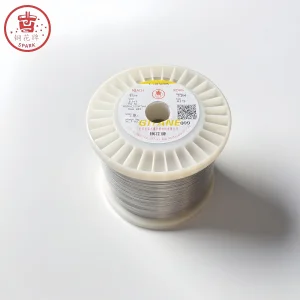
- Custom Packaging: DIN 200/250/350 plastic spools or heavy-duty wooden crates wrapped in moisture-proof vacuum packaging to endure ocean freight across the Indian Ocean.
- Competitive Wholesale Pricing: Direct factory-gate pricing with no middleman markup, supported by customized LC payment terms.
Localized Application Scenarios in Major Indian Industrial Hubs
Every industrial corridor in India exhibits unique operating environments, furnace designs, and production schedules. Our engineering team provides custom-tailored resistance alloy solutions designed to meet specific local requirements across the country.
Morbi Ceramic Kilns & Glass Tempering
The ceramic hub in Morbi requires continuous, high-efficiency heating elements capable of running up to 1250°C–1300°C for roller hearth kilns and glass annealing units.
Recommended Grade: 0Cr25Al5 or 0Cr21Al6Nb in heavy-gauge wire (4.0mm to 8.0mm) or wide cold-rolled strip, offering maximum alumina oxide scale stability and resistance to glaze chemical vapors.
Automotive Gear & Shaft Heat Treatment
Auto component manufacturers in Pune, Sanand, and Chennai run intense carburizing, nitriding, and bright annealing furnaces operating under controlled endothermic gas atmospheres.
Recommended Grade: Cr20Ni80S or Cr30Ni70 nichrome alloys. They resist carburization, prevent green rot failure, and retain ductility through continuous 24/7 batch furnace operations.
Steel Tube Annealing & Wire Annealing Lines
Steel mills and tube heat-treatment plants in Odisha, Jharkhand, and NCR demand robust furnace elements capable of rapid heat transfer and long service life under high power densities.
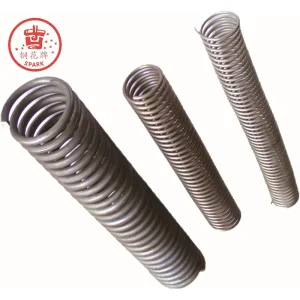
Recommended Grade: Heavy spiral elements made from 0Cr25Al5 or pre-formed wave-shaped ribbons suspended on ceramic tubes for rapid heat dissipation and easy replacement.
Engineering Guidelines: Surface Load (W/cm²) & Atmosphere Selection
An alloy’s maximum operating temperature is not a standalone metric. The true service life of a resistance heating element is governed by its surface load (watt density), furnace design, refractory selection, and operating atmosphere.
Recommended Surface Power Density (W/cm²)
Exceeding optimal watt density leads to element overheating, premature sagging, and rapid oxidation. Our technical support team assists Indian engineers in calculating precise surface load limits based on element placement:
- Uninterrupted Open-Radiant Coils: 1.8 – 2.5 W/cm²
- Embedded Ceramic Groove Elements: 1.2 – 1.8 W/cm²
- Heavy Ceramic Tube-Mounted Elements: 2.0 – 3.2 W/cm²
- Forced Air/Fan Heating Chambers: 3.5 – 5.0 W/cm²
Atmospheric Compatibility Overview
Different atmospheric gases react aggressively with heating alloys at elevated temperatures. Choosing the wrong alloy grade can dramatically shorten element life:
- Oxidizing Air: FeCrAl & NiCr perform exceptionally well.
- Nitrogen Atmosphere: NiCr preferred; FeCrAl can form brittle nitrides above 1000°C unless protected by an initial oxide layer.
- Carburizing / Carbon-Rich Gas: NiCr (specifically Cr30Ni70) provides maximum resistance to carbon absorption.
- Sulfur-Bearing Gas: FeCrAl is far superior; nickel in NiCr alloys reacts with sulfur to form low-melting-point nickel sulfide compounds.
Complete Catalogue of Resistance Wires, Tubes & Elements
Explore our complete range of heating alloys, seamless exchanger tubes, spiral elements, and specialized resistance wires available for bulk shipment to India.





B2B Procurement, Quality Testing & Indian Customs Compliance
Procuring industrial heating wire from an international factory requires clear logistics planning, quality verification, and transparent customs procedures. We provide Indian buyers with a streamlined procurement process designed to ensure hassle-free port clearance at Nhava Sheva (Mumbai), Mundra, Chennai, or Kolkata.
1. Quality Assurance & Testing
Every production batch undergoes strict internal quality inspections prior to shipment:
- Spectrometric chemical analysis (XRF & ICP)
- Cold and hot electrical resistance testing
- Tensile strength and elongation checks
- 50-Hour accelerated high-temperature life testing
2. Export Packaging & Shipping
To prevent corrosion and mechanical damage during tropical sea transit:
- Precision winding on standard DIN plastic spools
- Desiccant packets sealed inside airtight plastic wrapping
- Fumigated, heavy-duty wooden boxes reinforced with steel straps
- Custom shipping marks aligned with Indian import mandates
3. Documentation & Documentation Support
We supply complete documentation packages to simplify Indian customs clearance:
- Commercial Invoice & Packing List with accurate HS Codes (7505.22 / 7229.90)
- Certificate of Origin (COO)
- Mill Test Certificate EN 10204 3.1
- Flexible Payment Terms (T/T, Irrevocable LC at Sight)
Frequently Asked Questions (Technical B2B Guide)
Addressing key engineering and procurement inquiries from Indian industrial furnace manufacturers and distributors.
Partner with China’s Premier Heating Alloy Manufacturer
Optimize your furnace efficiency, extend element operational lifespan, and reduce raw material costs. Speak directly with our metallurgical sales engineers for custom quotes, technical drawings, and free sample testing for the Indian market.