
Featured Ni-Cr Alloys & Industrial Heating Solutions in Romania
Standard and precision-milled electrothermal alloys tested to GB/T 1234-2012 and ASTM B344, optimized for Romanian thermal treatment foundries and furnace builders.

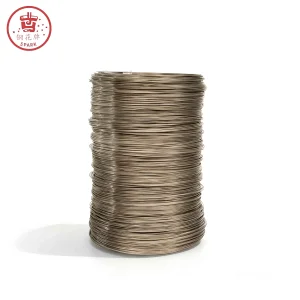
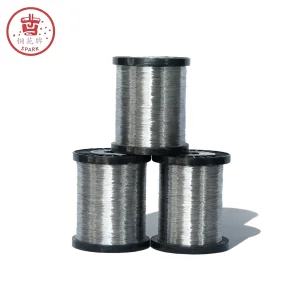
Romania's Industrial Heating Ecosystem & Demand for Premium Ni-Cr Alloys
As one of Central and Eastern Europe's primary industrial manufacturing hubs, Romania has experienced rapid modernization in automotive engineering, heavy metallurgy, petrochemical refining, and aerospace production. This evolution drives an unprecedented demand for reliable, ultra-high-temperature electric heating alloys.
Automotive Powerhouses (Mioveni & Craiova)
With major automotive production centers in Mioveni (Dacia Renault Group) and Craiova (Ford Otosan), alongside an extensive tier-1 supplier network across Timișoara, Sibiu, and Arad, continuous heat-treatment facilities depend heavily on NiCr8020 non-sag alloys. These elements power gear-carburizing, spring-tempering, and aluminum-casting furnaces operating around the clock.
Metallurgy & Heavy Forging (Galați & Hunedoara)
Romania’s historic metallurgical hubs, including steel and alloy works in Galați, Hunedoara, and Reșița, require robust resistance materials. Transitioning from gas-fired combustion to zero-emission electric arc and radiant heating demands high-density Ni-Cr and FeCrAl wire products capable of resisting cyclic thermal shock up to 1250°C.
Petrochemical & Process Refining (Ploiești Corridor)
The refinery and chemical cluster around Ploiești requires hazardous-area explosion-proof electric heating bundles, immersion heaters, and process line trace heating elements. High-grade Cr20Ni40 and Cr15Ni60 alloys provide optimum corrosion resistance and mechanical ductility under volatile thermal conditions.
Global Ni-Cr Alloys Market & Information Gain Benchmarking
Selecting the ideal high-temperature alloy requires balancing maximum furnace operating temperature, hot yield strength, oxide layer integrity, and atmosphere compatibility. Below is an engineering comparison between primary Nickel-Chromium grades and Ferritic Iron-Chromium-Aluminum (FeCrAl) alloys.
| Alloy Grade | Chemical Composition (%) | Max Temp (°C) | Resistivity (μΩ·m, 20°C) | Hot Strength at 1000°C | Oxidation Scale | Primary Industrial Application |
|---|---|---|---|---|---|---|
| Cr20Ni80 (NiCr 80/20) | Ni Balance, Cr 20.0-23.0 | 1200°C | 1.09 ± 0.05 | High (Austenitic) | Cr₂O₃ adherent layer | Automotive heat-treating, ceramic kilns, precision appliances |
| Cr30Ni70 (NiCr 70/30) | Ni Balance, Cr 28.0-31.0 | 1250°C | 1.18 ± 0.05 | Very High | Cr₂O₃ dense scale | Nitrogen-reducing atmospheres, industrial electric furnaces |
| Cr20Ni40 (NiCr 40/20) | Ni 34.0-37.0, Cr 18.0-21.0, Fe Bal | 1100°C | 1.04 ± 0.05 | Moderate | Mixed Fe-Cr Oxide | Night storage heaters, industrial defrosting, tubular heaters |
| Cr15Ni60 (NiCr 60/15) | Ni ≥ 55.0, Cr 15.0-18.0, Fe Bal | 1150°C | 1.11 ± 0.05 | Moderate-High | Cr₂O₃ scale | Domestic heating, industrial rheostats, air heaters |
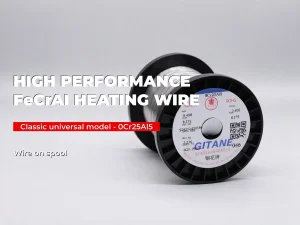
| 0Cr25Al5 (FeCrAl) | Cr 23.0-26.0, Al 4.5-6.5, Fe Bal | 1250°C | 1.42 ± 0.07 | Low (Subject to sag) | Al₂O₃ protective film | High-temperature industrial furnaces, radiant tubes |
Why Choose Ni-Cr Alloys Over FeCrAl in Continuous Operations?
While FeCrAl alloys offer higher resistivity and higher peak operating temperatures, Nickel-Chromium (Ni-Cr) alloys possess superior mechanical properties after thermal exposure. Upon cooling from operating temperature, Ni-Cr retains its ductility and does not become brittle at room temperature, allowing easy maintenance, winding, and structural repair.
Furthermore, the fully face-centered cubic (FCC) austenitic structure of NiCr8020 guarantees outstanding resistance to high-temperature creep and mechanical sag, making it ideal for vertically suspended heavy heating elements in industrial heat-treatment shafts across Romanian factories.
Oxidation Kinetics & Micro-Alloying Precision
Our SPARK series Ni-Cr wires incorporate controlled additions of reactive rare-earth micro-elements (Yttrium, Cerium, Zirconium). During initial power-up, these elements diffuse to the alloy surface, anchoring the adherent Chromium Oxide ($Cr_2O_3$) scale to the metallic base metal.
This micro-architectural bond prevents scale spallation during rapid thermal cycling (ON/OFF duty cycles), extending furnace element service life by up to 40% compared to standard commercial-grade nickel-chromium wires.
Localized Application Scenarios Across Romanian Industries
Tailored electrothermal resistance alloy supply delivered directly to specialized regional industrial hubs.
Automotive Gear Carburizing Lines
Location Focus: Argeș & Dolj Counties
Continuous pusher furnaces for automotive transmission gear carburizing demand non-magnetic Cr20Ni80 strip elements. These elements provide stable electrical resistance in carbon-rich, endothermic gas atmospheres without soot embrittlement.
Glass Annealing Lehrs & Ceramic Kilns
Location Focus: Mediaș & Cluj Clusters
Flat glass tempering and container glass annealing lehrs utilize woven wire mesh belts and coiled Cr30Ni70 heating elements. High Chromium content resists sulfur dioxide attack and volatile alkali fumes common in glass processing.
District & Industrial Thermal Storage
Location Focus: Transylvanian Urban Centers
With Romania’s drive toward renewable energy integration, large-scale electric boiler units and high-capacity thermal storage systems utilize heavy-gauge Cr20Ni40 and Cr15Ni60 rod elements for green heating conversion.
Future Outlook: Next-Generation Electrothermal Alloys
Meeting the stringent net-zero carbon directives of the European Union (EU Green Deal) requires advanced manufacturing technologies and next-generation alloy purity.
Powder Metallurgy (PM) Ni-Cr Processing
By moving from conventional vacuum induction melting (VIM) to powder metallurgy atomization and hot isostatic pressing (HIP), PM Ni-Cr alloys achieve zero segregation, ultra-fine grain boundaries, and superior resistance to high-temperature creep sag.
Zero-Carbon Direct Electric Arc Melting
Shougang Gitane is transforming primary alloy refining by incorporating green hydrogen reduction and green-powered electric arc furnaces, enabling Romanian manufacturers to reduce their Scope 3 supply chain emissions.
Smart Embedded Thermal Sensing Alloys
Developing dual-function resistance wires capable of providing localized heat while simultaneously measuring precise temperature resistance feedback (RTD effect) for Industry 4.0 closed-loop furnace controls.
Macro Industry Solutions for Romanian Wholesale & OEM Buyers
We provide complete technical support, tailored delivery formats, and flexible logisitical pathways tailored for European single-market compliance.
1. Customized Wire, Ribbon & Strip Formats
Whether your application requires fine drawn wire (down to 0.05 mm diameter) for precision electronic resistors or heavy hot-rolled ribbon (up to 6.0 mm thickness x 50 mm width) for furnace heating bands, our cold-drawing and precision rolling lines adhere strictly to tight dimensional tolerances (±0.01 mm).
Coils are delivered on standardized DIN spools or carrier-free wooden reels, vacuum-sealed with desiccant packaging to prevent maritime oxidation during transit to Constanța Port or inland rail hubs in Bucharest.
2. EU Compliance & Quality Traceability
All wholesale consignments shipped to Romania are fully compliant with EU regulations, including REACH, RoHS 2.0, and CE guidelines. Each production heat is accompanied by an EN 10204 3.1 Certified Mill Test Certificate detailing spectral chemical analysis, room temperature tensile strength, elongation, and specific electrical resistance at 20°C.
ISO 9001:2015 quality management oversees every processing stage from vacuum ingot casting to final wire drawing and bright annealing.
Frequently Asked Questions (FAQ) for Romanian Buyers
Clear, definitive technical answers addressing procurement, engineering design, logistics, and alloy performance.
Specify Cr20Ni80 if your furnace undergoes frequent thermal cycling (ON/OFF duty), requires high hot mechanical strength without sagging, operates in nitrogen-carburizing atmospheres, or requires maintenance flexibility (wire remains ductile after heating). Choose FeCrAl 0Cr25Al5 if you operate continuous high-temperature furnaces up to 1250°C in pure oxidizing atmospheres where lower raw material weight and higher electrical resistivity yield cost savings.
For large wholesale volumes, direct ocean freight ships directly to Constanța Port with typical transit times of 28–35 days. For urgent OEM replacement elements or prototype wire samples, air freight pathways directly to Henri Coandă International Airport (Bucharest) or Cluj-Napoca deliver in 5–7 business days. DAP and DDP customs clearance terms are fully supported through our regional logistics partners.
Yes. In addition to raw wire and strip coils, our manufacturing center features automatic CNC coiling machines that produce custom spiral elements, wavy ribbon elements, and ceramic-mounted heating racks engineered precisely to your electrical voltage (230V/400V 3-phase) and kilowatt rating specs.
For industrial furnaces operating between 900°C and 1150°C, recommended surface load for Cr20Ni80 wire ranges between 1.5 to 2.5 W/cm² depending on furnace thermal insulation, heating element diameter, and atmosphere circulation. Operating within these parameters prevents overheating and maximizes lifecycle performance.
Yes, all SPARK Ni-Cr alloys manufactured under Chinese GB/T 1234-2012 are chemically and electro-mechanically equivalent to ASTM B344 (UNS N06003 / N06008) and European DIN 17470 / EN 60239 standards. Full cross-reference documentation is available upon inquiry.
Wholesale Resistance Wire & Heating Alloys Catalog
Explore our full selection of high-temperature resistance materials available for direct factory distribution across Romania.

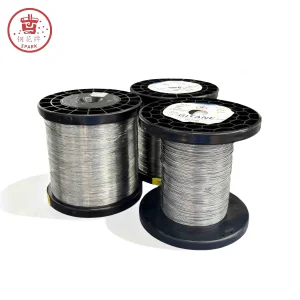


Partner with a World-Class Ni-Cr Alloy Manufacturer
Request custom factory pricelists, physical wire samples, mill test reports, or technical element calculations for your Romanian facility.
Send Inquiry Now