
Featured Industrial Heating Solutions for Brazil
High-performance electrothermal alloys engineered to meet Brazil’s heavy industry thermal requirements.


1. Brazil’s Industrial Realities: High-Temperature Alloy Demands
An in-depth assessment of thermal processing dynamics across Latin America's largest industrial economy.
Minas Gerais & Steel Sector
Iron ore pelletization, sintering plants, and direct reduced iron (DRI) processes demand high-creep resistant Fe-Cr-Al materials operating continuously above 1250°C under severe mechanical and thermal loads.
São Paulo Industrial Belt
Automotive foundries, heat-treatment shops, and glass-forming facilities in ABC Paulista require fast thermal response, oxidation resistance, and geometric stability in continuous annealing lines.
Agribusiness & Sugarcane Ethanol
Drying systems, bagasse-fired co-generation thermal loops, and specialized chemical calcination units require corrosion-tolerant, high-resistivity heating elements designed for extended lifespans.
Brazil’s industrial sector is currently undergoing a structural transformation toward energy efficiency and decarbonization. As plant operators across the states of São Paulo, Minas Gerais, Rio de Janeiro, and Rio Grande do Sul seek to optimize high-temperature electric furnaces, the choice of electrothermal materials becomes a critical vector for total cost of ownership (TCO) management.
Iron-Chromium-Aluminum (Fe-Cr-Al) alloys have progressively replaced traditional Nickel-Chromium (Ni-Cr) alloys across Brazilian industrial heating applications. The key driver behind this transition is the superior thermodynamic performance of Fe-Cr-Al alloys at elevated temperatures, coupled with a lower density that translates directly into material weight savings and reduced thermal mass.
Market Insight for Brazilian Procurement Managers: Operating industrial furnaces in Brazil involves significant electricity tariffs and logistics complexities. Utilizing high-resistivity Fe-Cr-Al alloys allows for lighter heating element designs, reducing overall power consumption by up to 15% during steady-state high-temperature operation compared to conventional Ni-Cr alternatives.
2. Metallurgical Engineering Roadmap: Fe-Cr-Al Alloys
Understanding oxidation kinetics, alumina scale formation, and micro-alloying chemistry for maximum campaign life.
The operational efficiency of Fe-Cr-Al alloys at temperatures up to 1425°C relies on the spontaneous formation of a continuous, highly adherent protective oxide layer consisting of alpha-alumina ($\alpha-Al_2O_3$). Unlike the chromia ($\text{Cr}_2\text{O}_3$) oxide film formed on Ni-Cr alloys, which tends to oxidize further into volatile $\text{CrO}_3$ at temperatures above 1100°C, the $\alpha-Al_2O_3$ layer remains thermodynamically stable, chemically inert, and electrically resistive even under extreme thermal cycles.
Key Alloy Grades & Chemical Composition Matrix
To assist Brazilian metallurgy engineers and thermal system designers in specifying the correct material, the table below outlines the chemical balance and temperature boundaries of our primary industrial-grade Fe-Cr-Al alloys:
| Alloy Grade | Chromium (Cr) % | Aluminum (Al) % | Reactive Elements | Max Working Temp | Primary Industrial Applications |
|---|---|---|---|---|---|
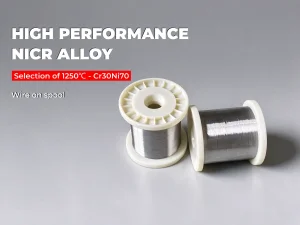
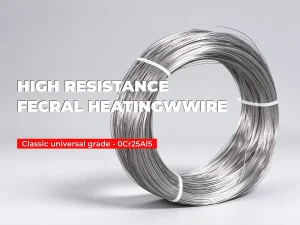
| 0Cr25Al5 | 23.0 - 26.0 | 4.5 - 5.5 | Balance Fe | 1250°C | Industrial heat treating, pottery kilns, drying equipment. |
| 0Cr21Al6Nb | 21.0 - 23.0 | 5.5 - 6.5 | Nb additions (0.5%) | 1350°C | Continuous annealing lines, ceramic sintering, heavy industry. |
| SPARK SGHYZ | 22.0 - 24.0 | 6.0 - 7.0 | Yttrium (Y) + RE | 1400°C | Diffusion furnaces, powder metallurgy, high-temp kilns. |
| SPARK SGHT | 23.0 - 25.0 | 6.8 - 7.5 | Optimized PM RE package | 1425°C | Ultra-high temp research furnaces, advanced ceramics. |
Micro-Alloying with Rare Earth Elements (RE)
Our China 4.0 production facility utilizes vacuum induction melting (VIM) followed by precise additions of reactive rare earth elements—specifically Yttrium (Y), Zirconium (Zr), and Neodymium (Nd). These reactive elements segregate to the metal-scale grain boundaries, blocking foreign ion transport, preventing oxide scale spallation during rapid thermal cycling, and dramatically enhancing sag/creep resistance at temperatures exceeding 1200°C.
3. Macro Industrial Solutions Tailored for Brazilian Sectors
Turnkey alloy selection and design customization engineered for regional operational challenges.
Heavy Metallurgy & Mining (Minas Gerais & Carajás)
In heavy steel production and mining processing plants, furnace uptime is directly correlated with revenue. We supply heavy-gauge Fe-Cr-Al strip and robust rod heating elements (up to 12mm diameter) engineered to withstand sulfur-containing gases and aggressive mechanical vibrations common in ore processing units.
Sugar & Ethanol Processing Thermal Systems
Brazil’s sugar-ethanol sector relies heavily on precise drying and roasting processes. Our custom-wound 0Cr25Al5 spiral heating wires offer high electrical resistance, avoiding voltage drop problems over long furnace distances and ensuring continuous 24/7 campaign performance during harvest peaks.
Automotive Components & Heat Treatment (São Paulo)
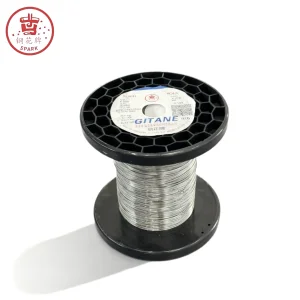
Tier-1 automotive suppliers require precise batch-to-batch repeatability during carburizing, nitriding, and tempering processes. We provide pre-oxidized, precision-spooled Fe-Cr-Al cold-drawn wire with resistance tolerances tightly held within ±3%.
Green Hydrogen & Sustainable Industrial Transition
As Brazil builds out its Green Hydrogen infrastructure in Ceará (Port of Pecém), high-efficiency electric thermal cracking units demand extreme-temperature alloys (such as SPARK SGHT) capable of operating in hydrogen-enriched or reduced oxygen atmospheres without premature degradation.
4. China Industry 4.0 Manufacturing: Supply Chain Resilience
Advanced metallurgical control, automated cold drawing, and streamlined direct shipping to Brazilian ports.
Securing high-quality electrothermal alloys requires rigorous process control at every stage of production—from raw liquid metal refinement to final spool packaging. Our Industry 4.0 production complex integrates digital quality tracking, ensuring that every master coil delivered to Santos, Paranaguá, or Rio de Janeiro carries complete physical and chemical traceability.
1. VIM + ESR Refining
Vacuum Induction Melting coupled with Electroslag Remelting minimizes non-metallic inclusions, nitrogen content, and tramp elements, ensuring maximum ductility during high-speed cold drawing.
2. Precision Wire Drawing
Multi-pass continuous drawing machines equipped with real-time laser micrometer control maintain strict dimensional tolerances across micro-thin wire (0.1mm) up to heavy industrial gauges (10.0mm).
3. Continuous Bright Annealing
In-line hydrogen atmosphere bright annealing prevents surface oxidation prior to customer fabrication, providing smooth surface finishes and uniform mechanical elongation properties.
Direct Shipping & Logistics Efficiency for Brazil: We provide specialized sea-freight packaging (vacuum-sealed anti-moisture barrier film, wooden crates compliant with ISPM 15) engineered specifically for transatlantic transit. Direct logistics corridors connect our factory directly to major Brazilian ports with standardized clearance documentation prepared to streamline Receita Federal (RFB) customs processes.
5. Brazilian Import Compliance & Engineering Best Practices
Navigating technical standards, tariff classifications (NCM), and furnace installation guidelines.
Harmonized Tariff (NCM) & Documentation
For Brazilian procurement teams, correct import classification (NCM - Nomenclatura Comum do Mercosul) is essential to optimize import duties (Imposto de Importação - II) and state circulation taxes (ICMS). Our dedicated export engineering desk provides fully compliant documentation under standard global HS Codes:
- HS Code 7223.00: Wire of stainless steel / alloy steel (including Fe-Cr-Al resistance heating wire).
- HS Code 8516.80: Electric heating resistors (assembled elements and spirals).
Design & Installation Guidelines for Fe-Cr-Al Elements in Brazil
To maximize element operational lifespan and prevent premature burn-out in humid or tropical Brazilian industrial environments, engineers should follow these fundamental rules during system design:
- Surface Load Optimization (W/cm²): Keep surface loads between 1.5 to 2.5 W/cm² for natural convection industrial furnaces, and up to 4.0 W/cm² for forced-air systems.
- Pre-Oxidation Treatment: Prior to initial production runs, heat new Fe-Cr-Al elements to 1050°C in air for 4 hours to form the primary $\alpha-Al_2O_3$ protective layer.
- Terminal Connection Integrity: Ensure terminal leads have 2x to 3x the cross-sectional area of the heating zone to keep furnace wall feed-throughs cool and prevent thermal oxidation at connection points.
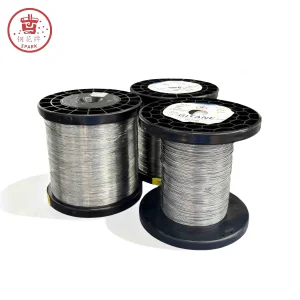
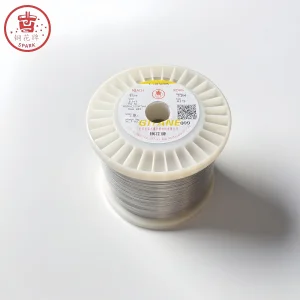
Complete Fe-Cr-Al & Heating Element Product Catalog
Explore our complete range of certified electrothermal products available for bulk wholesale export to Brazil.



6. Total Cost of Ownership (TCO) & ROI Matrix
Comparing procurement economics: Direct China Wholesale vs. European/Domestic Stockists in Brazil.
Industrial buyers in Brazil frequently face significant markups when sourcing high-temperature alloys through local intermediary stockists. By establishing a direct wholesale factory line with China’s premier alloy manufacturer, enterprise buyers unlock substantial total cost advantages while maintaining rigorous metallurgical standards.
| Evaluation Parameter | Local Intermediary Stockist in Brazil | Direct Factory Wholesale (China 4.0 Partner) | Impact on Brazilian Plant Operations |
|---|---|---|---|
| Material Procurement Cost | High (+40% to +80% markup) | Direct Factory Price | Immediate 30-40% reduction in raw material expenditure. |
| Heat-Level Traceability | Often re-batched or blended | Full Mill Test Certificate (MTC) per heat | Eliminates batch-to-batch furnace calibration failures. |
| Custom Dimensions | Limited to standard stock wire sizes | Custom wire diameter, strip, & coils | Optimizes electrical design and furnace power density. |
| Technical Support | General commercial sales | Dedicated Metallurgical Engineers | Direct assistance on surface load and lifespan modeling. |
7. Frequently Asked Questions (FAQ)
Expert metallurgical and logistics answers for engineering teams and procurement directors in Brazil.
Optimize Your Brazilian Plant Thermal Performance Today
Partner directly with China's leading Fe-Cr-Al alloy factory. Request a custom quote, technical datasheet, or metallurgical consultation for your high-temperature furnace applications.
Send Inquiry Now