
Featured Ni-Cr Resistance Alloys for Moscow Industrial Systems
Engineered for extreme thermal cycling, heavy industrial furnaces, and precise electrical resistance applications across the Moscow Region.
Moscow Regional Market Analysis for Nickel-Chromium Alloys
Understanding the shift in thermal process engineering, industrial heat-treatment demand, and supply chain restructuring across the Central Federal District of Russia.
The Moscow Industrial Cluster & High-Temperature Demand Dynamics
The Greater Moscow Region (including Moscow Oblast cities such as Elektrostal, Podolsk, Serpukhov, and Ryazan) represents the dense heart of Eastern Europe’s thermal processing, machinery manufacturing, defense metallurgy, and aerospace engineering. As heavy industries upgrade their heat-treatment infrastructure—transitioning from legacy gas-fired systems to high-precision electric resistance furnaces—the localized demand for premium Nickel-Chromium (Ni-Cr) resistance alloys has surged exponentially.
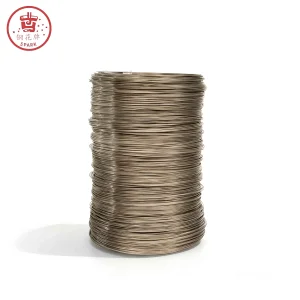
Ni-Cr alloys, particularly Cr20Ni80 (equivalent to GOST X20H80) and Cr15Ni60 (GOST X15H60), serve as the indispensable core for heavy-duty industrial furnaces, heat-treating lines for automotive components, continuous annealing furnaces, and ceramic sintering plants operating throughout Moscow's industrial zones.
Moscow Procurement Metrics at a Glance
- Primary Alloy Grades: Cr20Ni80, Cr30Ni70, Cr15Ni60
- Local Standards: GOST 12766.1-90 / EAC Certified
- Dominant Form Factors: 0.1mm-10mm Wire, Strip (0.5-3.0mm)
- Logistics Hubs: Vorsino Freight Yard / Elektrostal Hub
- Settlement Currencies: CNY (¥) / RUB (₽) Direct Settlement
Grid & Energy Stability
Moscow’s robust power grid infrastructure allows large-scale manufacturing facilities to operate high-wattage electric heating systems. Ni-Cr alloys provide stable resistance without severe cold-to-hot resistance swings, making them optimal for grid-connected operations.
Atmospheric Corrosion Resistance
Industrial applications in Moscow experience harsh seasonal ambient changes and moisture variations. Ni-Cr alloys develop a self-healing Chromium Oxide ($Cr_2O_3$) protective scale that prevents progressive internal oxidation in humid or protective gas environments.
Import Substitution Resilience
With traditional Western European brands exiting the Russian market, Moscow buyers require direct, reliable OEM factory partners capable of delivering certified high-purity Ni-Cr materials without supply chain friction or compliance delays.
Technical Roadmap: Phase Stability & High-Temp Performance
Comparative engineering analysis of Nickel-Chromium (Ni-Cr) versus Iron-Chromium-Aluminium (FeCrAl) alloys under continuous thermal stress and cyclic fatigue.
The Metallurgy of Ni-Cr Alloys (Cr20Ni80 & Cr30Ni70)
Nickel-Chromium alloys feature a face-centered cubic (FCC) austenitic crystal structure. This microstructural configuration grants Ni-Cr exceptional mechanical ductility at elevated operating temperatures (up to 1250°C), eliminating the embrittlement issues common in body-centered cubic (BCC) FeCrAl alloys after cooling.
- Hot Strength & Creep Resistance: Maintains structural rigidity; will not sag or deform under heavy element loads in vertical/horizontal kilns.
- Non-Magnetic Properties: Fully non-magnetic in fully annealed states, essential for precision electronic instrumentation and induction-shielded furnace designs.
- Cyclic Reliability: Superior oxide layer adhesion during rapid thermal cycling (on/off heating profiles), preventing oxide spalling and short circuits.
Ni-Cr vs. FeCrAl Engineering Selection Matrix
While FeCrAl alloys (e.g., 0Cr25Al5, HRE) offer higher peak temperatures (up to 1425°C), Ni-Cr remains the material of choice for industrial machinery builders in Moscow due to its superior mechanical reworkability and atmospheric tolerance.
- Nitrogen Atmospheres: Ni-Cr resists nitriding far better than FeCrAl in ammonia-dissociated or nitrogen-flushed heat-treat furnaces.
- Repairability: Used Ni-Cr elements can be re-bent, welded, and serviced during maintenance shutdowns, whereas used FeCrAl becomes brittle and snaps.
- Contact Resistance: Lower surface contact electrical resistance simplifies terminal connections and reduces heat generation at ceramic bushings.
| Alloy Grade | GOST / EN Equiv. | Nominal Chemical Comp. (%) | Max Temp (°C) | Resistivity at 20°C (μΩ·m) | Density (g/cm³) | Tensile Strength (MPa) |
|---|---|---|---|---|---|---|
| Cr20Ni80 (SPARK) | X20H80 / NiCr 80 20 | Ni 78.0-80.0, Cr 20.0-23.0 | 1200°C | 1.09 ± 0.05 | 8.40 | 750 - 950 |
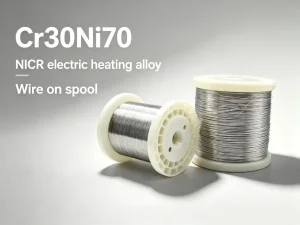
| Cr30Ni70 (SPARK) | X30H70 / NiCr 70 30 | Ni 67.0-71.0, Cr 28.0-31.0 | 1250°C | 1.18 ± 0.05 | 8.10 | 780 - 980 |
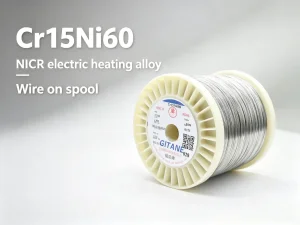
| Cr15Ni60 (SPARK) | X15H60 / NiCr 60 15 | Ni 55.0-61.0, Cr 15.0-18.0, Fe Bal. | 1150°C | 1.12 ± 0.05 | 8.20 | 680 - 880 |
| Cr20Ni35 (SPARK) | X20H35 / NiCr 35 20 | Ni 34.0-37.0, Cr 18.0-21.0, Fe Bal. | 1050°C | 1.04 ± 0.05 | 7.90 | 620 - 820 |
Macro Industry Applications Across Moscow & CIS Regions
From heavy machinery thermal processing to high-end laboratory furnaces, SPARK Ni-Cr alloys provide verified technical advantages.
Industrial Heat-Treating Lines
Over 120 heavy industrial plants in the Moscow Oblast employ SPARK Cr20Ni80 strip and heavy-gauge wire for carburizing, hardening, and tempering automotive gears and structural steel. Outstanding resistance to carbon pickup reduces element degradation in endothermic gas atmospheres.
Glass Tempering & Bending Kilns
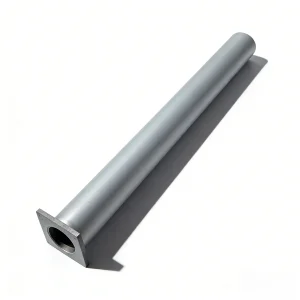
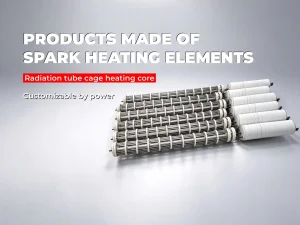
Moscow’s rapid architectural expansion demands high-performance glass processing. SPARK custom ceramic radiant tube heating cores utilizing Cr30Ni70 alloy deliver uniform radiation heat flux across large glass sheets, avoiding thermal stress fractures.
Precision Laboratory & Medical Equipment
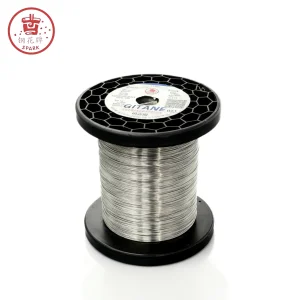
For scientific research institutes in Moscow and Skolkovo Innovation Center, micro-diameter Ni-Cr wire (0.05mm to 0.5mm) provides exact electrical resistance for tubular furnaces, thermal analysis instruments, and high-purity sterilisers.
Localization Support, GOST Compliance & Supply Chain Resilience
Seamless trade integration between China and the Russian Federation with transparent documentation, customs clearing, and local technical standards alignment.
GOST 12766 Standards Alignment
Engineering teams in Moscow require strict adherence to national metallurgical standards. Shougang Gitane’s SPARK alloy manufacturing lines undergo double-check quality inspections to guarantee chemical composition and cold-resistance compliance matching GOST 12766.1-90, GOST 12766.2-90, and international ASTM B344 standards.
Quality Documentation Included: 3.1 Mill Test Certificate (MTC), Chemical Spectrometry Analysis, Resistance per Meter Verification Report, EAC Declaration of Conformity support.
Streamlined Moscow Logistics Corridors
Eliminating geopolitical supply bottlenecks, our strategic export logistics utilize direct rail transport (China-Europe / China-Russia Railway Express) via Manzhouli/Zabaykalsk directly to key Moscow freight nodes like Moscow-Kuntsevo, Vorsino, and Silikatnaya.
- Lead Times: 12–16 days railway freight transit time to Moscow.
- Packaging: Seaworthy/Rail-safe vacuum-sealed wooden crates with anti-corrosion desiccant wraps to prevent humidity oxidation.
- Customs Clarity: Dedicated HS Code cataloging (HS 750522 for Nickel-Alloy Wire) simplifying Eurasian Economic Union (EAC) customs clearance.
China Industry 4.0 Infrastructure: Beijing Shougang Gitane
Over six decades of state-of-the-art alloy smelting, high-precision drawing, and intelligent quality control backed by the prestigious Shougang Group.
Vacuum Smelting (VIM)
Electromagnetic induction melting in ultra-high vacuum ensures gas content (O, N, H) is kept to absolute PPM levels, preventing internal micro-cracks.
Precision Electroslag (ESR)
Secondary refining eliminates non-metallic inclusions, yielding ultra-pure ingots with uniform element distribution from core to surface.
Continuous Micro-Drawing
Automated diamond-die wire drawing machines produce ultra-fine wire diameters down to 0.02mm with tolerances within ±0.001mm.
Hydrogen Bright Annealing
In-line continuous hydrogen atmosphere annealing guarantees oxide-free, golden, bright finished surfaces with uniform mechanical elongation.
Moscow Pricelist Determinants & Cost Optimization Guide
Understanding how London Metal Exchange (LME) Nickel benchmarks, dimensional processing, and alloy purity dictate your total cost of ownership (TCO).
Key Factors Influencing Ni-Cr Alloy Pricing
When evaluating pricelists for Ni-Cr alloys in Moscow, procurement managers must analyze more than just the baseline price per kilogram. Key cost drivers include:
- LME Nickel & Chromium Spot Price: Since Nickel comprises 55% to 80% of Ni-Cr alloys, raw material cost fluctuates directly with LME global indices. Transparent pricing uses formula-based indexing.
- Wire Diameter & Strip Thickness: Fine wires (<0.5mm) require multiple cold-drawing passes and diamond die wear, yielding higher processing fees per kg compared to heavy gauge rod (5mm-10mm).
- Surface Finish & Annealing State: Oxidized green/black finish is lower cost; bright-annealed golden/silver finish commands a slight premium for immediate winding readiness.
- Volume Tier Discounting: Standard factory orders over 1,000 kg unlock substantial tier-1 OEM pricing structures.
Requesting a Custom Moscow Pricelist
Due to raw metal market volatility and customized specifications (diameter, resistance tolerance, coil weight), we issue formal FOB/CIF Moscow quotes tailored to your exact bill of materials.
Fast response time within 24 hours from dedicated engineering sales staff.
Answers for Moscow Engineering & Procurement Teams
Addressing technical, logistical, and commercial inquiries regarding SPARK Ni-Cr alloys.
Industrial Heating Wire, Furnaces & Element Assemblies
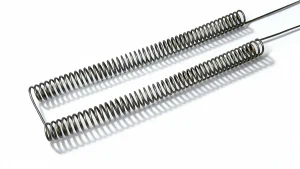
Explore our complete range of specialized resistance alloys, high-temperature FeCrAl grades, and pre-fabricated furnace elements available for Moscow shipment.



Ready to Upgrade Your Moscow Thermal Processing Infrastructure?
Contact our senior metallurgical engineering team today to receive a detailed technical consultation, GOST cross-reference analysis, and custom factory pricelist tailored to your operational requirements.
Send Inquiry Now