
Featured Industrial Heating Elements for UK OEMs
Direct factory-engineered thermal components designed for high-density duty cycles, precision thermal uniformity, and exceptional creep resistance across UK industrial facilities.
The United Kingdom Industrial Heating Transition: Decarbonisation, Net Zero & Electrothermal Engineering
The UK industrial landscape is undergoing a systemic transformation driven by the UK Government’s binding Net Zero 2050 framework and the Industrial Decarbonisation Strategy. Historically reliant on natural gas for process heating, British manufacturers—ranging from Sheffield’s high-grade alloy forge houses to Staffordshire’s advanced ceramics cluster and West Midlands aerospace specialists—are aggressively electrifying their high-temperature thermal processing systems.
However, transitioning from combustion to electric resistance heating presents severe technical and financial imperatives. Electricity costs in the UK consistently command a premium relative to gas. Consequently, British plant engineers, furnace OEMs, and thermal maintenance managers cannot afford thermal inefficiency, premature oxide scale spallation, or unexpected element burnout. Thermal efficiency must exceed 98%, and heating element operational lifespans must be extended through advanced alloy metallurgy.
As an established metallurgical master supplier and direct factory manufacturer serving the United Kingdom, SPARK (Beijing Shougang Gitane New Materials Co., Ltd.) provides British industry with superior Iron-Chromium-Aluminium (FeCrAl) and Nickel-Chromium (NiCr) resistance alloys. Utilizing vacuum induction melting (VIM), continuous hot-rolling, and proprietary powder metallurgy (PM) techniques, SPARK delivers custom electrical heating wires, heavy-ribbon elements, bundle rods, and radiant tubes that withstand temperatures up to 1425°C while minimizing total cost of ownership (TCO).
Engineered for Thermal Rigour: FeCrAl vs. NiCr Alloys
Selecting the optimal electrothermal resistance material requires balancing maximum operating temperature, specific electrical resistivity, density, and hot strength across operational atmospheres.
| Alloy Grade & Designation | Alloy Family | Max. Element Temp (°C) | Electrical Resistivity @ 20°C (μΩ·m) | Density (g/cm³) | Primary Scale Formation | Best UK Industry Application |
|---|---|---|---|---|---|---|
| SPARK SGHT (Powder Met) | Advanced FeCrAl | 1425°C | 1.45 | 7.10 | α-Al₂O₃ (Adherent Alumina) | High-temp ceramic sintering, semiconductor diffusion |
| SPARK SGHYZ | RE-Modified FeCrAl | 1400°C | 1.42 | 7.15 | α-Al₂O₃ + Y/Zr Oxide Interlock | Heavy industrial forging, continuous heat treatment |
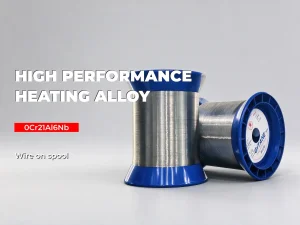
| SPARK HRE / 0Cr21Al6Nb | Nb-Doped FeCrAl | 1350°C | 1.40 | 7.20 | α-Al₂O₃ Protective Scale | Powder metallurgy kilns, radiant heating tubes |
| 0Cr25Al5 / 0Cr23Al5 | Standard FeCrAl | 1250°C | 1.35 – 1.42 | 7.25 | Aluminium Oxide | Industrial batch ovens, commercial heat treatment |
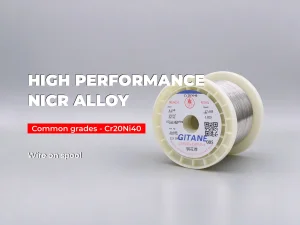
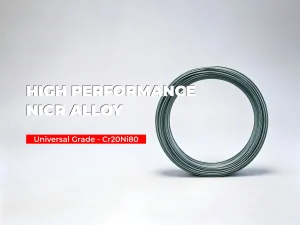
| Cr20Ni80 (80/20 Nichrome) | Ni-Cr Alloy | 1200°C | 1.09 | 8.40 | Cr₂O₃ (Chromium Oxide) | Cyclic heating, plastic extrusion, medical, aerospace |
| Cr30Ni70 | High-Ni Alloy | 1250°C | 1.18 | 8.10 | Cr₂O₃ Protective Film | Controlled atmosphere furnaces, nitriding lines |
Global Electrothermal Trends & Next-Generation Heating Technology
Understanding the technical shift in high-temperature resistance materials to optimize performance, prevent oxidation decay, and ensure compliance with UK safety and efficiency standards.
1. Powder Metallurgy (PM) Dispersion Strengthening
Traditional cast and wrought FeCrAl alloys suffer from rapid grain coarsening and thermal sag above 1300°C. SPARK’s SGHT grade employs advanced powder metallurgy with Reactive Element (RE) additions such as Yttrium (Y), Zirconium (Zr), and Hafnium (Hf). This produces fine-grained dispersion-strengthened alloys with unparalleled resistance to high-temperature creep and distortion in vertical radiant tubes.
2. Smart Ceramic Core & Bundle Rod Systems
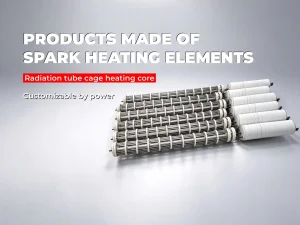
To replace inefficient gas burners in UK manufacturing plants without completely rebuilding furnace shells, SPARK supplies Ceramic Bundle Rod Radiant Tube Cores. Operating up to 1350°C, these modular units concentrate maximum wattage inside high-alloy radiant tubes, preventing atmospheric contamination while delivering high power density (W/cm²).
3. Dynamic Alpha-Alumina Oxide Scale Kinetic Control
When FeCrAl is heated in air, aluminium diffuses to the surface, forming a self-healing, non-conductive, highly protective α-Al₂O₃ (Alpha-Alumina) layer. SPARK’s optimized chemical composition ensures exceptional scale adhesion during rapid thermal cycling, eliminating spallation and short-circuiting against ceramic supports.
Tailored Heating Solutions for Key UK Industrial Sectors
From aerospace forging in the Midlands to technical ceramics in Staffordshire, SPARK engineered elements power critical manufacturing operations across Britain.
Aerospace & Specialty Metallurgy (Sheffield & West Midlands)
In heat-treating nickel superalloys and titanium components for UK aerospace OEMs (e.g., Rolls-Royce supply chains), vacuum and controlled-atmosphere furnaces require non-contaminating, stable heating ribbons.
Recommended Solution: SPARK Cr20Ni80 & Cr30Ni70 Heavy Strip Heaters
Advanced Ceramics & Glass Kilns (Staffordshire & North West)
Firing technical ceramics, refractories, and container glass demands continuous exposure to temperatures between 1250°C and 1400°C in oxidizing environments.
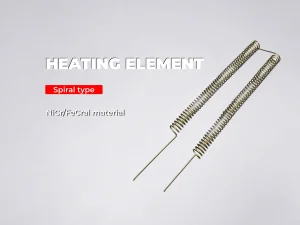
Recommended Solution: SPARK SGHT & SGHYZ Ultra-High Temp FeCrAl Element Coils
Chemical Processing & Fluid Heating (Teesside & Humber)
Process fluid preheating, catalyst regeneration, and hydrogen synthesis reactors require heavy-wall tubular heating elements and robust immersion bundles engineered to stringent UK safety standards.
Recommended Solution: SPARK Incoloy/FeCrAl Sheathed Industrial Tubular Heaters
Gas-to-Electric Furnace Retrofitting Blueprint for UK Operations
A structured technical methodology for converting gas-fired industrial furnaces to high-efficiency electric resistance heating systems.
Thermal Balance & Surface Load (Watt Density) Calculation
Calculating exact surface load ($W/cm^2$) based on operating temperature, element diameter, and furnace atmosphere. Overloading leads to localized overheating and rapid oxide breakdown; underloading increases total capital cost. SPARK engineers assist UK clients with precise thermal load modeling.
Radiant Tube & Ceramic Support Selection
Replacing gas burners with high-density ceramic bundle rods housed inside silicon carbide (SiC) or refractory alloy radiant tubes. This eliminates combustion byproducts, improves heat transfer coefficient, and allows operation under endothermic, exothermic, or vacuum atmospheres.
Thyristor / SCR Power Control Integration
Electric resistance alloys require smooth, fast-cycle power control. Utilizing Silicon Controlled Rectifiers (SCR) with phase-angle or zero-cross firing prevents thermal shock in FeCrAl/NiCr alloys, extending element lifespan by up to 300% compared to traditional contactor switching.
Electric Heating Wires, Strips & Alloys for UK Distributors & Factories
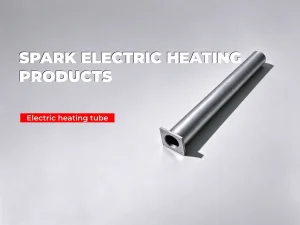
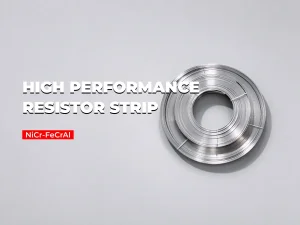
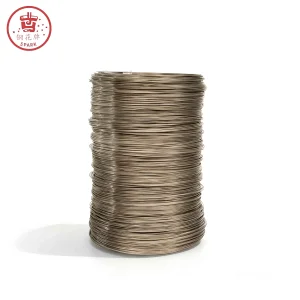
Ex-factory supply of premium grade electric heating alloys available in round wire, flat ribbon, coiled spirals, and custom fabricated furnace elements.




Frequently Asked Engineering Questions (UK Technical FAQ)
Detailed answers to direct technical inquiries regarding compliance, alloy selection, surface loading, and logistics for UK buyers.
How do SPARK heating alloys comply with UK and European standards (UKCA / CE / BS EN)?
SPARK electric resistance alloys are manufactured under strict ISO 9001:2015 quality control and fully comply with standard GB/T 1234-2012, which aligns with international standards including ASTM B603, DIN 17470, and BS EN 60519 (Safety in electroheating installations). Chemical compositions and electrical resistivity parameters are verified via mill test certificates (MTC) supplied with every order, ensuring smooth integration into UKCA and CE marked industrial furnace assemblies.
When should a UK manufacturer choose FeCrAl over NiCr resistance wire?
FeCrAl (e.g., SPARK SGHT, SGHYZ, 0Cr25Al5) is the superior choice when working at temperatures above 1150°C up to 1425°C, or when energy cost reduction is paramount. FeCrAl has a higher electrical resistivity (approx. 1.45 μΩ·m vs 1.09 μΩ·m) and lower density (7.10 g/cm³ vs 8.40 g/cm³), requiring roughly 20-30% less raw material weight per kilowatt output. NiCr (e.g., Cr20Ni80) is preferred for applications below 1200°C subject to frequent thermal cycling, rapid heating, or where post-use ductility and high mechanical hot strength are mandatory.
How does furnace atmosphere affect the operational life of FeCrAl elements?
FeCrAl alloys rely on a dense, protective Alpha-Alumina (α-Al₂O₃) surface oxide scale, which forms best in air or oxidizing environments. In carburizing, reducing, or humid atmospheres, protective oxide growth can be compromised. For carburizing atmospheres, pre-oxidizing elements in dry air at 1050°C-1100°C for 8 hours creates a protective barrier. Alternatively, using SPARK Ceramic Bundle Rod Radiant Tubes isolates the heating element completely from aggressive furnace gases.
What are the lead times and shipping options from SPARK to United Kingdom industrial ports?
SPARK maintains extensive inventories of standard wire gauges (0.1mm to 12mm) and cold-rolled strips. Standard stock orders ship within 5-7 business days. Custom pre-formed spiral elements, ceramic bundle rods, or non-standard alloys are manufactured within 14-21 days. We offer direct sea freight to London Gateway, Felixstowe, and Southampton, as well as expedited air freight to London Heathrow (LHR), Birmingham (BHX), or Manchester (MAN) for urgent plant maintenance requirements.
Can SPARK custom-engineer heating elements based on CAD drawings or worn-out samples?
Yes. Our in-house engineering team (accounting for over 30% of our staff) routinely reviews CAD technical drawings, schematic dimensions, or physical samples provided by UK OEMs and maintenance teams. We can re-calculate resistance values, wire pitch, outer coil diameters, and cold terminal specifications to optimize element life and operational efficiency.
Upgrade Your UK Thermal Processing Efficiency Today
Whether you require bulk precision resistance wire, custom heavy-ribbon heating elements, or complete radiant bundle rod systems, our engineers are ready to support your UK project.