
Featured Alloy Delivery Formats for Nagoya Assembly Lines
Direct export configurations compliant with JIS C2520 standards, optimized for automated furnace coilers and precision industrial heat treatments.



1. Technical Executive Summary: Sourcing Delivery Forms for Nagoya’s High-Precision Ecosystem
The Chubu region, centered around Nagoya (Aichi Prefecture), represents the undisputed heartland of Japanese advanced manufacturing. From automotive powerhouses in Toyota City to aerospace clusters near Centrair and world-leading fine ceramic manufacturers in Seto and Tajimi, Nagoya’s thermal processing demands are exceptionally stringent. Electric resistance heating materials—specifically Iron-Chromium-Aluminum (FeCrAl) and Nickel-Chromium (NiCr) alloys—serve as the foundational heating architecture for atmosphere furnaces, vacuum carburizing lines, ceramic firing kilns, and semiconductor processing equipment across the region.
When procurement executives and metallurgical engineers in Nagoya search for "China DELIVERY FORM Suppliers & Factories", their technical intent extends far beyond basic bulk alloy purchasing. What they critically evaluate is the delivery form integrity—the dimensional tolerance of wire spools, coil winding tension, ribbon flatness, surface brightness, and anti-oxidation packaging that prevents micro-abrasions during transit across the East China Sea. A failure in the physical delivery form (such as uneven spooling or micro-scale surface contamination) causes catastrophic feed jams in automated CNC coiling machines used by Japanese furnace element builders.
This whitepaper details how tier-1 Chinese electrothermal alloy manufacturers deliver fully localized, JIS-compliant, and ISO-certified heating alloy delivery forms, bridging Chinese metallurgical supply chain efficiency with Nagoya’s zero-defect manufacturing standard.
JIS C2520 Compliance
Full alignment with Japanese Industrial Standards for electrical resistance wires and ribbons, ensuring seamless substitution for domestic Japanese brands.
Precision Spooling Technology
Dynamic tension-controlled spooling (DIN 100 to DIN 250) guaranteeing zero tangling during ultra-high-speed automated spiral winding in Nagoya workshops.
Direct Port-to-Port Logistics
Consolidated maritime shipping from Shanghai/Ningbo directly to the Port of Nagoya within 3 to 5 days, backed by vacuum-sealed marine protection packaging.
2. Engineering Analysis: Electrothermal Alloy Delivery Forms & Technical Specs
The performance of an electric heating element is determined as much by its mechanical delivery form as by its chemical composition. Chinese metallurgical state-of-the-art facilities, backed by 60+ years of Shougang Gitane heritage, supply heating alloys in four core industrial delivery formats tailored for Nagoya factories:
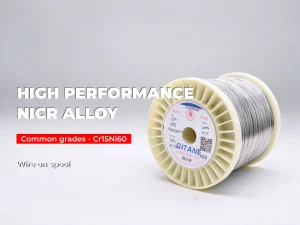
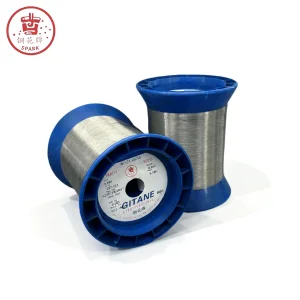
A. Fine Wire on Precision Spools (Ø 0.05mm – 1.0mm)
Designed for micro-heating elements, medical devices, and precision resistors. Supplied on ABS spools (DIN 100, DIN 125, DIN 160, HK80) with continuous bright hydrogen annealing, free of surface oxides, oil, or mechanical scratches.
B. Heavy Gauge Wire in Coils (Ø 1.0mm – 10.0mm)
Formulated for industrial furnace builders constructing heavy-duty radiant tube elements or ceramic fiber module heating arrays. Coils are strapped with protective film and packaged in fumigated wooden cases to prevent sea-fog corrosion.
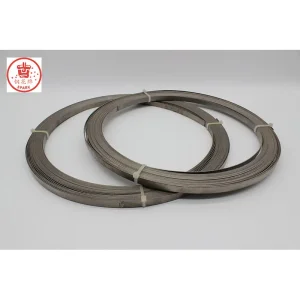
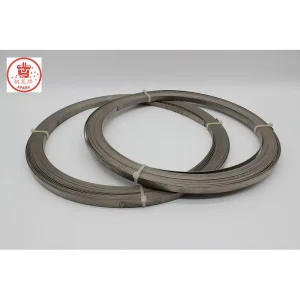
C. Cold-Rolled Strip & Flat Ribbon (Thickness 0.1mm–4.0mm)
Rolled with high-precision 20-high cold rolling mills ensuring uniform thickness tolerances within ±0.005mm. Ideal for wave-shaped heating ribbons used in high-power heat treatment furnaces across Toyota City's supplier tiers.
D. Pre-Formed Ready-to-Install Spirals & Meanders
Directly manufactured according to OEM furnace blueprints. Delivered with customized tail connections, precise pitch-to-diameter ratios, and pre-oxidized protective scale layer ($Al_2O_3$ or $Cr_2O_3$) for immediate integration.
China Supply Chain Integration for Greater Nagoya Industry
Combining primary smelting capabilities, rare-earth metallurgy, and scale economies with agile local engineering support for Aichi Prefecture.
Aichi Industrial Scenarios & Alloy Grade Matching Matrix
Nagoya’s industrial infrastructure spans multiple specialized zones, each requiring distinct alloy chemical formulations and physical delivery forms:
| Nagoya Industry Hub | Application Machine / Process | Recommended Alloy Grade | Optimal Delivery Form |
|---|---|---|---|
| Toyota City Automotive Zone | Continuous Gas Carburizing & Gear Annealing Furnaces | 0Cr25Al5 / SGHYZ | Heavy Coils (Ø 3.0-6.0mm) & Wave Strips |
| Seto & Tajimi Fine Ceramic Valley | Ultra-High Temperature Sintering Kilns (1350°C - 1400°C) | SGHT / HRE | Pre-formed Heavy Spirals & Thick Rod Elements |
| Yokkaichi-Nagoya Semiconductor Corridor | Diffusion Furnaces & Silicon Wafer Annealing | Cr20Ni80 / Cr30Ni70 | Bright Annealed Wire Spools & Thin Strips |
| Centrair Aerospace Cluster | Titanium Heat Treatment & Composite Curing Autoclaves | 0Cr21Al6Nb / Cr15Ni60 | Precision Ribbons & Calibrated Wire Spools |
3. Quality Control Standards & Marine Transit Protection for Japan Import
Importing electrothermal alloys into Japan requires absolute reliability. Our manufacturing facilities enforce a multi-stage quality control protocol that aligns perfectly with Japanese incoming inspection requirements:
1. Spectrographic Heat Traceability
Every delivery lot includes a certified Mill Test Certificate (MTC) detailing exact chemical composition (Cr, Al, Ni, Fe, and micro-alloyed Rare Earth elements Y/Zr/Ce) analyzed via Optical Emission Spectroscopy.
2. Resistance & Tolerance Auditing
100% resistance testing per meter ($\Omega/m$) at 20°C ambient temperature. Dimensional accuracy checked using continuous laser micrometers, ensuring strict tolerance compliance within ±0.01mm for standard wires.
3. Anti-Corrosion Seaworthy Packaging
Delivery forms destined for Nagoya Port undergo dual-layer vacuum sealing with activated desiccant packs, wrapped in VCI (Vapor Corrosion Inhibitor) plastic and crated in heavy ISPM-15 compliant wooden cases.
Frequently Asked Questions (FAQ) for Nagoya Procurement Engineers
Comprehensive technical and logistical answers regarding China-to-Nagoya alloy delivery formats, tariffs, and technical specifications.
How fast can delivery forms (spools/coils) be shipped from China to Nagoya?
For standard stock wire gauges (e.g., 0Cr25Al5, Cr20Ni80 in 1.0mm–3.0mm), orders ship within 3–5 business days. Direct maritime shipping from Ningbo/Shanghai to the Port of Nagoya takes 3 days. Air freight via Centrair (Chubu Centrair International Airport) delivers within 24–48 hours for urgent line-down emergencies.
Can Chinese FeCrAl and NiCr delivery forms directly replace Japanese domestic alloy brands?
Yes. Chinese grades like 0Cr25Al5, SGHYZ, and Cr20Ni80 fully match or exceed the physical, electrical, and thermal parameters of Japanese equivalents specified under JIS C2520. Our engineering team provides cross-reference chemical and electrical resistance tables for instant validation.
What spool sizes and winding options are available for automated coiling machines in Nagoya?
We supply fine and medium wires on standard plastic spools including DIN 100, DIN 125, DIN 160, DIN 200, DIN 250, as well as HK80 spools. Winding is executed with computerized constant-tension traverse systems to prevent wire overlaps or tension spikes during high-speed automated element coiling.
What documentation is provided to satisfy Japan Customs and quality auditors?
Every shipment is accompanied by a full export documentation set: EN 10204 3.1 Mill Test Certificate, ISO 9001:2015 audit certificate, RoHS and REACH environmental compliance declarations, Certificate of Origin (for RCEP tariff preferences), and ISPM-15 wooden packaging fumigation records.
How do rare-earth elements (RE) in SGHYZ / SGHT alloys improve furnace life in ceramic kilns?
Addition of reactive rare-earth micro-elements (such as Yttrium, Zirconium, and Cerium) enhances the adhesion of the protective Alpha-Alumina ($Al_2O_3$) oxide scale on the alloy surface. This prevents scale spallation during continuous thermal cycling up to 1400°C, extending element lifespan by 30% to 50% in industrial ceramic kilns.
Complete Catalog: Industrial Electrothermal Alloy Products & Delivery Forms
Explore our full range of certified resistance wires, heating ribbons, bright spools, and custom heating elements exported directly to Nagoya industrial clients.


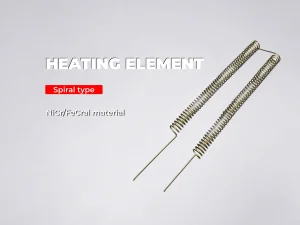
High-Performance FeCrAl & NiCr Spiral Heating Elements for Nagoya Heat Treating
Request Wholesale Price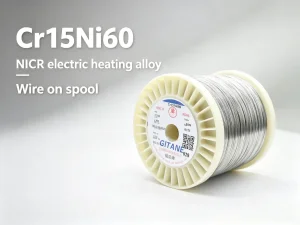
Partner with China’s Premier Electrothermal Alloy Delivery Form Factory
Optimize your thermal processing lines in Nagoya with direct factory pricing, zero-defect packaging, and JIS-compliant resistance alloys.
Send Inquiry Now