
Empowering Greater Boston’s High-Tech Sector with Next-Generation Amorphous & Nanocrystalline Alloys
The global demand for high-efficiency electromagnetic components and extreme-temperature structural alloys has triggered a paradigm shift in material science. As Greater Boston solidifies its stance as the premier global nexus for medical technology, defense systems, robotics, and clean energy innovation along the Route 128 and Cambridge tech corridors, the need for advanced core materials featuring ultra-low core loss, high magnetic permeability, and severe thermal stability has never been more urgent.
Amorphous metals (metallic glasses)—characterized by their non-crystalline, disordered atomic topology achieved via rapid melt-spinning solidification at cooling rates exceeding 1,000,000°C per second—represent the pinnacle of soft magnetic and high-performance electrothermal efficiency. As an industry-leading China Amorphous Products Manufacturer working in direct alignment with research hubs, engineering consultancies, and OEM manufacturers in Boston, MA, our enterprise delivers tailored metallic glass ribbons, high-saturation nanocrystalline cores, and precision industrial resistance alloy wires designed to transcend conventional metallurgical limits.
High-Accuracy Metrology & Industrial Alloy Core Components for Boston OEMs
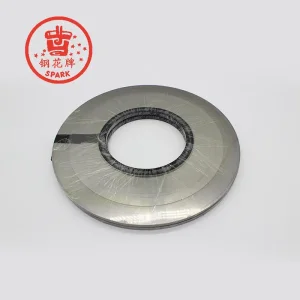
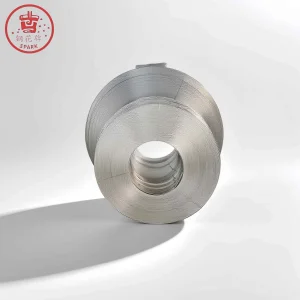
Explore our core offerings engineered to power analytical laborataries, vacuum heat treatment furnaces, and specialized magnetic core processes across Massachusetts.
The Greater Boston Ecosystem & Chinese Manufacturing Strength
Boston, Massachusetts stands at the epicentre of global scientific innovation. Home to prestigious institutions like MIT and Harvard, along with cutting-edge defense contractors, biotech pioneers, and renewable energy startups, the region demands high-purity functional materials that operate flawlessly under stress. However, scaling the manufacturing of advanced amorphous soft magnetic ribbons and specialized resistance wires requires immense capital intensity, specialized rapid solidification casting infrastructure, and rigorous metallurgical process controls.
Boston R&D & Precision Demand
Boston’s tech sector focuses heavily on high-frequency power electronics (Gallium Nitride & Silicon Carbide inverters), medical isolation transformers, advanced robotics servo-actuation, and localized green power distribution. These applications require magnetic cores with exceptionally low hysteresis and eddy current losses.
Chinese Production Scale & Metallurgy
As a leading Chinese metallurgical manufacturer, our facilities feature continuous double-roller melt-spinning machinery, precise hydrogen atmosphere annealing furnaces, and automated web inspection systems. We bridges the gap between high-volume production economics and stringent western engineering standards.
Resilient Supply Chain Architecture
By establishing direct B2B channels with OEMs, panel builders, and magnetic core winders in Massachusetts, we provide stable inventory management, rapid prototyping cycles, custom slit ribbon widths (down to 2mm), and fully certified chemical/magnetic test reports for every batch.
Technical Roadmap: Amorphous Alloys vs. Traditional Soft Magnetic Materials
Understanding the physics behind amorphous and nanocrystalline products is critical for electrical design engineers in Boston seeking to maximize power density while minimizing thermal dissipation. Traditional grain-oriented silicon steel (Fe-Si) and soft ferrites present fundamental physical limits at high frequencies. Silicon steel exhibits extreme eddy current dissipation above 1 kHz due to its thick sheet geometry (~0.23mm–0.35mm), while soft ferrites suffer from low saturation induction ($B_s \approx 0.4-0.5\text{ T}$), rendering them bulky for high-power systems.
Amorphous Fe-based alloys ($Fe-Si-B$ system) and Nanocrystalline $Fe-Cu-Nb-Si-B$ alloys bypass grain boundary pinning forces entirely. Because these materials lack a crystalline lattice structure, magnetocrystalline anisotropy drops virtually to zero, resulting in ultra-low coercive force ($H_c$) and remarkable magnetic permeability.
| Material Property | Iron-Based Amorphous Ribbon | Nanocrystalline Alloy | Grain-Oriented Silicon Steel | Mn-Zn Soft Ferrite |
|---|---|---|---|---|
| Saturation Flux Density ($B_s$) | 1.56 Tesla | 1.25 - 1.35 Tesla | 2.03 Tesla | 0.45 Tesla |
| Initial Permeability ($\mu_i$) | > 10,000 | > 80,000 - 150,000 | 1,500 | 2,000 - 10,000 |
| Ribbon Thickness | 22 - 25 μm | 14 - 18 μm | 230 - 300 μm | N/A (Bulk Ceramic) |
| Core Loss ($P_{1.0\text{T}/20\text{kHz}}$) | ~ 25 W/kg | ~ 6 W/kg | > 180 W/kg (Overheats) | ~ 35 W/kg (@ 0.2T) |
| Curie Temperature ($T_c$) | 412°C | 570°C | 740°C | 210°C |
| Electrical Resistivity ($\rho$) | 130 μΩ·cm | 115 μΩ·cm | 45 μΩ·cm | $10^6$ μΩ·cm |
Thermal Processing & Custom Magnetic Field Annealing
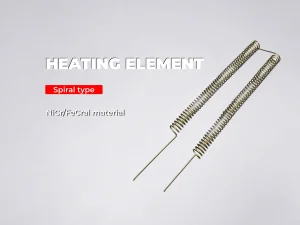
To achieve tailored hysteresis loops (e.g., flat loops with low remanence for common-mode chokes, or rectangular loops with high squareness for saturable reactors), our state-of-the-art Chinese manufacturing plant employs transverse and longitudinal magnetic field annealing during the thermal crystallization phase. Controlled heating profiles utilizing premium FeCrAl/NiCr heating elements ensure temperature uniformity within ±1°C across the entire vacuum chamber, preventing premature grain growth while maintaining the critical sub-20nm grain structure of nanocrystalline matrixes.
Macro-Industry Solutions for Emerging Boston Technologies
Next-Gen Grid & Clean Energy Inverters
Massachusetts' drive toward offshore wind generation (e.g., Vineyard Wind initiatives) and grid modernization requires distribution transformers with minimal no-load losses. Iron-based amorphous alloy cores reduce transformer no-load power dissipation by up to 70–80% compared to traditional silicon steel, drastically reducing carbon emissions across municipal power grids.
Medical Equipment & Bio-Robotics
Greater Boston is the undisputed capital of medical device engineering. High-frequency surgical generators, MRI gradient amplifiers, and wearable patient isolation monitors rely on our ultra-compact nanocrystalline common-mode chokes and current transformers to eliminate high-frequency electromagnetic interference (EMI) without generating excessive heat.
Aerospace, Defense & Pulse Power Systems
Defense contractors operating along Route 128 utilize customized amorphous ribbons for high-power pulsed radars, electromagnetic launchers, and airborne power conversion units. The exceptional $d B/d t$ flux swing rates offered by cobalt and iron-based amorphous cores allow for microsecond energy discharges with minimum thermal rise.
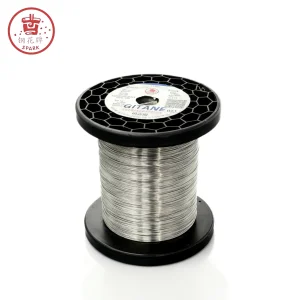
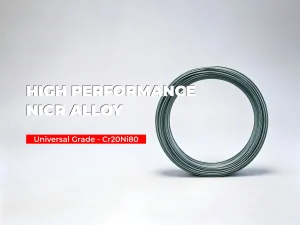
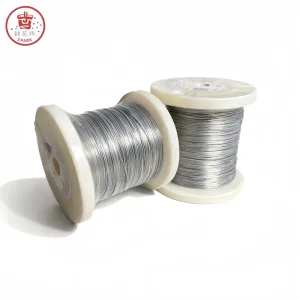
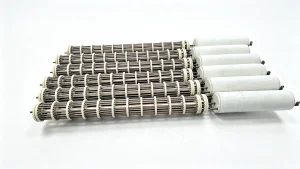
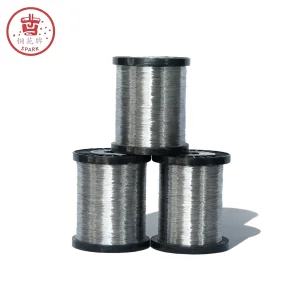
High-Temperature Alloys, Heating Cores & Resistance Wires
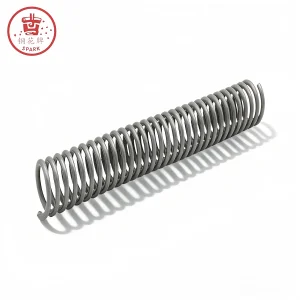
A comprehensive array of premium metallurgical products designed for industrial furnace builders, heat treatment plants, and equipment manufacturers in Boston and worldwide.
Localized Engineering Implementations Across New England
1. High-Frequency Power Supplies in Cambridge Labs
Engineers developing next-generation SiC-based power converters in Cambridge require transformers that can handle switching frequencies between 50 kHz and 200 kHz. By adopting our ultra-thin (18 μm) nanocrystalline core cuts, engineers achieve power densities exceeding 45 W/in³ while limiting core temperature rise to under 30°C under ambient cooling conditions.
2. Defense Electronics around Hanscom Air Force Base Area
Modern defense systems require electromagnetic protection and high-efficiency signal conditioning. Our cobalt-based amorphous ribbons offer dynamic permeability tailored to EMI filter networks, maintaining stable attenuation metrics over extreme temperature ranges from -55°C up to +125°C.
3. Heavy Metallurgical Processing in Worcester & Route 128 Corridor
For industrial heat-treating facilities specializing in medical-grade stainless steel annealing and titanium sintering, element longevity is paramount. Utilizing our premium FeCrAl 0Cr25Al5 and HRE 1350°C resistance wires ensures dense protective $\text{Al}_2\text{O}_3$ scale growth, preventing element sag and operational electrical breakdown.
Need Custom Cut Amorphous Ribbons or Furnace Alloy Wire in Boston?
Our metallurgical technical team provides full engineering consultations, CAD core drawing reviews, sample prototyping, and factory-direct pricing for North American procurement teams.
Send Inquiry NowQuality Control, Metallurgical Traceability & Testing Protocol
To comply with Google’s E-E-A-T (Experience, Expertise, Authoritativeness, and Trustworthiness) standards and meet the exacting quality requirements of US buyers, every production batch originating from our Chinese manufacturing headquarters undergoes a multi-stage quality control protocol:
1. Spectrographic Melt Analysis
Inductively Coupled Plasma Optical Emission Spectrometry (ICP-OES) verifies elemental composition prior to rapid casting, guaranteeing elemental purity thresholds down to parts-per-million (PPM) for trace impurities like sulfur and carbon.
2. Laser Ribbon Profilometry
Continuous laser thickness gauges monitor amorphous ribbon profile across the entire casting width (up to 213mm ribbon width), ensuring uniform cross-sectional thickness within ±1 μm to prevent magnetic flux stacking non-uniformities.
3. Automated B-H Hysteresis Loop Testing
100% of finished toroidal and C-cores are subjected to automated dynamic B-H analyzer testing. Certified inspection reports detailing $B_s$, $H_c$, $\mu_i$, and core loss values ($P_{f/B}$) are supplied with every export shipment.
Amorphous Products & Boston Supply Chain FAQ
For prototype quantities and standard slit ribbon dimensions, air freight to Logan International Airport (BOS) typically delivers within 5 to 7 business days. For bulk ocean freight orders delivered directly to Boston, Worcester, or Providence ports, standard sea transport lead time is approximately 25 to 35 days, supported by complete customs clearance documentation and DDP/DAP terms.
Iron-based amorphous alloys ($Fe-Si-B$) possess a higher saturation flux density ($B_s = 1.56\text{ T}$) compared to nanocrystalline ribbons ($B_s = 1.25-1.35\text{ T}$), making them significantly more cost-effective for high-power distribution transformers working at 50Hz/60Hz grid frequencies. Nanocrystalline ribbons are preferred when operating at higher frequencies (>10 kHz) where dynamic core loss dominates.
Yes. We specialize in custom OEM manufacturing. We produce toroidal cores, block cores, cut C-cores, and E-cores using automated precision winding and vacuum epoxy encapsulation machines. Dimensions can be tailored to match your specific bobbin or enclosure requirements down to millimeter precision.
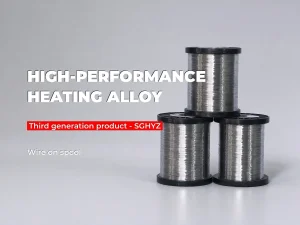
For thermal processing between 400°C and 600°C (standard amorphous/nanocrystalline stress relief annealing), our NiCr 80/20 (Cr20Ni80) wire offers superior ductility and long cycle life. For high-temperature vacuum sintering or ceramic processing furnaces running up to 1350°C–1400°C, we recommend our SPARK HRE or SGHYZ FeCrAl series wires.
High-power Level 3 DC fast chargers employ high-frequency transformers to convert grid power efficiently. Replacing traditional ferrites or silicon steel with ultra-thin nanocrystalline cores reduces transformer volume by up to 40% while cutting internal power losses by half, enabling faster charging speeds with less thermal cooling demand.
Partner with China's Premier Amorphous & Alloy Manufacturer
Whether you are designing next-generation medical power electronics in Cambridge, upgrading utility transformers across Massachusetts, or looking for reliable high-temperature resistance heating elements, our direct factory pipeline is built for your technical success.