
High-Performance Resistance Alloys & Heating Elements
Factory-direct thermal solutions processed under strict vacuum induction melting and secondary electroslag refining.



Eliminating Metallurgy Failure Modes: Intergranular Corrosion & Brittle Phase Control
An authoritative engineering breakdown on how advanced alloy synthesis, grain boundary engineering, and clean melting techniques overcome high-temperature degradation mechanisms.
Mitigating Intergranular Corrosion (IGC)
Intergranular corrosion in nickel-chromium (NiCr) and iron-chromium-aluminium (FeCrAl) resistance alloys stems primarily from sensitization within the critical temperature window of 450°C to 850°C. During extended thermal dwelling, chromium atom diffusion toward grain boundaries reacts with interstitial carbon to form chromium carbide precipitates ($Cr_{23}C_6$). This creates a chromium-depleted zone adjacent to the boundary, dropping local chromium content below the 12% passivation threshold required for protective oxide formation.
To guarantee a minimal risk of intergranular corrosion, our production process implements precise vacuum carbon-deoxidation (VCD), stabilizing micro-additions of Titanium (Ti) and Niobium (Nb), and strict carbon capping below 0.02%. By forming ultra-stable TiC or NbC precipitates prior to chromium carbide formation, the solid-solution chromium content remains fully preserved across the matrix.
Suppressing Brittle Phase Precipitation
In high-chromium and iron-rich alloy systems operating under high temperatures, long-term exposure can induce phase transformations resulting in embrittling intermetallic phases—most notably the tetragonal Sigma ($\sigma$) phase and Chi ($\chi$) phase. The precipitation of these brittle intermetallic phases along grain boundaries dramatically reduces ambient ductility, making elements prone to catastrophic snap failures during cooling cycles or mechanical maintenance.
Through exact micro-alloying thermodynamics, strict control over ferrite/austenite balance stabilizers, and continuous strand-annealing with rapid argon-quenching rates (>50°C/sec), our state-of-the-art mills suppress the kinetic window of $\sigma$-phase nucleation. Coils retain their original structural ductility, facilitating seamless coiling, bending, and long-term cyclic resistance.
| Metallurgical Parameter | Standard Commercial Resistance Wire | SPARK High-Homogeneity Optimized Coil | Engineering Impact on Equipment |
|---|---|---|---|
| Carbon Content Tolerance | 0.05% - 0.08% Max | ≤ 0.018% Ultra-Low Carbon | Eliminates grain boundary sensitization & carbide precipitation |
| Full Coil Resistance Deviation ($\Delta R/R$) | ± 3.0% to ± 5.0% | ≤ ± 1.0% Extremely Low | Prevents localized hot-spots, uneven thermal zones, and burnout |
| Sigma ($\sigma$) Phase Sensitivity | Moderate (Embrittles after 200h at 650°C) | Immune (Thermodynamically stabilized) | Allows repeat thermal cycling without brittle coil fracturing |
| Grain Boundary Micro-alloying | Uncontrolled trace elements | Doped with Yttrium (Y), Zirconium (Zr), Cerium (Ce) | Enhances oxide scale adherence ($Al_2O_3 / Cr_2O_3$) against spallation |
The Physics of Chemical Homogeneity & Low Resistance Deviation
Why coil-to-coil consistency is the single most important factor for predictable thermal element lifecycle and energy efficiency.
Continuous Laser Gauge Monitoring
Cross-sectional wire gauge variance directly dictates electrical resistance per meter via Ohm’s Law ($R = \rho \cdot L / A$). Our production lines integrate dual-axis inline laser micrometers providing continuous real-time diameter measurement down to $\pm 0.001\text{ mm}$ precision, removing physical dimensional drift over 1000+ meter continuous spools.
Solute Segregation Elimination
In casting large ingots, macro-segregation of heavy elements (such as Nickel, Chromium, and Molybdenum) creates local chemical fluctuations. By deploying Secondary Vacuum Arc Remelting (VAR) and Electromagnetic Stirring (EMS) during solidification, our alloys achieve solute distribution uniformity within $\pm 0.15\%$ across the entire heat weight.
Hot-Spot & Burnout Prevention
When an electric heating wire features an localized area of higher electrical resistance, electrical power dissipation ($P = I^2 R$) localized spikes at that exact point. This thermal run-away generates localized overheating, accelerating oxidation rate and leading to premature wire melting or element snap failure. Our low-deviation wire ensures uniform temperature distribution.
Strategic Advantages of Chinese Metallurgical Manufacturing
Combining world-class processing infrastructure with complete upstream rare-earth integration and massive economies of scale.
Upstream Rare Earth Integration
China commands the world's primary supply of specialized rare-earth elements (Yttrium, Neodymium, Lanthanum, Cerium). As a top-tier Chinese manufacturer, Shougang Gitane directly incorporates high-purity rare-earth micro-alloying packages into our resistance wire melts. Rare earths act as reactive element additions, forming an interlocking "peg" structure between the oxide scale and alloy matrix that prevents protective oxide spallation under severe thermal shock.
State-of-the-Art Continuous Processing
Our Beijing manufacturing base spans over 88,000 square meters, equipped with high-vacuum induction melting furnaces, continuous hydrogen-atmosphere bright annealing lines, and multi-pass diamond-die fine drawing blocks. Continuous hydrogen annealing removes surface contaminants, prevents intergranular oxidation during drawing, and delivers mirror-bright surface finishes that minimize radiative thermal hot-spots.
Unmatched Wholesale Value & Scale
By leveraging integrated supply chains from raw liquid metal to final coiled wire, element fabrication, and custom furnace assembly, we eliminate intermediate processing margins. Global OEMs and industrial heating buyers receive Western-spec metallurgical performance at optimized direct-from-factory pricing structures, backed by flexible MOQ and custom spool weights up to 500 kg.
Industrial Electrification, Decarbonization & Next-Gen Thermal Processing
How precise electric heating alloys are replacing fossil fuel burner systems across global heavy industry.
Transitioning from Gas Combustion to Green Electrification
Global net-zero mandates and strict carbon taxation schemes are forcing industrial facilities to replace traditional gas-fired burners with zero-emission high-power electric thermal systems. Switching to electric heating requires alloy materials that can handle extreme power densities, fast thermal response, and long operational life without requiring constant furnace shutdowns.
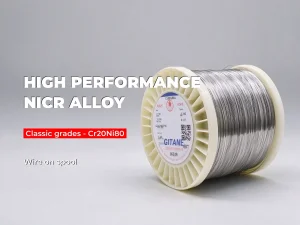
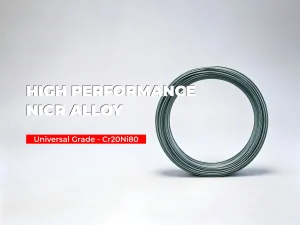
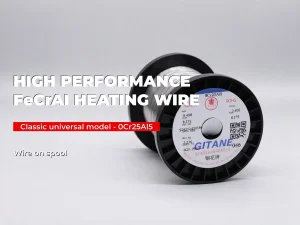
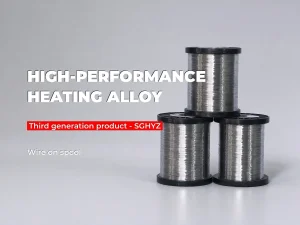
High-grade FeCrAl (such as 0Cr25Al5, SGHYZ, and powder metallurgy SGHT) and high-density NiCr alloys (Cr20Ni80, Cr30Ni70) provide the foundational heating technology for clean thermal processing in steel heat treatment, ceramic kilns, and chemical reactor vessel heating.
Advanced Requirements in Solar & Semiconductor Manufacturing
The global surge in photovoltaic (PV) solar cell production and silicon ingot pulling demands thermal processing furnaces capable of extreme temperature uniformity within $\pm 0.5^{\circ}\text{C}$. Any resistance variance along furnace elements creates localized temperature fluctuations that ruin silicon crystal structures or cause uneven dopant diffusion.
Our ultra-homogenous resistance wire coils guarantee flat thermal profiles across multi-zone semiconductor diffusion furnaces, enabling high manufacturing yield rates for 210mm wafer processing lines and advanced microelectronics production.
Localized Application Scenarios & Global Enterprise Solutions
Delivering high-reliability heating performance across critical industrial and high-tech sectors.
Automotive Thermal Treating
Carburizing, nitriding, and solution annealing furnaces for automotive gears, drive shafts, and electric vehicle battery casing hot-stamping lines.
Glass & Ceramic Kilns
Continuous roller hearth kilns for architectural glass tempering, technical ceramic sintering, and sanitaryware manufacturing reaching up to 1400°C.
Semiconductor & Solar PV
High-purity quartz tube heating elements, polysilicon crystal growth apparatus, and LPCVD/PECVD diffusion furnaces.
Heavy Appliances & Braking
Dynamic load breaking resistors for high-speed locomotives, industrial cranes, and commercial electric heating appliances.
Addressing Global Enterprise Procurement Requirements
Built to satisfy international standards, full material traceability, and complex OEM procurement workflows.
Every shipment is accompanied by Mill Test Certificates (MTC) conforming to EN 10204 3.1. We certify chemical composition via optical emission spectrometry, mechanical tensile properties, ambient resistivity ($\mu\Omega\cdot\text{m}$), and dimensional tolerances compliant with GB/T 1234-2012, ASTM B344, and DIN 17470.
Export Packaging & Spooling
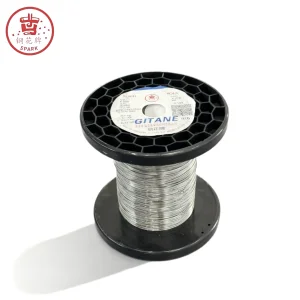
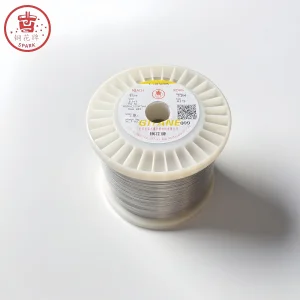
To ensure wire arrives without tangles, oxidation, or surface scratching, coils are precision-level wound onto plastic spools (DIN 160, DIN 200, DIN 250, DIN 355) or packaged as heavy-duty catch-weight coils wrapped in vapor-corrosion inhibitor (VCI) film and fortified seaworthy wooden cases.
OEM Customization & Prototyping
We work directly with engineering procurement teams to deliver custom element geometries—including pre-wound spiral coils, wave-shaped strip elements, and ceramic-supported heating assemblies tailored specifically to furnace architectural blueprints.
Precision FeCrAl & NiCr Alloys Direct From Factory
Explore our wholesale resistance wire and strip solutions designed for long-life industrial heating.




Frequently Asked Questions on Resistance Wire & Metallurgical Performance
Expert answers addressing alloy selection, intergranular corrosion mechanisms, and operational best practices.
NiCr alloys (such as Cr20Ni80, Cr30Ni70) provide superior hot strength, retain ductility even after long-term service (making maintenance re-coiling easier), and excel in reducing or nitrogen-containing atmospheres. Choose FeCrAl for maximum furnace temperature and energy savings; choose NiCr for mechanical toughness and cyclic flexibility.