
Featured Photovoltaic Resistance Alloys & Heating Wire
Explore our premium grade resistance wires, high-temperature alloy strips, and heavy-duty electric furnace heating elements custom-engineered for solar manufacturing equipment.





Executive Technical Report: Thermal Engineering in Modern Photovoltaic Cell & Wafer Manufacturing
The global photovoltaic (PV) industry is undergoing a massive technological shift toward higher efficiency solar cell architectures, notably TOPCon (Tunnel Oxide Passivated Contact), Heterojunction (HJT), and Perovskite-Silicon Tandem cells. Achieving solar conversion efficiencies beyond 25% requires extreme precision during thermal treatment processes. As a premier wholesale photovoltaic heating element manufacturer and factory, our engineering capabilities focus directly on eliminating thermal variance, extending element life in harsh atmospheric conditions, and reducing total cost of ownership (TCO) for solar manufacturing giants.
In high-temperature photovoltaic production lines—such as Czochralski (CZ) monocrystalline silicon ingot pulling, POCl3 diffusion thermal zones, and PECVD (Plasma-Enhanced Chemical Vapor Deposition) anti-reflective coating systems—heating elements are subjected to grueling continuous operation. Minor resistance shifts or surface oxidation flaking can lead to cell contamination, uneven dopant profiles, or unexpected thermal shutdown. Our advanced FeCrAl (Iron-Chromium-Aluminum) and NiCr (Nickel-Chromium) resistance heating alloys are metallurgical breakthroughs optimized specifically for cleanroom thermal processing.
Metallurgical Comparison: Selecting the Ideal PV Heating Element Alloy
Engineers must match the alloy composition to the furnace atmosphere (vacuum, inert, oxidizing, or corrosive dopant atmospheres). Below is a direct comparison matrix showing the performance metrics of primary high-temperature alloys produced in our factory.
| Alloy Grade | Alloy Type | Max Temp (°C) | Resistivity (μΩ·m, 20°C) | Key PV Process Application | Oxidation & Creep Resistance |
|---|---|---|---|---|---|
| SPARK SGHT | Powder Metallurgy FeCrAl | 1425°C | 1.45 | CZ Silicon Ingot Growth, Advanced Diffusion | Exceptional (Alpha-Al2O3 Formed) |
| SPARK SGHYZ | Ultra-High Temp FeCrAl | 1400°C | 1.42 | TOPCon Boron/Phosphorus Diffusion | Superior Hot Strength & Zero Spalling |
| HRE 1350 | High-Performance FeCrAl | 1350°C | 1.40 | Quartz Tube Heating, Sintering Furnaces | Excellent Oxidizing Atmosphere Life |
| 0Cr25Al5 | Standard Industrial FeCrAl | 1250°C | 1.42 | Wafer Annealing, Module Lamination | High Electrical Resistance, Cost-Efficient |
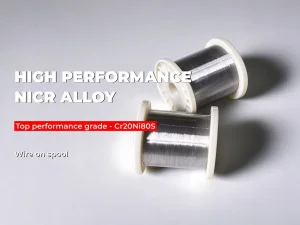
| Cr20Ni80 / Cr20Ni80S | Premium Nickel-Chromium | 1200°C | 1.09 | PECVD Heating, Rapid Thermal Processing (RTP) | Non-Magnetic, High Ductility After Use |
Macro Industry Solutions Across the Photovoltaic Manufacturing Value Chain
As a dedicated wholesale factory partner to tier-1 solar furnace builders, our custom heating elements address exact engineering friction points across four critical PV manufacturing stages:
1. CZ Monocrystalline Ingot Growing
Monocrystalline silicon pulling requires non-contaminating, extreme thermal stability at temperatures reaching up to 1400°C. Our powder metallurgy SGHT and SGHYZ alloy coils deliver zero structural sag, preventing short circuits against furnace insulation and ensuring uniform silicon crystal melt zones.
2. High-Precision Diffusion Furnaces
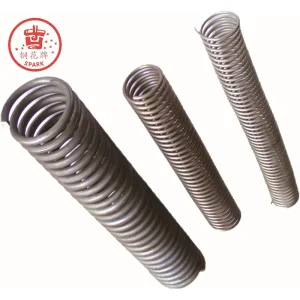
POCl3 liquid source diffusion and boron emitter formation demand multi-zone quartz tube heaters with rapid response. We manufacture high-density spiral heating coils housed in vacuum-formed ceramic fiber modules, maintaining continuous temperature uniformity within ±0.5°C across 2-meter heating zones.
3. PECVD & Anti-Reflective Coating
Plasma-Enhanced Chemical Vapor Deposition operates under pulsed thermal cycling and corrosive gas exposure (Silane, Ammonia). Our Cr20Ni80 Nichrome heating elements provide exceptional resistance to mechanical thermal fatigue, zero oxide flaking into vacuum chambers, and long-term ductility.
Localized Application Scenarios & Global Field Deployments
Photovoltaic equipment operates under contrasting ambient and operational stressors globally. Our customized heating element assemblies are engineered to withstand unique field environments across key solar production hubs:
Southeast Asian Giga-Factories
Facilities in tropical, high-humidity cleanroom environments (Vietnam, Malaysia, Thailand) require specialized terminal connection rods and anti-corrosive lead-in wires (SGHT steel tube connections) to prevent terminal degradation caused by ambient moisture condensation during equipment maintenance windows.
European Equipment Retrofits
European solar equipment refurbishers upgrading older diffusion lines to N-type TOPCon capabilities rely on our custom-wound heavy-gauge HRE 1350℃ alloy ribbons. These deliver direct drop-in replacement with higher watt-density ratings without requiring modification of existing furnace transformer taps.
North American Utility Solar Manufacturing
High-throughput module manufacturing plants utilizing rapid infrared and resistance heating for cross-linking EVA and POE encapsulant films use our 0Cr23Al5 flat strip elements for fast heat dissipation, zero thermal lag, and minimum power consumption per module produced.
Manufacturing Excellence: ISO 9001 Metallurgy & Quality Standards
With over six decades of metallurgical heritage backed by Beijing Shougang Gitane New Materials Co., Ltd., our factory implements stringent quality control protocols at every phase of alloy production—from vacuum induction melting (VIM) and electroslag remelting (ESR) to precision wire drawing and continuous bright annealing.
1. Traceable Raw Materials
100% high-purity electrolytic nickel, chromium, aluminum, and rare-earth additions (Yttrium, Zirconium) with full melt batch traceability.
2. Eddy-Current Defect Testing
Online non-destructive testing ensures 100% internal homogeneity, eliminating microscopic cracks or voids that cause localized hot spots.
3. Strict Resistance Tolerance
Precision cold-drawing dies guarantee electrical resistance variations kept within ±3% per standard coil meter, supporting stable multi-zone parallel wiring.
4. Pre-Oxidation Passivation
Factory pre-oxidation treatment forms a dense, self-healing Alpha-Alumina scale ($Al_2O_3$) on FeCrAl elements, boosting immediate service longevity.
Wholesale Factory Catalog: Photovoltaic Heating Wire & Tubing
Browse our complete range of specialized electric heating alloy wires, high-pressure furnace tubes, and factory-direct wholesale heating element components.




Frequently Asked Questions: Photovoltaic Heating Element Procurement & Engineering
In-depth answers to common technical queries raised by thermal system designers, PV equipment engineers, and wholesale purchasers.
FeCrAl alloys (such as SGHT, SGHYZ, and HRE) offer a significantly higher operating temperature capability (up to 1425°C) compared to standard NiCr alloys (typically max 1200°C–1250°C). Furthermore, FeCrAl forms a protective, non-spalling surface scale of Alpha-Alumina ($Al_2O_3$), which acts as an excellent electrical insulator and physical barrier against corrosive process gases. Additionally, FeCrAl has a higher electrical resistivity and lower density than NiCr, resulting in a weight savings of approximately 15% to 20% for equivalent power ratings.
Standard wrought FeCrAl alloys undergo rapid grain growth at temperatures above 1100°C, leading to thermal creep, grain boundary sliding, and eventual element deformation or coil sagging. SPARK SGHT is produced via advanced powder metallurgy manufacturing. This creates a fine dispersion of secondary phase oxides that pin grain boundaries, drastically increasing high-temperature creep strength. As a result, long vertical or horizontal coils retain their physical geometry even during multi-month continuous operational cycles in solar cell processing.
We provide full OEM and ODM customization. This includes custom coil outer diameters (OD), pitch-to-wire ratio optimization, pre-bent terminal lead-out pins, integrated ceramic support sleeves, multi-strand twisted lead wires, and flat strip elements up to wide ribbon dimensions. We also offer pre-oxidized surface treatments and custom packaging designed to prevent cleanroom contamination upon delivery.
Contamination by heavy metal ions (such as Iron, Copper, or Nickel) ruins minority carrier lifetime in N-type silicon wafers. Our PV-grade alloys feature controlled surface purity. When pre-treated, the impenetrable $Al_2O_3$ skin locks all metallic elements inside the core alloy matrix. This prevents flaking, particle airborne shedding, or outgassing inside quartz tube chambers.