
High-Performance Heating Alloy & Tube Series
Direct from Factory: Engineered to eliminate microstructural degradation, grain boundary oxidation, and brittleness at elevated operating temperatures.



Mitigating Intergranular Corrosion & Brittle Phase Precipitation in High-Temperature Alloys
In thermal processing industries, industrial furnace engineering, and advanced electronic heating equipment manufacturing, thermal resistance alloys—primarily Iron-Chromium-Aluminum (FeCrAl) and Nickel-Chromium (NiCr) systems—face extreme thermodynamic and kinetic stresses. Among the most catastrophic degradation mechanisms leading to premature heating element failure are Intergranular Corrosion (IGC) and Brittle Phase Precipitation (specifically $\sigma$-phase embrittlement, $\chi$-phase formation, and carbide segregation at grain boundaries).
Beijing Shougang Gitane New Materials Co., Ltd. (SPARK), leveraging over six decades of metallurgical excellence under the Shougang Group umbrella, has engineered advanced melting, micro-alloying, and thermal processing protocols that practically eliminate these failure modes. This technical white paper explores the underlying metallurgical phenomena, supply chain optimizations, global procurement standards, and empirical data validating SPARK’s resistant alloy series.
1. Fundamentals of Intergranular Corrosion (IGC) in Electrothermal Alloys
Intergranular corrosion occurs along the grain boundaries of an alloy where local chemistry deviates significantly from the bulk material. When resistance wires operate in the critical sensitization temperature range (typically 450°C to 850°C for nickel-base alloys and above 900°C for ferritic FeCrAl alloys), chromium atoms react with interstitial carbon and nitrogen to precipitate chromium carbide ($Cr_{23}C_6$) or chromium nitride ($Cr_2N$) along grain boundaries.
This carbide precipitation causes local Chromium Depletion Zones adjacent to the boundary, lowering local chromium concentrations below the 12% threshold required for dynamic surface passivation. When exposed to ambient moisture during furnace shutdowns, process gas impurities, or corrosive chemical environments, these depleted zones undergo preferential anodic dissolution, leading to intergranular cracking, wire spallation, and sudden electrical open-circuit faults.
2. Mechanisms of Brittle Phase ($\sigma$-Phase) Precipitation and Prevention
Ferritic FeCrAl alloys containing high chromium contents (20% to 27% Cr) are thermodynamically prone to the formation of the brittle tetragonal $\sigma$-phase and the coherent body-centered cubic $\alpha'$ (475°C embrittlement) phase during extended exposure in the 500°C to 800°C window. The $\sigma$-phase precipitation leads to extreme mechanical brittleness at room temperature, making elements incapable of handling mechanical vibration, thermal expansion cycling, or maintenance handling.
SPARK mitigates these phase transformations through precise micro-structural control:
- Rare Earth Element (REM) Micro-Alloying: Controlled addition of Yttrium (Y), Zirconium (Zr), and Cerium (Ce) pins grain boundaries and alters the transformation kinetics, preventing contiguous $\sigma$-phase network formation.
- Ultra-Clean Vacuum Induction Melting (VIM): Minimizing tramp elements (P, S, O, N) reduces nucleation sites for intermetallic precipitates.
- Grain Refinement Processing: Advanced cold-drawing and rapid bright-annealing steps establish a stable, equiaxed grain structure that resists secondary grain growth during high-temperature service.
Why SPARK Alloys Outperform Standard Alloys
Architected with AI-guided micro-structural optimization to ensure ultra-low maintenance, extended operating lifetimes, and thermal predictability.
Stable Passivating Scale
Forms an impenetrable, highly adherent $\alpha-Al_2O_3$ (Alumina) or $Cr_2O_3$ scale that acts as a dielectric barrier against chemical attack and halts intergranular oxygen diffusion.
Stabilized Grain Boundaries
Titanium and Niobium micro-additions preferential bind free carbon, completely eliminating chromium-depleted intergranular zone formation and sensitized boundary corrosion.
Ductility Retention After Aging
Optimized electron-to-atom ratios suppress the formation of brittle $\sigma$ and $\chi$ intermetallic phases, ensuring wires remain cold-workable and serviceable even after 10,000+ thermal hours.
Alloy Performance Specifications & Corrosion Thresholds
Benchmark data showcasing resistance properties, maximum continuous operating temperatures, and microstructural phase stability.
| Alloy Family & Grade | Nominal Composition | Max Temp (°C) | Resistivity at 20°C ($\mu\Omega\cdot m$) | $\sigma$-Phase Susceptibility | IGC Resistance Level |
|---|---|---|---|---|---|
| SPARK SGHT (FeCrAl) | Fe-25Cr-6Al+PM REM | 1425°C | 1.45 | Near Zero (PM Stabilized) | Ultra-High (Immune) |
| SPARK SGHYZ (FeCrAl) | Fe-24Cr-5.5Al+Y/Zr | 1400°C | 1.42 | Negligible | Superior |
| 0Cr25Al5 Standard | Fe-25Cr-5Al | 1250°C | 1.42 | Moderate (if aged 600-800°C) | Standard |
| 0Cr23Al5 Standard | Fe-23Cr-5Al | 1250°C | 1.35 | Low to Moderate | Good |
| SPARK Cr20Ni80S (NiCr) | 80Ni-20Cr+Rare Earth | 1200°C | 1.09 | Immune (Austenitic) | Outstanding |
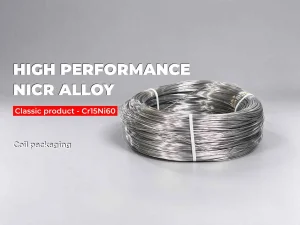
| SPARK Cr15Ni60 (NiCrFe) | 60Ni-15Cr-Bal Fe | 1150°C | 1.11 | Immune | High |
China Factory Supply Chain Supremacy & Global Localization Support
Combining world-class steelmaking infrastructure with hyper-responsive engineering deployment for international procurement networks.
Shougang Metallurgical Integration
Unlike secondary wire drawers, SPARK controls the complete value chain—from iron ore refining, vacuum induction melting (VIM), electro-slag remelting (ESR), hot rolling, precision wire drawing, to final bright annealing. This ensures complete lot-to-lot consistency and zero chemical drift.
Unrivaled Cost Efficiency
Direct wholesale pricing from China’s premier state-integrated alloy manufacturing base translates to a 25%–40% procurement cost reduction versus European or American market equivalents, without compromising metallurgical purity or service lifetime.
Global Compliance & Compliance Documentation
Every shipment is accompanied by comprehensive Material Test Reports (MTR) according to EN 10204 3.1, featuring complete chemical spectrographic analysis, tensile property verification, resistivity tolerances, and intergranular corrosion test certificates (ASTM A262 Practice E / GB/T 4334).
Target Application Environments for Corrosion-Resistant Alloys
Deployed globally across critical thermal processes where mechanical failure or corrosion-induced outages cause massive operational losses.
Semiconductor & Solar Photovoltaics
Diffusion furnaces, PECVD equipment, and crystal growth reactors operating under high-purity quartz and reactive gas atmospheres require clean, non-outgassing heating elements free from intergranular embrittlement.
Petrochemical & Green Hydrogen
High-temperature reforming furnaces, cracking units, and hydrogen gas pre-heaters operating in carbon-rich (carburizing) or high-moisture environments benefit from SPARK’s anti-carburizing alumina surface passivating layer.
Heavy Heat Treatment & Powder Metallurgy
Mesh-belt continuous tempering, sintering, and vacuum heat treatment furnaces requiring frequent cycling between ambient and 1300°C without element sagging, brittleness, or oxidation failure.
Industry Trends Driving Resistance Alloy Evolution
The global energy transition and industrial decarbonization are fundamentally reshaping high-temperature material demands.
Industrial Furnace Electrification
As steelmakers, ceramic producers, and glass manufacturers replace fossil-fuel burners with electric heating systems, high-power density heating wires resistant to atmosphere-induced corrosion are critical to achieving net-zero goals.
Powder Metallurgy (PM) Alloys
Next-generation alloys like SPARK SGHT utilize powder metallurgy routes to overcome the workability limits of traditional ingot casting, delivering superior hot-creep strength and complete immunity to $\sigma$-phase embrittlement up to 1425°C.
AI-Controlled Precision Drawing
Implementation of real-time laser micrometer inspection during cold drawing guarantees wire diameter tolerances down to ±0.002mm, eliminating hot spots caused by localized resistance variations.
Frequently Asked Questions by Global Buyers & Engineers
Clear answers regarding material selection, corrosion testing, lead times, and customization options.
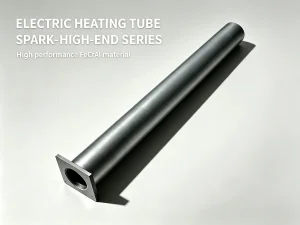
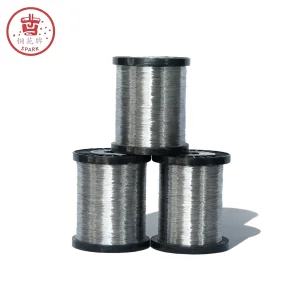
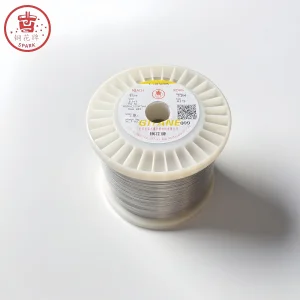
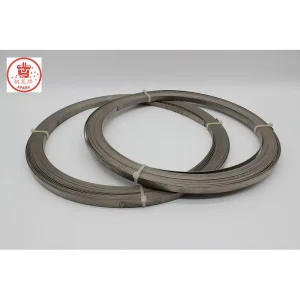
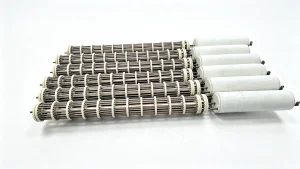
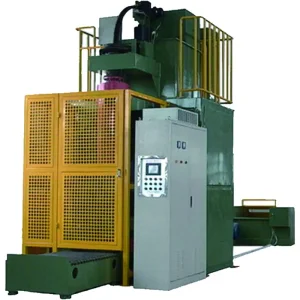
Precision Resistance Wires, Strips & Specialty Alloy Tube Core Series
Explore specialized grades designed for tempering furnaces, high-resistivity foils, and ceramic radiant cores.



Request Complete Engineering Datasheets & Wholesale Pricelists
Get in touch directly with Beijing Shougang Gitane’s senior metallurgical engineering team for custom element design, surface-load optimization, and factory-direct pricing.
Contact Metallurgical Engineers