Direct-from-Factory Radiant Heating Products
High-precision resistance wire, heating elements, and SGHT steel tube assemblies manufactured under ISO 9001:2005 quality controls.







Fundamentals of Electric Heating Radiation Tubes in Thermal Engineering
Electric heating radiation tubes (radiant tubes) represent the pinnacle of indirect electrical heating technology used across modern industrial furnaces. In heat-treatment environments where process gas integrity, precise carbon potential control, or vacuum sealing is required, direct contact between heating elements and the workload atmosphere must be strictly avoided. Radiation tubes serve as a thermal conduit and chemical barrier: internal resistance alloy elements generate intense joule heating, which is transferred primarily via infrared radiation through the tube shell to the furnace chamber.
The core thermal mechanism obeys the Stefan-Boltzmann Law ($q = \epsilon \sigma (T_1^4 - T_2^4)$), where thermal radiant flux depends heavily on the surface emissivity ($\epsilon$) of the outer sheath and the temperature gradient between the heating element, the radiation tube shell, and the workload. Engineering a long-life electric heating radiation tube demands a delicate balance between core alloy temperature limits, sheath mechanical creep resistance at temperatures exceeding 1000°C, and optimized surface watt density ($W/cm^2$).
W-Type & U-Type Radiant Tubes
Engineered for high-power thermal distribution across wide furnace hearths. Utilizes multi-pass inner ceramic or metallic cores to maximize surface area and radiation uniformity.
I-Type & Straight Plug-In Elements
Designed for vertical or horizontal insertion into continuous annealing, galvanizing, and carburizing furnaces. Features rapid hot-swap capability without cooling the entire kiln.
Powder Metallurgy (PM) Assemblies
Utilizes advanced FeCrAl-PM (such as SGHT and SGHYZ) resistant to thermal sag, structural distortion, and heavy carburization up to continuous 1425°C furnace conditions.
Resistance Alloys & Sheath Material Comparison Matrix
Select the optimal inner heating core and outer sheath metallurgy based on operating atmosphere, thermal cycling intensity, and maximum temperature requirements.
| Alloy Grade / Material | Alloy Family | Max Temp (°C) | Resistivity ($\mu\Omega\cdot m$) | Key Performance Characteristics | Primary Industrial Application |
|---|---|---|---|---|---|
| 0Cr25Al5 (SPARK) | FeCrAl | 1250°C | 1.42 | High electrical resistance, excellent oxide scale formation ($\alpha\text{-Al}_2\text{O}_3$), low density. | Standard industrial furnaces, radiant heating tubes, continuous heat treating. |
| Cr20Ni80 | NiCr (Nichrome) | 1200°C | 1.09 | Superior ductility post-heating, high hot strength, non-magnetic, resists thermal cycling. | Precision furnaces, high-vibration environments, controlled atmosphere heat treat. |
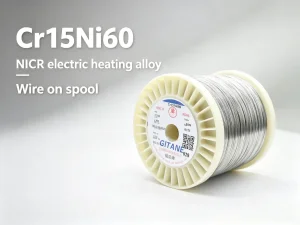
| Cr15Ni60 | NiCr (Nichrome) | 1150°C | 1.11 | Cost-effective nickel-chrome option with high corrosion resistance and ductility. | Domestic heat appliances, industrial baking ovens, medium-temp radiant tubes. |
| SGHT / SGHYZ | FeCrAl (PM) | 1400°C – 1425°C | 1.45 | Ultra-pure powder metallurgy grade, extreme creep resistance, zero structural distortion. | Semiconductor diffusion, high-temperature sintering, heavy carburizing lines. |
| SGHT Steel Tube Sheath | Heat-Resistant Alloy Tube | 1250°C (Sheath) | N/A | High-temperature rupture strength, resistance to thermal shock, low thermal expansion. | External containment tube for electric and gas radiant heating assemblies. |
China Manufacturing Ecosystem & Factory Advantages
How Beijing Shougang Gitane New Materials Co., Ltd. and China's advanced metallurgical hubs deliver unmatched engineering scale and cost efficiency.
Integrated Smelting-to-Assembly Supply Chain
Unlike regional assemblers who purchase third-party wire, Chinese state-backed metallurgical leaders control the complete production stack: vacuum induction melting (VIM), electroslag remelting (ESR), continuous hot rolling, wire drawing, tube centrifugal casting, and precision coil bending. This vertical integration guarantees batch-to-batch chemical homogeneity and precise electrical resistivity tolerances ($\pm 3\%$).
Rigorous Quality Assurance & Testing Protocols
Every wholesale radiation tube shipment undergoes comprehensive non-destructive testing (NDT), including ultrasonic flaw detection on alloy sheaths, X-ray alloy verification (XRF), cold resistance matching, and high-voltage dielectric insulation checks. Compliance with national standards such as GB/T 1234-2012 and international ASTM/DIN specifications ensures reliable zero-defect deployments.
Economies of Scale & Wholesale Price Advantage
By leveraging massive production capacity, localized raw material sourcing (Ni, Cr, Al, Fe), and automated continuous wire-drawing infrastructure, Chinese manufacturers deliver premium high-temperature heating systems at a total cost of ownership (TCO) 30% to 45% lower than European or North American counterparts, without sacrificing service life hours.
Macro Trends Driving the Transition to Electric Radiation Heating
Global industrial decarbonization policies and carbon-border adjustment mechanisms (such as EU CBAM) are accelerating a massive structural shift from gas-fired burner radiation tubes to all-electric radiant tube heating systems. Electric heating eliminates direct Scope 1 greenhouse gas emissions at the furnace site, achieves thermal conversion efficiencies approaching 98% (compared to 45%-65% for gas burner tubes without complex heat recovery systems), and enables fine-grained PID digital control integrated with smart factory IoT systems.
Decarbonization & Scope 1 Elimination
Replacing natural gas radiant tubes with electric 0Cr25Al5 or SGHT ceramic/metal radiant assemblies reduces plant site carbon footprint to zero when paired with renewable power grids.
Advanced Carburization Resistance
Modern steel heat-treatment processes demand high carbon potentials. Specialized FeCrAl alloys form a self-healing, impermeable $\alpha\text{-Al}_2\text{O}_3$ scale that completely prevents carbon soot penetration and green-rot corrosion.
Smart Thermal Diagnostics & IoT
Integration of internal thermocouples and inline current monitoring allows AI predictive maintenance algorithms to detect resistance drift, preventing catastrophic tube blowouts before furnace shutdowns occur.
Heavy Industrial Deployment Scenarios
Electric heating radiation tubes are the engineering standard across demanding high-precision thermal processing sectors.
Continuous Galvanizing & Annealing Lines (CGL / CAL)
In steel strip processing, vertical radiant tubes heat moving steel sheets to precisely controlled temperatures under hydrogen/nitrogen reducing atmospheres, ensuring pristine surface finish prior to zinc coating.
Automotive Hot Stamping & Component Hardening
High-strength boron steel components for modern electric vehicles require uniform heating in sealed roller hearth furnaces fitted with robust Cr20Ni80 or 0Cr25Al5 radiant tube heaters.
Photovoltaic & Semiconductor Manufacturing
High-purity quartz and powder metallurgy (SGHT) electric radiant heaters provide ultra-clean, particle-free thermal environments necessary for silicon ingot processing and solar cell wafer sintering.
Heavy Machinery Gear & Bearing Carburizing
Sealed-quench and batch carburizing kilns rely on high-wattage W-type electric radiant tubes to maintain strict endothermic gas equilibrium and uniform carbon case depth.
Global Enterprise Procurement Strategy & Pricelist Dynamics
Procuring wholesale electric heating radiation tubes requires a total cost analysis beyond the upfront purchase price. Electrical heater life, energy consumption, installation labor, and downtime risks drive true operational profitability. When requesting wholesale factory quotes or reviewing pricelists, industrial buyers must evaluate the following cost factors:
- Raw Material Market Surcharges: Prices for NiCr-based tubes (Cr20Ni80, Cr15Ni60) correlate strongly with London Metal Exchange (LME) Nickel spot prices. FeCrAl alloys (0Cr25Al5, 0Cr23Al5) provide a significantly more stable price structure due to iron/aluminum abundance.
- Wall Thickness & Centrifugal Casting Quality: Heat-resistant stainless sheaths (e.g., 310S, HU, HT, HK alloy tubes or specialized SGHT steel tubes) crafted via seamless centrifugal casting command higher initial pricing but deliver 3x life extension under thermal cycling.
- Surface Watt Loading ($W/cm^2$): Lower watt loading designs require larger physical heating element volume and thicker wire diameters, increasing material mass but drastically reducing thermal strain and element burnout risk.
- Custom OEM Design & Tolerances: Custom lead-out rod seals, ceramic terminal blocks, cold-end lengths, and multi-zone internal wiring require dedicated factory engineering, impacting minimum order quantities (MOQ) and lead times.
Frequently Asked Questions (FAQ)
Expert engineering answers to common procurement, maintenance, and metallurgical questions.
How do I calculate the correct surface watt density for an electric radiation tube?
Surface watt density ($W/cm^2$) is calculated by dividing total heater power (Watts) by the total effective radiating surface area of the heating wire or outer sheath tube ($cm^2$). For high-temperature furnaces operating between 950°C and 1100°C, recommended element surface watt density ranges between 1.5 and 2.5 $W/cm^2$. Exceeding 3.0 $W/cm^2$ in sealed radiant tubes without adequate heat dissipating geometry causes localized hotspots, rapid oxide scaling, and premature thermal burnout.
What is the key life-expectancy difference between FeCrAl and NiCr heating elements inside radiant tubes?
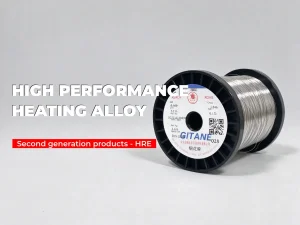
FeCrAl alloys (e.g., 0Cr25Al5, HRE, SGHT) can operate at maximum internal wire temperatures up to 1425°C, forming a tightly adherent aluminum oxide ($\text{Al}_2\text{O}_3$) protective scale that resists oxidizing and carburizing gases. However, FeCrAl experiences grain growth and becomes brittle after heating. NiCr alloys (e.g., Cr20Ni80) operate up to 1200°C, forming a chromium oxide scale; they retain high mechanical ductility when cooled, making NiCr superior for application zones subject to heavy mechanical vibration, frequent handling, or physical shock.
Can electric radiation tubes directly retrofit existing gas-fired radiant burner tubes?
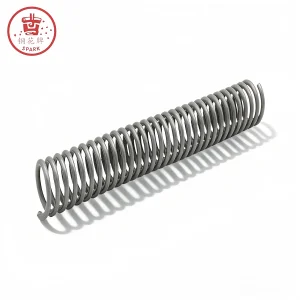
Yes. Electric radiant tube heating inserts (often configured as plug-in core assemblies or spiral elements mounted on ceramic support discs) can be engineered to match the exact outer diameter, flange mounting pattern, and insertion length of traditional gas radiant tubes. Retrofitting requires updating furnace electrical infrastructure, solid-state relays (SSRs) or thyristor power controllers, and temperature control loops.
What quality documentation should be requested with wholesale factory orders?
Enterprise buyers should demand EN 10204 3.1 Mill Test Certificates detailing spectral chemical analysis, cold electrical resistance measurements ($\Omega/m$), tensile strength, elongation percentages, dimensional tolerance reports, and proof of ISO 9001:2005 quality management system compliance.
How does Shougang Gitane / SPARK ensure batch-to-batch alloy resistance consistency?
Through computerized vacuum induction melting (VIM), precision cold drawing with inline laser micrometer monitoring, and automated continuous annealing. Every master coil is resistance-checked along its full length to guarantee resistance drift remains within tight international standard limits ($\pm 3\%$).
High-Temperature Resistance Materials & Tube Assemblies
Explore additional certified factory-direct heating alloys, SGHT tubes, and specialized wire products available for global wholesale shipment.