
Featured Cr20Ni40 & Electrothermal Alloy Series
Explore our core manufacturing product lineup designed for high-efficiency heat processing and industrial furnace applications.

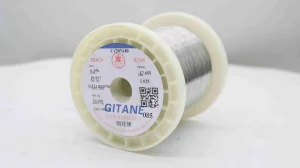
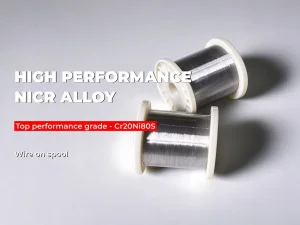
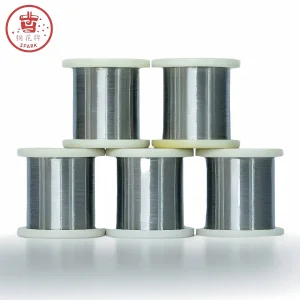
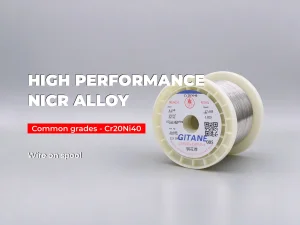
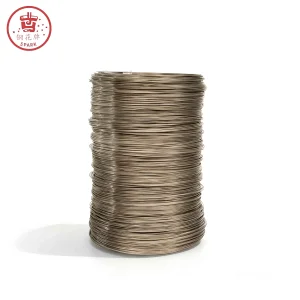
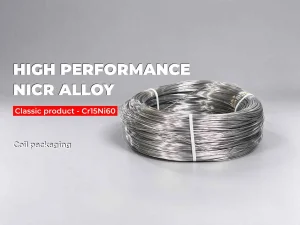
Executive Whitepaper: Metallurgy & Performance Profile of Cr20Ni40 Alloy
An authoritative analysis of Nickel-Chromium-Iron (NiCrFe) resistance alloys for high-duty thermal processing equipment and commercial applications.
Technical Information Gain: Cr20Ni40 (equivalent to Nikrothal 40, Ni40Cr20, DIN 2.4867) is an austenitic Nickel-Chromium-Iron alloy characterized by high electrical resistivity, excellent oxidation resistance up to operating temperatures of 1100°C (2010°F), and exceptional mechanical ductility following prolonged thermal exposure.
Microstructural Balance & Chemistry
Cr20Ni40 is engineered with a strict matrix balance consisting of approximately 38–42% Nickel, 19–21% Chromium, and the balance iron. The inclusion of ~40% Nickel provides a fully stable austenitic crystal structure, eliminating phase transformations during heating and cooling cycles. The 20% Chromium content facilitates the formation of a self-passivating chromium oxide (Cr2O3) outer layer, preventing deep internal oxidation under high temperatures.
Economic & Cost-Efficiency Advantage
While premium 80/20 Nickel-Chromium alloys (Cr20Ni80) represent the benchmark for extreme temperature applications (up to 1200°C), Cr20Ni40 serves as an optimized, cost-effective industrial substitute for systems operating below 1100°C. By reducing the expensive nickel content by half and substituting controlled metallurgical iron, B2B buyers achieve a substantial cost reduction per kilogram without sacrificing cold-workability or lifespan in mid-range thermal applications.
Corrosion & Atmosphere Resistance
Unlike standard Ferritic-Chromium-Aluminium (FeCrAl) alloys, Cr20Ni40 exhibits superior hot strength and does not become embrittled after extended operational hours. Furthermore, its higher iron and nickel balance grants exceptional resistance to moist air, industrial reducing atmospheres, and carbon-rich heat treatment environments where FeCrAl materials might suffer from premature structural degradation.
China Factory Advantage & Metallurgy Heritage
Why global OEMs choose Beijing Shougang Gitane New Materials Co., Ltd. for large-scale electrothermal alloy procurement.
60+ Years Metallurgical Precision
Backed by the massive state-owned Shougang Group, Beijing Shougang Gitane brings over six decades of advanced metallurgical production experience. Our facility covers 88,000 square meters with full-chain capabilities from Vacuum Induction Melting (VIM) to electro-slag remelting, wire drawing, cold rolling, and automated bright annealing.
Strict Quality Control & ISO Certifications
Our operations comply with rigorous quality management standards, holding ISO 9001, ISO 14001, and ISO 45001 accreditations. Every master coil batch undergoes full physical and chemical verification in line with GB/T 1234-2012 and international standards (ASTM B344, DIN 17471), verified via spectral composition analysis and electrical resistance testing.
Vertical Supply Chain Efficiency
By controlling raw material refinement, alloying, wire-drawing, and custom strip-rolling under one roof, China's manufacturing ecosystem eliminates intermediate markups. B2B buyers benefit from reliable supply continuity, high dimensional accuracy (tolerances down to ±0.01mm), and competitive wholesale factory pricing.
Technical Specifications & Comparative Alloy Matrix
Information gain benchmarking: Evaluate Cr20Ni40 against alternative heating alloy grades to optimize your thermal system design.
| Technical Property / Metric | Cr20Ni40 (Ni40Cr20) | Cr20Ni80 (Ni80Cr20) | Cr15Ni60 (Ni60Cr15) | 0Cr25Al5 (FeCrAl) |
|---|---|---|---|---|
| Nominal Chemical Composition | Ni 38-42%, Cr 19-21%, Fe Bal. | Ni 78-82%, Cr 19-21% | Ni 55-61%, Cr 15-18%, Fe Bal. | Cr 23-26%, Al 4.5-6.5%, Fe Bal. |
| Max Operating Temperature (°C) | 1100°C (2010°F) | 1200°C (2190°F) | 1150°C (2100°F) | 1250°C (2280°F) |
| Electrical Resistivity at 20°C (μΩ·m) | 1.09 ± 0.05 | 1.09 ± 0.05 | 1.12 ± 0.05 | 1.42 ± 0.07 |
| Density (g/cm³) | 7.90 | 8.40 | 8.20 | 7.10 |
| Thermal Conductivity (W/m·K) | 13.8 | 15.0 | 13.2 | 11.0 |
| Microstructural State Post-Use | Austenitic (Ductile) | Austenitic (Ductile) | Austenitic (Ductile) | Ferritic (Brittle after heating) |
| Magnetism at Room Temp | Slightly Magnetic | Non-Magnetic | Slightly Magnetic | Magnetic |
Temperature-Resistivity Coefficient Analysis
The electrical resistance of Cr20Ni40 increases gradually as operational temperatures rise. The resistance factor ($C_t$) relative to temperature is specified in engineering calculations to ensure accurate wattage output:
- 200°C: $C_t = 1.02$
- 500°C: $C_t = 1.07$
- 800°C: $C_t = 1.12$
- 1000°C: $C_t = 1.15$
Mechanical & Elastic Attributes
Cr20Ni40 wire exhibits an elongation rate of ≥ 20% at room temperature, making it exceptionally easy to coil, bend, or form into complex spiral heating elements, serpentine configurations, and woven mesh heaters without micro-fracturing.
Industrial & Commercial Application Scenarios
From domestic heating units to high-precision industrial heat processing plants, Cr20Ni40 powers global thermal applications.
Industrial Ovens & Kilns
Used extensively in medium-temperature convection ovens, stress-relieving furnaces, paint drying tunnels, and ceramic baking kilns operating up to 1050°C. Cr20Ni40 delivers uniform heating without hot-spot formation.
Commercial & Domestic Appliances
Ideal for night storage heaters, heavy-duty floor heating systems, immersion heaters, clothes dryers, space heaters, and commercial food warmers requiring predictable thermal cycle life and safety compliance.
Rheostats & Heavy-Duty Resistors
Because of its high electrical resistance and stable temperature coefficient, Cr20Ni40 is widely wound into breaking resistors, dynamic control rheostats, and electrical load banks for crane, railway, and power grid equipment.
Plastic Processing & Extrusion
Manufactured into mica band heaters, nozzle heaters, and cast aluminum heaters used in plastic extrusion lines, injection molding barrels, and thermoforming systems requiring accurate temperature profiling.
Industry Trends: Global Electrification & Sustainable Thermal Processing
Navigating the global shift from fossil-fuel combustion to clean, energy-efficient electric heating alloys.
Decarbonization of Industrial Heat
Global net-zero mandates are forcing industrial facilities to transition from gas-fired combustion heating to electrical heating systems. Electrothermal alloys like Cr20Ni40 emit zero direct carbon at the point of use, enabling automotive, metallurgy, and glass manufacturers to comply with strict Scope 1 and Scope 2 carbon emission targets.
Smart Temperature Control Integration
Modern smart factories utilize Solid-State Relays (SSRs) and PID controllers that rapidly cycle heating elements to maintain temperature stability within ±0.5°C. Cr20Ni40's high thermal fatigue resistance and physical flexibility make it ideal for high-frequency switching environments where inferior alloys suffer thermal stress failure.
Total Cost of Ownership Optimization
Procurement teams are moving away from evaluating initial material price per kilogram toward Total Cost of Ownership (TCO). Cr20Ni40's extended operational longevity, coupled with low maintenance downtime and recyclability at end-of-life, delivers optimal lifecycle cost efficiency for furnace owners.
Global Enterprise Sourcing & OEM Customization Guide
Streamlined B2B procurement options tailored to international importers, furnace original equipment manufacturers, and heating element fabricators.
Delivery Forms & Size Ranges
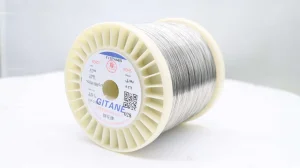
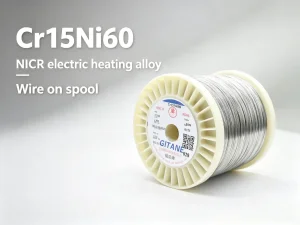
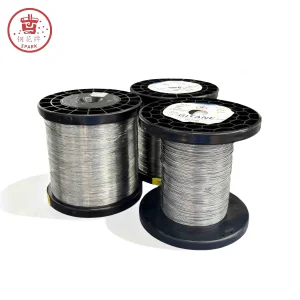
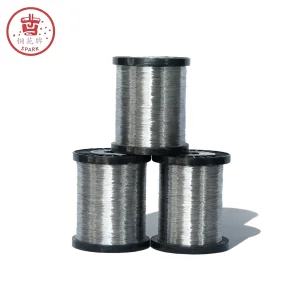
- Round Wire: Diameter from 0.05mm (0.002 in) up to 12.0mm (0.472 in). Supplied on DIN spools (DIN 125, DIN 160, DIN 200, DIN 250) or coils up to 250 kg.
- Flat Wire & Ribbon: Thickness 0.05mm to 3.0mm; Width 0.5mm to 6.0mm. Perfect for compact heating elements.
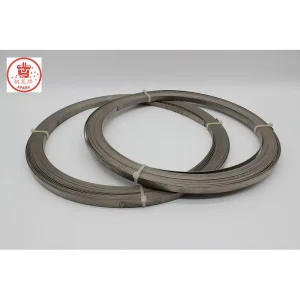
- Cold-Rolled Strip: Thickness 0.1mm to 4.0mm; Width 5.0mm to 250mm. Supplied in coils with smooth, bright finish.
- Pre-Formed Elements: Custom wound open-coil elements, wave-shaped elements, or rod-supported heating systems according to customer drawings.
Quality Assurance & Documentation
Every shipment from Beijing Shougang Gitane is issued with full-scope Mill Test Certificates according to EN 10204 3.1, detailing:
- Chemical heat analysis composition percentages
- Electrical resistance measurement (Ω/m at 20°C)
- Tensile strength and elongation percentage
- Dimensional tolerance inspection protocol
- RoHS and REACH compliance certification
Extended High-Temperature Alloy & Element Collection
Complete your furnace engineering requirements with our full line of specialized heating alloy products.


Frequently Asked Questions (Technical Sourcing Q&A)
Detailed answers to technical questions concerning Cr20Ni40 alloy engineering, thermal design, and procurement.