
⚙️ Premium Electric Heating Wire & Alloy Portfolio (Part I)
Explore our ISO9001:2005 certified resistance heating wires, custom precision coils, and ultra-high temperature FeCrAl / NiCr alloys engineered for industrial furnaces and precision heating systems.

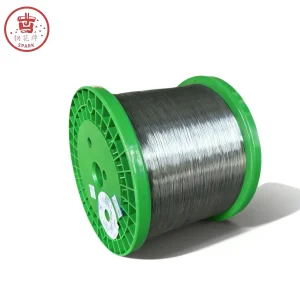

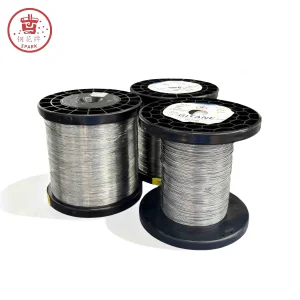

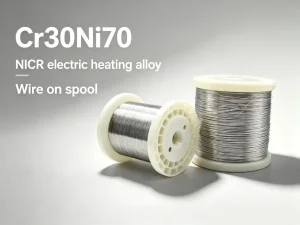

🔬 Comprehensive Overview: Cr20Ni80 Austenitic Resistance Heating Alloy
An authoritative metallurgical evaluation of Nickel-Chromium Cr20Ni80, detailing phase stability, oxide scale morphology, and high-frequency thermal cycling behavior.
Cr20Ni80 (commonly cross-referenced with Ni80Cr20, Nichrome V, W.Nr 2.4869, UNS N06003, and Resistance Heating Wire Standard GB/T 1234-2012) represents the benchmark solution among austenitic nickel-chromium resistance heating alloys. Composed of approximately 80% Nickel and 20% Chromium by mass, this binary matrix exhibits an exceptionally stable single-phase face-centered cubic (FCC) crystal structure across the entire operational thermal spectrum up to its solidus temperature of 1400°C.
In modern industrial thermo-processing, thermal efficiency and element durability depend entirely on the physical characteristics of the alloy. Unlike ferritic Iron-Chromium-Aluminum (FeCrAl) alloys, Cr20Ni80 maintains superior mechanical yield strength at elevated temperatures (hot strength), resisting structural sag, elongation, and creep deformation under self-weight or vibrational loads in heavy-duty industrial furnaces.
Key Metallurgical Advantage of Cr20Ni80:
Upon atmospheric heating above 600°C, Cr20Ni80 rapidly synthesizes a dense, self-healing, passivating oxide scale composed predominantly of Chromium Trioxide ($\text{Cr}_2\text{O}_3$) backed by a Nickel Chromite spinel ($\text{NiCr}_2\text{O}_4$) interface layer. This microscopic oxide shell acts as a chemical barrier against progressive subsurface oxidation and hot corrosion, providing an operational lifespan exceeding 10,000 thermal hours at working temperatures up to 1200°C (2192°F).
Physical, Thermal, and Electrical Parameters
Precision control during vacuum induction melting (VIM) and electroslag remelting (ESR) ensures batch-to-batch consistency in electrical resistivity and cross-sectional wire symmetry. Below are the definitive physical constants for standard-grade Cr20Ni80 heating wire:
| Physical / Thermal Property | SI Metric Unit | Imperial Unit | Technical Significance for Furnace Design |
|---|---|---|---|
| Electrical Resistivity at 20°C | 1.09 ± 0.05 µΩ·m | 656 Ω·circ.mil/ft | Provides consistent power density with minimal voltage drift during warm-up. |
| Density | 8.40 g/cm³ | 0.303 lb/in³ | Higher density contributes to structural rigidity and mass stability. |
| Max Continuous Operating Temp | 1200 °C | 2192 °F | Optimal ceiling for industrial heat treatment, kilns, and home appliances. |
| Melting Range | 1390 - 1420 °C | 2534 - 2588 °F | Wide margin above operational range prevents catastrophic burn-outs. |
| Thermal Conductivity (100°C) | 13.8 W/(m·K) | 95.7 BTU·in/(ft²·h·°F) | Ensures rapid lateral thermal dispersion along the element geometry. |
| Coefficient of Thermal Expansion | 18.0 × 10⁻⁶ /K (20-1000°C) | 10.0 × 10⁻⁶ /°F | Requires calculated expansion allowances in element support channels. |
| Post-Operational Ductility | High (Retains FCC phase) | High (Non-embrittling) | Allows maintenance handling, coil re-stretching, and repair without brittle fracture. |
📊 Shougang Gitane / SPARK Industrial Capacity Indicators
Decades of metallurgical innovation, strict quality governance, and scalable global enterprise distribution.
🌐 Global Industrial Trends & Macro Sourcing Demand
Analysis of global decarbonization policies, industrial furnace electrification, and procurement strategies for high-spec resistance wire.
1. Electrification of Thermal Processing & Green Steel Transition
The global manufacturing sector is undergoing an unprecedented shift toward decarbonization. Direct combustion furnaces powered by natural gas or fossil fuel burners are systematically being phased out in favor of zero-emission electric heating systems. Key growth sectors driving wholesale demand for Cr20Ni80 and FeCrAl alloys include:
- Lithium-Ion Battery Cathode Sintering: Roller hearth kilns requiring ultra-precise atmospheric heating up to 1100°C without particulate contamination.
- Semiconductor Wafer Processing: Horizontal and vertical diffusion furnaces demanding ultra-pure heating elements free of volatile metallic off-gassing.
- Photovoltaic Silicon Ingot Pulling: High-purity resistance zones running continuously under inert Argon atmospheres.
- Automotive Heat Treatment: Continuous carburizing, quenching, and tempering lines converting to clean electric radiant tube heating elements.
2. Comparative Sourcing Analysis: Cr20Ni80 (NiCr) vs. 0Cr25Al5 (FeCrAl)
For procurement directors and furnace engineering teams, selecting between Nickel-Chromium and Iron-Chromium-Aluminum represents a critical financial and technical decision. The matrix below outlines the decision factors:
Cr20Ni80 (Nichrome) Strengths
Superior Hot Strength: Resists sagging at 1150°C; requires fewer ceramic supports in complex coil configurations.
Non-Magnetic & Ductile: Remains fully ductile after prolonged service. Elements can be uncoiled, repaired, or welded during maintenance shutdowns.
Atmospheric Versatility: Excellent performance in protective nitrogen, argon, or carburizing gas environments.
FeCrAl (e.g., 0Cr25Al5, SGHT) Strengths
Higher Temperature Cap: FeCrAl alloys reach up to 1425°C (via powder metallurgy SGHT), whereas Cr20Ni80 caps at 1200°C.
Higher Resistivity & Lower Density: ~15% lower specific density translates to lower total alloy mass required per Kilowatt of design power.
Higher Surface Load Capacity: Tolerates aggressive surface watt loadings ($\text{W/cm}^2$) in clean oxidizing air.
🧬 Technical Roadmap, Micro-Alloying & Accelerated Life Testing
How Shougang Gitane optimizes trace elements and rare earth additions to enhance high-temperature creep resistance and oxidation life.
The performance gap between standard commercial resistance wire and premium-grade SPARK Cr20Ni80 lies in micro-alloying precision and melt clean-up technology. Traditional binary alloys suffer from scale spallation during rapid thermal shock. At Shougang Gitane, our metallurgical engineering team employs advanced micro-alloying techniques:
Reactive Element Addition (Yttrium, Cerium, Zirconium)
By adding controlled fractions (0.05% - 0.20%) of reactive rare-earth elements (RE) such as Yttrium ($\text{Y}$), Cerium ($\text{Ce}$), and Zirconium ($\text{Zr}$), the atomic grain-boundary diffusion rate is modified. Rare earths key into the protective $\text{Cr}_2\text{O}_3$ matrix, creating "reactive pegs" that anchor the oxide scale to the substrate metal. This virtually eliminates scale detachment during thermal cycling.
Accelerated Life Testing (Bash-Harsch Test according to ASTM B76)
Every melt batch of SPARK Cr20Ni80 undergoes standardized cyclic accelerated life testing. Test wires are subjected to continuous 2-minute ON / 2-minute OFF electrical heating cycles at 1150°C under controlled tension until failure occurs. Our refined Cr20Ni80 wire consistently demonstrates a 30% to 50% increase in total life cycles compared to standard market equivalents.
| Test Parameter | Standard Grade Cr20Ni80 | SPARK Micro-Alloyed Cr20Ni80 | Engineering Benefit |
|---|---|---|---|
| ASTM B76 Life Test (Hours) | 80 - 100 Hours | 140 - 180+ Hours | Extends physical replacement intervals in production kilns. |
| Oxide Scale Adhesion Rate | Moderate (Spalls on rapid cool) | Exceptional (Pegged scale) | Prevents oxide flakes from falling onto processed products/wafers. |
| Room Temp Ductility After 1000h | Elongation > 15% | Elongation > 22% | Resists mechanical fatigue from thermal vibration and magnetic hum. |
🏗️ Macro Industry Solutions & Customized Delivery Forms
Tailored alloy geometries, cold-drawn precision wires, flat ribbons, and turn-key spiral elements for industrial heat treatment.
1. Fine & Medium Round Wires
Diameter Range: 0.05mm to 12.0mm
Tolerances: DIN 17470 / GB/T 1234 precision grade (down to ±0.002mm for ultra-fine wires).
Applications: Precision medical heaters, brake resistors, sealing jaws, lab muffles, and high-reliability heating elements.
2. Cold-Rolled Flat Ribbon & Strip
Thickness: 0.1mm - 4.0mm | Width: 1.0mm - 200mm
Surface Finish: Bright annealed, smooth oxidized, or matte finish.
Applications: Heavy-duty industrial furnace heating panels, wave-shaped heating elements, radiant heaters, and packaging equipment.
3. Pre-Wound Spirals & Complete Elements
Custom Fabrication: Mandrel-wound single/double spirals, meander elements, radiant tubes, and ceramic bobbin heaters built directly to customer blueprints.
Applications: Industrial furnaces, air heaters, ceramic kilns, and heat-treatment plants.
🛡️ Global Enterprise Compliance, Testing & Quality Assurance
Full traceability from raw melt to finished coil, supported by international certification and custom logistics solutions.
Procuring heating wire for critical industrial applications requires strict adherence to international quality standards. Beijing Shougang Gitane New Materials Co., Ltd. enforces a complete 100% full-process quality tracking protocol:
1. Raw Material & Melt Assurance
Utilizes high-purity electrolytic Nickel (>99.95%) and low-carbon Ferro-Chromium. Every heat is analyzed via Optical Emission Spectroscopy (OES) and Carbon-Sulfur analysis to guarantee exact chemical compliance.
2. Mill Test Reports (EN 10204 3.1)
Every shipment is accompanied by an official Certified Material Test Report detailing exact chemical composition, 20°C electrical resistance (Ω/m), tensile strength, yield point, elongation %, and dimensional tolerances.
3. Export Packaging & Localization
Custom packaging solutions including plastic spools (DIN125, DIN160, DIN200, DIN250), wooden crates, vapor-corrosion inhibitor (VCI) shrink wrapping, and seaworthy palletizing for safe delivery worldwide.
⚡ Premium Electric Heating Wire & Alloy Portfolio (Part II)
Discover additional high-temperature resistance solutions, specialized spiral elements, and bare alloy wires designed for heavy industrial kilns and specialized heating systems.





❓ Frequently Asked Technical & Sourcing Questions
Detailed answers to common engineering, procurement, and application questions for industrial furnace designers and purchasing managers.
Q1 What is the maximum continuous working temperature for Cr20Ni80 wire?
The recommended maximum continuous working temperature for standard Cr20Ni80 resistance wire in ambient air is 1200°C (2192°F). For operating temperatures exceeding 1250°C and up to 1425°C, ferritic FeCrAl alloys such as SPARK HRE, SGHYZ, or powder-metallurgy SGHT grades are recommended.
Q2 Why does Cr20Ni80 cost more than FeCrAl alloys like 0Cr25Al5?
Cr20Ni80 contains approximately 80% high-purity refined Nickel ($\text{Ni}$), which is a high-cost commodity metal on the London Metal Exchange (LME). FeCrAl alloys are predominantly Iron-based ($\text{Fe}$). However, Cr20Ni80 offers significantly higher hot strength, remains fully ductile after heating (allowing easy element repair), and excels in protective or cycling atmospheres, making its total lifecycle cost lower in many applications.
Q3 How do I calculate the correct surface loading (W/cm²) for Cr20Ni80 heating elements?
Element surface loading ($\text{w} = P / A$) depends on furnace operating temperature, heating medium, element geometry, and enclosure heat transfer coefficient. For Cr20Ni80 in industrial air furnaces running at 1000°C, a conservative surface load of 1.5 to 2.5 W/cm² is typically recommended to maximize element lifespan and prevent localized overheating.
Q4 Does Cr20Ni80 resist carburizing atmospheres in heat-treatment furnaces?
Cr20Ni80 exhibits moderate resistance to carburizing environments, but under reducing carbon-rich conditions between 800°C and 950°C, it can suffer from "Green Rot" (internal oxidation of chromium). In heavily carburizing or endothermic gas furnaces, pre-oxidizing the wire to build a dense $\text{Cr}_2\text{O}_3$ layer or selecting high-nickel/silicon modified alloys (like Cr30Ni70 or FeCrAl) is recommended.
Q5 What quality certifications and test documentation do you provide with bulk shipments?
Beijing Shougang Gitane is ISO 9001:2005 certified. Every shipment is delivered with a complete EN 10204 3.1 Mill Test Report (MTR) including chemical analysis, resistivity values at 20°C, wire diameter tolerances, tensile strength, elongation percentages, and batch heat numbers for complete raw material traceability.