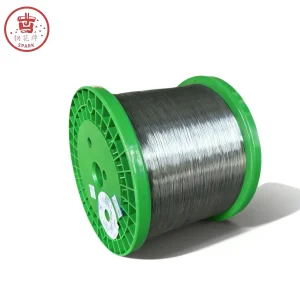
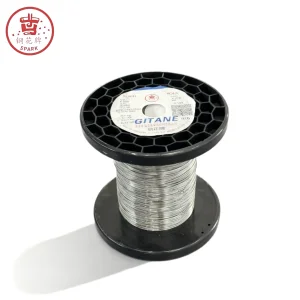
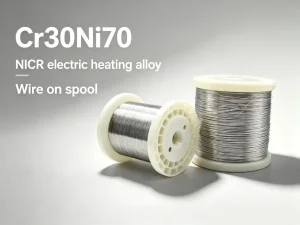
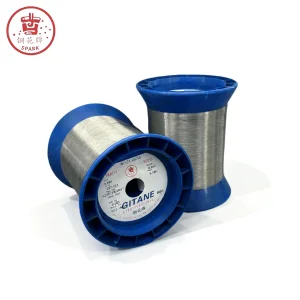
Featured 1400°C Industrial Heating Alloys & Elements
Direct factory supply from China's leading metallurgical manufacturer — engineered for high oxidation resistance and extended service life.
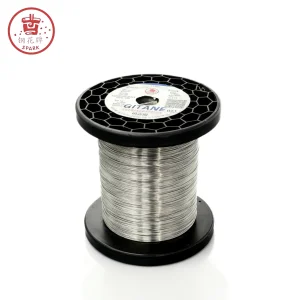
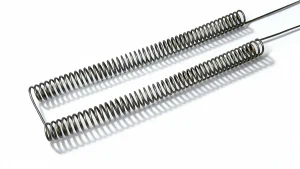
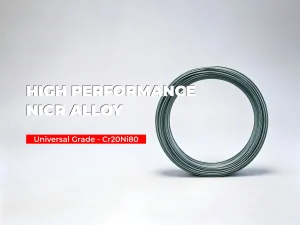
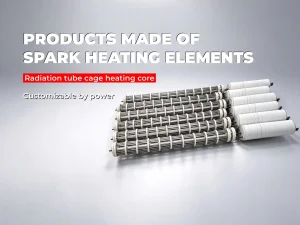
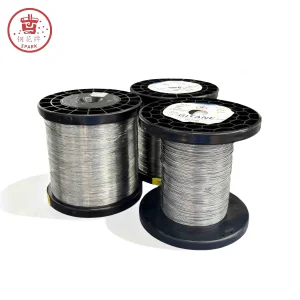
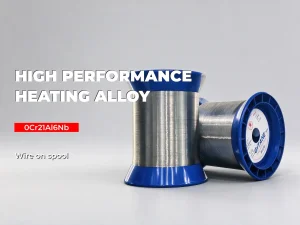
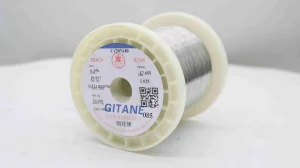
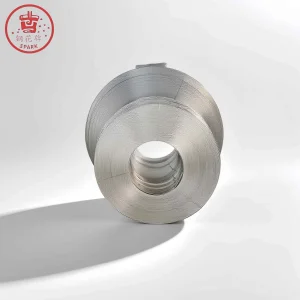
1400°C Thermal Engineering & High-Temperature Alloy Metallurgy
Understanding the material physics, protective scale mechanisms, and structural longevity of advanced heating elements operating at extreme thermal thresholds.
In modern high-temperature thermal processing, 1400°C represents a critical metallurgical watershed. Operating standard resistance alloys above 1200°C subjects heating elements to exponential acceleration in oxidation rates, rapid grain growth, thermal sag, and mechanical creep failure. To maintain dimensional stability and electrical consistency at 1400°C continuous service, furnace design engineers and enterprise buyers must select specialized high-temperature Iron-Chromium-Aluminum (FeCrAl) alloys modified with rare-earth element packages (such as Yttrium, Zirconium, and Hafnium) or advanced powder metallurgy dispersion-strengthened alloys.
Global Commercial & Industrial Demand for 1400°C Heating Systems
Key macro trends driving the global transition toward high-efficiency electric thermal processing.
Industrial Decarbonization
Global manufacturing industries are actively replacing fossil-fuel-fired burners with zero-emission, zero-carbon electric resistance heating. High-temperature 1400°C heating elements enable steel, glass, and ceramic facilities to electrify thermal processing without sacrificing heat intensity.
Semiconductor & Photovoltaic Expansion
Silicon crystal ingot pulling, wafer annealing, and solar diffusion furnaces require extreme thermal uniformity at temperatures up to 1400°C. Pure FeCrAl elements prevent heavy-metal contamination while providing rock-solid thermal stability.
Lithium-Ion Battery Cathode Calcination
The manufacturing of high-nickel NCM and LFP cathode active materials involves aggressive calcination cycles at high temperatures. Specialized heating elements resist corrosive alkaline vapors and maintain precise chamber temperatures.
Metallurgical Comparison Matrix: 1400°C Heating Technologies
Evaluating FeCrAl, NiCr, Silicon Carbide (SiC), and Molybdenum Disilicide (MoSi₂) heating elements for industrial buyers.
| Heating Material | Max Temp (°C) | Resistivity (μΩ·m) | Hot/Cold Mechanical Ductility | Corrosion & Oxidation Resistance | Relative Cost Factor |
|---|---|---|---|---|---|
| SPARK SGHT (FeCrAl PM) | 1425°C | 1.45 | High ductile before use; sag-resistant | Superior α-Al₂O₃ protective film | Moderate (High ROI) |
| SPARK SGHYZ (FeCrAl) | 1400°C | 1.42 | Good coilability; rigid upon oxidation | Excellent self-healing oxide scale | Economical Wholesale |
| SPARK HRE Grade | 1350°C | 1.40 | Standard industrial coilable wire | Very High | Cost-Effective Workhorse |
| Cr20Ni80 Nichrome | 1200°C | 1.09 | Extremely flexible cold & after heating | Moderate (Cr₂O₃ oxide) | High (Expensive Ni Content) |
| Silicon Carbide (SiC) | 1500°C | Variable | Brittle non-metallic element | Oxidizes steadily to SiO₂ | High (Requires Voltage Tapping) |
| MoSi₂ Rods | 1700°C | Very Low | Very brittle ceramic-like element | Forms quartz layer (SiO₂) | Very High (Heavy & Fragile) |
Watt Loading (W/cm²) & Surface Temperature Engineering
A critical metric when specifying wholesale 1400°C heating elements is Surface Loading (Watt Density). Operating an element at 1400°C furnace ambient temperature requires that the wire surface temperature remain within safe boundaries (typically under 1425°C). Excess surface loading causes localized overheating, oxide breakdown, and rapid wire burnout.
The total electrical power rating ($P$) for a coil or rod element is calculated as:
For continuous 1350°C–1400°C service in air, standard recommended surface loadings range between 1.2 to 2.2 W/cm² depending on wire diameter, ceramic support configuration, and cycle frequency.
The Chinese Factory Advantage: Precision Metallurgy & Supply Scale
Why leading industrial furnace manufacturers worldwide partner with Shougang Gitane / SPARK brand for OEM heating alloy procurement.
60+ Years Metallurgical Heritage
Backed by decades of state-of-the-art steelmaking and alloy smelting expertise, our facility operates over 39,000 m² of specialized workshops dedicated exclusively to precision heating wire, ribbon, and fabricated element manufacturing.
Vertical Integrated Smelting
From Vacuum Induction Melting (VIM) and ingot forging to continuous multi-pass wire drawing and bright annealing, complete vertical integration guarantees precise chemical composition control, batch-to-batch consistency, and cost savings.
Rigorous Quality Assurance
Certified to ISO 9001 and ISO 14001, every production batch undergoes 50-hour rapid accelerated life testing, spectral chemical analysis, cross-sectional grain structure verification, and strict resistance tolerance checking according to GB/T 1234-2012.
Industrial Application Scenarios for 1400°C Heating Elements
Engineered thermal solutions tailored for severe industrial environments and precise atmosphere furnaces.
1. Advanced Technical Ceramic & Dental Sintering Kilns
In high-density zirconia ceramic sintering and technical alumina processing, furnace temperatures must reach 1350°C–1400°C with absolutely zero metallic flaking or furnace contamination. SPARK SGHYZ and SGHT element coils provide clean, non-contaminating radiant heat with zero carbon release, guaranteeing flawless ceramic translucency and mechanical hardness.
2. Roller Hearth & Mesh Belt Kilns for Battery Materials
Industrial continuous furnaces producing lithium-ion battery precursors operate 24/7 under grueling continuous thermal loads. Heavy-gauge spiral elements and ceramic bundle rod radiant tubes constructed from 0Cr21Al6Nb and SGHT alloys resist chemical degradation from alkali fumes while retaining high structural rigidity against sagging.
3. Industrial Powder Metallurgy & Vacuum Sintering
Powder metal compacts require exact sintering temperature profiles up to 1380°C under protective hydrogen or nitrogen-hydrogen inert atmospheres. FeCrAl heating elements engineered with micro-alloyed reactive elements ensure high resistivity, low creep rate, and extended operational cycles between maintenance turnarounds.
4. Heavy Industrial Steel Heat Treating & Forging
Large-scale tempering, annealing, and hardening furnaces utilize high-capacity bundle-rod ceramic radiant tubes and heavy ribbon elements. These heavy-duty heating cores deliver uniform radiant heat transfer across broad furnace chambers, minimizing thermal stress on processed metal components.
Emerging Technological Trends in High-Temperature Resistance Alloys
Innovations shaping the future of industrial electric thermal systems.
- Powder Metallurgy & Oxide Dispersion Strengthened (ODS) Alloys: Next-generation FeCrAl materials synthesized via powder metallurgy eliminate traditional ingot segregation. Microscopic yttrium oxide dispersions pin grain boundaries, preventing high-temperature grain growth and dramatically increasing sag resistance up to 1425°C.
- Smart Heating Elements & Resistance Monitoring: Integrating continuous electrical resistance logging into furnace automation allows predictive maintenance algorithms to monitor oxide scale growth in real-time, forecasting element life and preventing unexpected production downtime.
- Optimized Coil & Radiant Tube Geometries: Advanced computer-aided thermal modeling allows customized pitch-to-diameter coiling ratios and ceramic sleeve supports, increasing radiant efficiency while lowering power consumption per ton of processed heat-treated material.
Global Enterprise B2B Procurement & RFP Checklist
Key technical criteria to specify when issuing RFQs for wholesale 1400°C heating elements.
1. Alloy Grade & Purity Specs
Specify exact chemical composition standards (e.g., FeCrAl with controlled Al 5.0–6.5%, Cr 21–24%, plus rare-earth additions Y/Zr/Hf). Request Certified Mill Test Reports (MTRs) matching GB/T 1234-2012 or international equivalents.
2. Dimensional & Electrical Tolerances
Confirm wire diameter tolerances (±0.01mm to ±0.05mm), linear resistance tolerances (±3% to ±5%), coil outer diameter (O.D.), coil pitch ratio, and cold terminal leg dimensions to fit existing furnace wall bushings.
3. Packaging & Export Logistics
High-temperature wires and pre-wound elements must be shipped in moisture-proof, plastic-sealed packaging with heavy-duty wooden spools or reinforced export crates to prevent physical deformation or surface corrosion during ocean freight.
Frequently Asked Questions (FAQ) - Technical & Wholesale Procurement
Direct answers from our senior metallurgical engineers to assist procurement managers and thermal designers.
Our premium FeCrAl grades such as SPARK SGHYZ are rated for continuous operational service up to 1400°C in air, while our powder-metallurgy SPARK SGHT grade can operate at peak furnace temperatures up to 1425°C. For Nichrome (Cr20Ni80) alloys, the maximum continuous limit is 1200°C.
FeCrAl alloys offer significantly higher maximum operating temperatures (up to 1425°C vs. 1200°C for NiCr), higher electrical resistivity (+30%), lower density (meaning ~15% less material weight required), and a superior protective alpha-alumina (α-Al₂O₃) scale. Additionally, FeCrAl is substantially more cost-effective due to the absence of expensive Nickel.
Reactive rare-earth additions pin the protective alumina scale to the underlying metal matrix, preventing thermal spallation during heating and cooling cycles. They also suppress high-temperature grain boundary creep, greatly reducing long-term element sag and dimensional elongation.
In reducing atmospheres (e.g., pure H₂ or N₂/H₂ mixes) or vacuum, the protective alumina scale cannot self-heal naturally. We recommend pre-oxidizing the elements in ambient air at 1050°C–1100°C for 8 to 12 hours prior to operating under atmosphere control, or reducing the maximum working temperature rating accordingly.
We supply standard round wire (0.1mm to 12mm diameter), flat ribbon/strip, pre-wound spiral coils, ceramic bundle rod assemblies, meander-shaped ribbon elements, and complete plug-in radiant tube heating cores manufactured to customer engineering drawings.
For standard wire diameters and stock alloy grades (e.g., 0Cr25Al5, HRE, Cr20Ni80), lead times are typically 5–7 working days. Custom alloy melts or specialized pre-wound element fabrications require 14–21 days. We support flexible sample quantities for OEM evaluation, with bulk wholesale tier discounts starting at 100 kg.
Explore Additional High-Temperature Resistance Products
Factory-direct resistance alloys, spiral coils, and customized furnace heating elements.