
Featured High-Temperature Alloys & Heating Elements
Factory-direct wholesale 1350℃ FeCrAl resistance wire, spiral coils, and custom heating element assemblies certified for continuous thermal processing.

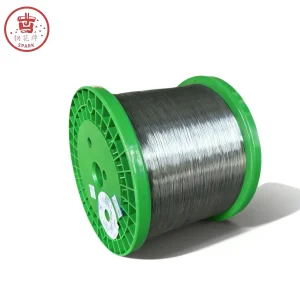
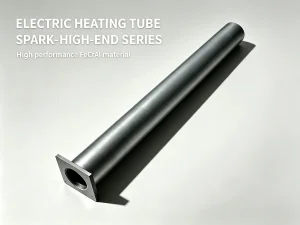
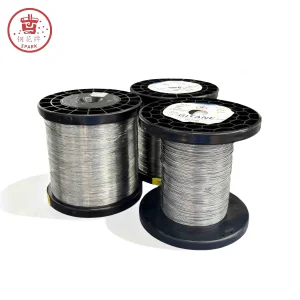
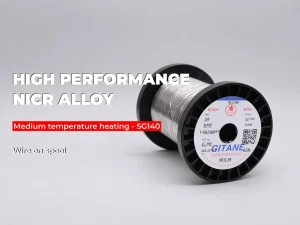
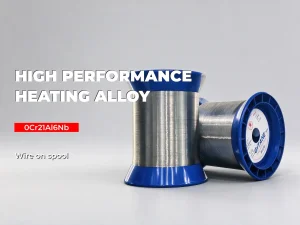

Metallurgical Foundations of 1350℃ Resistance Heating Alloys
In thermal engineering and high-temperature furnace design, reaching and sustaining operating temperatures of 1350℃ represents a critical thermodynamic threshold. At these extreme thermal levels, standard electrical resistance alloys experience severe creep deformation, accelerated grain growth, and destructive spallation of protective oxide scales.
As a premier wholesale 1350℃ heating wire manufacturer and factory, our advanced metallurgical engineering focuses on optimized Iron-Chromium-Aluminum (FeCrAl) matrix chemistry—specifically engineered high-grade compositions such as 0Cr21Al6Nb, HRE (High Resistance Alloy), and Powder Metallurgy (PM) SGHT alloys. Achieving long service life at 1350℃ requires precise micro-alloying and strict phase stability controls during vacuum induction melting (VIM) and hot processing.
Self-Healing α-Al₂O₃ Oxide Scale
At continuous 1350℃ operation, our FeCrAl alloys form an ultra-dense, thermodynamically stable alpha-alumina ($\alpha-\text{Al}_2\text{O}_3$) surface layer. This protective scale acts as an electrical insulator and diffusion barrier against atmospheric oxygen, sulfur, and carbon ingress.
Reactive Element Addition (RE)
By micro-alloying precise stoichiometry of Yttrium (Y), Zirconium (Zr), and Niobium (Nb), we eliminate interfacial voids at the oxide-metal boundary. This prevents thermal spallation during rapid heating and cooling cycles in industrial kilns.
High Electrical Resistivity
With a room temperature electrical resistivity reaching up to 1.45 μΩ·m, our 1350℃ resistance wire allows furnace engineers to design compact heating elements with higher surface loads ($W/cm^2$) without risking element overheating.
Global Industrial Landscape & Commercial Imperatives
The global transition toward net-zero industrial manufacturing has triggered a massive shift from fossil-fuel burner systems to high-efficiency electric thermal processing.
Demand for high-temperature resistance wire is driven by four primary industrial megatrends: Lithium-ion battery cathode sintering (requiring pristine chemical purity), advanced technical ceramics firing (zirconia, alumina, silicon nitride), semiconductor wafer thermal processing (diffusion and oxidation furnaces), and powder metallurgy sintering. Procurement directors and furnace OEMs require consistent batch chemistry to avoid thermal drift and unexpected element failures.
Localized Application Scenarios & Engineering Field Guides
Deploying 1350℃ heating wire requires specific design optimizations depending on geographic working conditions, furnace design standards, and localized manufacturing demands.
1. North American Industrial Heat Treatment
Environment: Large-scale car-bottom kilns, continuous mesh-belt furnace lines, and atmosphere-controlled carburizing furnaces in US & Canadian automotive manufacturing hubs.
Engineering Challenge: Thermal shock resistance during heavy load charging and resistance to carbon burnout.
Solution: Specification of 0Cr21Al6Nb FeCrAl wire pre-oxidized in clean air to establish a thick $\alpha-\text{Al}_2\text{O}_3$ scale prior to atmospheric introduction. Recommended surface load: 1.8 to 2.2 W/cm².
2. European Advanced Ceramic & Glass Tempering
Environment: High-precision roller hearth kilns and glass tempering plants across Germany, Italy, and Northern Europe adhering to strict EN furnace safety guidelines.
Engineering Challenge: Strict electrical insulation standards, low creep deformation over multi-year continuous operation, and precise coil dimension tolerances.
Solution: Implementation of SPARK HRE alloy heavy-gauge wire and pre-formed spiral elements supported by high-alumina ceramic tubing. This setup minimizes sag while maintaining tight resistance tolerances (±3%).
3. Asian Battery Material Sintering Lines
Environment: Gigawatt-scale Lithium Battery Cathode (LFP / NCM) rotary kilns and pusher kilns operating continuously across China, South Korea, and Southeast Asia.
Engineering Challenge: High chemical attack from lithium vapors, alkaline dust, and volatile oxygen atmospheres.
Solution: Application of Powder Metallurgy SGHT heating wire featuring refined grain structures that prevent grain border penetration by corrosive lithium gases at 1200℃–1350℃.
Technical Roadmap & Future Outlook (2025–2035)
Next-generation thermal processing demands higher temperature capabilities, extended lifecycle durability, and AI-driven thermal predictive modeling.
Traditional ingot metallurgy reaches its physical limit near 1380℃ due to rapid grain coarsening and soft phase transformation. Our R&D engineering roadmap bridges current manufacturing capabilities with emerging microstructural technologies:
| Technology Horizon | Metallurgical Focus | Operating Limit | Key Performance Advantage |
|---|---|---|---|
| Generation I (Current Standard) | Melting Ingot Metallurgy (0Cr21Al6Nb / 0Cr27Al7Mo2) | 1300℃ – 1350℃ | Cost-effective, reliable alumina scale formation, high availability for standard industrial furnaces. |
| Generation II (Advanced Standard) | Micro-alloyed HRE & Rare Earth (Y/Zr) Refinement | 1350℃ – 1380℃ | Superior scale adhesion, 30% reduction in thermal sagging, enhanced resistance to dynamic thermal cycling. |
| Generation III (Next-Gen PM) | Powder Metallurgy & Oxide Dispersion Strengthened (ODS) FeCrAl | 1400℃ – 1425℃ | Ultra-high creep resistance, near-zero sag, extended lifespan under aggressive chemical kilns. |
| Generation IV (Future Outlook) | Nano-structured Ceramic-Metal Hybrids & AI Smart Elements | 1450℃+ | Integrated in-situ resistance telemetry for real-time predictive failure monitoring and automated power balancing. |
China Factory Supply Chain Resilience & Cost-Performance Dominance
Leveraging vertical integration from raw material smelting to final precision coil drawing delivers unparalleled quality stability and global pricing advantages.
Full Upstream Smelting Integration
Unlike secondary re-drawers, our manufacturing ecosystem controls the entire melt line: Vacuum Induction Melting (VIM), Electroslag Remelting (ESR), hot billet rolling, cold wire drawing, and continuous bright annealing. This ensures zero trace contaminant variation batch-to-batch.
Direct Wholesale CAPEX Savings
By optimizing manufacturing efficiency, direct bulk sourcing yields a 25% to 40% CAPEX saving compared to Western European brand-name resistance alloys, without sacrificing chemical purity, resistivity tolerance, or high-temperature lifespans.
Buffer Stock & Agile Export Logistics
We maintain extensive raw ingot and standard diameter wire stocks (0.5mm to 12.0mm wire, strip up to 250mm width), ensuring expedited air or sea freight shipping to industrial OEM clients worldwide in under 14 days.
Comparative Technical Specification Matrix
Engineering datasheet reference for selection of high-temperature electrical resistance wire and strip per GB/T 1234-2012, ASTM B603, and international standards.
| Alloy Grade | Alloy Family | Max Temp (℃) | Resistivity @20℃ (μΩ·m) | Density (g/cm³) | Melting Point (℃) | Primary Industrial Application |
|---|---|---|---|---|---|---|
| SPARK HRE | FeCrAl (Rare Earth) | 1350℃ | 1.45 | 7.10 | 1500℃ | Powder metallurgy, heavy industrial kilns, ceramic sintering. |
| 0Cr21Al6Nb | FeCrAl + Niobium | 1350℃ | 1.45 | 7.10 | 1500℃ | High-temperature industrial furnaces, radiant tubes, heat treatment. |
| SPARK SGHT | FeCrAl (Powder Met) | 1425℃ | 1.45 | 7.10 | 1505℃ | Ultra-high temp kilns, semiconductor diffusion, advanced ceramics. |
| 0Cr25Al5 | FeCrAl Standard | 1250℃ | 1.42 | 7.10 | 1500℃ | General industrial heating, bake ovens, commercial equipment. |
| Cr20Ni80 | Nichrome (NiCr) | 1200℃ | 1.09 | 8.40 | 1400℃ | Frequent dynamic cycling, medical devices, precision appliances. |
| Cr30Ni70 | Nichrome High-Cr | 1250℃ | 1.18 | 8.10 | 1380℃ | Industrial furnaces with reducing atmospheres, heavy industrial heaters. |
Quality Verification, Localized Compliance & E-E-A-T Guarantees
Certified manufacturing practices compliance ensuring full traceability, international standard adherence, and complete product reliability.
System Certification
Fully certified under ISO 9001:2015 Quality Management System, ISO 14001 Environmental Management, and ISO 45001 Occupational Health. All shipments include certified Mill Test Certificates (MTC EN 10204 3.1).
Rigorous NDT Quality Control
Every spool of 1350℃ resistance wire undergoes 100% online Eddy-Current flaw detection, laser diameter gauging (±0.01mm tolerance), optical spectrum chemical analysis, and room-temperature electrical resistance verification.
Global Environmental Compliance
Fully compliant with European EU Directive RoHS 2011/65/EU and REACH (EC 1907/2006) regulations, guaranteeing freedom from restricted heavy metals and hazardous substances.
Comprehensive Industrial Alloy Catalog
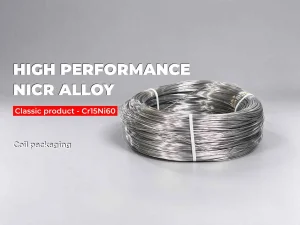
Explore our complete range of NiCr, FeCrAl, specialized resistance alloys, and precision measurement equipment.




Frequently Asked Questions (Technical & Procurement FAQ)
In-depth technical responses curated by senior metallurgical engineers for furnace builders, thermal design specialists, and global purchasing agents.
- Air / Oxidizing: 1350℃
- Dry Nitrogen ($N_2$): 1250℃ (Nitride formation risk)
- Pure Hydrogen ($H_2$): 1300℃ (Requires dew point <-40℃)
- Carburizing Atmosphere: 1100℃–1150℃ (Risk of green rot and carbon pickup)
- Vacuum: 1100℃ (Aluminum vaporization occurs under high vacuum at elevated temperatures)
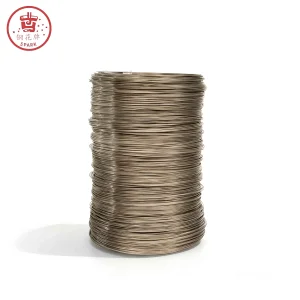
- Round Wire: Diameters from 0.10mm up to 12.0mm on DIN spools or coils.
- Flat Wire / Ribbon: Thickness 0.2mm–3.0mm, Width 1.0mm–10.0mm.
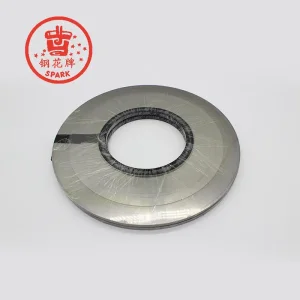
- Cold-Rolled Strip: Thickness 0.5mm–4.0mm, Width 10mm–250mm.
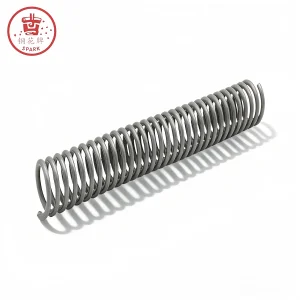
- Fabricated Pre-formed Elements: Wound spiral coils, wave-shaped elements, and rod elements engineered to OEM drawings.