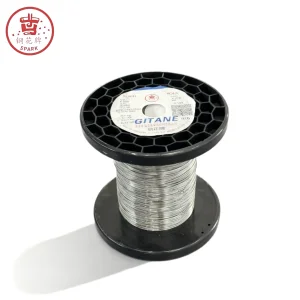
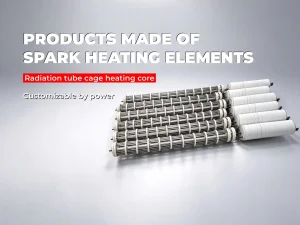
Featured Resistance Alloy Solutions & Heating Elements
High-precision FeCrAl & NiCr resistance wire, furnace cores, and industrial heating solutions manufactured under rigorous ISO 9001 and GB/T 1234-2012 standards.




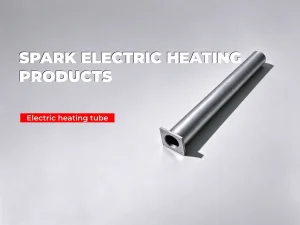



Comprehensive Analysis on Metallurgical Innovations, Electrically Heated Catalysts (EHC), Euro 7 / EPA Tier 4 Emission Compliance, and Global OEM Procurement Benchmarks.
The global automotive and industrial emissions abatement ecosystem is undergoing a fundamental technological shift. Driven by stringent international environmental mandates—such as Euro 7 emissions standards, US EPA Tier 4 regulations, and China VI-b/VII guidelines—manufacturers of catalytic converters are increasingly forced to solve the "cold-start emissions" dilemma. Over 80% of harmful internal combustion engine emissions (NOx, CO, and unburned hydrocarbons) occur within the first 60 seconds of engine startup, before the precious metal catalyst bed reaches its light-off temperature (typically 250°C to 350°C).
To eliminate this critical gap, direct electrical pre-heating utilizing high-temperature metallic substrates has transitioned from a specialized niche to a foundational requirement. Among all high-temperature resistance alloys, 1350℃ FeCrAl (Iron-Chromium-Aluminum) heating elements—manufactured through precise vacuum induction melting and advanced powder metallurgy or micro-alloying—stand out as the definitive material standard. Offering superior electrical resistivity, extreme oxidation resistance at temperatures up to 1350°C, high thermal creep strength, and extraordinary immunity to sulfur corrosion, FeCrAl alloys form the backbone of modern Electrically Heated Catalysts (EHC), Diesel Particulate Filter (DPF) regeneration heaters, and Industrial VOC catalytic incinerators.
Global Market Trends & Procurement Demand Analysis
According to recent global procurement surveys across Tier-1 automotive exhaust suppliers and industrial catalytic system integrators, demand for 1350℃-grade FeCrAl resistance elements (available in thin-gauge corrugated foil, woven wire mesh, and precision drawn wire) is experiencing unprecedented year-over-year growth. Key demand vectors include:
- Rapid Adoption of Electrically Heated Catalysts (EHC): EHC units utilize structured FeCrAl metallic foils directly energized by 48V mild-hybrid or high-voltage battery architecture. These units require heating elements capable of withstanding thermal shocks from ambient to 1000°C within 2 to 5 seconds without mechanical warping or grain boundary degradation.
- Industrial VOC and Methane Abatement Systems: Petrochemical, pharmaceutical, and printing industries requiring thermal and catalytic oxidation systems demand robust pre-heating grids capable of operating continuously in corrosive flue gases at temperatures between 1100°C and 1350°C.
- Transition to Metallic Monolith Substrates: Compared to traditional ceramic honeycomb substrates (Cordierite), metallic FeCrAl substrates feature thinner cell walls (0.02 mm to 0.05 mm), lower backpressure, superior mechanical shock resistance, and direct electrical conductivity—making them ideal heating elements themselves.
Metallurgical Principles & Superiority of 1350℃ FeCrAl Alloys
Understanding the material science behind self-passivating alumina scale formation, reactive element additions, and resistance to cyclic oxidation.
Alpha-Alumina (α-Al₂O₃) Scale Passivation
At temperatures exceeding 1000°C, 1350℃ FeCrAl alloys selectively oxidize to form an ultra-thin, highly adherent, electrically insulating, and thermodynamically stable layer of alpha-alumina (α-Al₂O₃) on the outer surface. This protective film acts as a formidable diffusion barrier against further oxygen penetration and chemical attack by hot exhaust gases.
Reactive Element Effect (REM)
By doping the melt with precise micro-additions of Yttrium (Y), Zirconium (Zr), Hafnium (Hf), and Rare Earth Elements (RE), such as in specialized HRE and SGHYZ grades, grain-boundary growth is pinned. This prevents spallation of the oxide layer under intense thermal cycling and drastically extends element operational life in catalytic applications.
Resistance to Creep & Structural Sagging
Standard alloys exhibit severe mechanical softening and grain growth at 1350°C, causing structural sagging and localized electrical short-circuits in thin-walled catalytic substrates. Advanced powder-metallurgy FeCrAl (e.g., SGHT grade) creates dispersion-strengthened microstructures that maintain dimensional integrity under harsh physical vibrations.
Comparative Technical Specification Matrix
| Alloy Grade / Material Type | Nominal Composition | Max Temp (°C) | Resistivity (μΩ·m, 20°C) | Density (g/cm³) | Primary Application in Catalytic Converters |
|---|---|---|---|---|---|
| SPARK HRE (1350℃ Grade) | Fe - 26% Cr - 6% Al + RE (Y/Zr) | 1350°C | 1.45 | 7.10 | EHC Heating Grids, Heavy-Duty Diesel DPF Heaters, VOC Abatement |
| SPARK SGHYZ (Ultra-Pure FeCrAl) | Fe - 25% Cr - 5.8% Al + Micro-Doped RE | 1400°C | 1.43 | 7.15 | Ultra-High Temperature Exhaust Gas Pre-Heaters, Ceramic Sintering |
| SPARK 0Cr25Al5 (Standard FeCrAl) | Fe - 25% Cr - 5% Al | 1250°C | 1.42 | 7.10 | General Industrial Radiant Tubes, Secondary Heating Coils |
| SPARK SGHT (Powder Metallurgy) | Fe - 24% Cr - 5.5% Al + Oxide Dispersion | 1425°C | 1.46 | 7.10 | Extreme Vibration EHC Foils, High-Frequency Cycling Systems |
| Cr20Ni80 (Nichrome Standard) | 80% Ni - 20% Cr | 1200°C | 1.09 | 8.40 | Low-Temperature Auxiliary Heaters (Not Suitable for High Sulfur Exhaust) |
Macro Industry Solutions: Engineering FeCrAl in Catalytic Convertor Assembly
Integrating 1350℃ FeCrAl heating elements into OEM catalytic converter assemblies requires a deep holistic understanding of electrical engineering, fluid dynamics, and mechanical packaging. As a premier wholesale manufacturer, Shougang Gitane provides comprehensive macro solutions across three core catalyst architecture formats:
1. Electrically Heated Foil Monoliths (EHC)
Direct integration of micro-corrugated FeCrAl alloy strips (0.03mm - 0.05mm thickness) wound into honeycomb structures. Electrodes attached directly to the outer shell allow rapid heating via high amperage power supplies, activating washcoat chemistry prior to engine ignition.
2. Sintered Wire Mesh Catalyst Discs
Precision woven FeCrAl alloy wire screens stacked and vacuum-sintered to create highly turbulent air passage channels. This maximizes thermal transfer efficiency between the 1350℃ heated surface and incoming exhaust gases while minimizing overall pressure drop.
3. Tubular Sheathed Pre-Heaters for Industrial Flue Gas
For industrial VOC abatement facilities, heavy-gauge 1350℃ FeCrAl heating coils are housed within high-grade refractory alloy tubes or ceramic cores, providing robust continuous duty pre-heating for large volume catalyst beds.
While Nickel-Chromium (NiCr) alloys are widely used in traditional industrial furnaces, they are inherently prone to catastrophic failure in internal combustion and industrial combustion exhaust streams. Exhaust gases contain trace amounts of sulfur dioxide (SO₂) and hydrogen sulfide (H₂S). Nickel reacts aggressively with sulfur at temperatures above 600°C to form low-melting-point nickel sulfide (Ni₃S₂) eutectics, causing rapid intergranular corrosion. FeCrAl alloys, being completely nickel-free, are immune to nickel-sulfidation and thrive in harsh, sulfur-rich combustion atmospheres.
Global Procurement Strategy & Factory Quotes Insights
When procurement managers and technical directors evaluate wholesale supplier quotes for 1350℃ FeCrAl heating elements, looking solely at the per-kilogram or per-unit purchase price often leads to hidden long-term operational costs. A comprehensive Total Cost of Ownership (TCO) framework must consider material quality, yield rates, consistency, and supply chain integrity.
1. Raw Material Purity & Melt Traceability
The lifespan of a 1350℃ heating element is directly governed by trace impurities. Excess carbon (C), nitrogen (N), or sulfur (S) disrupts the uniform growth of the protective α-Al₂O₃ scale, causing premature cracking and spallation. Shougang Gitane utilizes state-of-the-art Vacuum Induction Melting (VIM) followed by Electroslag Remelting (ESR) to ensure ultra-low carbon levels and tight compositional tolerances compliant with GB/T 1234-2012.
2. Dimensional Uniformity & Resistance Tolerances
For automated catalytic converter assembly lines, variations in wire diameter or foil thickness cause localized resistance hot-spots, leading to uneven pre-heating across the catalyst face and early component burnout. Our factory enforces a standard dimensional tolerance within ±0.005 mm for fine wires and thin strip products, guaranteeing uniform electrical resistance throughout every batch.
3. Surface Condition & Pre-Oxidization Options
To reduce thermal run-in times for converter manufacturers, elements can be supplied with factory-pre-oxidized surfaces. This forms a stabilized alpha-alumina coating prior to final delivery, ensuring immediate operational readiness and protection against contamination during assembly.
Localized Support, Compliance & Quality Assurance
Partnering with Beijing Shougang Gitane New Materials Co., Ltd. ensures full international quality alignment, technical consultation, and complete regulatory compliance.
Certifications & Standards Compliance
Our manufacturing ecosystem operates strictly under ISO 9001:2015 Quality Management Systems and ISO 14001 Environmental Management Systems. All 1350℃ FeCrAl resistance alloys conform fully to China’s GB/T 1234-2012 standard and match or exceed international standards including ASTM B603, DIN 17470, and JIS C2520. Products shipped globally are fully compliant with EU REACH and RoHS regulations.
Global OEM Technical Support & Customization
With over 30% of our 500+ workforce composed of senior metallurgical engineers and process specialists, we offer direct technical consultation for global catalytic converter OEMs. From customized alloy development, surface load calculations (W/cm²), and ribbon slitting to coil winding and prototype fabrication, our team delivers localized engineering responsiveness from concept to full-scale factory production.
Technological Roadmap & Future Outlook (2025–2030)
As global transportation transitions toward zero-emission and hydrogen-powered futures, the role of 1350℃+ FeCrAl alloys continues to evolve into advanced thermal management frontiers:
Hydrogen Combustion Engine Aftertreatment
Hydrogen internal combustion engines produce elevated water vapor (H₂O) levels in the exhaust, which accelerates oxidation spallation in standard metals. Next-generation FeCrAl alloys with enhanced Y/Zr micro-alloying are specifically optimized to withstand high p(H₂O) environments at 1300°C+.
Ultra-Thin Nanostructured Foils (0.02 mm)
Ongoing advancement in cold-rolling technology allows production of ultra-thin 20-micron FeCrAl foils, enabling catalyst manufacturers to double cell density (CPSI) while reducing element warm-up mass for sub-second e-catalyst response.
Fuel Cell & Solid Oxide Electrolyzer Systems
Adapting 1350℃ FeCrAl substrates as interconnects and balance-of-plant high-temperature heating elements for Solid Oxide Fuel Cells (SOFC) and Solid Oxide Electrolyzer Cells (SOEC) operating in harsh steam-reforming environments.
Frequently Asked Questions (FAQ)
Addressing Key Metallurgical, Operational, and Wholesale Procurement Inquiries from Global Engineers and Buyers.
Why is 1350℃ FeCrAl alloy preferred over Nichrome (NiCr) for catalytic converter heating elements?
What product delivery forms are available for wholesale factory orders?
How does the alpha-alumina (α-Al₂O₃) protective layer extend element life?
What factors should be considered when calculating the surface load (W/cm²) for an EHC catalyst element?
Does Shougang Gitane provide mill test reports and batch certification?
How can I obtain custom factory quotes and sample spools for testing?
Explore More High-Temperature Alloys & Industrial Systems
Complete factory catalog options including SPARK series resistance wire, customized industrial furnaces, and ultra-high-temperature heating tubes.