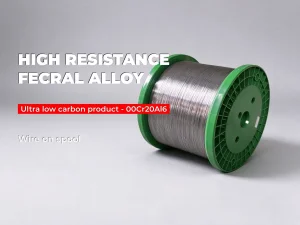
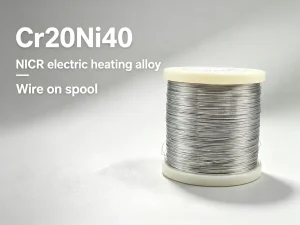
Featured High-Temperature Alloys & Resistance Heating Coils
Explore our premium FeCrAl and NiCr heating elements optimized for 1100℃ to 1425℃ continuous operation.

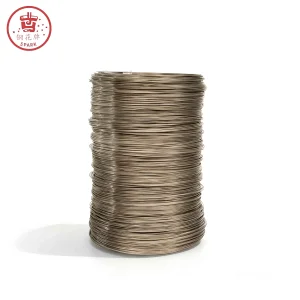
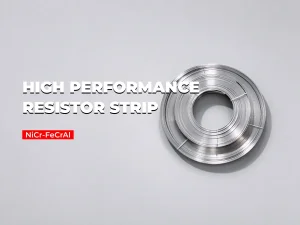
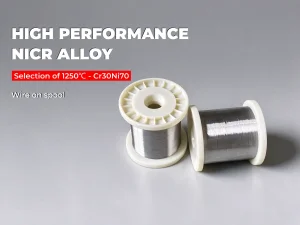


Technical Whitepaper: 1300℃ Resistohm 145 Equivalent FeCrAl Alloy Metallurgy
A comprehensive engineering analysis of iron-chromium-aluminium resistance alloys for extreme high-temperature glass manufacturing environments.
In high-temperature glass processing—such as glass annealing lehrs, float glass tin baths, container glass forming, and specialty optical glass bending—thermal stability and surface oxidation behavior dictate furnace performance. The 1300℃ Resistohm 145 Equivalent FeCrAl electric heating wire represents the pinnacle of ferritic resistance alloy metallurgy. Engineered as a direct drop-in replacement for international benchmark alloys like Resistohm 145 and Kanthal A1, this advanced iron-chromium-aluminium material incorporates reactive element additions (Yttrium, Zirconium, and Hafnium) to maintain microstructural integrity at continuous operating temperatures up to 1300°C (2370°F).
1. Metallurgical Composition & Protective Oxide Layer Chemistry
The operational longevity of FeCrAl heating elements rely on isothermal oxidation dynamics. When energized at temperatures above 900°C, the aluminium content within the matrix selectively diffuses outward to react with atmospheric oxygen, forming an ultra-dense, thermodynamically stable alpha-alumina (α-Al₂O₃) surface scale. Unlike nickel-chromium alloys that generate chromia (&Cr₂O₃) scales susceptible to volatilization above 1100°C or degradation under carbon-rich/sulfur atmospheres, the α-Al₂O₃ layer provides an impenetrable barrier against further gaseous corrosion and molten glass vapor attack.
| Property Parameter | Resistohm 145 Benchmark | SPARK Equivalent Grade | Kanthal A1 Reference | Glass Processing Impact |
|---|---|---|---|---|
| Nominal Composition | Fe-22Cr-5.8Al + RE | Fe-22.5Cr-5.8Al + Y/Zr | Fe-22Cr-5.8Al | Ensures high oxidation rate resistance & structural ductility |
| Max Operating Temp (Element) | 1300℃ | 1300℃ – 1350℃ | 1300℃ | Prevents element sagging & hot-spot burnout in glass lehrs |
| Resistivity at 20℃ (μΩ·m) | 1.45 ± 0.05 | 1.45 ± 0.03 | 1.45 | Constant electrical load; precise kilowatt output tuning |
| Density (g/cm³) | 7.10 | 7.10 | 7.10 | Lower weight per meter vs NiCr (8.4g/cm³) reduces coil sag |
| Thermal Expansion (20-1000℃) | 15.0 × 10−&sup6;/K | 14.8 × 10−&sup6;/K | 15.0 × 10−&sup6;/K | Minimizes mechanical strain during thermal cycling |
| Elongation at Break (%) | ≥ 16% | ≥ 18% | ≥ 16% | Superior coil winding flexibility without micro-cracking |
2. Microstructural Grain Refinement & Creep Resistance
A primary challenge for standard FeCrAl alloys in horizontal and vertical heating coils is high-temperature creep deformation (sagging under their own weight). Through vacuum induction melting (VIM) followed by electroslag remelting (ESR), our factory precisely regulates trace impurities (Carbon ≤ 0.02%, Sulfur ≤ 0.005%, Phosphorus ≤ 0.015%). The addition of micro-alloyed Yttrium (Y) pins grain boundaries via oxide dispersion strengthening (ODS mechanics), dramatically reducing grain growth at 1300℃ and extending hot tensile strength across extended campaign lengths in glass furnaces.
High Electrical Resistivity
1.45 μΩ·m value enables larger wire cross-sections, lowering surface power loading (W/cm²) and quadrupling coil service lifetime.
Spallation-Resistant Scale
Rare-earth doping locks the alumina scale to the metal core, preventing oxide flaking from contaminating pristine glass sheets.
Thermal Shock Tolerant
Engineered to endure severe thermal cycling during automated glass batch loading and rapid temperature ramping protocols.
Substantial Cost Savings
Achieve identical technical specifications to European brands at a 30% to 45% lower factory-direct price point.
Localized Application Scenarios in Glass Processing Engineering
Specific heating element configurations designed for demanding thermal zones across flat glass, container glass, and technical glass manufacture.
Tin Bath Heating Coils
In float glass tin baths, electric heating elements operate under a protective Nitrogen-Hydrogen (N₂-H₂) atmosphere. Resistohm 145 equivalent FeCrAl heating coils maintain chemical inertness against volatile tin vapors, preventing resistance drift and guaranteeing uniform glass ribbon thickness.
- Operating Temp: 1050℃ – 1250℃
- Atmosphere: N₂ / H₂ Reducing gas
- Element Form: Heavy-gauge Spiral Coils
Annealing Lehr Zone Heating
Glass bottles and containers require precise stress relief during passage through annealing lehrs. Our 1300℃ FeCrAl wire, configured as radiant tube elements or meander strip elements, provides zone-controlled thermal gradients to eliminate internal structural strain.
- Operating Temp: 550℃ – 850℃
- Atmosphere: Standard Air / Combustion Products
- Element Form: Meander Strips & Ceramic Rod Coils
Glass Bending & Tempering
Producing curved windshields and architectural tempered glass demands extremely rapid heat transfer. The high surface load capacity of 1300℃ FeCrAl coils enables fast power response without element burnout during rapid press-bending cycles.
- Operating Temp: 650℃ – 1100℃
- Atmosphere: Air
- Element Form: Suspended Coils on Ceramic Tubes
Optical Fiber Preform Furnaces
Ultra-pure quartz glass drawing requires contamination-free heating environments. The robust α-Al₂O₃ protective film on our Resistohm 145 equivalent alloy ensures zero particle particulate shedding into silica fiber preforms.
- Operating Temp: 1200℃ – 1300℃
- Atmosphere: Inert Argon / Purified Air
- Element Form: High-density Precision Spirals
China Factory Advantages & Manufacturing Excellence
Why leading global glass plant engineering firms partner with our facility for direct wholesale sourcing.
As an established high-temperature resistance alloy manufacturer in China, our facility integrates the entire production value chain—from initial raw material melting to final spiral coil fabrication. By combining advanced metallurgical equipment with stringent quality assurance protocols, we supply industrial heating solutions that match European quality benchmarks while unlocking strategic cost advantages for international procurement managers.
1. End-to-End Vertical Integration
We operate in-house Vacuum Induction Melting (VIM), Electroslag Remelting (ESR), hot rolling mills, continuous hydrogen bright annealing lines, and automatic fine wire drawing machines. This vertical integration guarantees 100% traceabilty from raw ingot heat numbers to finished wire spools.
2. Precision Dimensional & Resistance Control
Equipped with online laser micrometer gauges and continuous digital resistance testing units during wire drawing, we maintain strict wire diameter tolerances within ±0.01mm and electrical resistance variation under ±3%. This guarantees uniform heat distribution across multi-zone glass furnace systems.
3. Wholesale Pricing & Flexible MOQ
Eliminating multi-tier agent markups, our wholesale factory pricelist enables direct cost reductions of 30% to 45%. We offer flexible Minimum Order Quantities (MOQ starting from 10 kg for trial testing) and customized packaging on DIN spools, coils, or pre-wound furnace elements.
Macro Industry Trends: Electrification & Decarbonization in Glass Making
Transitioning from fossil-fuel burner systems to zero-emission electric resistance heating coils.
The global glass manufacturing industry is undergoing a structural paradigm shift driven by stringent carbon neutrality targets, rising natural gas volatility, and strict NOx/SOx emissions standards. Industrial glass producers are actively replacing legacy fossil-fuel burners with 100% electrified furnace architectures powered by renewable energy sources.
Key Drivers Accelerating Electric FeCrAl Element Sourcing:
- Thermal Efficiency Exceeding 90%: Unlike gas furnaces where combustion exhaust gases carry away up to 40% of input heat energy, electric resistance heating coils convert 99.8% of electrical energy directly into radiant infrared heat inside the glass processing chamber.
- Ultra-Precise Temperature Profiling: Automated glass forming operations require thermal uniformity within ±1°C across large glass sheets. Digital thyristor (SCR) power control combined with Resistohm 145 equivalent FeCrAl heating elements delivers unmatched zonal temperature control.
- Zero Local Carbon Footprint: Electric heating elements produce zero flue gas emissions, eliminating the need for expensive post-combustion scrubbers and catalytic denitrification (SCR) units in glass plants.
- Noise Reduction & Improved Workplace Safety: Replacing high-decibel air-fuel burners with silent electric resistance coils significantly lowers shop-floor decibel levels and reduces ambient thermal radiation loss.
Global Procurement Strategy & Quality Compliance Guide
Essential checklist for B2B buyers, furnace OEMs, and thermal maintenance engineers inquiring for wholesale quotes.
Quality Certificates & Mill Test Reports
Every shipment is delivered with a comprehensive EN 10204 3.1 Mill Test Certificate (MTC) documenting spectral chemical analysis, room-temperature tensile properties, specific electrical resistance at 20°C, and accelerated oxidation life test results (GB/T 1234 / ASTM B78 standard).
Custom Coil Winding & Fabrication
Beyond raw wire and strip spools, our factory operates CNC spring coiling machines capable of pre-forming heating elements according to customer engineering drawings. We produce spiral coils on ceramic tubes, meander-shaped ribbon elements, and terminal lead-out rods (cold ends).
Export Packaging & Logistics
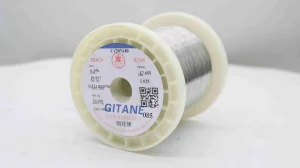
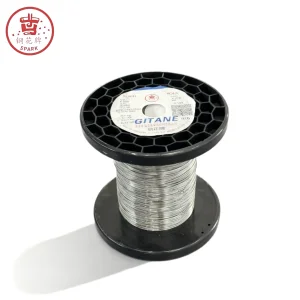
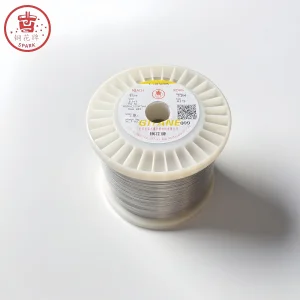
Wires are wound neatly on plastic DIN spools (DIN 125, DIN 160, DIN 200, DIN 250, DIN 355), shrink-wrapped with desiccant packs to prevent moisture corrosion, and packed inside sturdy fumigation-free wooden cases reinforced with steel banding for international ocean and air freight.
Frequently Asked Questions (FAQ) for Sourcing Engineers
Technical answers regarding 1300℃ Resistohm 145 equivalent FeCrAl heating wire and coils.
Complete High-Temperature Alloy Series & Heating Solutions
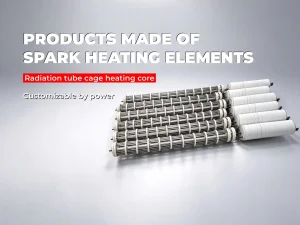
Explore our complete range of ultra-low carbon FeCrAl, NiCr heating ribbons, and high-precision furnace cores.