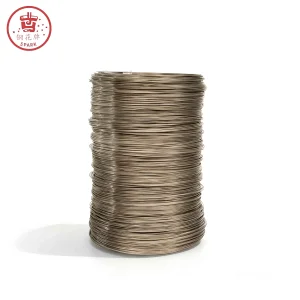
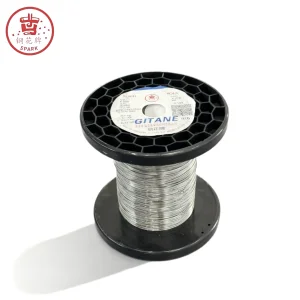
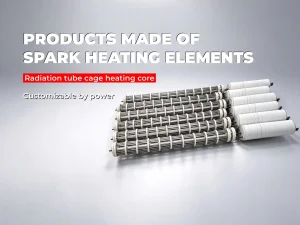
High-Performance Industrial Heating Products (Part I)
Direct manufacturer procurement options for high-temperature resistance wire, custom furnace alloys, and electrothermal solutions engineered in China.


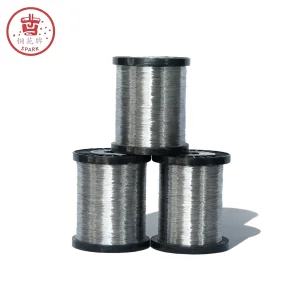



High-Temperature Oxidation Kinetics & Oxide Film Adhesion Mechanics
Why modern industrial furnaces depend on alloys exhibiting ultra-low isothermal oxidation weight gain and highly tenacious protective oxide scales.
The Physics of Oxidation Weight Gain ($\Delta m/A$)
When high-temperature electrothermal alloys (such as FeCrAl and NiCr systems) operate above 1000°C, atmospheric oxygen reacts with active metallic elements at the surface. The rate of isothermal oxidation is traditionally measured by oxidation weight gain per unit surface area ($\text{mg/cm}^2$). Advanced alloys synthesized in China utilize vacuum induction melting (VIM) and precise rare-earth element (REE) micro-alloying (such as Yttrium, Zirconium, and Cerium) to achieve parabolic oxidation rates ($k_p$). By controlling composition tolerances within strict metallurgical thresholds, the formation of non-protective oxides is suppressed, yielding an exceptionally slow rate of weight increase over thousands of operational hours.
Oxide Film Adhesion & Spallation Resistance Mechanics
Low oxidation weight gain alone is insufficient if the protective passivation layer spalls during thermal cycling. In iron-chromium-aluminum (FeCrAl) systems, a highly continuous, thermodynamic thermodynamically stable alpha-alumina ($\alpha\text{-Al}_2\text{O}_3$) scale forms at temperatures exceeding 1050°C. Adhesion of this sub-micron oxide scale to the parent alloy substrate depends on the Pilling-Bedworth Ratio (PBR) and interfacial stress relief. Micro-alloyed additions of active elements aggregate along grain boundaries, anchoring the oxide scale via "reactive element pegging." This mechanism eliminates interfacial voids, drastically suppresses oxide spallation during rapid furnace cooling cycles, and prevents catastrophic element burnout.
Information Gain Insight: Standard commercial resistance alloys frequently fail not due to wire melting, but due to repeated scale cracking, localized chromium/aluminum depletion, and progressive oxidation breakdown. Chinese advanced alloy manufacturers have optimized REE additions to increase interfacial oxide shear resistance by over 300% under cyclic thermal stress.
Global Industry Development Trends & Procurement Demand Shifts
How the global decarbonization movement and energy efficiency mandates are redefining procurement criteria for resistance heating materials.
1. Transition from Fossil Fuel to Electric Industrial Heating
Global net-zero emission mandates are accelerating the electrification of heavy industrial processing. Glass melting, steel heat treatment, ceramic sintering, and chemical processing facilities are replacing gas-fired burners with high-density electric radiant heating elements. This shift demands heating alloys capable of enduring higher surface power loadings ($\text{W/cm}^2$) without scale flaking or premature creep failure.
2. Procurement Focus on Total Cost of Ownership (TCO)
Global procurement directors are abandoning raw per-kilogram material purchasing models in favor of life-cycle operating cost evaluations. High-purity FeCrAl alloys featuring low oxidation rates drastically reduce furnace shutdown frequencies, maintenance labor, and replacement inventory costs, delivering up to a 40% reduction in total operational expenditures over a 3-year service horizon.
3. Semiconductor & Solar Photovoltaic Boom
The manufacture of single-crystal silicon ingots, semiconductor wafer annealing furnaces, and lithium-ion battery cathode sintering kilns require contaminant-free heating environments. Flaking oxide scales cause catastrophic batch contamination. Consequently, demand has surged for specialty powder-metallurgy FeCrAl alloys (such as SGHT and SGHYZ) that maintain high scale tenacity under aggressive processing atmospheres.
Macro Industry Heating Solutions & Alloy Grade Comparison
Selecting the optimal chemical composition and delivery form based on thermal operating windows, furnace atmospheres, and stress conditions.
| Alloy Grade / Family | Nominal Composition | Max Temp (°C) | Oxidation Characteristics | Primary Industrial Applications |
|---|---|---|---|---|
| SPARK SGHT (PM FeCrAl) | Fe-Cr-Al-RE (Powder Met) | 1425°C | Ultra-low weight gain; dense $\alpha\text{-Al}_2\text{O}_3$ scale; zero spallation | Semiconductor diffusion, ceramic sintering, solar ingot growth |
| SPARK SGHYZ / HRE | Fe-26Cr-6.5Al-RE | 1400°C / 1350°C | Exceptionally slow parabolic scale growth rate ($k_p$); rare-earth micro-pegged | Powder metallurgy furnaces, heavy industrial kilns, radiant tubes |
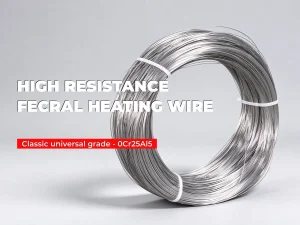
| 0Cr25Al5 / 0Cr23Al5 | Fe-25Cr-5Al / Fe-23Cr-5Al | 1250°C | High electrical resistivity; cost-effective uniform protective oxide layer | Industrial heat treatment furnaces, tempering systems, braking resistors |
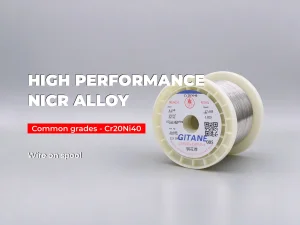
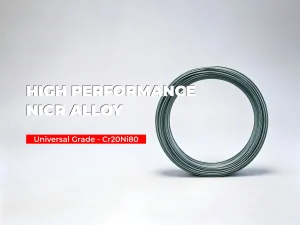
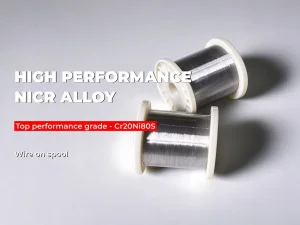
| Cr20Ni80 / Cr20Ni80S | 80Ni-20Cr (Nichrome) | 1200°C | Tenacious $\text{Cr}_2\text{O}_3$ scale; superior hot strength and ductility post-use | Precision lab furnaces, medical equipment, frequent cycling appliances |
| Cr30Ni70 | 70Ni-30Cr | 1250°C | Enhanced resistance to green-rot corrosion and high-temperature oxidation | Controlled atmosphere furnaces, nitriding/carburizing environments |
Global Compliance, Quality Framework & Technical Service
Ensuring complete traceability, regulatory adherence, and engineering support for international buyers.
Standardization & Certification
All electrothermal resistance alloys produced by premier manufacturers in China strictly adhere to GB/T 1234-2012, ASTM B603, DIN 17470, and ISO 9001:2015 quality management systems. Every shipment is accompanied by certified 3.1 Mill Test Reports detailing chemical spectral analysis, electrical resistance per meter, tensile strength, and elongation statistics.
Environmental & RoHS/REACH Compliance
Products satisfy strict European Union chemical regulations (REACH) and Restriction of Hazardous Substances (RoHS) directives. Alloys are melted using clean electrical energy in closed-loop induction facilities, eliminating heavy metal impurities like Lead, Cadmium, and Mercury to guarantee environmentally responsible global supply chains.
Customized Packaging & Export Logistics
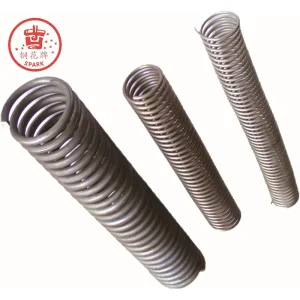
Precision-drawn fine wire, heavy spools, strip coils, and pre-formed heating element spirals are packed in moisture-sealed anti-vibration wooden crates. Local technical sales teams offer worldwide express clearance, door-to-door logistics, and rapid technical support to resolve design engineering challenges.
Technical Roadmap & Future Outlook (2026–2035)
Next-generation advancements in oxide scale mechanics, nanostructured grain boundaries, and powder metallurgy.
1. Oxide Dispersion Strengthened (ODS) FeCrAl Alloys
Future high-temperature heating element development centers on incorporating nanometer-scale yttria ($\text{Y}_2\text{O}_3$) particles throughout the metallic matrix via mechanical alloying and powder metallurgy. ODS FeCrAl alloys offer unprecedented creep resistance at temperatures above 1350°C, virtually eliminating wire sagging and distortion in unsupported vertical heating element configurations.
2. Self-Healing Smart Protective Layers
Advanced research in metallurgical synthesis aims to develop reactive surface coatings capable of dynamic self-healing upon exposure to mechanical scratches or local atmosphere attack. By micro-doping localized aluminum reservoirs and reactive elements, future alloys will instantly rebuild non-porous $\alpha\text{-Al}_2\text{O}_3$ oxide films without compromising underlying core cross-sectional wire dimensions.
Shougang Gitane & SPARK Brand Engineering Capacity
Over six decades of leadership in melting, drawing, rolling, and thermal testing of high-resistance electrothermal alloys.
Beijing Shougang Gitane New Materials Co., Ltd. is a specialized state-owned subsidiary of the renowned Shougang Group, bringing more than 60 years of metallurgical engineering heritage to the global market. Operating from an 88,000 m² industrial manufacturing site in Changping, Beijing (featuring over 39,268 m² of dedicated heavy workshop space), Gitane houses advanced vacuum induction furnaces, continuous wire drawing lines, precision strip rolling mills, and automated hydrogen annealing atmosphere lines.
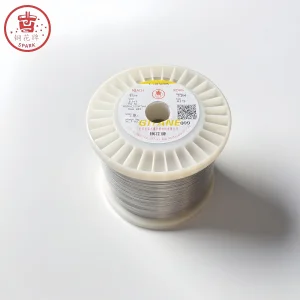
With a dedicated staff of over 500 personnel—where more than 30% consist of senior metallurgical engineers and technical specialists—the company produces a comprehensive range of resistance heating alloys (FeCrAl and NiCr), electronic resistance alloys, stainless steel wires, fine ribbon, and custom spiral heating elements. Certified to ISO 9002 in 1996 and ISO 9001 in 2003, Shougang Gitane’s proprietary SPARK brand represents world-class quality, exceptional scale adhesion, and unyielding batch-to-batch consistency.
Core Manufacturing Highlights
- 60+ Years of continuous high-temperature alloy innovation.
- 88,000 m² Total plant area with integrated melting-to-wire lines.
- 30%+ Engineers ensuring rigorous quality assurance.
- 1425°C Max Temp capabilities in specialty powder metallurgy grades.
- GB/T 1234-2012 National standard drafter and compliance pioneer.
Frequently Asked Questions (FAQ)
Expert engineering answers regarding low oxidation weight gain, scale adhesion, alloy selection, and factory order specifications.
High-Performance Industrial Heating Products (Part II)
Explore additional premium electrothermal resistance wire grades, high-pressure seamless tubing, and ceramic radiant core assemblies direct from China suppliers.