
High-Performance Electric Resistance Alloys & Industrial Systems
Explore our certified range of nickel-chrome (NiCr) and iron-chromium-aluminum (FeCrAl) solutions engineered for demanding thermal environments up to 1425°C.


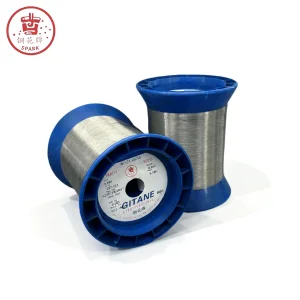
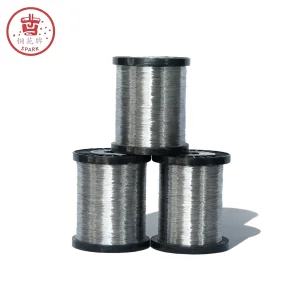

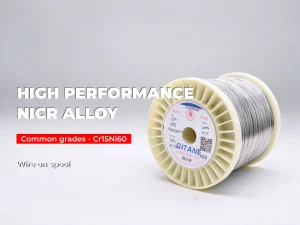

Strategic Dominance of Chinese NiCr Heating Ribbon Manufacturing
In the evolving landscape of global thermal engineering, Nickel-Chromium (NiCr) heating ribbons—also referred to as Nichrome flat wires or electrical resistance strips—represent the critical backbone of industrial heat-treatment systems, semiconductor processing units, sealing machinery, and high-spec household appliances.
As global manufacturing shifts toward high-efficiency electric heating systems to meet stringent carbon-neutrality mandates, the demand for high-purity, micro-alloyed NiCr resistance ribbons has surged. China has established itself as the global epicenter for advanced NiCr alloy melting, precision cold-rolling, and metallurgical quality control.
Unlike standard round heating wires, NiCr heating ribbons present a substantially larger surface-area-to-cross-section ratio. This geometry accelerates radiant heat transfer, minimizes thermal lag, and decreases internal core temperatures under high watt densities, thereby extending element operational lifespan by up to 35%.
Critical Technical Capabilities of Leading Chinese Suppliers
- Vacuum Induction Melting (VIM) & ESR: Ultra-low interstitial impurity levels preventing high-temperature embrittlement.
- Precision Cold Rolling: Tolerances tight to ±0.005 mm thickness for uniform resistance distribution across kilometer-long coils.
- Rare Earth Micro-Alloying: Addition of Cerium (Ce), Yttrium (Y), and Rare Earth Elements (REE) to enhance passive Chromia ($Cr_2O_3$) scale adhesion.
- Controlled Atmosphere Bright Annealing: Mirror-smooth surface finish eliminating local stress concentrations and hot spots.
Comparative Chemistry & Thermodynamics of NiCr Ribbon Alloys
Selecting the correct grade of Nickel-Chromium resistance strip requires a thorough understanding of alloy chemistry, operating atmospheres, and thermal expansion dynamics.
| Alloy Grade | Nominal Composition | Max Temp (°C) | Resistivity (μΩ·m, 20°C) | Density (g/cm³) | Primary Industrial Application |
|---|---|---|---|---|---|
| Ni80Cr20 (Cr20Ni80) | 80% Ni, 20% Cr (Micro-REE) | 1200°C | 1.09 ± 0.05 | 8.40 | Industrial furnaces, heat treatment, heavy duty elements, plastic sealing |
| Ni70Cr30 (Cr30Ni70) | 70% Ni, 30% Cr | 1250°C | 1.18 ± 0.05 | 8.10 | Oxidizing/alternating atmospheres, ultra-long life kiln elements |
| Ni60Cr15 (Cr15Ni60) | 60% Ni, 15% Cr, Bal. Fe | 1150°C | 1.11 ± 0.05 | 8.20 | Domestic appliances, commercial heaters, mid-range industrial ovens |
| Ni40Cr20 (Cr20Ni40) | 40% Ni, 20% Cr, Bal. Fe | 1100°C | 1.04 ± 0.05 | 7.90 | Cost-effective commercial heating elements, storage heaters, defrosters |
| Ni35Cr20 (Cr20Ni35) | 35% Ni, 20% Cr, Bal. Fe | 1050°C | 1.00 ± 0.05 | 7.90 | Low-temperature heating strips, convective heaters, rheostats |
Chromia ($Cr_2O_3$) Scale Kinetics
When exposed to high temperatures, NiCr ribbons form a highly adherent, protective scale of Chromium Oxide ($Cr_2O_3$). In Ni80Cr20, the high nickel content prevents the spallation of this scale during frequent thermal cycling, ensuring prolonged electrical stability.
Ductility & Mechanical Retention
Unlike Iron-Chromium-Aluminum (FeCrAl) alloys which become embrittled after exposure to temperatures above 900°C due to grain growth, NiCr alloys retain superior hot strength and room-temperature ductility, enabling post-use maintenance and coil repair.
Non-Magnetic Behavior
Ni80Cr20 is fully austenitic and entirely non-magnetic at room temperature. This property is paramount in precision electronic applications, medical equipment, and high-frequency induction-shielded furnace environments.
Technical Specification & Dimension Selection Roadmap
Global procurement teams must balance electrical resistance, cross-sectional geometry, and surface load density ($W/cm^2$) when specifying NiCr heating ribbons.
Dimensional Capabilities for NiCr Flat Wires & Ribbons
Chinese manufacturers utilize ultra-precise multi-pass rolling mills equipped with automatic gauge control (AGC) lasers. Standard production ranges include:
- Thickness Range: 0.05 mm – 4.00 mm (0.002" – 0.157")
- Width Range: 0.50 mm – 120.00 mm (0.020" – 4.724")
- Thickness Tolerance: ±0.003 mm to ±0.01mm (Grade Dependent)
- Width Tolerance: ±0.05 mm to ±0.20 mm
- Edge Options: Slit Edge, Deburred Round Edge, Rolled Round Edge
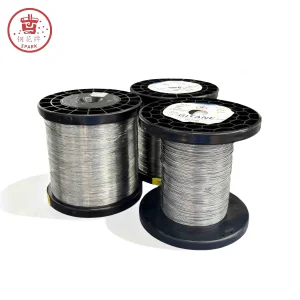
- Supply Forms: Spools (DIN 160, 200, 250, 355), Coils, Cut-to-length Strips
Calculating Resistance of NiCr Heating Ribbons:
R = (ρ × L) / (w × t)
Where R = Resistance (Ω), ρ = Resistivity (μΩ·m), L = Length (m), w = Ribbon Width (mm), and t = Ribbon Thickness (mm).
Surface Load Rating ($W/cm^2$) Selection Guide
Operating ribbon heating elements above recommended watt density leads to premature oxidation and burnout. Use this matrix for safe design limits:
*Note: Operating in protective atmospheres (e.g., Nitrogen, Hydrogen, Argon) alters permissible watt densities. Consult engineering staff for exact calculations.
Where Precision NiCr Heating Ribbons Power Global Industry
From advanced semiconductor fab lines to heavy metallurgical heat-treatment plants, NiCr flat wire solutions deliver unparalleled thermal accuracy.
Industrial Furnaces & Kilns
Utilized as heavy-gauge wavy ribbons (meander elements) mounted on ceramic hooks or refractory bricks in carburizing, annealing, and hardening furnaces operating up to 1200°C.
Packaging & Impulse Sealing
Ultra-thin, bright-annealed Ni80Cr20 flat ribbons engineered for instantaneous rapid heating and cooling cycles in pouch sealing, vacuum packaging, and thermal cutting machinery.
Aerospace & Automotive Heat Treatment
Critical heating elements for vacuum furnaces and atmosphere-controlled pit furnaces used to treat turbine blades, automotive gears, and high-strength fasteners.
Domestic & Commercial Appliances
Embedded in mica-insulated heaters, toaster elements, commercial convection ovens, hand dryers, and industrial space heating equipment requiring long cycle life.
Stringent Quality Management & International Standards
Leading Chinese NiCr ribbon manufacturers maintain robust quality assurance protocols aligned with global industrial standards to guarantee flawless performance.
Global Standard Compliance
Our production strictly complies with international specifications including ASTM B344 (Standard Specification for Drawn or Rolled Nickel-Chromium Alloys), DIN 17470, JIS C2520, and GB/T 1234-2012.
Full Mill Traceability & MTC
Every shipment is accompanied by a comprehensive EN 10204 3.1 Mill Test Certificate (MTC) detailing chemical ladle analysis, room-temperature tensile strength, elongation, and electrical resistivity verification.
Export Logistics & Custom Packaging
Ribbons are precision-spooled, sealed in moisture-proof vacuum foil, and crated in export-grade fumigated wooden cases to eliminate transit corrosion and mechanical deformation during ocean or air freight.
Frequently Asked Questions: NiCr Heating Ribbon Procurement
Expert answers to common engineering, purchasing, and application inquiries regarding Nickel-Chromium resistance flat wires.
High-Temperature Wires, Elements & Specialized Alloys
Discover our specialized high-temperature resistance alloy solutions tailored for industrial thermal processing, furnace construction, and heating element manufacturing.
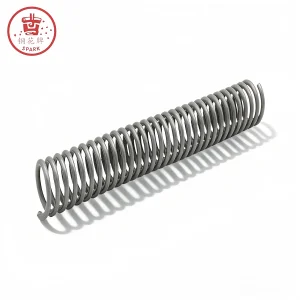



Partner with China's Premier NiCr Heating Ribbon Manufacturer
Request custom alloy melting, precise cold-rolling samples, engineering resistance calculations, or mill-direct quotations for your industrial heating projects.
Request Technical Consultation