
Featured Industrial Heating Alloys & Elements (Catalog 1/2)




Global Landscape of Nickel Chromium Heating Alloys & Chinese Manufacturing Leadership
As global industries accelerate electrification and transition away from fossil-fuel heating, high-precision resistance heating alloys serve as the critical foundation for high-temperature thermal processing systems.
Electrification of Industrial Thermal Processes
Industrial decarbonization mandates have triggered a structural shift toward electric resistance heating across steel tempering, semiconductor wafer fabrication, ceramic sintering, and glass manufacturing. Nickel-Chromium (Ni-Cr) alloys—renowned for their exceptional hot strength, ductility, and self-healing oxide scale—are indispensable elements in precise thermal enclosures up to 1250°C.
Strategic Advantage of Chinese Alloy Factories
China has established an unprecedented industrial ecosystem for resistance heating alloys. By integrating high-purity raw material refining (such as sulfur-free electrolytic nickel and ultra-pure chromium), Vacuum Induction Melting (VIM), Electro-Slag Remelting (ESR), and high-precision wire drawing, top-tier Chinese manufacturers offer uncompromised metallurgical purity at competitive global economics.
Information Gain: E-E-A-T Metallurgical Benchmark
This technical guide provides furnace engineers, procurement officials, and OEMs with actionable, empirical insights into alloy selection criteria, phase dynamics, high-temperature oxidation kinetics, life-expectancy factors (such as ASTM B78 bash and rush tests), and long-term supply chain risk mitigation.
Nickel-Chromium vs. Iron-Chromium-Aluminum Alloys: Phase Dynamics & Oxidation Kinetics
Selecting the ideal resistance alloy requires balancing continuous working temperature, hot yield strength, electrical resistivity stability, and environmental atmosphere compatibility.
At high operating temperatures, resistance alloys rely on the formation of a dense, adherent oxide layer to suppress further metallic degradation. Nickel-Chromium (Ni-Cr) alloys form a tenacious Chromia (Cr₂O₃) surface film, which provides superior mechanical toughness, excellent fatigue resistance during frequent thermal cycling, and non-magnetic properties. In contrast, Iron-Chromium-Aluminum (FeCrAl) alloys form an Alumina (Al₂O₃) protective barrier, enabling higher peak temperatures (up to 1425°C) but suffering from post-heating embrittlement.
| Alloy Grade | System Type | Nominal Composition (%) | Max Temp (°C) | Resistivity at 20°C (μΩ·m) | Density (g/cm³) | Primary Industrial Application |
|---|---|---|---|---|---|---|
| Cr20Ni80 (Nichrome V) | Ni-Cr | 80 Ni, 20 Cr | 1200°C | 1.09 ± 0.05 | 8.40 | Industrial Furnaces, Appliance Elements, Precision Resistors |
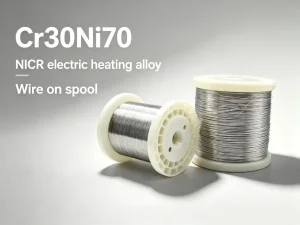
| Cr30Ni70 | Ni-Cr | 70 Ni, 30 Cr | 1250°C | 1.18 ± 0.05 | 8.10 | High-Temperature Industrial Kilns, Oxidizing/Reducing Alternating Lines |
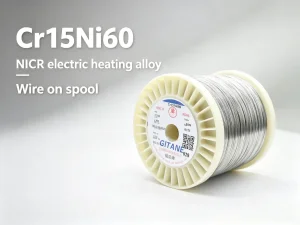
| Cr15Ni60 | Ni-Cr-Fe | 60 Ni, 15 Cr, Bal. Fe | 1150°C | 1.11 ± 0.05 | 8.20 | Domestic Appliances, Medical Sterilizers, Heating Cables |
| 0Cr25Al5 | FeCrAl | 25 Cr, 5.3 Al, Bal. Fe | 1250°C | 1.42 ± 0.07 | 7.10 | Industrial Kilns, Radiant Tube Heaters, Automotive Catalysts |
| 0Cr21Al6Nb | FeCrAl+Nb | 21 Cr, 6 Al, +Nb, Bal. Fe | 1350°C | 1.45 ± 0.07 | 7.10 | Diffusion Furnaces, Ceramic Sintering, Heat Treatment Equipment |
| SPARK SGHT (Powder Met) | PM FeCrAl | Advanced PM Chemistry | 1425°C | 1.48 ± 0.08 | 7.10 | Semiconductor Wafer Processing, High-Temperature Cleanroom Kilns |
Microstructural Stability & Creep Resistance
Ni-Cr alloys retain an austenitic FCC (face-centered cubic) crystal structure from room temperature up to their melting point (~1400°C). This crystalline stability prevents sag and deformation under gravity when heating coils are supported horizontally or hung vertically. Furthermore, rare-earth micro-alloying with Yttrium (Y) and Cerium (Ce) pins grain boundaries, hindering high-temperature creep growth.
Atmospheric Degradation Kinetics
While Cr20Ni80 excels in air, water vapor, and inert argon/nitrogen atmospheres, exposure to sulfur-rich gas streams (such as H₂S or SO₂) can lead to low-melting-point nickel sulfide eutectic formations at grain boundaries. Our technical team guides clients toward specific alloy selection or pre-oxidation treatments based on precise gas phase analysis.
Engineering Deployment Across Global High-Tech & Heavy Industries
How Chinese nickel chromium alloys deliver high uptime and precise thermal uniformity across complex manufacturing environments.
1. Semiconductor & Solar Photovoltaic Processing
In semiconductor LPCVD diffusion tube furnaces and solar silicon ingot crystallization units, micro-fluctuations in temperature destroy yield. SPARK Cr30Ni70 and SGHT elements deliver ultra-clean radiant heat with thermal stability within ±0.5°C, eliminating particulate spallation into silica reaction tubes.
2. Automotive & Aerospace Heat Treatment
Continuous carburizing, nitriding, and vacuum quenching lines for transmission gears and aerospace turbine blades operate 24/7/365. Heavy-gauge NiCr 80/20 ribbons and cast ceramic heating cores ensure uninterrupted operation, resisting shock loads from door openings and cold workpieces.
3. Industrial Ceramics & Glass Tempering
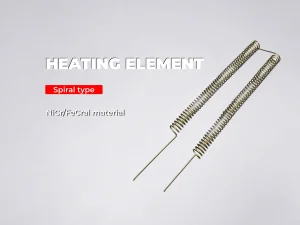
Glass bending and tempering lines require fast dynamic power modulation. High-resistivity Cr15Ni60 and 0Cr25Al5 spiral wire coils installed on radiant tubes provide uniform heat transfer across glass panes, preventing optical distortion and structural stress fractures.
4. Commercial Appliances & Energy Storage Load Banks
From commercial convection ovens and coffee maker heating coils to megawatt-scale dynamic braking resistors for locomotives and wind turbines, fine Cr20Ni80 wire and flat ribbon deliver long-life reliability under extreme electrical duty cycles.
China Supply Chain Resilience: From High-Purity Ore to Precision Wire
Unpacking the structural cost efficiencies, vertical integration, and quality assurance frameworks behind top-tier Chinese alloy manufacturers.
The strength of China's nickel chromium alloy sector relies on complete vertical integration. State-of-the-art manufacturing hubs, such as Beijing Shougang Gitane New Materials, link raw metallurgical refining directly with downstream wire drawing and spooling operations.
1. Raw Material Purity Control
By utilizing high-purity electrolytic nickel cakes (99.99% Ni purity) and low-sulfur ferro-chrome additives, Chinese melt shops minimize trace impurities such as lead (Pb), zinc (Zn), and sulfur (S), which cause premature intergranular corrosion at high temperatures.
2. VIM & ESR Double-Melting Process
Molten alloys undergo Vacuum Induction Melting (VIM) followed by Electro-Slag Remelting (ESR). This double-melt methodology eliminates non-metallic oxide inclusions, guarantees chemical uniformity across multi-ton ingots, and prevents micro-voids during high-speed cold drawing.
3. Precision Cold Drawing & Continuous Annealing
Using diamond dies and inline laser micrometer monitoring, wire diameters are maintained within tight tolerances (down to ±0.005mm). Continuous hydrogen atmosphere strand annealing produces a bright, oxide-free surface ready for winding or weaving.
Next-Generation Resistance Alloys & High-Temperature Innovation
Strategic metallurgical developments driving higher efficiency, longer operational lifetimes, and carbon-neutral thermal processing.
Nanoscale Rare-Earth Oxide Dispersion
Integration of nano-dispersed Y₂O₃ and ZrO₂ particles into Ni-Cr matrix via mechanical alloying, extending oxidation resistance up to 1300°C while doubling creep rupture life.
Powder Metallurgy Super-Alloys
Expansion of PM FeCrAl and PM NiCr production lines (e.g., SPARK SGHT) to produce wire and strip capable of 1425°C continuous operation without grain growth degradation.
Green Hydrogen Furnace Compatibility
Developing specialized surface passivation treatments for alloys operating in pure H₂ and high-moisture reducing atmospheres for zero-emission steelmaking kilns.
Smart Self-Monitoring Heating Elements
Embedded thin-film sensor interfaces within heating alloy elements, transmitting real-time resistance change data to AI furnace controllers for predictive maintenance.
Global Technical Support, Quality Certification & Compliance
Comprehensive quality verification and engineering consultation to guarantee flawless integration into global industrial equipment.
Quality Assurance Standards
All products comply fully with national standard GB/T 1234-2012, international specifications ASTM B344, DIN 17470, and JIS C2520. Certified ISO 9001 and ISO 14001 quality and environmental management systems govern every production run.
Mill Test Reports & Traceability
Every shipment includes complete EN 10204 3.1 Mill Test Certificates detailing spectral chemical heat analysis, room-temperature tensile properties, electrical resistance tolerances, and density verification.
Custom Formatting & Packaging
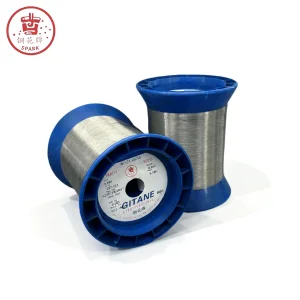
Engineered to customer specification in round wire (0.05mm to 12.0mm), flat wire, rolled strip (up to 250mm width), pre-wound coils, or custom-bent hairpin elements packed in anti-oxidation vacuum foil and export wooden cases.
High-Temperature Resistance Alloy Offerings (Catalog 2/2)




Frequently Asked Questions (FAQ) for Furnace Designers & Procurement
In-depth answers addressing key metallurgical selection, lifecycle optimization, and sourcing parameters.
Partner with China's Premier Heating Alloy Manufacturer
Whether you require mill-quantity wire spools, precision ribbon strips, or custom-engineered spiral element assemblies, our engineering team provides full metallurgical support from design to delivery.
Request Technical Consultation & Custom Quote