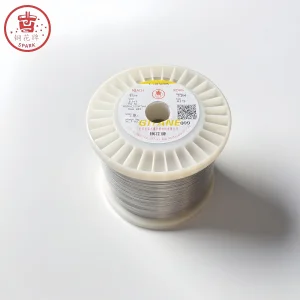
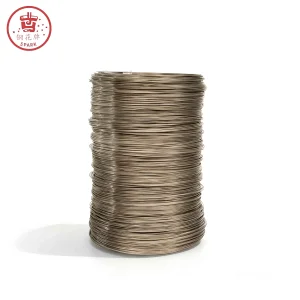
Featured Electric Heating & Precision Alloy Products
Direct Factory Sourcing Solutions • ISO 9001 & GB/T 1234-2012 Quality Certified Direct from China Manufacturing Hubs



Executive Overview: Global Market Landscape & Supply Chain Shift
The Microeconomic and Metallurgical Imperatives Driving High-Temperature Resistance Alloy Procurement in Modern Thermal Processing
Global Sourcing Dynamics & Market Growth
The global demand for high-performance Nichrome (Ni-Cr) resistance wire and complementary electrothermal alloys has experienced an unprecedented structural transformation. Driven by the global push for carbon neutrality, industrial electrification, semiconductor expansion, and advanced battery energy storage manufacturing, industrial heating processes are rapidly transitioning away from fossil fuel combustion toward precision electric thermal systems.
China has established itself as the world's premier manufacturing epicenter for electrothermal alloys, combining state-of-the-art vacuum induction melting (VIM), electroslag remelting (ESR), precision wire drawing, and controlled-atmosphere bright annealing. Enterprise buyers, EPC furnace builders, and industrial OEM component suppliers globally turn to top-tier Chinese manufacturers to secure high-purity, long-lifecycle Nichrome resistance wire that matches or exceeds Western metallurgical benchmarks at highly optimized capital expenditures.
Value Proposition of Leading China Suppliers
Leading Chinese Nichrome wire manufacturers, backed by modern metallurgical research facilities and vertical integration—from raw nickel/chromium electrolytic refining to finished micro-gauge wire spooling—offer unique technological advantages:
- Strict Grain Boundary Chemistry: Minimizing trace impurities ($S, P, C, Pb$) to prevent intergranular cracking under thermal cycling.
- Micro-Alloying Precision: Controlled inclusion of rare-earth elements ($Y, Ce, Zr$) to significantly increase oxide scale adherence.
- Unmatched Dimensional Tolerances: Precision multi-pass diamond drawing dies delivering wire diameter tolerances down to $\pm 0.002$ mm.
- End-to-End Traceability: Complete MTR (Mill Test Reports) compliant with ASTM B344, DIN 17470, and GB/T 1234-2012.
Metallurgical Science: Composition, Phase Stability & Oxide Kinetics
A Comprehensive Technical Evaluation of Nickel-Chromium (Ni-Cr) vs. Iron-Chromium-Aluminum (Fe-Cr-Al) Resistance Alloys
1. Microstructural Analysis & The Oxidation Mechanism
Nichrome alloys, predominantly composed of Nickel ($Ni$) and Chromium ($Cr$), form an austenitic face-centered cubic ($FCC$) crystal structure. This crystal lattice imparts high hot strength, structural stability at elevated temperatures, and outstanding ductility after prolonged thermal exposure. When exposed to temperatures above $600^\circ\text{C}$, Nickel-Chromium wire develops a tenacious, self-healing layer of chromia oxide ($\text{Cr}_2\text{O}_3$), supplemented by a sub-layer of nickel chromite spinel ($\text{NiCr}_2\text{O}_4$).
2. Standard Chemical Composition & Physical Property Matrix
The following engineering matrix compares standard export-grade Chinese Nichrome alloys against high-temperature FeCrAl alternatives:
| Alloy Grade | Ni (%) | Cr (%) | Fe (%) | Max Temp (°C) | Resistivity (μΩ·m, 20°C) | Density (g/cm³) | Thermal Conductivity (W/m·K) |
|---|---|---|---|---|---|---|---|
| Ni80Cr20 (Cr20Ni80) | 78.0 – 81.0 | 19.0 – 21.0 | < 1.0 | 1200 | 1.09 ± 0.05 | 8.40 | 15.0 |
| Ni70Cr30 (Cr30Ni70) | Balance | 28.0 – 31.0 | < 1.0 | 1250 | 1.18 ± 0.05 | 8.10 | 13.5 |
| Ni60Cr15 (Cr15Ni60) | 55.0 – 61.0 | 15.0 – 18.0 | Balance | 1150 | 1.12 ± 0.05 | 8.20 | 13.0 |
| Ni35Cr20 (Cr20Ni35) | 34.0 – 37.0 | 18.0 – 21.0 | Balance | 1050 | 1.04 ± 0.05 | 7.90 | 12.0 |
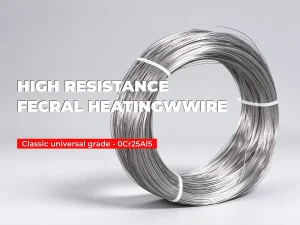
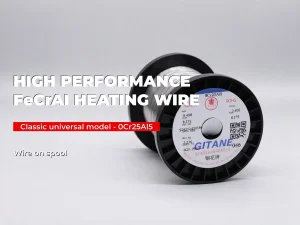
| FeCrAl 0Cr25Al5 | - | 23.0 – 26.0 | Balance (Al 4.5-5.5) | 1250 | 1.42 ± 0.07 | 7.10 | 16.0 |
| SPARK SGHT (PM Grade) | - | 23.0 – 26.0 | Balance (PM RE) | 1425 | 1.45 ± 0.07 | 7.10 | 18.0 |
3. Temperature Resistance Factors ($C_t$) for Precision Calculation
In electrical thermal design, the cold resistance ($R_{20}$) increases with temperature. Engineers sizing heating elements must apply the exact resistance temperature coefficient ($C_t$) multiplier:
| Alloy Grade | 100°C | 300°C | 500°C | 700°C | 900°C | 1100°C | 1200°C |
|---|---|---|---|---|---|---|---|
| Ni80Cr20 ($C_t$) | 1.006 | 1.022 | 1.041 | 1.052 | 1.066 | 1.080 | 1.089 |
| Ni60Cr15 ($C_t$) | 1.014 | 1.050 | 1.086 | 1.111 | 1.135 | 1.158 | - |
Global Enterprise Procurement & Engineering Selection Framework
A Decision Matrix for Purchasing Managers, R&D Engineers, and Furnace OEMs
Surface Load Wattage ($W/cm^2$) Selection
The lifespan of a Nichrome heating element is directly governed by its surface load factor ($w$). Exceeding allowable wattage density accelerates element oxidation, causing premature hot spots and burnouts.
- Industrial Air Heating (Forced Convection): 3.0 – 6.0 $W/cm^2$
- Muffle & Box Furnace (Radiant Heating): 1.5 – 2.5 $W/cm^2$
- Liquid Immersion Heating Elements: 4.0 – 10.0 $W/cm^2$ (depending on liquid viscosity)
- Plastic Extrusion Nozzle Bands: 3.0 – 4.5 $W/cm^2$
Atmospheric Compatibility Matrix
Different industrial processing atmospheres aggressively react with resistance alloys. Correct alloy selection prevents rapid degradation:
- Oxidizing Air: Outstanding compatibility with both Ni-Cr and FeCrAl alloys.
- Carburizing Atmosphere (Endothermic Gas): Nichrome (Ni80Cr20) is superior due to resistance to "Green Rot" when silicon/rare earths are added.
- Nitrogen / Ammonia ($\text{NH}_3$): Nichrome exhibits high stability; FeCrAl may absorb nitrogen and form brittle aluminum nitrides.
- Vacuum Thermal Processing: Ni-Cr can experience chromium vaporization above 1050°C in high vacuum ($<10^{-2}\text{ Torr}$).
Sourcing Quality Checklist
When auditing China Nichrome suppliers, international procurement directors should demand compliance on four key vectors:
- Chemical Certification: Spectrometric verification of Ni, Cr, and ultra-low levels of residual carbon ($C < 0.03\%$).
- Accelerated Life Testing: Compliance with ASTM B78 (Bash-Harsch Test) proving total cumulative burn hours.
- Concentricity & Surface Finish: Smooth bright anneal or oxidized finish free from nicks, slivers, and drawing lubricant residue.
- Spooling Integrity: Tangle-free level precision spooling (DIN 160, DIN 200, DIN 250) for high-speed automated element coiling.
Macro Industrial Application Solutions
Cross-Sector Engineering Integration: Deploying High-Purity Nichrome Alloys Across Global Industries
1. Semiconductor, Photovoltaic & Microelectronics Thermal Systems
In semiconductor wafer processing, LPCVD diffusion furnaces, and solar ingot growth apparatus, absolute thermal uniformity and zero particle contamination are critical. Nichrome wire (specifically high-purity Ni80Cr20) is manufactured into precise coiled heating elements, ceramic fiber heating modules, and diffusion bank heaters. The tight tolerance on electrical resistance ($\pm 2\%$) guarantees exact thermal zonal control across 300mm silicon wafer processing zones.
2. Automotive, EV Battery & Aerospace Heat Treatment
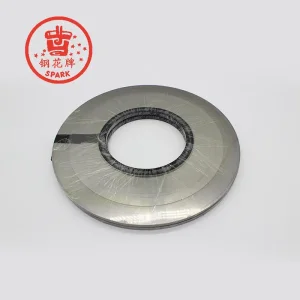
The manufacturing of electric vehicle (EV) battery packs, lithium-ion cathode sintering furnaces, and aerospace alloy heat-treatment lines relies heavily on heavy-gauge Nichrome strip and ribbon ($0.5 \text{ mm} \times 10 \text{ mm}$ to $3 \text{ mm} \times 30 \text{ mm}$). Formed into wave-shaped or serpentine heating banks suspended on high-alumina ceramic hooks, these elements sustain high mechanical vibrational stress, thermal shocks, and rapid cycle ramping without sagging or structural deformation.
3. Heavy Industrial Kilns, Glass Processing & Ceramics
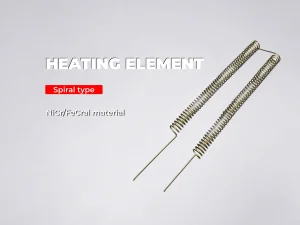
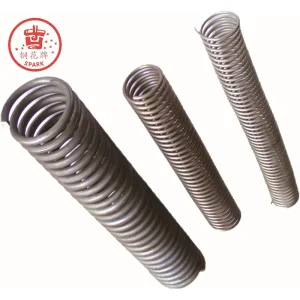
High-temperature industrial roller hearth kilns, glass tempering lines, and ceramic sintering furnaces demand elements capable of continuous operation at $1000^\circ\text{C} - 1250^\circ\text{C}$. China suppliers provide integrated solutions comprising heavy-gauge wound spirals (e.g., Ni70Cr30 or high-grade FeCrAl SPARK SGHT) assembled into embedded tube modules or exposed ceramic groove systems, delivering thermal throughput efficiency exceeding $92\%$.
4. Precision Appliance, Medical Instruments & Laboratory Analytical Tools
For fine wire applications ($0.02 \text{ mm} - 0.25 \text{ mm}$), such as medical cautery tools, lab sample heating chambers, precision hot-wire anemometers, and high-reliability commercial appliances (sealing machines, commercial ovens), micro-drawn Nichrome wire offers ultra-uniform cross-sectional area, consistent linear resistance, and non-magnetic options (Ni80Cr20), preventing electromagnetic interference with sensitive scientific instrumentation.
Technological Roadmap & Metallurgy Innovations (2025–2030)
Next-Generation Alloys, Powder Metallurgy Processing, and Sustainability Initiatives in China Electrothermal Industry
1. Powder Metallurgy (PM) Dispersion Strengthening
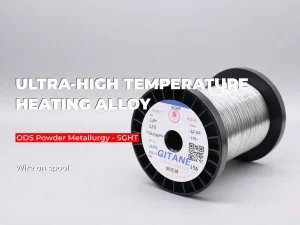
Conventional ingot melting (VIM/ESR) can exhibit grain coarsening at extreme service temperatures. Advanced China manufacturers are scaling Powder Metallurgy (PM) technology. By gas-atomizing molten alloy into ultra-fine spherical powder, followed by hot isostatic pressing (HIP) and directional extruding, PM alloys (like SPARK SGHT) feature dispersed oxide nano-particles ($Y_2O_3, ZrO_2$). This pinning effect eliminates high-temperature creep and extends element life by over 300% in 1350°C-1425°C thermal regimes.
2. Rare Earth Micro-Alloying (RE-Modification)
Modern metallurgical chemistry integrates precise micro-additions of rare earth elements—specifically Yttrium ($Y$), Cerium ($Ce$), Neodymium ($Nd$), and Lanthanum ($La$). RE atoms preferentially segregate to oxide-scale grain boundaries, effectively forming "keying pegs" that anchor the protective chromia ($\text{Cr}_2\text{O}_3$) or alumina ($\text{Al}_2\text{O}_3$) film directly to the parent alloy. This eliminates scale spallation during severe cyclic heating-cooling dynamics.
3. Ultra-Thin Ribbon Rolling & Green Manufacturing
To support high-frequency pulse heating and compact thermal exchangers, advanced precision rolling mills now produce micro-ribbons with thicknesses under $0.03\text{ mm}$ ($\pm 0.001\text{ mm}$ tolerance). Simultaneously, green hydrogen-based bright annealing furnaces are replacing traditional cracked ammonia systems, reducing scope 1 carbon emissions by up to 80% across manufacturing centers.
Quality Assurance, Global Compliance & Localization Support
End-to-End Regulatory Guarantee & Seamless Supply Chain Operations for International Buyers
Testing Methodologies & Quality Protocols
To guarantee zero-defect shipments, premier Chinese Nichrome manufacturers implement rigorous, multi-tiered quality verification protocols before departure:
- 100% Eddy-Current Defect Detection: In-line continuous eddy-current scanning identifies microscopic surface cracks, inclusions, or pinholes along the entire length ofdrawn wire.
- Resistance Uniformity Testing: Automated resistance logging per 1000 meters ensures tight tolerance adherence ($\pm 1.5\% - \pm 3\%$).
- Mechanical Tensile & Elongation Testing: Verifying ambient yield strength, ultimate tensile strength (UTS), and plastic elongation ($A_5 > 20\%$) to prevent breakage during automated element winding.
- Mill Test Certificate (MTC) EN 10204 3.1: Every heat is accompanied by an authenticated MTC specifying ladle chemical analysis, physical parameters, and batch heat treatment parameters.
Global Packaging, Logistics & Regulatory Compliance
Sourcing resistance alloys internationally requires specialized export protection and regulatory alignment:
- VCI Anti-Corrosion Packaging: Spools and coils are enclosed in Vapor Corrosion Inhibitor (VCI) vacuum foil bags with desiccants, preventing humidity-induced oxidation during ocean transit.
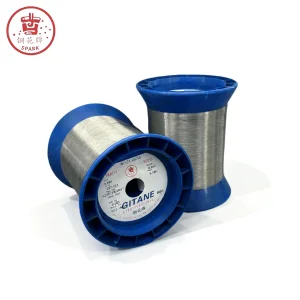
- Standardized Spooling Specifications: Available on plastic spools (DIN 125, DIN 160, DIN 200, DIN 250, DIN 355) or heavy wire pails/coils up to 500 kg for high-volume manufacturing lines.
- Global Compliance Declarations: Fully compliant with EU RoHS 3 (Directive 2015/863), REACH (EC 1907/2006), Conflict-Free Minerals requirements, and ISO 9001:2015 / ISO 14001:2015 frameworks.
- Customs & Incoterms Support: Complete DDP, CIF, FOB, and DAP fulfillment with full customs documentation, HS Code classification (e.g., 7505.22 for Nickel-Alloy Wire), and origin certification.
Technical FAQ: Procurement & Engineering Q&A
In-Depth Answers to Critical Sourcing, Technical, and Application Questions
Explore Additional Industrial Heating & Furnace Solutions
Complete Range of High-Temperature FeCrAl & NiCr Alloy Wires, Heating Strips, Elements, and Furnaces