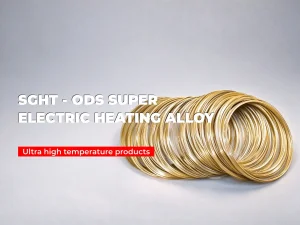
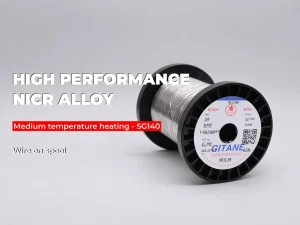
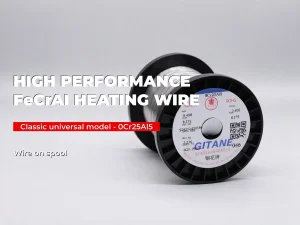
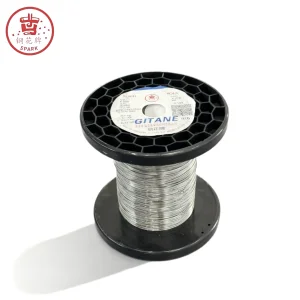
Featured Vacuum Melted & Precision Processed Products
Explore our core engineering portfolio of industrial heating wires, custom thermal elements, and high-purity alloy materials manufactured under rigorous vacuum control and precision rolling standards.
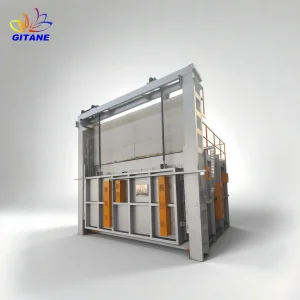
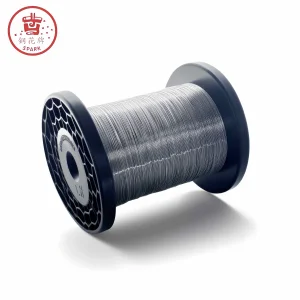
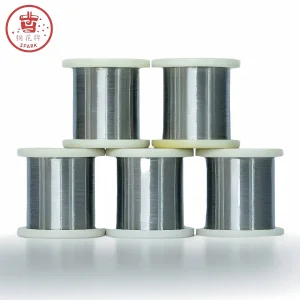
Global Industrial Status & Macro Metallurgical Solutions
Decarbonization, extreme thermal processing, and advanced semiconductor manufacturing demand unprecedented material purity and mechanical durability at operating temperatures exceeding 1400°C.
Energy Electrification & Industrial Decarbonization
Global industrial thermal processing is undergoing a paradigm shift from fossil-fuel combustion to clean electric heating. High-temperature industrial furnaces—operating in semiconductor wafer diffusion, photovoltaic silicon melting, and green steel annealing—require electric heating alloys capable of continuous operation up to 1425°C. Traditional air-induction melting fails to eliminate trace interstitial gases (O₂, N₂, H₂), resulting in localized oxidation, hot-spot formation, and premature element creep. Advanced metallurgical solutions require absolute elemental purity achieved through vacuum processing.
Vacuum Metallurgy as the Core Competency
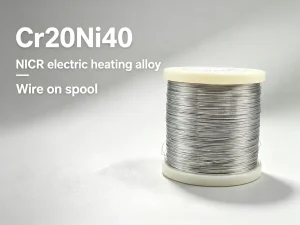
As a premier OEM manufacturer and global supplier in China, our metallurgical facilities utilize Vacuum Induction Melting (VIM) coupled with Vacuum Arc Remelting (VAR) and Electro-Slag Remelting (ESR). By controlling trace impurities (such as S, P, Pb, Bi, Sb) down to single-digit parts per million (ppm), we prevent harmful grain-boundary eutectic phases. This vacuum-engineered micro-purity grants our FeCrAl (0Cr25Al5, 0Cr23Al5, 0Cr21Al6Nb, SGHYZ, SGHT) and NiCr (Cr20Ni80, Cr30Ni70, Cr20Ni40) alloys exceptional life extension under thermal fatigue.
Vacuum Melting & Precision Chemical Composition Control
Inside the physics of ultra-clean alloy synthesis: Precise element balancing, reactive element additions, and the removal of low-melting-point trace impurities.
Gas Phase Outgassing & Deoxidation
Under a vacuum environment maintained at $10^{-1}$ to $10^{-3}\text{ Pa}$, dissolved volatile gas species are forced out of the molten metal bath. Carbon-oxygen reaction dynamics are optimized to form gaseous Carbon Monoxide ($CO$), which is continuously evacuated, yielding ultra-clean metal baths without residual solid slag inclusions. This ensures a uniform metallic matrix free of microscopic voids.
Reactive Rare-Earth Dosing (RE Control)
The addition of Reactive Rare-Earth elements—specifically Yttrium (Y), Zirconium (Zr), Hafnium (Hf), and Cerium (Ce)—is strictly calibrated. Rare earths lock onto grain boundaries, suppressing the outward diffusion of iron and chromium ions while promoting the formation of a tight, slow-growing, self-healing $\alpha-\text{Al}_2\text{O}_3$ protective oxide scale that resists spallation under violent thermal shock.
Narrow-Band Resistivity Precision
Electrical resistance ($\rho$) is directly dictated by chemical stoichiometry. Vacuum induction melting permits narrow-band alloy control within $\pm 0.15\%$ for key alloying elements (such as Aluminium in FeCrAl and Nickel/Chromium in NiCr). This guarantees batch-to-batch resistivity tolerances within $\pm 1.5\%$, enabling furnace designers to construct heating circuits without manual wire sorting.
| Alloy Grade | Primary Composition (%) | Melting Technique | Max Temp (°C) | Resistivity at 20°C ($\mu\Omega\cdot\text{m}$) | Key Mechanical / Thermal Feature |
|---|---|---|---|---|---|
| SGHT (Powder Metallurgy) | Fe-Cr-Al-RE (Ultra Pure) | VIM + PM Sintering | 1425°C | 1.45 ± 0.03 | Extreme creep resistance, anti-sagging under long horizontal spans. |
| SGHYZ | Fe-Cr23-Al6.5-RE+Nb | VIM + VAR Remelted | 1400°C | 1.43 ± 0.02 | Dense $\alpha-\text{Al}_2\text{O}_3$ adhesion, superior high-temperature yield strength. |
| 0Cr21Al6Nb | Fe-Cr21-Al6-Nb0.5 | VIM Electro-Melted | 1350°C | 1.40 ± 0.02 | Niobium stabilization prevents post-annealing rapid grain coarsening. |
| 0Cr25Al5 | Fe-Cr25-Al5.3 | VIM Standard | 1250°C | 1.42 ± 0.02 | Industry workhorse, high resistivity, low density compared to NiCr. |
| 0Cr23Al5 | Fe-Cr23-Al5.0 | VIM Clean Melt | 1250°C | 1.35 ± 0.02 | Cost-effective heating wire with highly repeatable cold ductility. |
| Cr20Ni80 | Ni78-Cr20-Si1.5 | VIM Vacuum Melted | 1200°C | 1.09 ± 0.02 | Non-magnetic, excellent post-use cold ductility, superior cycling life. |
| Cr30Ni70 | Ni67-Cr30-Si1.8 | VIM Vacuum Melted | 1250°C | 1.18 ± 0.02 | Maximum oxidation and corrosion resistance in reducing atmospheres. |
Advanced Hot Rolling & Multi-Pass Cold Drawing Mechanics
Transforming raw vacuum-cast ingots into micro-engineered wire rods, strips, and ultra-fine wires through precise thermo-mechanical processing.
1. Thermo-Mechanical Hot Rolling & Grain Refinement
Vacuum-cast ingots undergo high-temperature homogenized soaking to dissolve all secondary phase precipitates. During hot rolling on multi-stand continuous rolling mills, deformation temperatures, speed, and pass reductions are strictly controlled to induce dynamic recrystallization. This breaks up coarse cast dendritic structures into ultra-fine equiaxed grains ($ASTM\text{ grain size } 7-8$), mitigating the inherent brittleness of high-aluminium FeCrAl alloys prior to cold deformation.
2. Precision Cold Drawing with Polished Synthetic Diamond Dies
Cold drawing reduces wire dimensions down to micrometer tolerances (diameters ranging from 0.05 mm to 10.0 mm). Utilizing custom synthetic polycrystalline diamond (PCD) drawing dies engineered with optimized reduction angle profiles, our process ensures zero internal shear cracking. Integrated inline laser micrometers continuously monitor wire ovality and diameter tolerance, guaranteeing dimensional precision within $\pm 0.002\text{ mm}$.
3. Continuous Hydrogen Atmosphere Bright Annealing
Severe plastic deformation causes rapid work hardening due to dislocation entanglement. To restore ductility without inducing surface oxidation, drawn wires pass through continuous horizontal bright annealing furnaces purged with pure, dried hydrogen ($H_2$ dew point $< -60^{\circ}\text{C}$). Precise thermal profiles relieve internal stress, regulate recrystallized grain size, and yield a mirror-bright surface finish ($Ra \le 0.2\ \mu\text{m}$) free of lubricating grease residues.
4. Surface Topography & Crack-Free Ribbon Rolling
For strip and flat ribbon applications (e.g., heavy-duty furnace elements, brake resistors), cold rolling mills feature hardened tungsten carbide rolls with hydraulic automatic gauge control (AGC). Surface roughness, edge curvature, and strip camber are monitored in real-time. Eliminating edge micro-fissures ensures that localized current density peaks are prevented during high-amperage operation.
Manufacturing Excellence by Numbers
Our commitment to metallurgical quality, production scale, and global engineering delivery.
Targeted Applications & Localized Industry Scenarios
Providing custom thermal engineering solutions tailored to regional industrial ecosystems across North America, Europe, East Asia, and the Middle East.
Semiconductor & Photovoltaic Wafer Thermal Processing
In high-purity semiconductor diffusion, oxidation, and LPCVD furnaces operating at $1000^{\circ}\text{C}-1350^{\circ}\text{C}$, any heavy metal outgassing (such as Cu, Fe, Ni) ruins silicon wafer yields. Our low-iron, high-stability powder metallurgy FeCrAl alloys (SGHT, SGHYZ) deliver ultra-clean, non-contaminating thermal performance with zero thermal sagging under horizontal spans.
Industrial Glass Tempering & Ceramic Sintering Kilns
Glass tempering lines require fast response times, rapid thermal cycling, and high surface loading ($W/\text{cm}^2$). NiCr alloys (Cr20Ni80, Cr30Ni70) provide superior mechanical ductility during frequent startup/shutdown cycles, resisting oxide flaking that would otherwise mark hot glass sheets or technical ceramic components.
Green Hydrogen & EV Battery Materials Synthesis
The manufacturing of lithium-ion battery cathode materials (NCM/LFP kilns) involves highly corrosive, alkaline, and oxygen-enriched thermal atmospheres. Custom 0Cr21Al6Nb and SGHYZ spiral heating elements are micro-alloyed to resist aggressive lithium oxide vapors, significantly extending kiln campaign life.
Quality Assurance, International Compliance & Technical Support
Full-traceability quality control backed by rigorous laboratory testing and direct end-to-end engineering support.
Full-Traceability Quality Assurance Matrix
From incoming raw material spectro-analysis (ICP-OES) to finished product shipment, every coil is assigned a unique heat number trace. Quality verification protocols strictly align with GB/T 1234-2012, ASTM B603, DIN 17470, and JIS C2520 standards. Facilities are certified to ISO 9001, ISO 14001, and ISO 45001, with full compliance under RoHS and REACH directives.
Localized Global Support & Engineering Services
We provide localized engineering support to global OEM furnace builders, thermal design consultants, and maintenance engineers. Our engineering services encompass:
- Surface Load Calculation ($W/\text{cm}^2$ Optimization): Preventing element overheating while maximizing furnace heat dissipation efficiency.
- Element Geometry Coiling & Pitch Design: Calculating coil outer diameter ($D_o$), wire diameter ($d$), and stretch ratio ($S/d$) to prevent inter-turn short circuits.
- Custom Supply Formats: Supplied as round wire, flat strip, straight rods, pre-formed wave elements, or fully pre-wound spiral coils ready for ceramic tube mounting.
Technology Roadmap & Metallurgical Outlook (2025–2035)
Pioneering the next frontier of high-temperature electrothermal materials through advanced powder metallurgy and digital twin melting controls.
Oxide Dispersion Strengthened (ODS) Alloys
By incorporating nanoscale Yttrium Oxide ($Y_2O_3$) dispersoids directly into the metallic matrix via mechanical alloying and hot isostatic pressing (HIP), ODS FeCrAl alloys will extend continuous service temperatures beyond $1450^{\circ}\text{C}$, delivering creep resistance comparable to metallic molybdenum at a fraction of the cost.
AI-Assisted VIM Thermal Process Control
Deploying machine-learning thermodynamic algorithms to simulate slag-metal equilibrium and vapor-pressure sublimation in real time during VIM processing. This closed-loop AI control ensures ultra-precise chemical homogenization across 10-ton melting heats.
Zero-Carbon Hydrogen Bright Annealing Lines
Transitioning all intermediate thermal treatment furnaces to 100% green hydrogen power, eliminating upstream industrial carbon footprints while delivering pristine, oxide-free wire surfaces optimized for automated high-speed element fabrication.
Frequently Asked Questions (Engineering FAQ)
In-depth technical responses addressing material selection, vacuum metallurgy advantages, installation mechanics, and element longevity optimization.
Traditional air induction melting exposes molten aluminium and chromium to atmospheric oxygen and nitrogen, generating hard oxide/nitride slag inclusions ($\text{Al}_2\text{O}_3$, $\text{CrN}$). These microscopic inclusions act as severe stress raisers during cold drawing, leading to internal wire breakage. Furthermore, air melting cannot eliminate trace low-melting-point tramp elements (such as Lead, Bismuth, Sulfur). Vacuum Induction Melting (VIM) operates under ultra-high vacuum ($10^{-1}$ to $10^{-3}\text{ Pa}$), degassing dissolved oxygen and hydrogen while sublimating volatile impurities. This produces an ultra-clean metallic matrix with vastly improved high-temperature fatigue life and precise resistivity consistency.
FeCrAl alloys (e.g., 0Cr25Al5, SGHYZ) feature higher maximum operating temperatures (up to 1425°C), higher electrical resistivity ($\sim 1.45\ \mu\Omega\cdot\text{m}$), and lower mass density ($\sim 7.10\text{ g/cm}^3$) compared to NiCr. They form a protective $\alpha-\text{Al}_2\text{O}_3$ oxide layer. NiCr alloys (e.g., Cr20Ni80) feature a maximum temperature of ~1200°C, forming a $\text{Cr}_2\text{O}_3$ scale. However, NiCr exhibits superior hot strength, non-magnetic behavior, and remains fully ductile after prolonged high-temperature exposure. FeCrAl becomes brittle after cooling to room temperature. Therefore, FeCrAl is selected for maximum temperature and energy savings, whereas NiCr is selected for applications requiring severe thermal cycling, frequent mechanical vibration, or post-use repairability.
Rare Earth elements such as Yttrium (Y), Zirconium (Zr), and Hafnium (Hf) exhibit high oxygen affinity. When added in micro-alloyed proportions, RE ions migrate to the grain boundaries of the developing oxide scale. This alters oxidation kinetics from dual-direction diffusion to inward oxygen diffusion, suppressing the formation of compressive growth stresses within the scale. Furthermore, RE ions form microscopic "pegs" that mechanically anchor the external $\alpha-\text{Al}_2\text{O}_3$ film to the underlying alloy substrate, preventing oxide spallation under rapid heating and cooling cycles.
At temperatures above 1200°C, conventional FeCrAl alloys undergo significant grain growth. Under their own weight, grain boundary sliding occurs, leading to plastic deformation known as creep or "sagging." Sagging leads to coil-to-coil contact, localized short-circuits, and burnouts. Powder Metallurgy SGHT alloy utilizes oxide dispersion and refined powder consolidation to maintain stable grain structures at extreme temperatures ($1425^{\circ}\text{C}$), providing up to 4x higher creep resistance than standard melted 0Cr25Al5 wire.
Surface loading ($W/\text{cm}^2$) represents the electrical power dissipated per square centimeter of wire surface area. Choosing the correct value depends on furnace operating temperature, heating element geometry, atmosphere, and ceramic support thermal conductivity. For example, at $1000^{\circ}\text{C}$ in air, a typical surface load for 0Cr25Al5 is $2.5 - 3.2\text{ W/cm}^2$. At $1300^{\circ}\text{C}$, the allowable load drops to $1.0 - 1.5\text{ W/cm}^2$ to prevent localized thermal runaway. Our technical team provides custom computer simulations to determine optimal surface loads for your furnace parameters.
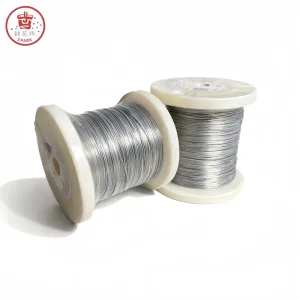
We supply products in a complete range of delivery formats: Fine wire ($\varnothing 0.05\text{ mm} - 0.8\text{ mm}$ on DIN spools), Heavy industrial wire ($\varnothing 1.0\text{ mm} - 10.0\text{ mm}$ in catch-weight or precision coils), Cold-rolled strip (thickness $0.1\text{ mm} - 4.0\text{ mm}$, width $5\text{ mm} - 200\text{ mm}$), and pre-formed wound elements (spirals, wave elements, tubular modules). Standard wire diameter tolerances are maintained within $\pm 0.002\text{ mm} - \pm 0.01\text{ mm}$ depending on gauge, conforming to GB/T 1234-2012 and ASTM B603 standards.
Additional Ultra-High Temperature & Specialty Heating Solutions
Explore our complete range of specialized high-temperature resistance materials, powder-metallurgy wires, glass-tempering alloys, and pure nickel raw materials.