
Precision Electrothermal Alloys & Heating Elements
Engineered to deliver extended operational life in high-temperature ambient air environments.




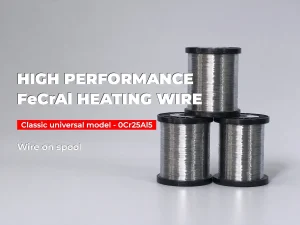
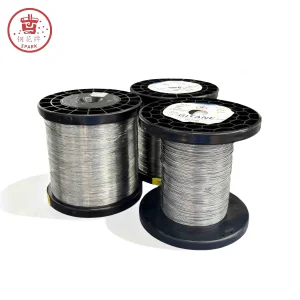
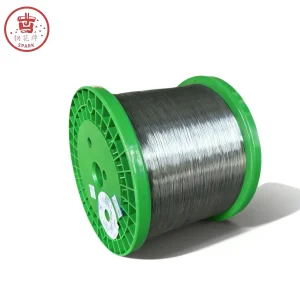
Executive Whitepaper: Eliminating Atmosphere Protection via Advanced Self-Passivating Alloys
In modern industrial high-temperature processing, thermal efficiency, operational uptime, and system simplicity are paramount. Historically, operating electrical resistance elements at temperatures exceeding 1000°C to 1425°C required continuous purge gases—such as dry Nitrogen ($N_2$), Argon ($Ar$), Hydrogen ($H_2$), or specialized endothermic gas mixtures—to prevent catastrophic oxidative degradation of the heating elements. This mandatory atmosphere protection introduces significant capital expenditure, operational complexity, gas storage hazards, and recurring gas consumption overheads.
This technical whitepaper examines the metallurgical physics, global procurement shifts, China's advanced Industry 4.0 manufacturing capabilities, and real-world industrial application scenarios surrounding atmosphere-free high-temperature resistance materials.
The Science of Atmosphere-Free Reliability: Metallurgical Mechanisms
Understanding why certain electrothermal alloys thrive in ambient air without requiring protective gas flushes requires a microscopic look at high-temperature oxidation kinetics and microstructural thermodynamics.
Thermodyamic Passivation ($\alpha-Al_2O_3$)
FeCrAl alloys enriched with critical concentrations of Aluminum (5.0% to 7.0%) undergo selective oxidation at temperatures above 900°C. Aluminum diffuses outward toward the alloy surface to react with environmental oxygen, forming a microscopic layer of pure alpha-alumina ($\alpha-Al_2O_3$). This oxide possesses an exceptionally low oxygen-ion diffusion coefficient, practically sealing the core alloy against progressive internal oxidation.
Rare-Earth Element Doping (RE Effect)
Standard binary alloys tend to spall or flake their oxide layers during thermal cycling due to mismatched thermal expansion coefficients between the metal substrate and the oxide film. Leading Chinese manufacturers incorporate micro-alloying additives—specifically Yttrium ($Y$), Zirconium ($Zr$), Hafnium ($Hf$), and Niobium ($Nb$) as seen in 0Cr21Al6Nb—to anchor the scale via oxide pegging, ensuring long-term spallation resistance.
High Specific Electrical Resistivity
Alloys engineered for long-term atmosphere-free reliability feature high specific electrical resistivity (ranging from $1.35$ to $1.45\,\mu\Omega\cdot\text{m}$). This property allows furnace designers to utilize thicker wire cross-sections or wider strip profiles for a given power rating, increasing structural rigidity, creep resistance, and overall service life.
Global Procurement Trends: Decarbonization and CAPEX Reduction
The global manufacturing sector is currently undergoing a structural transformation driven by two key forces: industrial decarbonization (electrification of industrial heat) and strict operational cost management. Facilities worldwide are actively upgrading from gas-fired burner systems to high-efficiency electric furnaces.
1. Elimination of Industrial Gas Logistics
Operating a controlled-atmosphere furnace requires extensive infrastructure: cryogenic gas storage tanks, high-pressure vaporizers, gas mixing panels, double-walled piping, and continuous gas monitoring instrumentation. By specifying Chinese resistance wire designed for long-term reliability without additional atmosphere protection, global engineering teams eliminate these heavy infrastructure investments and remove recurring gas procurement expenditures.
2. Risk Mitigation in Thermal Processing
In traditional setups requiring protective gas, any power failure or utility glitch that stops gas delivery leads to rapid element oxidation, internal furnace soot accumulation, or catastrophic structural embrittlement. Atmosphere-resilient alloys offer inherent system safety; they operate continuously and reliably in natural atmospheric air without requiring active gas management safeguards.
3. Global Demand Drivers by Region
- Europe & North America: Focus on electrifying industrial kilns to meet net-zero targets while lowering plant operational risks and high gas prices.
- Asia-Pacific & Latin America: Rapid expansion of heat-treatment lines for automotive manufacture, solar photovoltaics, and advanced ceramics demanding low CAPEX and high reliability.
China Industry 4.0: Supply Chain Resilience & Manufacturing Excellence
China has established itself as the world’s preeminent manufacturing hub for high-temperature resistance alloys, backed by integrated metallurgical supply chains, state-of-the-art melting technology, and strict quality assurance protocols.
Vacuum Induction Melting (VIM) & ESR
Leading Chinese facilities utilize primary Vacuum Induction Melting paired with Electroslag Remelting (ESR). This double-melt methodology eliminates non-metallic inclusions, controls dissolved gas content ($O_2, N_2, H_2$), and guarantees tight compositional tolerances for elements like Aluminum, Chromium, and Niobium.
Automated Wire Drawing & Bright Annealing
Through continuous multi-pass wire drawing machines equipped with laser inline micrometer feedback, Chinese factories maintain wire diameter tolerances as strict as $\pm 0.01\,\text{mm}$. Continuous hydrogen-atmosphere bright annealing lines ensure uniform grain structure and surface cleanliness before final spooling or coiling.
Unmatched Supply Chain Agility
From raw ore processing and rare-earth extraction in domestic mines to finished spiral elements and complete custom industrial furnaces, China's fully integrated domestic supply chain eliminates component bottlenecks, shortens lead times, and guarantees predictable pricing for overseas buyers.
Engineering Comparison: Alloy Performance in Ambient Air
Selecting the optimal heating alloy depends on operating temperature, electrical requirements, mechanical hot strength, and atmospheric conditions. Below is a comparative overview of key high-temperature resistance alloy grades manufactured in China.
| Alloy Grade | Alloy Family | Max Temp in Air (°C) | Resistivity ($\mu\Omega\cdot\text{m}$) | Atmosphere Protection Needed? | Primary Industrial Applications |
|---|---|---|---|---|---|
| SPARK SGHT | FeCrAl (PM / Ultra-Pure) | 1425°C | 1.45 | NO (Self-Passivating) | Advanced ceramic sintering, semiconductor diffusion furnaces |
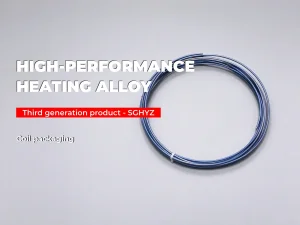
| SPARK SGHYZ | FeCrAl (Rare-Earth Enriched) | 1400°C | 1.42 | NO (Self-Passivating) | Powder metallurgy, high-temperature industrial kilns |
| 0Cr21Al6Nb | FeCrAl (+Nb Addition) | 1350°C | 1.45 | NO (Self-Passivating) | Industrial heat-treatment furnaces, radiant tube heaters |
| HRE 1350 | FeCrAl (High-Temp Grade) | 1350°C | 1.40 | NO (Self-Passivating) | Electric furnace coils, ceramic processing lines |
| 0Cr25Al5 | FeCrAl (Standard Workhorse) | 1250°C | 1.42 | NO (Self-Passivating) | General industrial furnaces, domestic heating elements |
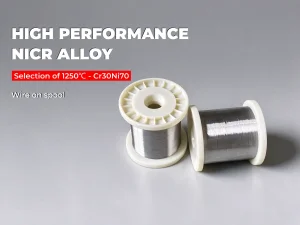
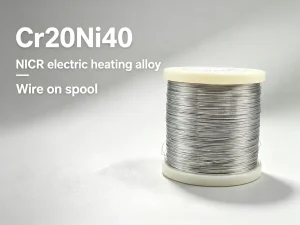
| Cr20Ni80 | Nickel-Chromium (NiCr) | 1200°C | 1.09 | NO (Forms $Cr_2O_3$) | High thermal shock systems, appliances, precision elements |
Localized Industrial Application Scenarios
How global industries leverage atmosphere-free Chinese heating wire technology to optimize operations:
1. Ceramic Sintering & Kilns
High-temperature shuttle kilns and roller hearth kilns processing technical ceramics operate continuously between 1200°C and 1380°C. Utilizing 0Cr21Al6Nb or SGHYZ wire eliminates the need for furnace sealing, reducing kiln thermal mass and lowering energy input per batch.
2. Solar Photovoltaic Wafer Processing
Diffusion and annealing furnaces in solar cell manufacturing require pristine, uniform thermal zones. Ultra-clean FeCrAl alloys provide rapid heating cycles and exceptional mechanical dimensional stability without introducing gas-borne contaminants.
3. Automotive Metallurgical Heat-Treatment
Carburizing, annealing, and stress-relieving furnaces for automotive gears and shafts rely on robust heating spirals. FeCrAl materials withstand harsh thermal shocks and ambient workshop air without thermal degradation or scale spallation.
4. Petrochemical Catalytic Reactors
High-temperature fluid heating and catalyst testing reactors require externally wrapped heating elements. The self-passivating alumina layer protects the alloy from trace air moisture and atmospheric oxidation over years of uninterrupted operation.
Explore Our Complete Range of Resistance Wire Solutions
Direct from China's leading certified heating alloy manufacturers.



Frequently Asked Questions: Atmosphere Protection & Heating Wire Selection
Technical guidance for furnace engineers, OEM manufacturers, and procurement managers.
Upgrade Your High-Temperature Systems with China's Reliable Alloys
Eliminate costly gas protection systems, reduce furnace downtime, and optimize your operational yield with engineered electrothermal resistance solutions.
Request Technical Consultation & Quote