
Featured Industrial Heating Wires & Heavy-Duty Soldering Alloys
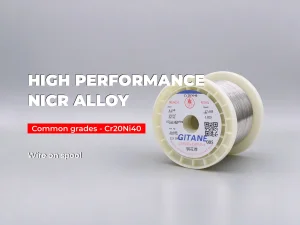
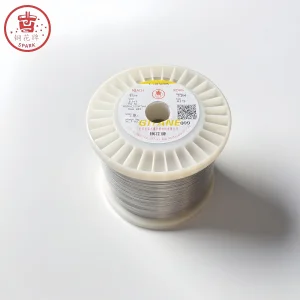
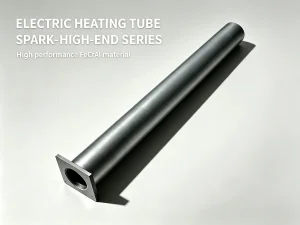
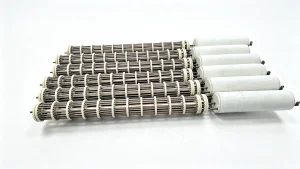
Below are China's flagship high-temperature alloy wires, custom furnace cores, and resistance elements designed for heavy-duty industrial soldering stations, automated SMT soldering machines, and high-temp heat treatment furnaces.


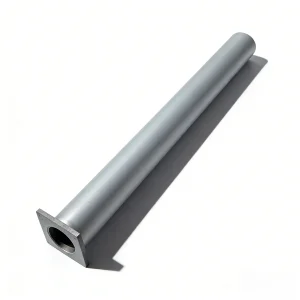
Global Commercial & Industrial Status of Industrial Soldering Irons
In modern electronic assembly, automotive wire-harness joining, and semiconductor thermal processing, the industrial soldering iron is far more than a basic workbench tool. It is a highly engineered, thermal-transfer system operating under rigorous, continuous-duty cycles. As global electronics manufacturing transitions toward lead-free solders (such as SAC305 and Sn-Cu alloys), thermal demands on soldering tips and internal heating cores have increased exponentially.
Lead-free solders possess significantly higher melting points (typically 217°C–227°C) compared to traditional leaded alloys (183°C). Consequently, industrial soldering iron heating elements—traditionally composed of standard ceramic or Nichrome wire—must maintain an elevated working temperature (350°C to 480°C) without suffering thermal degradation, oxidation burnout, or electrical leakage. China has emerged as the global epicenter for precision heating core manufacturing, leveraging specialized metallurgical supply chains such as Beijing Shougang Gitane New Materials Co., Ltd. to produce high-density ceramic heaters, FeCrAl resistance wire, and NiCr alloys engineered specifically for micro-soldering and heavy industrial soldering operations.
Thermal Shock Resilience
Automated SMT soldering tips undergo rapid thermal dissipation upon contacting large copper ground planes. Industrial cores utilize high-density MCH (Metal Ceramics Heater) structures to ensure sub-second thermal recovery.
Dielectric Safety & Zero-Leakage
Sensitivities in MOSFETs and microchips demand insulation resistance exceeding 100MΩ at 500V DC. Advanced FeCrAl and NiCr heating elements prevent high-voltage spikes from ruining sensitive ICs.
Continuous-Duty Longevity
Unlike consumer-grade irons designed for intermittent craft use, industrial soldering iron cores are built to operate 24/7 on high-speed factory lines, demanding low oxidation rates and high creep resistance.
Key Growth Drivers & Technological Trends
The global industrial soldering irons and heating element market is undergoing a structural transition driven by four major technological imperatives:
1. Integration of Smart PID & Micro-Thermocouples
Modern high-end industrial soldering handles no longer place the temperature sensor behind the heating element. Next-generation designs embed K-type or Platinum (Pt100) micro-sensors directly inside the tip structure adjacent to the heating wire coil. This setup communicates with digital PID microcontrollers at sub-millisecond intervals, dynamically boosting current when a thermal load is detected.
2. Shift to Powder Metallurgy (PM) Alloys
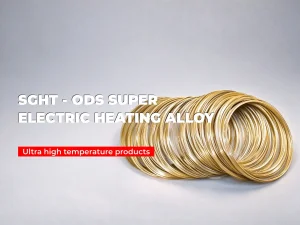
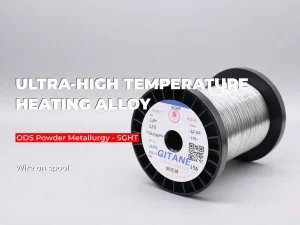
Traditional drawn resistance wires tend to suffer from grain growth at temperatures above 1100°C, causing sagging, micro-fractures, and non-uniform heating. Advanced alloys like SPARK SGHT FeCrAl utilize powder metallurgy process control, yielding an ultra-fine grain structure with rare-earth additions (Yttrium, Zirconium, Reactive Elements) that extend element lifespan up to 300%.
3. High Watt-Density Cartridge Heaters
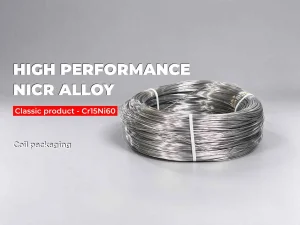
Automated robotic soldering heads require compact forms with immense power delivery—often up to 150W to 300W packed into a cylinder less than 5mm in diameter. Achieving this watt density without shorting or melting requires specialized high-purity MgO insulation powder combined with ultra-thin, highly uniform Cr20Ni80 or 0Cr25Al5 resistance wire.
4. Environmental Green Manufacturing & RoHS Compliance
Global buyers require full traceability ensuring zero heavy-metal contamination (Lead, Cadmium, Hexavalent Chromium). China’s leading alloy plants operate under strict ISO 14001 and RoHS/REACH standard frameworks, issuing mill test certificates for every batch of wire and heating tube produced.
FeCrAl vs. NiCr Alloys: Choosing the Right Heating Core Material
When specifying an industrial soldering iron core, heating tube, or furnace element, engineers must choose between two primary resistance alloy families: Iron-Chromium-Aluminium (FeCrAl) and Nickel-Chromium (NiCr). Below is a comparative technical analysis.
| Property Parameter | FeCrAl Alloys (e.g., 0Cr25Al5, SGHT, HRE) | NiCr Alloys (e.g., Cr20Ni80, Cr30Ni70) |
|---|---|---|
| Max Operating Temp | Up to 1425°C (SGHT Powder Metallurgy) | Up to 1250°C (Cr30Ni70 Grade) |
| Electrical Resistivity (20°C) | High (1.35 - 1.45 μΩ·m) — Allows thinner wire | Moderate (1.09 - 1.18 μΩ·m) |
| Density | 7.10 g/cm³ (~15% lighter than NiCr) | 8.40 g/cm³ |
| Oxidation Mechanism | Forms self-healing, ultra-dense $\alpha\text{-Al}_2\text{O}_3$ scale | Forms protective $\text{Cr}_2\text{O}_3$ scale layer |
| Hot Strength & Ductility | Lower hot strength; becomes brittle after thermal use | Superior hot strength; remains ductile after cooling |
| Thermal Cycling Resilience | Excellent with rare-earth doping (SGHYZ grade) | Outstanding natural resistance to frequent power cycles |
| Sulfur & Carbon Atmosphere | Highly resistant to sulfur and carburizing atmospheres | Vulnerable to sulfur attack ("green rot") |
Engineering Recommendation for Soldering Iron Core Manufacturers
For continuous automated soldering heads subject to intense power modulation (0W to 150W duty cycles), Cr20Ni80 Nichrome wire is preferred due to its superior post-use ductility and mechanical resistance to mechanical shock. However, for ultra-high-watt density micro-heaters and ceramic heating tubes requiring maximum dielectric isolation and elevated thermal thresholds, 0Cr25Al5 or SGHT FeCrAl alloys provide unmatched thermal-to-electrical conversion efficiency at lower raw material costs.
Stage 1: Melting & Vacuum Refining
VIM (Vacuum Induction Melting) and ESR (Electroslag Remelting) remove tramp impurities (Sulfur, Phosphorus, Hydrogen), stabilizing element lifetime.
Stage 2: Precision Wire Drawing & Annealing
Multi-pass continuous drawing down to micro-diameters (0.05mm - 2.0mm) with bright hydrogen atmosphere annealing ensures clean, oxide-free wire surfaces.
Stage 3: Ceramic Element Fabrication
Precision coiling around ceramic mandrels or embedding within alumina tape, followed by high-temperature sintering into complete industrial soldering cores.
Global Industry Deployment Scenarios
High-reliability heating cores and resistance alloy wires engineered in China serve diverse global sectors:
EV Battery & Automotive Electronics
Heavy-duty 200W to 500W soldering stations utilize high-mass ceramic cores to solder heavy copper busbars, battery management system (BMS) tabs, and power electronics without cold-solder joints.
Photovoltaic Stringer Soldering
Solar module production lines employ automated induction and resistance-heated soldering tips to interlink PV cells continuously. High-temperature 0Cr21Al6Nb wires ensure zero maintenance over millions of cycles.
Aerospace Micro-SMT Assembly
Precision soldering handles fitted with micro-wire NiCr heating elements enable microscopic touch-ups on high-density circuit boards under magnifying systems without thermal blooming.
Industrial Soldering Irons & Alloys Factory Wholesale Pricelist
Understanding B2B pricing structure is critical for procurement directors, OEM buyers, and supply chain managers. Wholesale prices for industrial heating elements and alloy wires are governed by four primary variables:
- LME Raw Metal Spot Prices: Nickel index fluctuations heavily impact NiCr grades (Cr20Ni80), whereas FeCrAl alloys offer superior price stability due to their iron-rich base composition.
- Wire Diameter & Precision Tolerances: Ultra-fine wires (<0.10mm) incur higher drawing and annealing process costs per kilogram compared to heavy industrial rod stock.
- Ceramic & Insulation Quality: High-purity 99% Alumina ceramic tubes with high-grade MgO insulation command a premium over standard porcelain equivalents due to superior dielectric strength.
- Order Volume & Custom OEM Tooling: Custom heating core shapes, pre-formed coils, or lead wire spot-welding affect unit costs at smaller volumes (MOQ < 100 kg).
Factory Direct Benchmark Reference Pricelist (B2B Indicative)
| Product Category / Alloy Grade | Specification / Form | Temp Rating | MOQ | Estimated Wholesale Price (USD) |
|---|---|---|---|---|
| 0Cr25Al5 FeCrAl Heating Wire | Ø 0.5mm – 3.0mm Spooled Wire | 1250°C | 50 kg | $8.50 – $14.00 / kg |
| Cr20Ni80 Nichrome Alloy Wire | Ø 0.1mm – 2.0mm Fine Wire | 1200°C | 25 kg | $28.00 – $42.00 / kg |
| SPARK SGHT Powder Metallurgy Wire | Ø 1.0mm – 6.0mm High-Temp Wire | 1425°C | 100 kg | $22.00 – $35.00 / kg |
| MCH Ceramic Soldering Core (60W-100W) | Internal Wire-Embedded Heating Cylinder | 600°C (Core) | 1,000 Pcs | $1.20 – $2.80 / pc |
| Ceramic Bundle Rod Radiant Tube Core | Custom Diameter Industrial Assembly | 1300°C | 10 Sets | $120.00 – $450.00 / set |
| 0Cr21Al6Nb Industrial Heating Strip | 0.5mm - 3.0mm Thickness Ribbon | 1350°C | 100 kg | $12.50 – $19.00 / kg |
*Note: Prices above represent indicative factory FOB tier rates as of Q1 2025. Final quotes depend on exact metallurgical composition, tolerance requirements, and exchange rate shifts.
Strict Quality Control & Metallurgical Heritage
With more than six decades of deep metallurgical experience under Shougang Group, Beijing Shougang Gitane New Materials Co., Ltd. maintains complete vertical manufacturing control—from raw vacuum induction melting to precision drawing, ribbon rolling, and final heating assembly testing.
ISO 9001:2015
Certified quality management system enforcing batch traceability from raw ingot to finished spool.
GB/T 1234-2012
Full compliance with China National Standard for industrial resistance heating alloys.
50-Hour Accelerated Life
Rigorous accelerated high-temperature lifecycle testing to verify wire oxidation boundaries.
100% Resistance Test
Every spool undergoes automated continuous resistance testing to ensure standard Ω/m uniformity.
Frequently Asked Questions (FAQ) for Industrial Heating Procurement
Comprehensive technical answers provided by senior thermal engineers for commercial buyers and furnace designers.
Complete High-Temperature Alloy & Tube Portfolio
Explore our secondary suite of ultra-high temperature FeCrAl powder metals, Nichrome strips, radiant cores, and structural steel tubes engineered for demanding industrial environments.





Request Custom Heating Core Quotes & Technical Datasheets
Partner directly with China's leading resistance alloy engineering manufacturer. Our technical team assists with wire gauge selection, watt-density calculations, and custom OEM heating core prototyping.