
High Temperature Resistant Alloy Products & Factory Specifications
Direct manufacturer supplies, custom wire/strip dimensions, and precision heat-resistant alloy elements manufactured under ISO9001 and GB/T 1234-2012 standards.
-
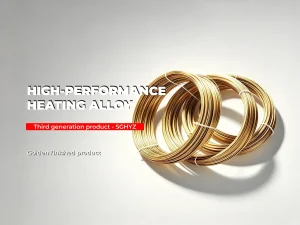 Wholesale SGHYZ FeCrAl Heating Wire | 1400°C Golden High Temperature Resistance Alloy Factory, QuotesRequest Factory Quote
-
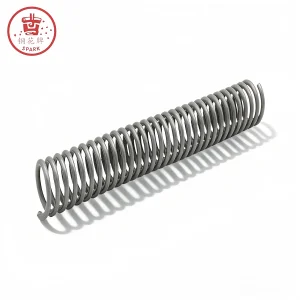 Wholesale High-Quality NiCr & FeCrAl Electric Heating Elements - China Suppliers and Factory Solutions Suppliers, PricelistView Specifications
-
 China SG140 Alloy Electric Heating Wire for Tempering Furnace - High Strength, Eco-Friendly Solution from China Suppliers & Factory Supplier, PricelistGet Custom Quote
-
China High-Quality NiCr & FeCrAl Electric Heating Elements from China Suppliers and Factory for Efficient Heating Solutions Supplier, PricelistRequest Catalog
-
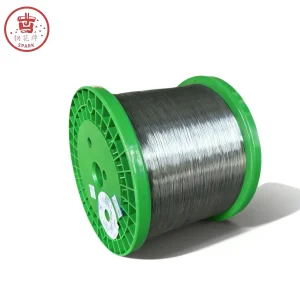 China High-Performance SPARK 0Cr20Al6 Electric Heating Wire 1350℃ - China Suppliers & Factory Manufacturer, PricelistInquire Factory Pricing
-
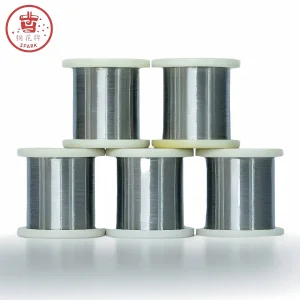 China China Cr20Ni80 Electric Heating Wire - Reliable Resistance Wire Suppliers & Factory Manufacturers, QuotesDownload Datasheet
-
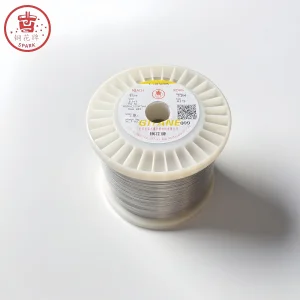 Wholesale High-Performance Cr20Ni80S Electric Heating Alloy from China – Reliable Suppliers & Factory for Thermal Environments Pricelist, QuotesCheck Bulk Quotes
-
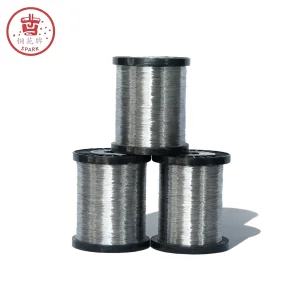 China High-Performance 0Cr25Al5 Electric Heating Wire from China Suppliers | Trusted Factory for Resistance Wire Solutions Factories, QuotesGet Free Sample
Executive Summary: High-Temperature Deformation Mechanics in Advanced Alloys
When engineering industrial heating systems, thermal process reactors, and high-temperature calcination kilns operating between 900°C and 1425°C, structural integrity failure rarely stems from immediate melting. Instead, it occurs through insidious high-temperature creep, grain boundary sliding, and sag deformation under sustained mechanical loads and self-weight.
Grain Boundary Pinning
Micro-alloying with rare earth reactive elements (REE) such as Yttrium (Y), Zirconium (Zr), and Hafnium (Hf) forms sub-micron oxide dispersions along grain boundaries. This inhibits Coble creep and grain boundary sliding at temperatures exceeding 0.6 Tm (homologous temperature).
Alpha-Alumina Protection
Advanced Iron-Chromium-Aluminium (FeCrAl) alloys (such as SGHYZ, SGHT, and HRE) form a self-healing, thermodynamically ultra-stable α-Al2O3 surface scale. This scale reduces oxidation kinetics by orders of magnitude while locking internal grain structures.
Sag Deformation Ratio
Under continuous horizontal mounting in industrial furnaces, conventional resistance wires experience coil collapse and pitch alteration. Deformation resistant alloys maintain high hot-yield strength, preserving pitch consistency and preventing electrical short-circuiting.
Technical Insight: Sourcing high-temperature deformation resistant alloys from qualified Chinese manufacturers like Shougang Gitane (SPARK) delivers significant cost and performance advantages. By employing vacuum induction melting (VIM) and powder metallurgy (PM) processing routes, modern FeCrAl and NiCr alloys achieve structural longevity equal to or exceeding traditional European standards at competitive price points.
Global Commercial & Industrial Status of Heat-Resistant Alloys
The global market for high-temperature resistance and deformation-resistant superalloys is undergoing a fundamental structural shift. Driven by worldwide net-zero emissions mandates, the decarbonization of heavy industrial heating, and the rapid growth of semiconductor manufacturing, demand for stable thermal elements has reached unprecedented levels.
1. Decarbonization of Process Heat
Global steelmakers, glass producers, and chemical refining complexes are actively replacing gas-fired burner systems with zero-emission megawatt-scale electric heating systems. Electric furnace installations require heavy-gauge deformation-resistant ribbon and wire that can operate continuously without sagging during multi-year production campaigns.
2. China's Metallurgical Evolution
China has transitioned from a volume-centric producer of commercial resistance wire to an advanced innovation hub for specialty superalloys. Leading Chinese suppliers leverage state-backed R&D ecosystems, integrated steelworks infrastructure (e.g., Shougang Group), and advanced raw material refinement to manufacture ultra-pure alloy grades matching global specifications.
3. Supply Chain Optimization
Global original equipment manufacturers (OEMs) in Europe, North America, and Southeast Asia are diversifying their procurement models. Sourcing directly from certified Chinese superalloy factories provides a 25%–40% cost efficiency gain while securing robust lead times for critical industrial furnace overhauls.
Key Industry Trends Driving Alloy Innovation
To survive next-generation operational environments—such as high-speed thermal cycling, aggressive carburizing atmospheres, and extreme vacuum conditions—metallurgical engineers are advancing four primary technology vectors:
Powder Metallurgy (PM) Route
Traditional ingot melting suffers from macro-segregation of heavy alloy additions. Powder metallurgy (used in grades like SGHT) produces an ultra-fine, homogeneous grain structure with uniformly dispersed oxide particles, dramatically elevating hot tensile strength and creep rupture limits up to 1425°C.
Oxide Dispersion Strengthening (ODS)
By mechanical alloying nano-scale Y2O3 (yttria) particles throughout the metallic matrix, ODS FeCrAl alloys achieve extraordinary high-temperature mechanical stability, preventing thermal fatigue crack propagation during rapid power cycling.
AI-Driven Composition Modeling
Machine learning models simulate multi-component phase diagrams to calculate exact concentration windows for Cr, Al, Ni, and trace elements. This optimizes oxidation resistance while maintaining room-temperature ductility for ease of coiling and element fabrication.
Localized Application Scenarios & Sector Solutions
Operating environments vary significantly across manufacturing sectors. Selecting the appropriate high-temperature deformation resistant alloy requires matching chemical compatibility, maximum continuous service temperature, and mechanical mounting configurations.
Semiconductor Diffusion & Epitaxy
Operating Temperature: 1000°C – 1300°C
Primary Challenge: Extreme cleanliness and zero particle shedding.
Recommended Alloy: SGHT / SGHYZ Powder Metallurgy FeCrAl. Forms a dense, non-flaking alumina oxide film that prevents metallic contamination on silicon wafers while maintaining zero sag across extended horizontal thermal zones.
Lithium EV Battery Cathode Sintering
Operating Temperature: 800°C – 1150°C
Primary Challenge: Corrosive lithium vapor atmospheres in roller hearth kilns.
Recommended Alloy: 0Cr25Al5 / SPARK 0Cr20Al6. High aluminum content establishes a protective barrier resistant to alkaline vapor attack, reducing element swelling and deformation.
Petrochemical Cracking & Reforming
Operating Temperature: 900°C – 1200°C
Primary Challenge: Carburization, sulfur contamination, and heavy mechanical vibration.
Recommended Alloy: Cr20Ni80S / Cr30Ni70 Nichrome. Higher nickel matrix provides superior ductile resistance to thermal shock and mechanical vibration while remaining non-magnetic and structural under cycling.
Material Comparison Matrix: Deformation & Thermal Properties
Comprehensive engineering comparison of high-performance FeCrAl and NiCr alloy grades manufactured in China for industrial furnace applications:
| Alloy Grade | Alloy System | Max Temp (°C) | Resistivity (μΩ·m) | Density (g/cm³) | Creep Deformation Resistance | Primary Industrial Use |
|---|---|---|---|---|---|---|
| SGHT (PM) | Fe-Cr-Al + ODS | 1425°C | 1.45 | 7.10 | Exceptional | Semiconductor, High-Temp Kilns |
| SGHYZ | Fe-Cr-Al + REE | 1400°C | 1.42 | 7.10 | Very High | Industrial Ceramics, Heat Treat |
| HRE 1350 | Fe-Cr-Al | 1350°C | 1.40 | 7.15 | High | Powder Metallurgy, Annealing |
| 0Cr25Al5 | Fe-Cr-Al | 1250°C | 1.42 | 7.10 | Moderate | Standard Industrial Furnaces |
| Cr20Ni80S | Ni-Cr-Fe | 1200°C | 1.09 | 8.40 | High Ductility / Cycling | Petrochemical, Precision Elements |
| Cr30Ni70 | Ni-Cr | 1250°C | 1.18 | 8.10 | High Cycling Strength | Medical, High-End Appliances |
Technology Roadmap & Metallurgical Future Outlook (2025–2035)
As thermal processes demand higher operating temperatures and tighter energy footprints, the development roadmap for high-temperature deformation resistant alloys focuses on three major milestones:
Nano-Dispersed Superalloys
Scaling up high-yield atomization and hot isostatic pressing (HIP) to produce commercial-grade ODS FeCrAl rod and strip with uniform nano-yttria grain pinning, raising maximum service limits to 1450°C.
Refractory High-Entropy Alloys (RHEAs)
Commercializing multi-principal element alloys (containing Mo, Nb, Ta, Cr, Al) for specialized furnace components, combining extreme yield strength at 1500°C with non-sag performance.
Smart Self-Healing Oxide Surfaces
Integrating secondary reactive element reservoirs within the alloy bulk that actively migrate to surface micro-cracks during thermal fatigue, instantaneously sealing oxidation pathways.
High Temperature Resistant Alloy Products & Factory Specifications
Explore specialized alloy products, heavy heating coils, precision flat wire, and engineered furnace heating elements directly from China's primary manufacturing facility.
-
Wholesale High-Quality SPARK 0Cr25Al5 Electric Heating Wire from China Suppliers and Factory - Premium Resistance Wire Supplier, SuppliersInquire Factory Price
-
China High-Performance Cr20Ni80S Electric Heating Alloy from China Suppliers and Factory for Demanding Thermal Environments Supplier, FactoriesView Product Details
-
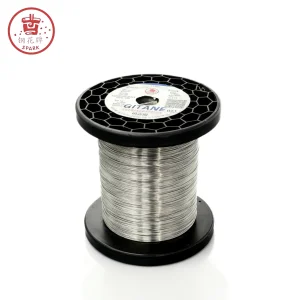 China High-Temperature Electric Heating Wire HRE 1350℃ - China Suppliers & Factory for Alloy Resistance Heating Solutions Supplier, FactoriesRequest Technical Data
-
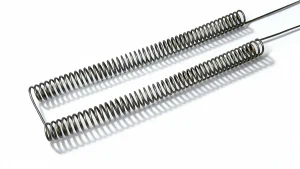 Wholesale High-Quality Spiral Electric Heating Elements from China Suppliers - Efficient Heating Factory Solutions Manufacturers, SupplierGet Wholesale Quote
-
 Wholesale High Temperature Electric Heating Wire SGHYZ 1400℃ - Premium Resistance Wire from China Suppliers & Factory Manufacturers, SuppliersContact Sales Engineer
-
Wholesale High-Quality SPARK 0Cr25Al5 Electric Heating Wire - China Suppliers and Factory for Efficient Heating Solutions Suppliers, FactoryDownload Spec Sheet
-
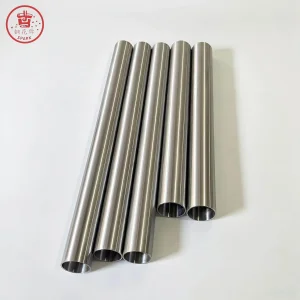 Wholesale High Performance SGHT Steel Tube - Quality Products from China Suppliers and Factory for Energy and Petrochemical Industries Manufacturers, QuotesCheck Tube Availability
-
 Wholesale Gitane: Professional Customized Industrial Furnaces from China Suppliers | Energy-Efficient Factory Solutions Manufacturers, SuppliersCustom Furnace Inquiry
Procurement Framework & Quality Control Protocols
Selecting a high-temperature deformation resistant alloy supplier requires stringent verification of manufacturing consistency and metallurgical testing standards. Sourcing directly from certified Chinese suppliers involves validating key technical milestones:
1. Chemical Purity Verification
Request mill test reports (MTR) verifying low impurity levels (Carbon, Sulfur, Phosphorus < 0.02%). Excess sulfur weakens grain boundaries, triggering premature creep failure at elevated temperatures.
2. Hot Tensile & Creep Rupture Testing
Ensure the supplier provides high-temperature tensile test data at 1000°C–1200°C and creep rupture values under specified load parameters per ASTM E139 or GB/T 2039 protocols.
3. Accelerated Life Testing (2b Test)
Validate the alloy's service life using standard accelerated thermal cycling tests (e.g., GB/T 1234-2012 / Bash Test). This measures the adhesion of the oxide scale during repeated heating and cooling cycles.
Frequently Asked Engineering Questions (Q&A)
Detailed answers to technical queries regarding high-temperature deformation resistant alloys, grade selection, and factory sourcing:
At temperatures exceeding 1300°C, NiCr alloys suffer from grain coarsening and rapid oxidation. In contrast, advanced FeCrAl alloys (such as SGHYZ and SGHT) form a dense, protective α-Al2O3 surface scale with a very low parabolic oxidation rate. When micro-alloyed with reactive elements like Yttrium and Zirconium, oxide dispersions pin grain boundaries, preventing dislocation movement, grain boundary sliding, and high-temperature creep deformation.
Traditional ingot melting can lead to macro-segregation and non-uniform grain growth during hot rolling, causing localized weak spots susceptible to sag deformation. Powder Metallurgy atomizes liquid alloy into ultra-pure micro-powders, followed by Hot Isostatic Pressing (HIP). This creates a homogeneous microstructure with fine, uniform grain sizes, higher hot yield strength, and exceptional resistance to sagging in horizontally mounted furnace elements.
FeCrAl alloys offer two primary economic advantages: (1) Density: FeCrAl has a density of ~7.1 g/cm³ compared to NiCr's ~8.4 g/cm³, meaning approximately 15% less material weight is needed to fabricate an element of identical electrical resistance. (2) Material Cost: FeCrAl relies on iron, chromium, and aluminum rather than high-cost nickel, lowering raw material expenses while delivering higher maximum temperature ratings (up to 1425°C vs 1250°C for NiCr).
To minimize sag deformation: (1) Select a high creep-strength alloy grade like SGHYZ or SGHT. (2) Keep the element coil pitch-to-wire diameter ratio between 2:1 and 4:1. (3) Utilize internal ceramic support rods or ceramic shelf grooves to distribute mechanical loads. (4) Calculate surface load (W/cm²) conservatively to avoid localized hot spots that accelerate creep.
Qualified buyers should request: (1) Certified Mill Test Reports (MTR) showing exact chemical composition per heat number. (2) Electrical resistivity measurements at 20°C and temperature correction factors up to maximum operating limits. (3) ISO 9001 and GB/T 1234-2012 quality compliance certificates. (4) Creep rupture and dimensional tolerance reports for wire/strip products.