
High-Performance Resistance Wires & Heating Elements
Directly sourced from Beijing Shougang Gitane New Materials Co., Ltd. — ISO9001-certified manufacturing with over 60 years of metallurgical excellence.

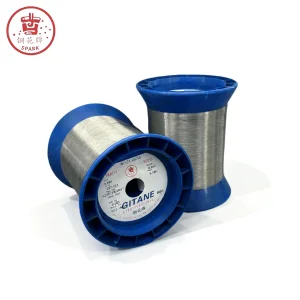
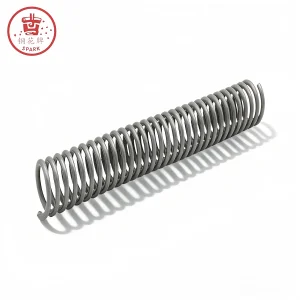
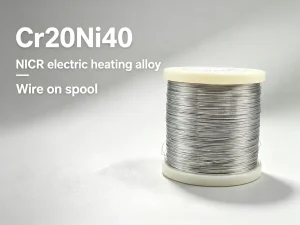
The Global Commercial & Metallurgical Landscape of Glass Furnace Heating Alloys
Navigating decarbonization, high-density energy transition, and thermal performance standards in contemporary glass manufacturing.
Electrification & Hybrid Melting
Global glass producers are aggressively replacing fossil-fuel regenerative burners with full electric melting or high-percentage electric boosting systems. Modern forehearths and conditioning zones rely heavily on overhead metallic electric heating wires to achieve sub-degree temperature uniformity before gob formation.
Volatilization & Corrosion Resistance
Glass tank melting generates volatile alkaline vapors including sodium oxide (Na2O), potassium oxide (K2O), and boron compounds. Resistance heating wires must develop an impenetrable, self-healing alpha-alumina (Al2O3) oxide protective layer to suppress chemical erosion and prevent hot-spot burnout.
Extreme Creep Strength at 1400°C
Glass annealing lehrs and float roof heating arrays demand high-temperature mechanical creep resistance. Traditional standard alloys suffer from thermal sag and intergranular deformation. Advanced powder metallurgy (PM) FeCrAl alloys ensure prolonged structural integrity over years of continuous operation.
China Manufacturing Efficiency & Structural Supply Chain Superiority
How Beijing Shougang Gitane leverages integrated metallurgy, precision vacuum melting, and economy-of-scale to empower global procurement teams.
Full Vertical Integration: From Smelting to Coiled Element
Unlike regional re-drawers, Chinese premier manufacturer Beijing Shougang Gitane controls the entire manufacturing chain: Vacuum Induction Melting (VIM), Electroslag Remelting (ESR), hot rolling, precision wire drawing, continuous hydrogen annealing, and automatic CNC coil winding. This vertical synergy ensures batch-to-batch chemical stability, ultra-narrow electrical resistance tolerances (±3%), and zero structural internal flaws.
Cost Efficiency & Agile Engineering Customization
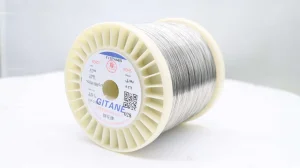
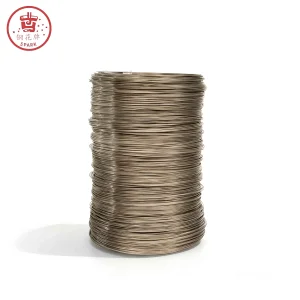
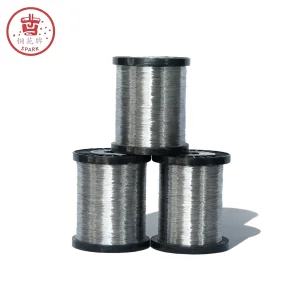
Leveraging China's comprehensive industrial ecosystem, Gitane provides high-temperature glass furnace heater wires (such as SGHYZ, HRE, and 0Cr25Al5) at a competitive TCO (Total Cost of Ownership). Global glass plant operators receive tailored element dimensions, custom pitch ratios, and quick-turnaround technical export support directly from metallurgy engineers.
Technical Comparison Matrix: FeCrAl vs. NiCr Alloys in Glass Furnaces
In-depth chemical and physical parameters governing element selection for forehearths, feeder bowls, float baths, and glass lehrs.
| Alloy Grade | Alloy Family | Max Temp (°C) | Resistivity (μΩ·m, 20°C) | Density (g/cm³) | Primary Glass Furnace Application |
|---|---|---|---|---|---|
| SGHT (Powder Metallurgy) | FeCrAl (PM Superalloy) | 1425°C | 1.45 | 7.10 | Ultra-high temp glass melting, forehearth roof radiant elements, refractory roof heating. |
| SGHYZ | FeCrAl Rare-Earth | 1400°C | 1.43 | 7.10 | Glass forehearth zones, feeder bowls, container glass conditioning, optical glass furnaces. |
| HRE | FeCrAl High-Temp | 1350°C | 1.42 | 7.15 | Float glass tin bath heating, glass tempering furnaces, continuous annealing lehrs. |
| 0Cr25Al5 | FeCrAl Standard | 1250°C | 1.42 | 7.20 | Commercial glass bending kilns, glass fiber drying ovens, auxiliary lehr heaters. |
| Cr20Ni80 | NiCr (Nichrome) | 1200°C | 1.09 | 8.40 | Frequent temperature cycling zones, glass mold preheating, reducing or inert gas lehrs. |
| Cr30Ni70 | NiCr High-Cr | 1250°C | 1.18 | 8.10 | Corrosive chemical glass environments, specialized borosilicate glass vapor zones. |
Why FeCrAl Dominates Glass Forehearths
FeCrAl alloys (such as SGHYZ and HRE) offer a higher electrical resistivity than NiCr, allowing thicker wire cross-sections that withstand heavy surface watt loading (W/cm²). Upon oxidation, FeCrAl forms a continuous, pure Alpha-Alumina (Al2O3) scale. This scale acts as an electrical insulator and corrosion barrier against sodium silicate condensates, extending heater element life by 40% to 100% compared to NiCr in vapor-laden glass tanks.
The Niche Advantage of NiCr (Nichrome)
Nickel-Chromium alloys (e.g., Cr20Ni80, Cr30Ni70) form a protective Chromium Oxide (Cr2O3) scale. While having a lower thermal ceiling than FeCrAl, NiCr remains completely ductile when cold, even after extended operation. This mechanical toughness makes NiCr the preferred alloy for glass plant zones subject to severe mechanical vibration, frequent thermal shutdown cycles, or specific reducing gas atmospheres.
Localized Application Scenarios in Modern Glass Manufacturing
From float glass production lines to precision optical lens pressing, see where SPARK heater wires excel.
1. Container Glass Forehearths & Feeder Bowls
In glass bottle manufacturing, maintaining homogeneous glass temperature prior to shear cutting is paramount. Overhead heating spirals made of SGHYZ 1400°C FeCrAl wire or pre-formed meander elements provide uniform radiant thermal flux across the molten glass channel, eliminating thermal cords and weight variations in glass gobs.
2. Float Glass Tin Bath Roof Heating Arrays
During float glass forming, molten glass flows onto a liquid tin bath under a nitrogen/hydrogen protective atmosphere. Thousands of electric resistance heaters installed in the tin bath roof maintain precise glass ribbon thickness. SPARK HRE and 0Cr21Al6Nb wires guarantee zero scaling flaking, protecting the pristine glass surface from contamination defects.
3. Continuous Glass Annealing Lehrs (Relieving Stress)
Controlled cooling prevents catastrophic thermal stress failure in glassware. Annealing lehrs utilize electric heater wire coils mounted on refractory tiles along multi-zone tunnels. Standard 0Cr25Al5 wire provides economical, maintenance-free heating across long production cycles.
4. Pharmaceutical Glass Tubing (Danner Process)
Neutral borosilicate glass tubing for medical vials demands tight dimensional tolerances. SPARK SGHT powder-metallurgy alloy wire powers the sleeve heating sections and sleeve muffles, operating continuously at 1380°C without sag or creep, ensuring pristine dimensional repeatability.
5. E-Glass & Continuous Fiber Glass Bushing Assemblies
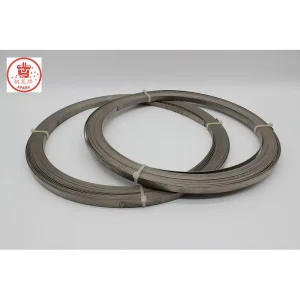
In glass fiber drawing plants, high-temperature conditioning of glass melt entering platinum-rhodium bushings requires intense localized thermal output. Heavy-gauge square and flat wire profiles of 0Cr27Al7Mo2 and SGHYZ deliver ultra-dense power output up to 1400°C.
6. Special Optics & Borosilicate Bending Kilns
Automotive windshield sagging, architectural glass tempering, and precision optical lens molding rely on fast-response Cr20Ni80 Nichrome heating elements. Low surface oxidation rate and fast thermal responsiveness enable precise PLC microprocessor temperature profile tracking.
Industry Trends & Global Procurement Engineering Criteria
What international plant directors, furnace builders, and procurement managers must evaluate when selecting China heating wire suppliers.
Key Procurement Engineering Criteria
- Surface Load Capacity (Watt Loading W/cm²): Calculating correct surface load is essential to prevent element overheating in glass forehearths. Typical conservative loading ranges from 1.5 to 3.0 W/cm² for continuous glass duty.
- Sagging Resistance & Grain Structure: At temperatures above 1300°C, traditional FeCrAl wire grains coarsen, leading to embrittlement and sagging. Procurement teams should mandate rare-earth micro-alloyed or powder metallurgy (SGHT) wire containing dispersion-strengthened Y2O3 or ZrO2 particles.
- Atmosphere Compatibility: Verification of alloy behavior under oxidizing, neutral, reducing, or volatile batch atmospheres (sulfur, sodium, chlorine) to prevent unexpected scale breakdown.
- Traceable Batch Testing: Requesting certified Mill Test Certificates (MTC) with full chemical spectral analysis, room-temperature resistance test, and accelerated life test data (GB/T 1234-2012 / ASTM B603).
Global Industry Trends Shaping Supply Requirements
- Net-Zero Carbon Glass Manufacturing: Global policies mandating CO2 emission reductions drive glass factories away from natural gas firing toward 100% electric melting, increasing global demand for high-temperature alloy wires by over 14% annually.
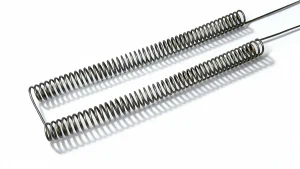
- Modular Pre-Formed Heating Elements: Glass furnace OEMs increasingly specify custom pre-coiled meander, wave-shaped, or ceramic tube-mounted heating elements to reduce installation downtime during glass tank rebuilds.
- Higher Yield Borosilicate & OLED Display Substrates: Advanced glass for electronics demands higher melting temperatures (>1550°C), driving forehearth temperatures higher and requiring 1400°C+ rated resistance wire solutions.
- Supply Chain Resilience: European and North American furnace builders are diversifying supply chains by establishing direct strategic partnerships with leading Chinese tier-1 alloy manufacturers like Shougang Gitane.
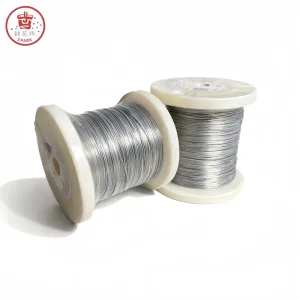
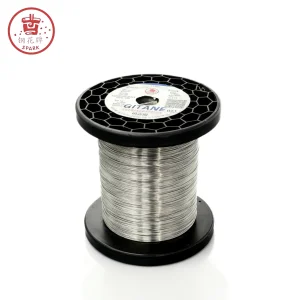
Industrial Alloys, Custom Elements & Furnace Components
Explore our full line of resistance alloys, heavy wire coils, strip ribbons, and industrial electric furnace elements.


Frequently Asked Questions (Q&A) for Glass Plant Procurement
Expert responses from Shougang Gitane senior metallurgical engineers on glass furnace heater wire selection, lifespan, and installation.
Request Direct Manufacturer Quotation & Engineering Consultation
Partner directly with Beijing Shougang Gitane New Materials Co., Ltd. Get technical data sheets, sample wires, element design verification, and competitive factory-direct pricing for your glass furnace project.