
Featured Heating Alloy Products & Factory Specifications (Part I)
Select direct-from-factory FeCrAl and NiCr electric resistance products manufactured to ISO 9001:2015 and international ASTM/GB standards.



1. Executive Summary & Metallurgical Engineering Whitepaper
In the modern industrial processing landscape, thermal energy conversion remains the single most critical vector for material transformation. General-purpose electric heating alloys—primarily divided into Iron-Chromium-Aluminum (FeCrAl) and Nickel-Chromium (NiCr/NiCrFe) systems—form the core operational backbone of global industrial furnaces, semiconductor thermal chambers, photovoltaic ingot growers, and consumer thermal systems. Understanding the microstructural physics, oxidation kinetics, and cost dynamics of Chinese heating alloy production is imperative for engineering executives, procurement leaders, and original equipment manufacturers (OEMs).
Chinese electric heating alloy manufacturing has transitioned from bulk commodity drawing to ultra-clean metallurgy, grain-boundary engineering, and rare-earth element modification. By incorporating micro-alloyed additions of Yttrium (Y), Zirconium (Zr), Hafnium (Hf), and Titanium (Ti), contemporary Chinese foundries produce alloys capable of sustained operations up to 1425°C while matching or exceeding traditional European and North American quality metrics at a 25% to 40% cost efficiency advantage.
1.1 Oxidation Scale Dynamics: FeCrAl vs. NiCr Metallurgical Physics
The operational longevity of a general-purpose heating element is directly governed by its self-healing protective oxide scale:
- FeCrAl Alloys (e.g., 0Cr25Al5, 0Cr23Al5, HRE, SGHT): Operating above 1000°C, Aluminum migrates rapidly to the alloy surface to form a dense, thermodynamically stable Alpha-Alumina ($\alpha\text{-Al}_2\text{O}_3$) scale. This scale possesses exceptionally low ionic transport rates and superior electrical insulation properties, preventing further internal oxidation of the underlying matrix. The incorporation of reactive elements (RE) prevents scale spallation during cyclic thermal shocks.
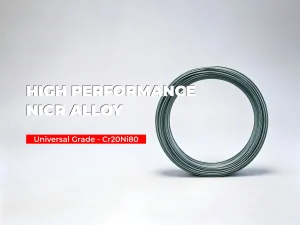
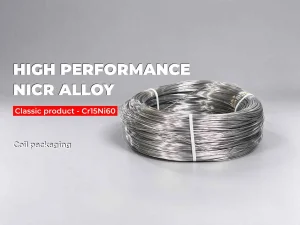
- NiCr Alloys (e.g., Cr20Ni80, Cr30Ni70, Cr15Ni60): These alloys form a protective Chromia ($\text{Cr}_2\text{O}_3$) layer paired with a sub-scale Nickel Chromite ($\text{NiCr}_2\text{O}_4$) spinel. While Chromia volatilizes as gaseous $\text{CrO}_3$ above 1200°C, below this threshold NiCr scales exhibit exceptional mechanical flexibility and adhesion. Consequently, NiCr wire resists spalling under frequent thermal cycling far better than un-modified FeCrAl, despite having a lower absolute maximum operating limit.
2. China Industry 4.0: Supply Chain Resilience & Efficiency Advantages
How modernized Chinese alloy clusters have transformed manufacturing from manual processing to fully integrated, digitalized metallurgical ecosystems.
Vacuum Induction Smelting (VIM + ESR)
Modern Chinese mills utilize Vacuum Induction Melting coupled with Electroslag Remelting (ESR). This double-vacuum processing reduces non-metallic inclusions, sulfur, and dissolved gases ($\text{O}_2, \text{N}_2, \text{H}_2$) to single-digit ppm levels, drastically eliminating premature local wire burnout points.
Online Laser Gauge Wire Drawing
Multi-pass continuous drawing lines equipped with high-speed laser micrometers provide real-time dimensional feedback control. Wire diameter tolerances are held within tight $\pm 0.002 \text{ mm}$ windows, guaranteeing uniform linear electrical resistance across thousands of meters of wire.
Continuous Hydrogen Bright Annealing
Utilizing high-purity hydrogen ($99.999\%$) furnace atmospheres, drawing stresses are relieved without generating premature surface oxidation. The output wire features an ultra-clean, mirror-bright surface finish that guarantees smooth coiling and minimal contact resistance.
2.1 Complete Vertical Integration & Cost Structure Economics
The cost structure of Chinese general-purpose heating alloy factories benefits from deep industrial integration. Unlike European re-drawers who source rod or wire blank from third-party melting shops, primary Chinese producers (such as Beijing Shougang Gitane New Materials Co., Ltd.) control the entire value chain: from raw iron ore, ferro-chrome, and refined nickel melting to hot rolling, cold drawing, strip rolling, annealing, and final element fabrication.
This vertical integration insulates buyers from compound supplier markups and provides unmatched transparency regarding raw material indexing (London Metal Exchange Nickel pricing, Shanghai Futures Exchange Ferro-Alloy index). Furthermore, domestic industrial automation lowers labor overhead per kilogram by over 60% relative to Western competitors, providing international buyers with an unbeatable pricelist structure without sacrificing metallurgical integrity.
3. Global Commercial & Industrial Demand Matrix
The global transition toward electrification and decarbonization of industrial process heat is accelerating demand for precision electric heating alloys. Gas-fired industrial kilns are rapidly being retrofitted or replaced with high-power electric heating systems powered by renewable energy grids.
Semiconductor & Photovoltaics
Diffusion furnaces, LPCVD units, and silicon ingot pulling systems require contamination-free heating elements. Ultra-pure FeCrAl alloys (SGHT and HRE) engineered with ultra-low trace heavy elements prevent alkali metal contamination in cleanroom manufacturing environments.
EV Battery Cathode Sintering
Lithium Iron Phosphate (LFP) and Nickel Manganese Cobalt (NMC) cathode powder sintering kilns rely on continuous roller hearth furnaces operating at 900°C–1200°C. These atmospheres contain aggressive corrosive vapors, demanding modified FeCrAl ribbon elements with elevated aluminum reserves.
Industrial Heat Treatment
Carburizing, nitriding, annealing, and hardening furnaces in the automotive, aerospace, and defense sectors utilize high-resistivity wire grids and heavy-gauge coiled elements (2.0mm–10.0mm diameter) engineered for extreme thermal shock resistance.
4. Comprehensive Alloy Engineering Comparison & Pricelist Benchmarks
Selecting the optimal heating alloy requires balancing continuous working temperature, thermal expansion coefficient, hot tensile yield strength, and raw material cost. Below is a comprehensive engineering specification matrix for primary general-purpose electric heating alloys manufactured in China.
| Alloy Grade | System Type | Max Temp (°C) | Resistivity (μΩ·m) | Density (g/cm³) | Primary Application | Pricelist Index ($/kg) |
|---|---|---|---|---|---|---|
| SGHT / SGHYZ | FeCrAl + RE (PM) | 1400 - 1425 | 1.45 | 7.10 | Semiconductor, Advanced Ceramics, PM Furnaces | $$$$ (Specialty High-End) |
| HRE | FeCrAl + RE | 1350 - 1400 | 1.42 | 7.10 | Powder Metallurgy, High-Temp Kilns | $$$ (Mid-High Tier) |
| 0Cr25Al5 | FeCrAl Standard | 1250 | 1.42 | 7.10 | Industrial Furnaces, Duct Heaters, Domestic Appliances | $ (Highly Economical) |
| 0Cr23Al5 | FeCrAl Standard | 1200 | 1.35 | 7.25 | HVAC Heating Elements, Brake Resistors | $ (Highly Economical) |
| Cr20Ni80 | NiCr 80/20 | 1200 | 1.09 | 8.40 | Precision Instruments, Plastic Molding, Sealed Tube Heaters | $$$$ (Ni Indexed) |
| Cr30Ni70 | NiCr 70/30 | 1250 | 1.18 | 8.10 | Industrial Furnaces with Oxidizing/Nitrogen Atmospheres | $$$$$ (High Ni) |
| Cr15Ni60 | NiCrFe 60/15 | 1150 | 1.12 | 8.20 | Domestic Appliances, Defrost Elements, Rheostats | $$$ (Mid Tier) |
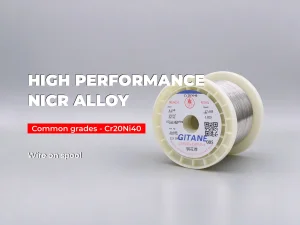
| Cr20Ni40 | NiCrFe 40/20 | 1100 | 1.04 | 8.30 | Low-Temperature Heating Elements, Storage Radiators | $$ (Cost-Effective Ni) |
5. Localized Application Scenarios & Engineering Field Notes
Real-world thermal installation analysis from international field engineering deployments.
Scenario A: Continuous Powder Metallurgy Mesh-Belt Furnaces
Challenge: Excessive wire sagging and inter-turn shorting in horizontal coil elements at 1150°C in cracked ammonia reducing atmospheres.
Solution: Transitioned from standard 0Cr25Al5 to rare-earth dispersion modified HRE alloy wire (3.5mm diameter). The oxide scale modification provided exceptional sag resistance and extended mean time between replacement (MTBR) from 4 months to over 14 months.
Scenario B: HVAC High-Velocity Duct Heaters
Challenge: Rapid vibration fatigue and thermal cycling cracking in open coiled wire elements subjected to turbulent airflows.
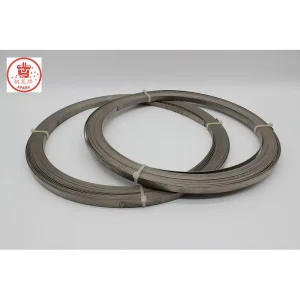
Solution: Selected Cr20Ni80 (80/20 Nichrome) flat ribbon wire. Due to its face-centered cubic (FCC) austenitic crystal structure, Cr20Ni80 remains fully ductile even after thousands of heating/cooling cycles, completely eliminating brittle fracture under mechanical vibration.
Scenario C: Industrial Ceramic Shuttle Kilns
Challenge: Severe element degradation caused by sulfur fumes and glaze off-gassing at 1280°C.
Solution: Deployment of SGHT (Powder Metallurgy FeCrAl) heavy spiral elements mounted on high-alumina ceramic tubes, combined with a pre-oxidation treatment at 1200°C for 8 hours prior to chemical exposure.
6. Quality Assurance Protocols, Testing Standards & Compliance
To ensure total reliability in severe industrial environments, leading Chinese manufacturers enforce rigorous quality assurance testing in strict compliance with GB/T 1234-2012, ASTM B78 (Standard Test Method for Accelerated Life of Iron-Chromium-Aluminum Alloys), and ASTM B76 (Accelerated Life of Nickel-Chromium Alloys).
Accelerated Life Test Rig
Specimen wires are subjected to rapid cycle power loading (2 minutes ON / 2 minutes OFF) at elevated temperatures (1100°C - 1350°C) until failure occurs. Standard SPARK brand Cr30Ni70 wires reliably exceed 50+ hours in accelerated testing, demonstrating outstanding grain boundary cohesion.
Four-Point Kelvin Resistance Measurement
Every master spool undergoes automated four-terminal sensing to verify linear electrical resistivity ($\Omega/\text{m}$) within strict $\pm 3\%$ limits, ensuring balanced current distribution across multi-phase heating element banks.
Eddy Current & Ultrasonic Defect Detection
In-line non-destructive inspection detects internal micro-voids, draw seams, or surface lap faults prior to spooling, preventing field failures during high-tension automatic coil winding.
Featured Heating Alloy Products & Factory Specifications (Part II)
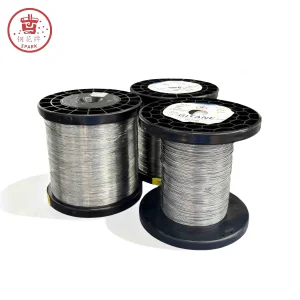
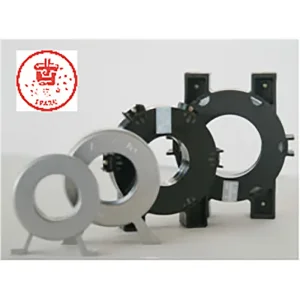
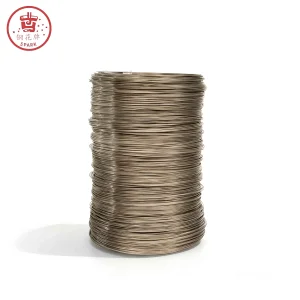
Additional high-temperature resistance wire, foils, and specialized electric furnace components available for wholesale dispatch.


7. Technical Frequently Asked Questions (Procurement & Engineering FAQ)
Detailed technical answers to common queries regarding sourcing general purpose heating alloys from Chinese suppliers.
What is the key metallurgical difference between FeCrAl and NiCr heating alloys?
FeCrAl alloys (such as 0Cr25Al5, 0Cr23Al5, and HRE) are Ferritic in structure, featuring higher electrical resistivity (approx. 1.42–1.45 μΩ·m), lower density (7.10 g/cm³), and higher maximum operating temperatures (up to 1425°C) due to the formation of a protective Alpha-Alumina ($\alpha\text{-Al}_2\text{O}_3$) scale. However, FeCrAl becomes brittle after high-temperature exposure due to grain growth.
NiCr alloys (such as Cr20Ni80 and Cr30Ni70) are Austenitic, offering higher hot yield strength, superior sag resistance, and permanent post-use ductility. They form a protective Chromia ($\text{Cr}_2\text{O}_3$) scale, limiting their maximum continuous operating temperature to 1200°C–1250°C, but making them ideal for frequent thermal cycling and mechanical vibration applications.
How does raw material pricing impact the China General Purpose Heating Alloy Pricelist?
The pricelist for NiCr alloys is heavily indexed to the London Metal Exchange (LME) spot prices for electrolytic Nickel. Since NiCr 80/20 contains 80% Nickel, market fluctuations directly impact per-kilogram costs. In contrast, FeCrAl alloys consist primarily of Iron, Chromium (20–27%), and Aluminum (4.5–7%), making their base pricelist significantly lower and far less susceptible to volatile price swings.
What delivery forms are standard when sourcing from Chinese factories?
Chinese factories deliver general-purpose heating alloys in several standard geometry forms:
- Fine & Medium Wire: Diameters ranging from 0.05mm to 2.00mm, supplied on DIN or PT plastic spools.
- Heavy Wire & Rod: Diameters from 2.00mm to 12.00mm, supplied in coils or straightened cut lengths.
- Cold-Rolled Strip & Ribbon: Thicknesses from 0.05mm to 3.00mm, widths from 1.0mm to 300mm.
- Fabricated Coils & Elements: Custom pre-wound spirals, wave-shaped furnace elements, and radiant tubes made to engineering drawings.
Why is rare-earth addition (RE) important in modern FeCrAl alloys like HRE and SGHT?
Adding micro-alloyed reactive elements such as Yttrium (Y), Zirconium (Zr), or Hafnium (Hf) alters the growth mechanism of the passive oxide layer. It suppresses the outward diffusion of Aluminum, eliminates void formation at the oxide-metal interface, and anchors the protective scale securely to the alloy substrate (termed "reactive element pegging"). This extends the oxidation life of the heating element by 300% to 500% under cyclic heating conditions.
How can international buyers verify quality compliance before shipment?
Reputable Chinese suppliers provide comprehensive EN 10204 3.1 Mill Test Certificates with every shipment. These certificates detail exact ladle chemical compositions (via Optical Emission Spectrometry), 20°C electrical resistance measurements, tensile strength testing, and dimensional tolerance checks. Third-party inspections by SGS, TÜV, or Intertek can also be arranged at port of origin.