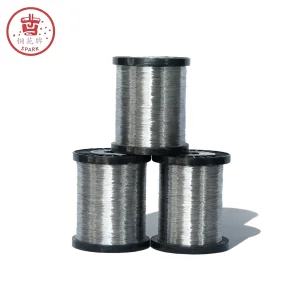
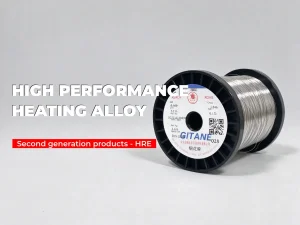
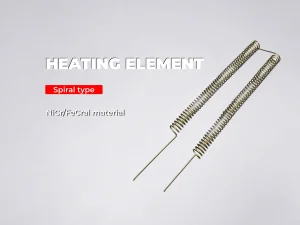
Featured FeCrAl & NiCr Heating Solutions (Top Selection)




1. Executive Engineering Whitepaper: Anti-Sulfidation FeCrAl Alloys in Modern Vacuum Processing
In the domain of modern high-temperature industrial heating, vacuum furnaces represent the pin-point of metallurgical and thermal engineering precision. However, maintaining heating element integrity under extreme vacuum conditions—especially in the presence of reactive contaminants such as sulfur vapor, hydrogen sulfide ($H_2S$), carbonaceous gases, and residual atmospheric impurities—presents a severe engineering challenge. Conventional nickel-chromium (NiCr) alloys suffer catastrophic degradation due to nickel sulfidation, which forms low-melting-point eutectic phases ($Ni-Ni_3S_2$ at 645°C) that lead to rapid element burn-out.
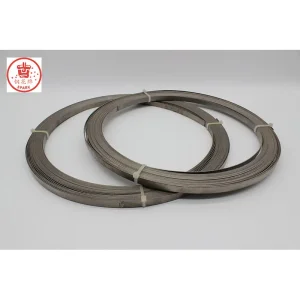
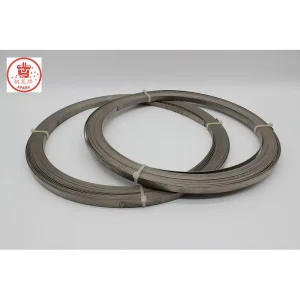
Beijing Shougang Gitane New Materials Co., Ltd. (operating under the globally recognized SPARK brand) has engineered a specialized solution: FeCrAl (Iron-Chromium-Aluminum) Anti-Sulfidation Heating Strips. Leveraging over 60 years of metallurgical heritage within the Shougang Group, our proprietary FeCrAl strips utilize micro-alloying techniques involving Reactive Elements (RE) such as Yttrium (Y), Zirconium (Zr), and Hafnium (Hf). This whitepaper outlines the thermodynamic mechanisms, procurement dynamics, operational protocols, and microstructural enhancements that establish China FeCrAl anti-sulfidation strips as the global benchmark for vacuum thermal processing.
2. Metallurgical Mechanisms: How FeCrAl Prevents Sulfidation under Vacuum
To understand why wholesale FeCrAl heating strip specifies high preference in vacuum furnace procurement, one must analyze the thermodynamics of sulfur corrosion. Sulfidation is a aggressive form of high-temperature corrosion that occurs when sulfur species interact with metallic elements in furnace charges, lubricants, or process gases.
The Alpha-Alumina ($α-Al_2O_3$) Protective Barrier
FeCrAl alloys contain balanced percentages of Chromium (20.0% - 26.0%) and Aluminum (4.5% - 7.5%). When subjected to controlled pre-oxidation, aluminum selectively diffuses outward to the metal surface, reacting with trace oxygen to construct a dense, adherent layer of Alpha-Alumina ($α-Al_2O_3$). This alumina scale exhibits an extremely low parabolic growth rate and minimal ionic conductivity, rendering it completely inert to sulfur gas compounds.
Nickel-Free Composition Prevents Liquid Eutectic Formation
Standard NiCr alloys (e.g., Cr20Ni80) suffer rapid catastrophic failure under sulfur exposure because sulfur reacts with nickel to yield $Ni_3S_2$. This chemical species forms a low-melting eutectic mixture with the nickel matrix at approximately 645°C. The liquid phase penetrates grain boundaries, causing severe embrittlement and catastrophic liquid metal embrittlement (LME). Because SPARK FeCrAl alloys are completely nickel-free, this failure pathway is thermodynamically eliminated.
| Performance Parameter | SPARK FeCrAl Anti-Sulfidation Strip | Standard NiCr Alloy Strip (Cr20Ni80) | Molybdenum / Refractory Metal Strip |
|---|---|---|---|
| Max Vacuum Operating Temp | 1250°C - 1425°C | 1100°C - 1200°C | 1600°C - 1900°C |
| Sulfur Resistance ($H_2S / SO_2$) | Exceptional (Forms inert $Al_2O_3$) | Poor (Forms low-melt $Ni-Ni_3S_2$) | Moderate to Poor (Volatile sulfides) |
| Density ($g/cm^3$) | 7.10 (High yield per kg) | 8.40 (Heavier weight) | 10.20 (Extremely heavy) |
| Electrical Resistivity (20°C) | 1.45 μΩ·m | 1.09 μΩ·m | 0.05 μΩ·m |
| Creep Resistance under Vacuum | High (Dispersion Strengthened) | Moderate | High (Requires specialized support) |
| Cost-Benefit Ratio | Optimal (Low density & lower material cost) | Moderate | Very Expensive (High raw material cost) |
3. Industrial Vacuum Application Scenarios & Macro Sector Solutions
As a global wholesale supplier and manufacturer, Shougang Gitane supplies optimized FeCrAl strips tailored for specific thermal processing environments. Below are the macro sectors utilizing our anti-sulfidation heating strips:
Vacuum Heat Treatment & Dewaxing
In Metal Injection Molding (MIM) and powder metallurgy sintering, organic binders contain residual sulfur compounds. SPARK FeCrAl strips withstand continuous binder burn-out and sulfur outgassing without surface pitting or structural degradation.
Semiconductor & Solar PV Processing
Photovoltaic ingot growing furnaces and diffusion equipment require zero heavy metal contamination. The dense alumina scale on our FeCrAl strips isolates the iron-chromium matrix, preventing vapor-phase cross-contamination of silicon wafers.
Aerospace Superalloy Vacuum Brazing
Aerospace components subjected to high-temperature vacuum brazing utilize fluxing agents that contain sulfates. Our anti-sulfidation strips maintain thermal uniformity across large vacuum hot zones up to 1350°C.
4. Global B2B Procurement Trends & Total Cost of Ownership (TCO) Analysis
Procurement directors and vacuum furnace OEMs face mounting pressure to reduce operational expenditure while extending element service life. Sourcing China FeCrAl anti-sulfidation heating strips direct from a primary mill manufacturer like Shougang Gitane offers compelling economic advantages:
1. Density-Driven Material Savings
FeCrAl has a density of 7.10 g/cm³, whereas NiCr alloys average 8.40 g/cm³. This 15.5% difference in density means that for an identical heating strip geometry (thickness x width x length), a purchasing agent buys ~15.5% less total alloy mass when specifying FeCrAl, dramatically lowering air and sea freight costs.
2. Higher Surface Load Capacity
Due to superior oxidation stability, SPARK FeCrAl strips permit higher surface loads ($W/cm^2$). High surface loading translates into smaller element footprints, lighter furnace insulation loads, and lower overall furnace power consumption.
3. Resistance Stability & Energy Savings
FeCrAl alloys maintain stable electrical resistance over extended thermal cycling. Unlike alloys that experience internal oxidation and resistance drift, SPARK strips minimize transformer voltage adjustment requirements and deliver predictable power output.
5. Quality Assurance, International Standards & Future Technical Roadmap
Every batch of SPARK FeCrAl anti-sulfidation strip undergoes rigorous metallurgical testing. Our integrated manufacturing chain includes Vacuum Induction Melting (VIM), Electroslag Remelting (ESR), precision hot rolling, cold rolling, and bright annealing in pure hydrogen atmospheres.
Quality Control & Regulatory Compliance
Our products strictly comply with international standards including GB/T 1234-2012 (Chinese National Standard for Electric Resistance Alloys), ASTM B603, and DIN 17470. We operate fully certified ISO 9001:2015 quality management and ISO 14001 environmental management systems. Each wholesale shipment includes detailed 3.1 Mill Test Certificates (MTC) detailing chemical composition, electrical resistivity, mechanical tensile strength, and elongation limits.
Future Technical Roadmap: Powder Metallurgy (PM) FeCrAl Alloys
To address extreme creep resistance demands at temperatures approaching 1425°C under high vacuum, Shougang Gitane has commercialized Powder Metallurgy (PM) FeCrAl alloy strips (SGHT grade). By dispersing microscopic Yttrium oxide ($Y_2O_3$) particles throughout the metal matrix, SGHT strips eliminate room-temperature brittleness, suppress grain growth at elevated temperatures, and increase vacuum creep-rupture strength by over 300% compared to ingot-melted alloys.
6. Frequently Asked Questions (Technical Knowledge Base)
Complete Electric Heating & Resistance Alloy Catalog (Bottom Selection)