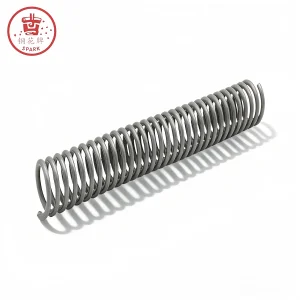
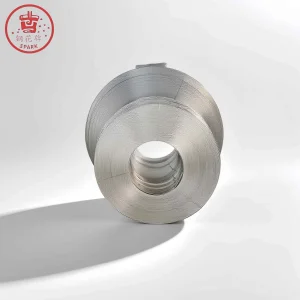
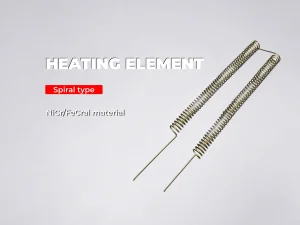
Explore our core product lines manufactured to ISO 9001 and GB/T 1234-2012 global standards.


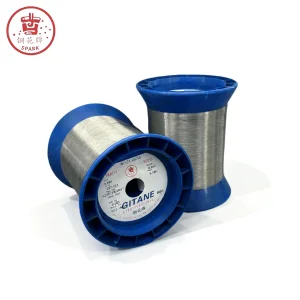

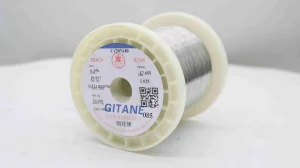
Understanding the atomic mechanics, oxide layer growth kinetics, and thermal longevity of Nichrome 80/20.
Chemical Composition & Phase Stability
Cr20Ni80 (equivalent to N8, Nichrome 80/20, RESISTOHM 80, Chromel A) is a premium austenitic resistance alloy consisting nominally of 80% Nickel and 20% Chromium. The Face-Centered Cubic (FCC) lattice matrix imparts exceptional mechanical strength and resistance to plastic deformation at elevated operating temperatures up to 1200°C (2190°F).
By controlling trace element additions such as Silicon (Si), Manganese (Mn), and Rare Earth Elements (REEs like Yttrium and Cerium), China's advanced metallurgical factories stabilize grain boundaries against intergranular oxidation and grain growth during extended heating cycles.
Oxidation Scale & Self-Passivation Dynamics
When energized, Cr20Ni80 reacts immediately with ambient oxygen to generate a continuous, highly adherent surface layer of Chromium Oxide ($\text{Cr}_2\text{O}_3$). Unlike Iron-Chromium-Aluminium (FeCrAl) alloys which form alumina scales, Nichrome's chromia layer exhibits high hot-ductility, ensuring the protective oxide does not spall or crack during rapid thermal cycling (ON/OFF switching).
Furthermore, Cr20Ni80 resists "green rot"—a form of severe internal carburization and oxidation—far better than lower-nickel alternatives, making it ideal for controlled industrial furnace atmospheres.
| Physical / Mechanical Property | Metric Value | Imperial Value | Engineering Significance |
|---|---|---|---|
| Electrical Resistivity at 20°C | 1.09 ± 0.05 µΩ·m | 656 Ω·cmil/ft | High uniform resistance allows compact element coiling |
| Density | 8.40 g/cm³ | 0.303 lb/in³ | High mass density prevents element distortion under load |
| Max Operating Temp in Air | 1200°C | 2192°F | Continuous thermal threshold without catastrophic creep |
| Thermal Conductivity (20°C) | 15.0 W/m·K | 104 BTU·in/ft²·h·°F | Rapid thermal dissipation into medium or radiant space |
| Melting Point | 1400°C | 2552°F | Safety margin against localized hot-spot burnouts |
| Tensile Strength (Annealed) | 650 - 800 MPa | 94 - 116 ksi | Superior ductility for cold coiling and form-winding |
How Chinese manufacturing ecosystems combine raw material control, VIM/ESR melting, and laser-guided drawing to deliver global quality dominance.
VIM & ESR Refining
Our manufacturing workflow begins with Vacuum Induction Melting (VIM) followed by Electro-Slag Remelting (ESR). This double-melting process strips out harmful trace impurities (such as Sulfur, Phosphorus, and dissolved gases), yielding ultra-clean ingots with refined grain structure.
Multi-Pass Cold Drawing
Utilizing high-precision synthetic diamond dies and continuous inline laser gauging, our factories draw wire down to ultrafine gauges (0.015mm to 8.0mm) with strict dimensional tolerances, ensuring zero cross-sectional variation along 10,000-meter spools.
Hydrogen Bright Annealing
Wires undergo atmosphere-controlled continuous hydrogen tube annealing. This eliminates surface oxidation, stress-relieves the cold-worked alloy, and produces a mirror-bright, smooth surface finish that maximizes radiative heat transfer.
Deploying Cr20Ni80 heating elements across critical global industrial sectors.
Automotive & Aerospace Heat Treating
In continuous mesh-belt heat treatment furnaces, carburizing lines, and nitriding kilns, Cr20Ni80 ribbon and rod elements supply uniform heat distribution up to 1100°C. Because Ni-Cr alloys do not emit iron-flake scale, they prevent carbon contamination of high-precision auto gears and aerospace fasteners during thermal processing.
Solar PV & Semiconductor Processing
Diffusion tubes, CVD reactors, and crystal growing furnaces demand ultra-clean thermal environments. Cr20Ni80 heater coils, insulated by high-purity alumina ceramics, provide low-outgassing heating systems crucial for silicon ingot manufacturing and wafer annealing processes.
Industrial Kilns, Glass & Ceramics
For glass bending, ceramic glazing, and porcelain firing, element ductility after high-temperature exposure is paramount. Cr20Ni80 elements can be cold-repaired or re-coiled after years of service without shattering—a benefit unavailable in brittle FeCrAl materials.
Precision Electrical Appliances
From industrial duct heaters and sealed tubular heating elements to commercial toaster units and laboratory muffles, Cr20Ni80's stable positive temperature coefficient of resistance guarantees reliable power draw without dynamic current surges.
Ensuring risk-free enterprise procurement through rigorous verification and international certification compliance.
International Standards
Our Cr20Ni80 production lines strictly conform to major worldwide specifications:
- ASTM B344: Standard Specification for Drawn or Rolled Nickel-Chromium Alloys
- DIN 17470: High-temperature nickel-alloy wire & strip
- JIS C2520: Wires and ribbons for electric resistance heating
- GB/T 1234-2012: China National Standard for Resistance Alloys
Accelerated Life Testing
Every melt batch undergoes the Bash & Harsch Accelerated Thermal Life Test. By rapidly cycling test samples at elevated voltages to 1200°C in controlled intervals, we measure lifetime hours to failure, guaranteeing that every shipment meets or exceeds Western OEM benchmarks.
Batch Traceability & MTR
Shipments include detailed 3.1 Mill Test Reports (MTR) covering spectral chemical analysis, room-temperature tensile properties, electrical resistance per meter, and heat number tracking from the original VIM melt.
Pioneering next-generation resistance alloys for decarbonized industrial heating and extreme thermal environments.
Oxide Dispersion Strengthened (ODS) Ni-Cr Alloys
To overcome high-temperature sagging and creep deformation in long horizontal elements, our R&D center is integrating nano-scale Yttria ($\text{Y}_2\text{O}_3$) particles via Powder Metallurgy. ODS Cr20Ni80 retains extreme mechanical yield strength up to 1250°C, opening new frontiers in heavy industrial kilns.
Industrial Decarbonization & Electrification
As steelmakers, glass producers, and chemical processors migrate from gas-fired combustion to zero-emission electric heating, the demand for mega-watt class resistance elements is accelerating. Chinese suppliers are developing ultra-heavy gauge Cr20Ni80 corrugated ribbons capable of delivering 50kW per meter element length.
Seamless cross-border procurement backed by international environmental compliance and protective export packaging.
Environmental Compliance
All Cr20Ni80 wires and strips fully comply with EU RoHS 3.0 (Directive 2015/863) and REACH regulations regarding hazardous substances and SVHC chemicals. Conflict-Free Mineral Declaration (CMRT) reports are available upon request.
Sealed Moisture Barrier Packaging
To prevent ocean-freight surface oxidation during transit, fine wires are wound on DIN/ABS spools, shrink-wrapped with desiccant packs, sealed inside moisture-barrier foil bags, and packed into ISPM-15 compliant fumigated plywood cases.
Customs & Tariffs Optimization
Under Harmonized System (HS) Code 7505.22 (Nickel Alloy Wire), our export department assists international buyers with preferential Certificate of Origin paperwork (Form E, RCEP, Form A) to reduce import duty burdens.
Direct engineering answers to common intent queries raised by furnace designers and procurement directors.
Additional specialized heating elements, custom industrial furnace solutions, and premium resistance wires.