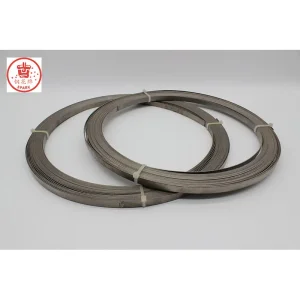
Engineered Resistance Alloy Product Matrix
Direct supply from state-owned metallurgical manufacturing centers: FeCrAl and NiCr heating elements, resistance wire, strip, and radiant cores calibrated for heavy industrial duty.



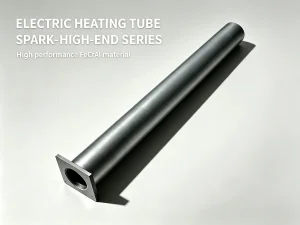
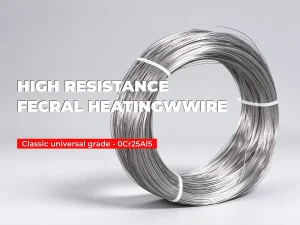
Metallurgical Dynamics & Thermodynamics of Brake Resistor Alloys
Analyzing kinetic energy dissipation, thermal shock resilience, and phase stability in high-impulse dynamic braking systems.
Dynamic brake resistors (DBRs) represent the core kinetic dissipation safety valve for variable frequency drives (VFDs), electric traction systems, industrial hoists, and renewable energy dump loads. When electric motors decelerate rapidly, they transition into generator mode, feeding regenerative electrical power back into the DC bus. If unabsorbed, this surge elevates DC bus voltage beyond safe thresholds, inducing over-voltage trips or silicon-controlled rectifier (SCR) breakdowns. Brake resistor alloys are specifically engineered to convert these high-amplitude, transient electrical spikes into localized thermal energy instantaneously, dissipating it safely into ambient environments.
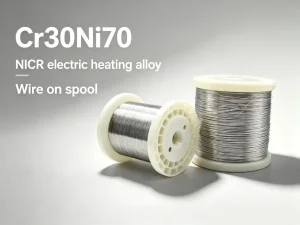
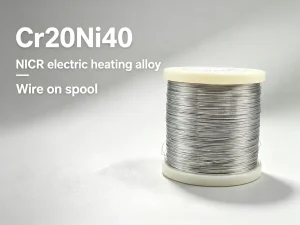
Choosing the correct alloy chemical composition—primarily between advanced Iron-Chromium-Aluminum (FeCrAl) systems (such as 0Cr25Al5, 0Cr23Al5, and powder-metallurgy SGHT/SGHYZ grades) and Nickel-Chromium (NiCr/NiCrFe) systems (such as Cr20Ni80, Cr20Ni40, Cr30Ni70)—determines the operational lifespan, footprint density, and duty-cycle reliability of the entire brake bank assembly.
High Impulse Load Tolerance
Under abrupt dynamic braking maneuvers (e.g., emergency stops in harbor cranes or mining dump trucks), resistor alloys experience instantaneous temperature spikes from ambient up to 800°C–1000°C within milliseconds. Industrial-grade FeCrAl ribbons provide exceptional thermal shock immunity, preventing fatigue fracture along grain boundaries.
Self-Healing Oxide Layer Architecture
FeCrAl alloys form an adherent, dense ceramic surface coating of alpha-alumina (α-Al₂O₃) at high temperatures. This passivating scale protects the underlying metallic core against further atmospheric oxidation, chemical moisture attack, and high-duty sulfur corrosion, significantly prolonging coil service life.
Optimized TCR & Specific Resistance
A stable Temperature Coefficient of Resistance (TCR) ensures minimal ohmic variance throughout the thermal operating curve. FeCrAl provides higher electrical resistivity (1.35 to 1.45 μΩ·m) compared to NiCr (1.09 to 1.18 μΩ·m), enabling engineers to build lighter, more compact brake resistor banks with less total alloy mass.
Comparative Engineering Data: FeCrAl vs. NiCr Alloys for Dynamic Braking
| Alloy Grade / Material Standard | Alloy Family System | Electrical Resistivity @ 20°C (μΩ·m) | Max Continuous Operating Temp (°C) | Density (g/cm³) | Dominant Physical / Metallurgical Advantage |
|---|---|---|---|---|---|
| SGHT / SGHYZ (GB/T 1234) | Powder Metallurgy FeCrAl | 1.45 ± 0.05 | 1400°C - 1425°C | 7.10 | Ultra-high creep resistance, zero thermal elongation sag under peak current loads. |
| 0Cr25Al5 (SPARK Standard) | High-Resistivity FeCrAl | 1.42 ± 0.04 | 1250°C | 7.10 | Cost-effective workhorse grade; high electrical resistivity reduces material weight. |
| 0Cr23Al5 (Standard Grade) | Industrial FeCrAl | 1.35 ± 0.03 | 1200°C | 7.25 | Excellent cold-forming ductility for continuous ribbon edge-winding and stamping. |
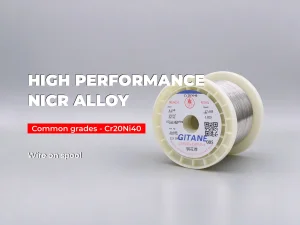
| Cr20Ni80 / Cr20Ni80S | Premium Nickel-Chromium | 1.09 ± 0.03 | 1200°C | 8.40 | Non-magnetic, superior hot strength, excellent corrosion resistance in humid/marine air. |
| Cr20Ni40 / NiCrFe | Economy Nickel-Chromium | 1.00 ± 0.03 | 1100°C | 8.20 | High ductility after long-term cyclic thermal loading; easy termination welding. |
China Factory & Scale Supply Chain Excellence
Leveraging Beijing Shougang Gitane's 60+ years of metallurgical heritage to deliver unmatched consistency, raw material purity, and cost efficiency.
As an essential direct subsidiary of Shougang Group—one of China's premier state-owned steel and metallurgy conglomerates—Beijing Shougang Gitane New Materials Co., Ltd. controls the complete production lifecycle of high-resistance electric heating and dynamic brake resistor alloys. From raw material melt sourcing to final cold rolling, annealing, and spooled dispatch, our fully integrated manufacturing architecture guarantees precise chemistry control and mechanical consistency across every metric ton shipped.
Our Shahe production facility in Changping District, Beijing, houses advanced vacuum induction melting (VIM) furnaces, electroslag remelting (ESR) refine units, continuous hot-rolling strip mills, hydrogen-shielded atmosphere annealing furnaces, and high-precision fine wire drawing machinery. This industrial scale translates into substantial competitive advantages for global OEM brake resistor manufacturers:
Full Vertical Melting Integration
By eliminating third-party billet sourcing, we eliminate trace element contaminants (such as Lead, Sulfur, and Phosphorus) that cause intergranular embrittlement under thermal shock cycling.
Precision Cold Rolling & Slitting
Capable of producing ultra-flat, tightly dimensioned ribbons and strips with thickness tolerances down to ±0.01mm, perfectly tailored for stamped grid resistor banks and wave-folded elements.
Strict Batch-to-Batch Homogeneity
Every single coil undergoes spectrographic composition verification, room-temperature resistivity testing, and high-temperature oxidation lifespan verification per GB/T 1234-2012.
Fulfilling Global OEM Technical Specifications
Custom form factors, precise ohmic target balancing, and specialized surface conditioning for international brake resistor assembly lines.
Global electrical manufacturers require resistance alloy suppliers who offer versatile delivery forms, flexible dimensions, and robust post-processing capabilities. Brake resistor elements vary significantly in architecture based on power density, forced-air or natural cooling, dynamic kinetic energy profile, and enclosure mounting constraints. China SPARK provides tailor-made manufacturing options across multiple delivery forms:
1. Edge-Wound Strips & Ribbons
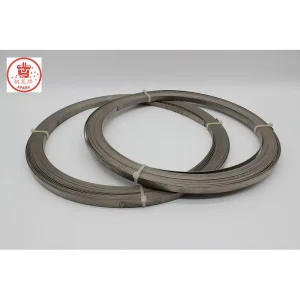
Heavy-duty grid resistors utilize continuous flat alloy strips coiled on edge to maximize surface area contact with cooling airflow. SPARK supplies cold-rolled FeCrAl and NiCr strip (thickness 0.5mm to 4.0mm; width 10mm to 80mm) with burr-free deburred edges and uniform tensile strength for smooth automated coiling.
2. Stamped & Wave-Formed Resistor Grids
For high-power traction brake banks installed on locomotives and mining trucks, flat alloy sheet is stamped into serpentine patterns and stacked with ceramic spacers. SPARK delivers high-ductility 0Cr25Al5 strip with optimized elongation parameters, minimizing micro-cracking at sharp bend radiuses during cold stamping.
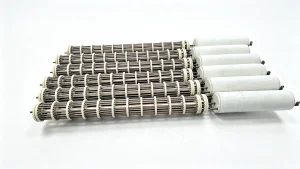
3. Helical Coils & Ceramic Rod Heating Core
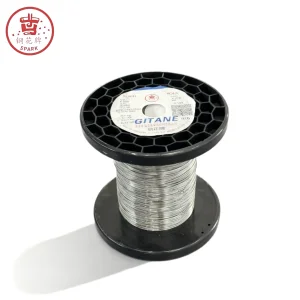
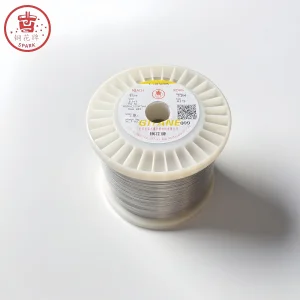
Compact dynamic braking units (1kW to 50kW) often feature spiraled round resistance wire wound around ceramic formers or encased in stainless steel tubes filled with compacted Magnesium Oxide (MgO) powder. We offer precision drawn round wire from 0.10mm to 10.0mm diameter with strict resistance per meter tolerances.
Localized Application Scenarios & Heavy-Duty Use Cases
Proven long-term operational success across global industrial transportation, energy generation, and automation infrastructure.
Electric Locomotives & High-Speed Rail
Over-the-track dynamic braking grids demand high mechanical vibration strength, zero thermal fatigue sagging, and rapid pulse power dissipation during steep grade descents. SPARK 0Cr25Al5 and SGHT strips ensure maximum reliability under constant physical shock and weather fluctuations.
Harbor Cranes, Hoists & Mining Elevators
Heavy overhead cranes dropping multi-ton container loads operate in high duty-cycle regenerative braking modes. Resistor banks equipped with SPARK NiCr8020 or FeCrAl elements absorb repetitive megawatt current pulses without resistance value thermal drift.
Wind Turbine Pitch Control & Grid Dumping
When utility grid disconnection occurs during high-wind events, wind turbine pitch control systems utilize dynamic brake resistors to absorb blade rotational kinetic energy safely. Salt-spray resistant Cr20Ni80 alloys prevent environmental corrosion in offshore wind farms.
EV / Commercial Heavy Vehicle Retarders
Heavy electric mining dump trucks and hybrid buses deploy auxiliary liquid-cooled or forced-air brake resistors to relieve friction brakes during continuous downhill hauling, leveraging high power-density SPARK alloy grids.
Localization Support & International Compliance
Adhering strictly to global quality benchmarks with full metallurgical traceability and local engineering assistance.
Partnering with China Shougang Gitane guarantees that your manufacturing pipeline complies with international environmental and engineering directives. Our quality system is certified under ISO 9001:2015, with formal environmental compliance certified under ISO 14001. Every production lot is delivered with comprehensive Mill Test Certificates (MTRs) detailing spectrographic chemical analysis, tensile testing, elongation percentages, and room-temperature electrical resistivity values per GB/T 1234-2012.
RoHS & REACH Compliance
All SPARK FeCrAl and NiCr alloys fully comply with EU RoHS 3 (Directive 2015/863) and REACH hazardous chemical directives, ensuring zero lead, cadmium, mercury, or hexavalent chromium contamination.
Localized Engineering Co-Development
Our dedicated technical team provides international OEMs with rapid prototype development, custom ribbon slitting, special winding calculation assistance, and on-site failure analysis co-consultation.
Global Export Packaging Standards
Materials are packaged in humidity-controlled, vacuum-sealed plastic wrapping, reinforced wooden boxes, and anti-vibration spools, protecting delicate fine wire and bright annealed strip from oceanic transit corrosion.
Future Trends in High-Power Dynamic Braking Alloys
Addressing the shifting paradigm toward higher energy density, electrification, and smart industrial automation.
As variable frequency drives move toward Silicon Carbide (SiC) and Gallium Nitride (GaN) power electronics, switching frequencies are increasing rapidly. Next-generation dynamic brake resistors must handle higher peak pulse power within smaller footprint enclosures while surviving aggressive thermal cycling schedules. Key metallurgical trends driving the industry include:
- Adoption of Powder Metallurgy (PM) Alloys: Advanced powder metallurgy FeCrAl grades (such as SGHT) eliminate grain coarsening at ultra-high temperatures (1400°C+), offering near-zero creep deformation over decades of intermittent pulse load duty.
- Optimized Oxide Layer Adhesion via Rare Earth Doping: Doping FeCrAl matrices with calibrated fractions of Yttrium (Y), Zirconium (Zr), and Cerium (Ce) drastically improves the mechanical tenacity of the alumina scale, preventing protective scale spallation during rapid heating/cooling cycles.
- Transition from Wire-Wound to Stamped Wave Sheet Arrays: High-power applications are increasingly shifting from round wire coils to wave-stamped ribbon sheets to maximize forced-air thermal transfer rates and cut enclosure size by up to 35%.
Frequently Asked Questions (FAQ)
Engineering and procurement insights regarding China brake resistor alloy sourcing, material selection, and quality verification.
Why is FeCrAl generally preferred over NiCr for heavy industrial brake resistors?
FeCrAl alloys (such as 0Cr25Al5) offer higher electrical resistivity (approx. 1.42 μΩ·m vs. 1.09 μΩ·m for Cr20Ni80) and a lower physical density (7.10 g/cm³ vs. 8.40 g/cm³). This combination allows engineers to design brake resistor banks that use significantly less raw material weight to achieve the targeted resistance value, lowering overall material costs by 30% to 50% while operating safely at elevated maximum continuous temperatures (up to 1250°C).
When should an engineer specify NiCr alloys instead of FeCrAl for brake resistor banks?
NiCr alloys (e.g., Cr20Ni80, Cr30Ni70) are superior in applications subject to severe mechanical vibration, frequent high-impact physical shock, or humid marine conditions (e.g., harbor cranes or shipboard winches). Unlike FeCrAl, which becomes brittle after high-temperature exposure due to grain growth, NiCr retains its cold ductility after extended heating cycles, making post-service maintenance, re-coiling, or mechanical servicing much safer and easier.
How does Shougang Gitane guarantee batch-to-batch resistance stability?
We utilize precision Vacuum Induction Melting (VIM) and automated continuous tension-controlled wire drawing/cold rolling mills. Resistance per meter is monitored in real-time using high-precision digital bridges during the final winding or spooling pass. Standard manufacturing tolerances are held within ±3%, with custom precision tolerances available down to ±1% upon customer specification.
What delivery forms are available for China brake resistor alloy buyers?
SPARK alloys are supplied in round wire (0.10mm to 10.0mm diameter), flat wire/ribbon (thickness 0.2mm to 4.0mm, width 1.0mm to 80mm), cold-rolled sheet, pre-wound helical spirals, ceramic-rod core elements, and custom stamped resistor grid plates packaged in spools, coils, or wooden cases.
What quality certifications and material test reports accompany shipments?
Every shipment includes an official Mill Test Certificate (MTR) according to EN 10204 3.1 detailing chemical composition percentages, room-temperature resistivity (μΩ·m), tensile strength (MPa), elongation percentage (%), and physical dimension verifications. Production facilities are certified to ISO 9001:2015 and ISO 14001 standards.
Can SPARK provide customized ribbon dimensions or non-standard alloy compositions?
Yes. Thanks to our direct integration with Shougang Group’s metallurgical research laboratories, we can manufacture custom slit ribbon widths, non-standard wire diameters, and specialized chemical variations (such as rare-earth modified FeCrAl or non-magnetic NiCr alloys) tailored for unique OEM engineering specs.
Complete Heating & Resistor Alloy Catalog
Explore our complete product lineup: industrial furnace cores, high-temperature FeCrAl tubes, radiant bundle rods, and premium resistance wire.