

Wholesale High-Performance SGHT Steel Tubes - Trusted China Suppliers & Factory for Energy and Petrochemical Industries Manufacturers, Pricelist
View Product & Quotes
China High-Quality Cr15Ni60 Heating Wire from China Suppliers - Durable Electric Heating Alloy Factory Manufacturer, Suppliers
View Product & Quotes
China High Performance SGHT Steel Tube Material from Reliable China Suppliers and Factory for Energy and Petrochemical Industries Supplier, Suppliers
View Product & Quotes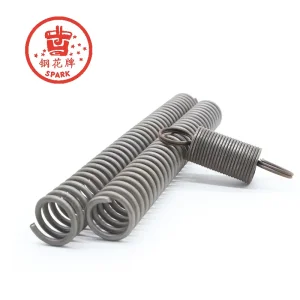
China Hot sale China Alumina Ceramic Fiber Resistance Wire Heating Plate Factory, Quotes
View Product & Quotes
China High-Performance 0Cr25Al5 Electric Heating Wire from China Suppliers | Trusted Factory for Resistance Wire Solutions Factories, Quotes
View Product & Quotes
China High-Performance FeCrAl Heating Alloy Wire China Suppliers - 1400°C Grade Factory for Industrial Applications Pricelist, Quotes
View Product & Quotes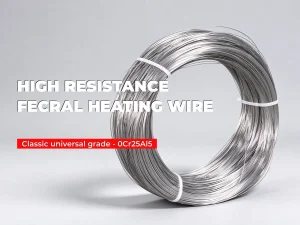
Wholesale 0Cr25Al5 FeCrAl Heating Wire | High Temp Industrial Resistance Wire Factory, Pricelist
View Product & Quotes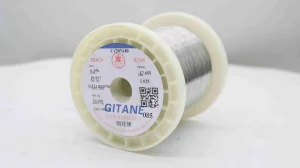
Wholesale High-Temperature Cr20Ni40 Nickel Chrome Heating Wire - Reliable China Suppliers & Factory for Industrial Applications Suppliers, Quotes
View Product & Quotes1. Thermomechanical & Metallurgical Foundations of Adherent Cr₂O₃ Oxide Layer Formation
Understanding the thermodynamic kinetics of chromium oxide scale formation, interface adhesion mechanisms, and matrix isolation under continuous high-temperature exposure at 1200°C.
In high-temperature thermal processing and electrothermal engineering, the lifespan of resistance alloys, radiant tubes, and heating matrix structures hinges almost entirely on the chemical stability and mechanical integrity of their surface oxide scale. When operating continuously at temperatures reaching 1200°C in dry air, unprotected base metals undergo catastrophic oxidation erosion. China's advanced metallurgical foundries have pioneered high-purity Nickel-Chromium (Ni-Cr) and specialized iron-matrix formulations that rapidly develop an adherent Chromia (Cr₂O₃) oxide layer. This dense oxide layer acts as a stoichiometric diffusion barrier, effectively isolating the underlying base matrix from aggressive oxidizing atmospheres.
Thermodynamic Passivation
Gibbs free energy ($\Delta G^\circ$) for Cr₂O₃ formation is highly negative at 1200°C, ensuring rapid preferential oxidation of chromium over iron or nickel matrix atoms.
Pilling-Bedworth Ratio (PBR)
Cr₂O₃ possesses an optimal PBR of approximately 2.07, generating moderate compressive strain that seals micro-cracks without inducing mechanical spallation.
Reactive Element Effect (REE)
Micro-alloying with rare earth additions (Yttrium, Cerium, Zirconium) creates structural "pegging" anchors along grain boundaries, slowing cation outward diffusion.
1.1 Oxidation Kinetics & Parabolic Rate Constant (kp) at 1200°C
Under isothermal dry air conditions at 1200°C, the growth of the protective Cr₂O₃ oxide layer follows Wagner’s parabolic rate law:
Where $\Delta x$ is the scale thickness, $t$ is oxidation time, and $k_p$ represents the parabolic rate constant. In unoptimized alloys, $k_p$ increases exponentially above 1100°C due to chromium evaporation forming volatile CrO₃ gas. However, modern Chinese metallurgical techniques utilize optimized chromium concentrations (20% to 30% Cr) enriched with rare earth active elements. This suppresses the formation of volatile CrO₃ species and maintains a slow, parabolic scale growth ($k_p \approx 10^{-12} \text{ g}^2\cdot\text{cm}^{-4}\cdot\text{s}^{-1}$), enabling continuous, multi-thousand-hour operation without matrix exhaustion.
1.2 Pilling-Bedworth Ratio (PBR) & Interface Adhesion Mechanics
The adherence of the oxide layer determines whether a material can withstand continuous thermal stress. If the oxide film volume is smaller than the consumed metal matrix ($\text{PBR} < 1$), the scale is porous and non-protective. If the oxide volume is excessively large ($\text{PBR} > 2.5$), intense growth stresses cause the scale to wrinkle, buckle, and spall off under thermal cycling. Chromia ($\text{Cr}_2\text{O}_3$) exhibits a PBR of **2.07** relative to nickel/iron matrices, providing a tight, continuous protective blanket. Chinese factories enhance scale adhesion by controlling trace impurities (S, P, Lead) down to single-digit PPM levels, eliminating sulfur accumulation at the metal-oxide interface which would otherwise cause scale detachment.
2. Metallurgical Matrix Dynamics: NiCr vs. FeCrAl High-Temperature Performance
Comparative physical, electrical, and oxidation parameters of leading China-supplied electric heating alloys operating in 1200°C dry air atmospheres.
| Alloy Grade / Material | Protective Oxide Type | Max Continuous Temp (°C) | Resistivity at 20°C (μΩ·m) | Pilling-Bedworth Ratio | Primary Industrial Application |
|---|---|---|---|---|---|
| Cr20Ni80 (NiCr 80/20) | Adherent Cr₂O₃ | 1200°C | 1.09 ± 0.05 | 2.07 | Precision Kilns, Furnaces, Industrial Heating Elements |
| Cr30Ni70 (NiCr 70/30) | Dense Cr₂O₃ + NiCr₂O₄ | 1250°C | 1.18 ± 0.05 | 2.12 | Heavy Industrial Heat Treatment, Corrosive Atmospheres |
| Cr15Ni60 (NiCr 60/15) | Cr₂O₃ / Fe₂O₃ mixed | 1150°C | 1.11 ± 0.05 | 1.98 | Domestic Appliances, Medium-Temp Industrial Heaters |
| 0Cr25Al5 (FeCrAl) | α-Al₂O₃ Layer | 1250°C | 1.42 ± 0.07 | 1.28 | High-Power Industrial Furnaces, Radiant Heating Plates |
| SGHT High-Temp Alloy | Reinforced Al₂O₃ / Cr₂O₃ | 1400°C - 1425°C | 1.45 ± 0.08 | 1.35 | Petrochemical Pyrolysis, Powder Metallurgy Furnaces |
While FeCrAl alloys rely on an Alpha-Alumina ($\alpha\text{-Al}_2\text{O}_3$) scale that performs exceptionally well at temperatures up to 1400°C, Nickel-Chromium alloys generating an adherent Cr₂O₃ layer offer superior hot mechanical strength, excellent post-use ductility (they do not become brittle after prolonged heating), and unmatched resistance to mechanical shock and thermal cycling.
3. China Factory Manufacturing Infrastructure & Ecosystem Advantages
How advanced metallurgical processing, end-to-end supply chain integration, and rigorous quality control establish China as the premier global hub for resistance heating alloys.
VIM + ESR Double Refining
Vacuum Induction Melting (VIM) followed by Electroslag Remelting (ESR) eliminates oxygen inclusions and gas pockets, delivering ultra-clean melt chemistries.
Atmosphere Bright Annealing
Continuous hydrogen-atmosphere strand annealing guarantees uniform tensile properties, bright surface finish, and predictable wire drawing tolerances.
Rare Earth Micro-Doping
Precision additions of Yttrium, Neodymium, and Cerium refine grain size during 1200°C exposure, preventing high-temperature creep and grain coarsening.
3.1 Raw Material Dominance & Vertical Integration
China produces and refines over 70% of the world’s industrial chromium and rare earth element additives. This vertical integration allows Chinese manufacturers to control alloy chemistry from raw ore processing to finished spooled resistance wire. By eliminating intermediate supply chain markups and logistical delays, OEM clients obtain certified resistance materials compliant with **GB/T 1234-2012**, **ASTM B344**, and **DIN 17470** standards at a significantly lower Total Cost of Ownership (TCO).
3.2 Advanced Quality Assurance & ASTM B78 Life Testing
To guarantee long-term stability under 1200°C dry air operation, Chinese production lines utilize automated eddy-current flaw detection and high-speed laser micrometers for continuous diameter dimensional check ($\pm 0.005 \text{ mm}$). Furthermore, batches are subjected to the **ASTM B78 Accelerated Life Test** (Bash & Harsch method), subjecting wire samples to rapid electrical thermal cycling to verify that the Cr₂O₃ oxide layer remains adherent without premature thermal fatigue or localized hot-spot burnouts.
4. Macro-Industry Trends: Decarbonization & Thermal Electrification
How high-temperature Cr₂O₃ passivating alloys enable global energy transitions from fossil fuel combustion to clean electrical thermal processing.
As heavy industries worldwide commit to Net-Zero carbon goals, chemical processing, steelmaking, and glass manufacturing facilities are transitioning away from direct natural gas combustion toward **electric resistance heating**. Replacing fossil burners with high-efficiency electrical heating elements requires materials capable of continuous, high-wattage operation in oxidizing dry air at 1200°C.
Petrochemical Electrification
Conversion of steam cracking furnaces and reformer tubes to high-density electric heating elements powered by green energy grids.
Semiconductor Thermal Processing
High-purity quartz tube heaters and continuous diffusion furnace elements requiring zero flaking, zero particle contamination, and stable Cr₂O₃ coatings.
Green Hydrogen & Fuel Cells
Solid Oxide Electrolyzer Cell (SOEC) stack interconnects and balance-of-plant heaters utilizing passivated Cr₂O₃ surfaces to resist thermal oxidation erosion.
5. Localized Application Scenarios & Engineering Case Studies
From continuous automotive heat-treating furnaces to petrochemical reforming, exploring real-world applications of China-engineered Cr₂O₃ forming alloys.
5.1 Automotive Component Heat Treatment (Mesh Belt Furnaces)
In continuous mesh-belt furnaces used for gear carburizing, quenching, and tempering, heating elements operate under intense thermal cycling and exposure to dry air atmospheres during maintenance purges. Traditional resistance wires suffer from rapid scale spallation, causing local hot spots and premature wire rupture. By specifying Chinese **Cr20Ni80** and **Cr30Ni70** resistance wires with adherent Cr₂O₃ passivation, automotive heat treaters achieve over 18,000 hours of continuous service, reducing furnace maintenance downtime by 42%.
5.2 Petrochemical Pyrolysis & Energy Storage Heat Exchangers
High-performance **SGHT steel tubes** and specialized resistance wire coils deployed in energy storage thermal batteries require continuous performance at 1200°C without wall thinning or oxidation erosion. The self-healing nature of the Cr₂O₃ scale ensures that if thermal expansion creates microscopic surface fissures, atmospheric oxygen immediately reacts with subsurface chromium matrix atoms to repair the oxide barrier, preventing deep oxidative pitting.
5.3 Surface Power Load Calculation Formula for Engineering Design
When designing industrial heating elements for 1200°C service, engineers must balance element lifespan with surface loading ($W/\text{cm}^2$). The total surface area $A$ and surface load $p$ are calculated as follows:
Where:
P = Element Power Rating (Watts)
d = Wire Diameter (cm)
L = Total Wire Length (cm)
For continuous 1200°C operation in dry air, recommended conservative design surface loads for Cr₂O₃ forming NiCr alloys range from **1.5 to 2.2 W/cm²** for coiled elements, preserving scale adherence and extending overall service life.
6. Global Enterprise Procurement Strategy & Quality Verification Roadmap
A step-by-step technical audit guide for OEM buyers, engineering procurement specialists, and global importers Sourcing high-temperature alloys from China.
Chemical Composition Audit
Verify Spectrographic Mill Test Certificates (MTC). Ensure Nickel content in Cr20Ni80 is ≥ 77.0% and Chromium is strictly between 20.0% – 23.0%.
Resistance Uniformity Check
Require electrical resistance tolerance testing per meter (±3% max variance). Cold resistivity variations indicate irregular wire drawing or segregation.
Spooling & Surface Inspection
Ensure wire surfaces are free of die scratches, drawing lubricant residue, or surface oxides. Bright annealing finish must be uniform from spool core to outer layer.
7. Frequently Asked Questions (FAQ) & Engineering Technical Q&A
Expert answers to technical procurement questions regarding Cr₂O₃ scale performance, atmosphere compatibility, operating thermal limits, and China supply quotes.
What makes an adherent Cr₂O₃ oxide layer superior to unpassivated metal matrix structures at 1200°C?
Unpassivated metal matrix alloys undergo rapid inward oxygen diffusion when exposed to dry air at 1200°C, leading to deep intergranular oxidation, mechanical swelling, embrittlement, and rapid structural failure. An adherent Cr₂O₃ (Chromium Oxide) scale forms a continuous, stoichiometry-dense layer on the alloy surface. Because oxygen diffusion through solid Cr₂O₃ is several orders of magnitude slower than through bulk nickel or iron, this oxide barrier isolates the base metal from further atmospheric contact, slowing oxidation erosion to a predictable parabolic rate.
Why is operation specified in "dry air", and how does moisture affect the Cr₂O₃ oxide layer?
In dry air atmospheres, Cr₂O₃ remains thermodynamically stable. However, in high-humidity or steam-laden environments above 1000°C, chromia reacts with water vapor to form volatile chromium oxyhydroxides such as $\text{CrO}_2(\text{OH})_2$. This volatility accelerates chromium depletion from the base matrix. Specifying dry air environment ensures that chromia evaporation rates remain negligible, preserving scale thickness, mechanical adhesion, and maximum alloy operating life.
How does NiCr (Cr20Ni80) compare to FeCrAl (0Cr25Al5) for 1200°C continuous service?
FeCrAl forms an $\alpha\text{-Al}_2\text{O}_3$ scale and can reach higher absolute temperatures (up to 1400°C) with lower raw material costs. However, FeCrAl suffers from severe grain growth and high-temperature embrittlement—once heated and cooled, FeCrAl elements become brittle and prone to breakage during handling or repair. Nickel-Chromium alloys (Cr20Ni80) forming Cr₂O₃ maintain excellent ductility after prolonged exposure, possess much higher hot strength (creep resistance), and tolerate frequent thermal cycling without thermal fatigue spallation.
What role do micro-alloyed rare earth elements (REE) play in Chinese Cr₂O₃ passivated wire?
Chinese metallurgical research centers add controlled micro-fractions (0.05% to 0.2%) of rare earth active elements such as Yttrium (Y), Cerium (Ce), and Lanthanum (La). These heavy reactive atoms concentrate at oxide grain boundaries. They suppress the outward rapid transport of chromium cations and promote inward slow anion oxygen transport. Additionally, REE additions create oxide "pegs" that physically anchor the Cr₂O₃ scale into the base substrate, dramatically increasing spallation resistance during thermal shocks.
What delivery forms and custom fabrication services are available from China suppliers?
Leading Chinese manufacturers supply resistance alloys in a full spectrum of delivery forms: fine round wire (diameters 0.05 mm to 12.0 mm), cold-rolled ribbon/flat strip, wound spirals on ceramic formers, pre-fabricated hairpin elements, seamless high-temperature SGHT tubes, and custom ceramic fiber heating plates ready for direct furnace installation.
How can international buyers request RFQs and engineering quotes for Cr20Ni80 and SGHT items?
Procurement engineering teams can click any of the product buttons on this whitepaper to access direct factory RFQ portals. Quotes are generated within 24 hours upon providing wire diameter/strip dimensions, required resistance per meter, order tonnage, and target furnace operating parameters. Mill Test Certificates (MTC) and sample spools for lab testing are available upon request.
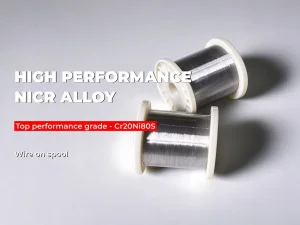
China Cr20Ni80S Nickel Chromium Heating Wire | 1200°C High-Performance Resistance Heating Alloy Suppliers, Pricelist
View Product & Quotes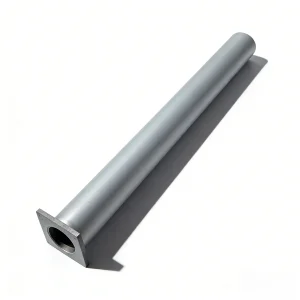
China High-Quality Electric Heating Tubes from China Suppliers - Efficient Heating Solutions by Factory Supplier, Pricelist
View Product & Quotes
China High-Temperature Cr30Ni70 Alloy Wire - Durable 50 Hours @ High Temp | China Suppliers & Factory Manufacturer, Pricelist
View Product & Quotes
China High-Temperature Electric Heating Wire HRE 1350℃ - China Suppliers & Factory for Powder Metallurgy Applications Manufacturers, Factories
View Product & Quotes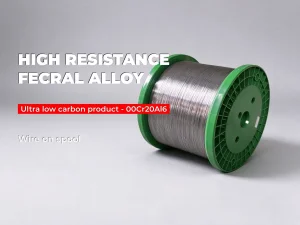
China China Suppliers Factory 00Cr20Al6 Ultra Low Carbon FeCrAl Heating Alloy for High-Performance Industrial Applications Supplier, Factory
View Product & Quotes
China China 0Cr23Al5 High Resistance Electric Heating Alloy Wire - Top Suppliers & Reliable Factory for High-Temperature Applications Manufacturers, Quotes
View Product & Quotes
China Spiral Type Electric Heating Element from China Suppliers - High-Quality Factory Manufacturing for Efficient Heating Factories, Pricelist
View Product & Quotes