
Featured Industrial Heating Wires & Alloy Elements
Direct factory solutions engineered for high oxidation resistance, extended operational life, and superior thermal efficiency in continuous industrial furnace operations.

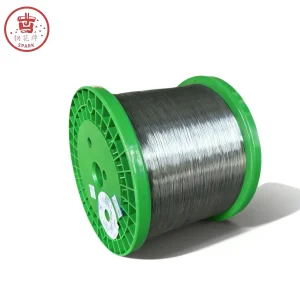


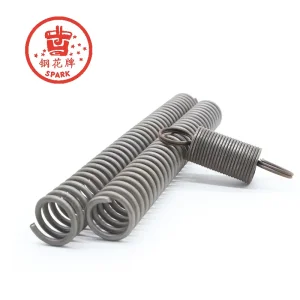


1. Global Commercial and Industrial Landscape of "255" Resistance Alloys
In modern industrial thermal processing, the term "255" predominantly refers to high-performance Iron-Chromium-Aluminum (FeCrAl) electrical resistance alloys, most notably symbolized by the standardized industry grade 0Cr25Al5 (and its specialized variants containing approximately 25% Chromium and 5% Aluminum). Operating at the core of thermal transformation systems worldwide, 255-series alloys represent a foundational pillar of modern metallurgy, high-temperature manufacturing, and decarbonized electrification infrastructure.
Globally, the demand for high-resistance heating alloys has expanded rapidly due to the accelerating global transition from fossil-fuel-fired thermal equipment to electric heating systems. Industrial kilns, semiconductor annealing chambers, automotive heat-treatment lines, and specialized energy refineries rely on 255-class FeCrAl wires, strips, and tubes to achieve maximum thermal efficiency at operating temperatures ranging from 1100°C to well over 1400°C.
Unlike Nickel-Chromium (NiCr) alloys, 255-grade FeCrAl material forms an ultra-dense, self-healing protective layer of Alpha-Alumina ($\alpha-Al_2O_3$) on its surface during high-temperature thermal exposure. This micro-scale oxide scale acts as a chemical barrier against ongoing oxidation, sulfur attack, and thermal degradation. Combined with an unusually high electrical resistivity (typically $1.42 \, \mu\Omega\cdot \text{m}$ at 20°C) and a lower specific gravity ($7.10 \, \text{g/cm}^3$ vs $8.40 \, \text{g/cm}^3$ for NiCr80/20), 255 alloys deliver significant material savings—enabling design engineers to achieve equivalent electrical power output using lower total alloy mass.
2. Why Chinese Manufacturers Lead Global Supply Chains in 255 Alloys
Analyzing the structural cost advantages, vertical integration, and advanced metallurgical control found across Chinese production clusters like Beijing Shougang Gitane New Materials.
Vertical Industrial Integration
By partnering directly with state-level metallurgical groups like Shougang Group, primary manufacturing hubs in China eliminate intermediary costs. From ultra-pure iron ore smelting and precise ferro-alloy melting to continuous casting and hot rolling, end-to-end processing guarantees chemical purity and heat-to-heat consistency.
Hydrogen-Atmosphere Annealing
China's modern 255 production lines feature state-of-the-art bright annealing furnaces operating in pure hydrogen atmospheres. This ensures bright, oxide-free wire surfaces, uniform elongation characteristics, and precise grain structure control required for high-speed automated element coiling.
Economy of Scale & Rapid Customization
Operating production workshops spanning tens of thousands of square meters, top-tier factories retain vast inventories of wire diameters ranging from ultra-fine 0.05mm to heavy-gauge 12.0mm rods. Rapid die-changing capabilities allow custom ribbon and wire drawing to meet urgent project deadlines.
The strategic efficiency of Chinese 255 manufacturers stems from rigorous adherence to national and international standards, such as GB/T 1234-2012 and ASTM B603. Advanced spectroscopic quality verification (XRF and OES analysis) ensures that trace elements such as Carbon ($C \le 0.05\%$), Silicon ($Si \le 0.70\%$), and Manganese ($Mn \le 0.70\%$) are kept within hyper-narrow bands, while beneficial reactive elements (such as Yttrium, Zirconium, and Cerium) are alloyed at ppm-level precision to maximize oxide adhesion.
3. Localized Application Scenarios for 255 Heating Elements
From heavy metallurgy heat treating to high-tech cleanroom semiconductor processing, exploring where 255 alloys excel.
| Industrial Sector | Primary Equipment Type | Operating Temperature Range | Key 255 Material Advantage |
|---|---|---|---|
| Steel & Metallurgy | Carburizing & Tempering Furnaces | 850°C – 1150°C | High resistance to carbon penetration; long coil life in cyclic loads. |
| Ceramics & Glass | Tunnel Kilns & Glass Tempering Lines | 1100°C – 1300°C | Excellent thermal dimensional stability and resistance to sag. |
| Semiconductor & Photovoltaics | Silicon Wafer Diffusion & Annealing Chambers | 1200°C – 1380°C | Contamination-free surface oxide layer preventing metal vapor release. |
| Petrochemical & Clean Energy | Fluidized Bed & Radiant Heating Tubes | 900°C – 1250°C | Superior sulfur gas ($H_2S, SO_2$) corrosion resistance compared to NiCr. |
| Domestic & Commercial Appliances | Quartz Heaters & Ceramic Hot Plates | 600°C – 1000°C | High electrical resistance allows compact wire length and smaller footprints. |
Specialized Focus: Tempering Furnaces & Thermal Tube Systems
In heat-treatment facilities specializing in stress-relieving and tempering of alloy steels, 255 wire spirals are held in ceramic grooves or supported on ceramic tubes. The alloy's ability to maintain high hot-strength under mechanical stress prevents sagging during prolonged thermal soak cycles. Furthermore, when encased in alumina ceramic fiber modules, 255 elements form high-efficiency, low-thermal-mass heating blocks capable of rapid ramp-up rates and reduced electrical energy demand.
4. Global Development Trends & Powder Metallurgy Breakthroughs
The industrial heating landscape is currently undergoing a radical technological evolution driven by two major market drivers: Decarbonization of Industrial Heat and the pursuit of Ultra-High Temperature Operations ($>1400^\circ\text{C}$).
To overcome traditional physical limitations of ingot-melted FeCrAl alloys—such as grain growth at elevated temperatures leading to post-operational room-temperature brittleness—Chinese metallurgical innovators have pioneered Powder Metallurgy (PM) Dispersion-Strengthened FeCrAl Alloys (such as SPARK SGHT and SGHYZ grades).
Yttrium-Oxide ($Y_2O_3$) Dispersion
By utilizing mechanical alloying and hot isostatic pressing (HIP), nano-scale oxide dispersions are introduced into the 255 alloy matrix. These particles pin grain boundaries, preventing abnormal grain coarsening at temperatures up to 1425°C.
Enhanced Creep Resistance
Dispersion-strengthened 255 PM alloys exhibit creep strength values up to 4 times higher than conventional melted 0Cr25Al5 wire, preventing element deformation, wire-to-wire short circuits, and early structural failure in heavy industrial setups.
5. Global B2B Procurement & Total Cost of Ownership (TCO) Analysis
A strategic framework for international procurement directors, furnace builders, and system integrators sourcing 255 resistance wires from China.
When evaluating suppliers for 255 electrothermal alloys, comparing unit price per kilogram ($/kg) alone can lead to deceptive purchasing decisions. Modern procurement teams must apply a comprehensive Total Cost of Ownership (TCO) formula that factors in electrical power efficiency, furnace downtime, replacement labor, and element service longevity.
Core Technical Metrics for Vendor Audit
- Surface Watt Loading Limit ($W/\text{cm}^2$): Evaluate the maximum allowable power density per square centimeter of element surface. Premium 255 wires support surface loads between $1.5 \text{ to } 3.0 \, W/\text{cm}^2$ in furnace air, permitting compact element design.
- Resistivity Uniformity ($\pm 3\%$ Tolerance): Request lot-specific mill test reports verifying that electrical resistance per meter remains consistent across the entire spool to ensure uniform furnace zone heating.
- Accelerated Life Testing (Bash & Harsch Test): Verify that the supplier tests heating wires per ASTM B78 or GB/T 1234 standards, demonstrating extended thermal cycle life under dynamic on/off conditions.
Expanded Resistance Alloys & High-Temp Element Inventory
Complete supplier solutions including NiCr alloys, ultra-high temperature FeCrAl variants, and pre-formed heating elements.




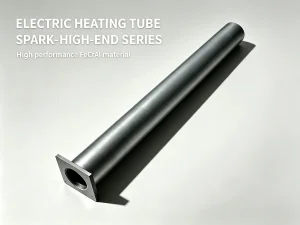
6. Chemical Composition & Physical Property Standards for 255/0Cr25Al5
| Alloy Grade | Elemental Composition (%) | Max Temp (°C) | Resistivity at 20°C ($\mu\Omega\cdot \text{m}$) | Density ($\text{g/cm}^3$) |
|---|---|---|---|---|
| 0Cr25Al5 (255) | Cr: 23.0–26.0 | Al: 4.5–6.5 | Fe: Bal. | 1250°C | 1.42 | 7.10 |
| 0Cr23Al5 | Cr: 21.0–23.0 | Al: 4.5–5.5 | Fe: Bal. | 1250°C | 1.35 | 7.25 |
| 0Cr20Al6 | Cr: 19.0–21.0 | Al: 5.5–6.5 | Fe: Bal. | 1350°C | 1.40 | 7.15 |
| SPARK HRE | Fe-Cr-Al + Rare Earth Addition | 1350°C | 1.45 | 7.10 |
| SPARK SGHT (PM) | Dispersion-Strengthened Fe-Cr-Al | 1425°C | 1.48 | 7.10 |
| Cr20Ni80 (NiCr) | Cr: 20.0–23.0 | Ni: Bal. | 1200°C | 1.09 | 8.40 |
Frequently Asked Questions (FAQ) for Sourcing Engineers
In-depth answers addressing design, metallurgy, installation, and procurement parameters for high-resistance heating alloys.