
High-Performance Thermal Equipment & Materials
Engineered for Victorian heat treatment facilities, foundry operations, and high-precision metallurgical laboratories requiring exact thermal control and robust durability.

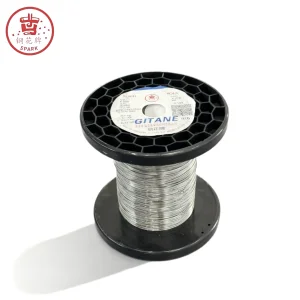

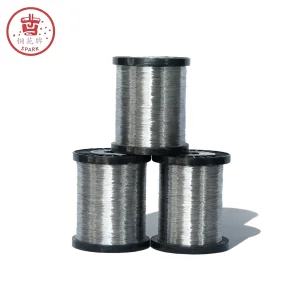
Melbourne’s Industrial Evolution: Transitioning Thermal Processing to High-Efficiency Electric Standards
As Australia’s premier manufacturing hub, Greater Melbourne—spanning key industrial precincts from Dandenong South, Campbellfield, and Laverton North to Geelong—is undergoing a profound transformation. Driven by Victoria's stringent energy transition policies, escalating industrial gas prices, and regional net-zero targets, thermal processing facilities across the state are aggressively migrating from legacy fossil-fuel combustion systems toward advanced, high-efficiency electric industrial furnaces.
This macro-shift requires industrial furnace manufacturers and alloy suppliers to provide solutions that meet demanding metallurgical criteria while maximizing operational uptime. Melbourne’s diverse commercial ecosystem—comprising automotive component remanufacturing, aerospace thermal treatment, advanced structural steel fabrication, defense sector engineering, and high-tech ceramic sintering—demands thermal processing equipment built with superior metallurgical precision.
To remain competitive within Victoria’s manufacturing corridor, engineering managers must focus on Total Cost of Ownership (TCO). Unplanned down-time in heat-treatment operations can lead to thousands of dollars per hour in delayed throughput. By sourcing direct from wholesale OEM manufacturing partners like Beijing Shougang Gitane New Materials Co., Ltd. (SPARK), Melbourne businesses gain direct access to Tier-1 metallurgy, custom element winding, and rapid-response technical consultation that ensure compliance with Australian Standards (AS/NZS) while significantly lowering capital equipment expenditures.
Macro-Industry Solutions for Victorian Enterprises
Tailored high-temperature furnace designs and heating elements optimized for specific industrial thermal cycles.
Aerospace & Defense Heat Treatment
Precision vacuum and atmosphere furnaces utilizing low-creep powder-metallurgy SGHT heating alloys to perform stress-relieving, solution heat treating, and aging of titanium and nickel superalloys compliant with Nadcap requirements.
Automotive & Rail Component Forging
Continuous mesh-belt, pusher, and bogie-hearth furnaces engineered for heavy duty hardening, carburizing, and tempering of drive axles, gears, and rail infrastructure alloys across Geelong and outer-suburban Melbourne hubs.
Advanced Ceramics & Glass Sintering
Ultra-high temperature chamber and roller hearth kilns capable of continuous operation up to 1400°C using SPARK SGHYZ FeCrAl elements, ideal for technical ceramic insulation, battery materials, and specialized glass annealing.
Technical Roadmap & Future Outlook: The Physics of 1425°C High-Resistance Alloys
The core performance of any electric industrial furnace resides in its heating elements and thermal insulation envelope. Beijing Shougang Gitane New Materials, leverage over six decades of metallurgical research under the Shougang Group umbrella, has redefined high-temperature electrothermal resistance materials through precise micro-alloying and powder metallurgy (PM) techniques.
Engineering Breakthrough: SPARK SGHT alloy utilizes a dispersion-strengthened FeCrAl powder metallurgy technique that prevents rapid grain growth at elevated temperatures (>1300°C), resulting in a 4x increase in sag resistance and sagging-creep life compared to standard melted FeCrAl alloys.
Comparative Metallurgy: Selecting the Ideal Resistance Alloy Grade
When engineering high-temperature industrial furnaces for Australian operators, matching alloy chemistry to operating temperature, furnace atmosphere, and surface load ($W/cm^2$) is paramount:
| Alloy Grade | Alloy Type | Max Working Temp (°C) | Resistivity (μΩ·m, 20°C) | Key Industrial Application in Melbourne |
|---|---|---|---|---|
| SPARK SGHT | FeCrAl (Powder Metallurgy) | 1425°C | 1.45 | Semiconductor crystal growth, advanced technical ceramics, high-vacuum sintering kilns. |
| SPARK SGHYZ | FeCrAl (Rare Earth Enriched) | 1400°C | 1.42 | Heavy duty forging furnaces, ceramic kilns, continuous mesh-belt heat treatment lines. |
| SPARK 0Cr25Al5 | FeCrAl Standard Grade | 1250°C | 1.42 | Commercial heat-treating, general industrial ovens, radiant tube heaters, tempering. |
| Cr20Ni80 | NiCr (Nichrome) | 1200°C | 1.09 | Frequent thermal cycling environments, protective nitrogen/reducing atmospheres, medical furnace systems. |
In high-temperature electric furnaces, FeCrAl alloys form a dense, protective surface layer of alpha-alumina ($Al_2O_3$). This ceramic layer acts as a barrier against further oxidation, sulfur attack, and electrical shorting across adjacent element coils. For specialized applications where frequent heating and cooling cycles occur, NiCr alloys like Cr20Ni80 remain the material of choice due to their superior hot strength and ductile post-service properties.
China Industry 4.0: Supply Chain Resilience and Manufacturing Efficiency
For Melbourne procurement teams, securing a reliable, cost-efficient, and transparent international supply line is critical. Shougang Gitane’s modern 88,000 $m^2$ production facility in Beijing integrates the entire manufacturing chain—from raw element melting in vacuum induction furnaces, hot rolling, precision wire drawing, and bright annealing, to automated spiral coiling and complete furnace structural fabrication.
This end-to-end control ensures absolute batch-to-batch consistency. Every coil of wire, heating element ribbon, or fully engineered industrial furnace shipped to Victoria is delivered with full traceability and chemical/physical Mill Test Certificates (MTC) conforming to international quality assurance standards.
Traceable ISO 9001 QA
Certified production under ISO 9001 and strict execution of GB/T 1234-2012 standards ensure exact electrical resistance tolerances (±3%) and zero inner-void defects.
Custom OEM/ODM Capability
Furnaces custom-built to customer drawings, including customized control panels, programmable Eurotherm/Omron PID controllers, and SCR power regulators suited for 415V 3-phase Australian grids.
Direct Export Logistics
Seamless containerized shipping directly from manufacturing yards to Port of Melbourne, supported by streamlined customs documentation and local clearance handling.
Australian Regulatory Compliance & Local Support Framework
Deploying heavy industrial thermal processing plant within Victoria requires total alignment with national and state regulatory codes. Our industrial furnaces and heating element systems supplied to Melbourne customers are engineered to fulfill key local requirements:
- AS/NZS 3000 (Wiring Rules): All electrical wiring, contactors, circuit breakers, and grounding circuits on custom control cabinets adhere strictly to Australian standard low-voltage installation practices.
- AS 1375 (Industrial Fuel-Fired & Electric Appliances Code): Enforcing comprehensive thermal safety, emergency power cutoffs, dual-channel over-temperature isolation, and airflow interlocks.
- WorkSafe Victoria Compliance: Incorporating ergonomic door opening mechanisms, dual-hand anti-pinch safety switches, and exterior cabinet surface temperatures below 50°C via multi-layer ceramic fiber insulation blankets.
To support continuous industrial uptime, SPARK offers Melbourne clients direct remote engineering support, pre-wired replacement heating element kits, ceramic terminal blocks, and custom refractory bricking modules ready for rapid emergency installation.
Strategic Sourcing for Global Enterprises: Optimizing TCO and Thermal Efficiency
When procurement managers evaluate wholesale industrial furnace suppliers for Australian facilities, upfront purchase price accounts for less than 15% of the machine’s lifetime operational cost. Energy consumption, unexpected heating element degradation, heat loss through subpar insulation, and batch rejections constitute the vast majority of expenditure.
Total Cost of Ownership Formula: $TCO = C_{acquisition} + C_{energy} + C_{maintenance} + C_{downtime}$. By installing SPARK high-density ceramic fiber lined furnaces with ultra-low thermal mass and high-resistivity FeCrAl elements, energy consumption is reduced by up to 32% compared to traditional refractory brick furnaces.
We provide Melbourne engineering teams with fully customized thermal calculations, surface watt loading analyses, and element lifetime estimations prior to contract execution. This guarantees that your thermal equipment delivers optimal thermal uniformity ($\pm 3^\circ C$ or $\pm 5^\circ C$ per AMS 2750 specs) and maximum thermodynamic efficiency.
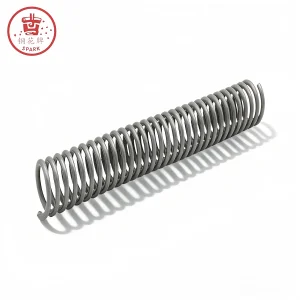
Wholesale Industrial Heating Alloys, Tubes & Elements
Direct factory wholesale catalog items available for fast dispatch to Melbourne heat treatment operations and furnace builders.




Frequently Asked Questions for Australian Industrial Buyers
Clear answers to common engineering, procurement, and logistical inquiries regarding industrial furnaces and heating alloy sourcing.
Why should Melbourne manufacturers switch from gas industrial furnaces to electric heating systems?
Electric industrial furnaces offer significantly higher thermodynamic efficiency (often >90% compared to 30-45% for gas combustion), zero local carbon emissions, precise multi-zone PID temperature control (within ±1°C), quieter operation, and reduced maintenance costs. With Victoria's focus on renewable power integration, electric furnaces future-proof operations against rising gas tariffs and emissions regulations.
How do I determine whether to specify FeCrAl or NiCr heating elements for my furnace retrofits?
Choose FeCrAl (such as SPARK 0Cr25Al5 or SGHYZ) if your application operates at ultra-high temperatures (up to 1400°C), requires high electrical resistivity, or demands lower raw material weight. Choose NiCr (such as Cr20Ni80) if the furnace undergoes frequent rapid heating/cooling thermal cycles, operates in protective nitriding/reducing atmospheres, or requires elements to remain ductile post-use for easy mechanical adjustment.
What documentation and quality certifications accompany SPARK alloy shipments to Australia?
Every shipment is accompanied by detailed Mill Test Reports (MTC) according to EN 10204 3.1 standards, detailing exact chemical ladle analysis, electrical resistivity at 20°C, tensile strength, elongation, and dimensional tolerance checks compliant with ISO 9001 and GB/T 1234-2012 standards.
Can Shougang Gitane custom-engineer furnaces to comply with Australian electrical power standards?
Yes. All industrial furnaces engineered for Australian delivery are designed to accommodate 415V, 3-Phase, 50Hz electrical supply networks. Control switchgear, isolation transformers, digital controllers, and SCR firing units are selected to conform with AS/NZS 3000 rules.
What is the typical lead time for custom furnace manufacturing and delivery to Melbourne?
Standard resistance wire coils and stocked elements ship within 5-7 business days. Custom-engineered batch or continuous industrial furnaces typically require 30 to 45 calendar days for precision manufacturing, assembly, factory acceptance testing (FAT), and packaging, followed by 14-20 days ocean transit to Port of Melbourne.
Ready to Upgrade Your Melbourne Thermal Processing Efficiency?
Consult with our senior metallurgical engineers to select the exact furnace configurations, high-temperature alloy grades, and heating element specifications tailored to your production targets.
Send Inquiry Now