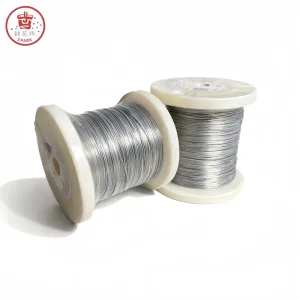
High-Demand Resistance Alloys for Slovakian OEMs
Slovakia’s Industrial Transformation & Electric Heating Demand
Slovakia stands as one of Central Europe's primary industrial powerhouses. Recognized globally for having the highest automotive production output per capita worldwide, the nation’s manufacturing infrastructure—anchored across major hubs in Bratislava, Trnava, Žilina, and Nitra—relies heavily on thermal processing efficiency. Modern automotive giants, specialized tier-1 component foundries, and heavy metallurgy clusters (such as those surrounding Košice) demand extremely stable, precision-engineered thermal alloys capable of operating reliably under relentless production cycles.
Driven by stringent EU Green Deal mandates and regional carbon neutral initiatives, Slovakian industrial enterprises are systematically replacing outdated fossil fuel-fired combustion systems with high-efficiency electric thermal technology. This macroeconomic shift has created an urgent, expanding need for high-performance Iron-Chromium-Aluminum (FeCrAl) and Nickel-Chromium (NiCr) electric heating elements, resistance wires, and customized furnace components.
As a premier manufacturing force within the Shougang Group, Beijing Shougang Gitane New Materials Co., Ltd. delivers over six decades of specialized metallurgical mastery. By providing direct wholesale quotes and optimized logistical fulfillment into Slovakia, we empower regional plant managers, heating system OEMs, and furnace builders with factory-direct material options that substantially lower total cost of ownership (TCO) while guaranteeing uncompromised operational lifespan.
Global Metallurgical Context & Supply Chain Resilience
The global landscape for high-temperature resistance alloys has experienced unprecedented volatility over recent years. Fluctuations in raw nickel commodity pricing on the London Metal Exchange (LME), coupled with tightening geopolitical energy dynamics across Europe, have forced procurement officers in Slovakia to re-evaluate their alloy selection frameworks.
Volatile Nickel Markets vs. Stable FeCrAl
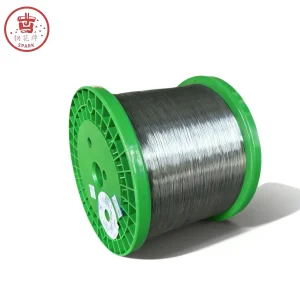
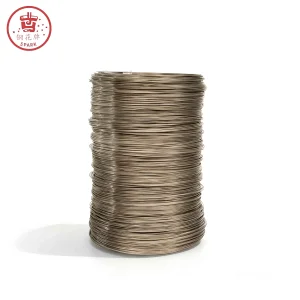
Traditional Nickel-Chromium (NiCr) alloys, while exceptionally ductile and strong when hot, carry significant financial exposure due to raw nickel price swings. Advanced Iron-Chromium-Aluminum (FeCrAl) alloys—such as 0Cr25Al5 and 0Cr23Al5—offer a cost-effective, price-stable alternative with higher maximum service temperatures and superior electrical resistivity.
Adherent Oxide Scale Engineering
When exposed to high temperatures, SPARK FeCrAl alloys rapidly generate a dense, continuous protective layer of alpha-alumina ($\alpha\text{-Al}_2\text{O}_3$). This ceramic-grade film acts as an impervious barrier against oxidation, carburization, and chemical degradation in severe industrial atmospheres typical of Slovak heat-treating lines.
Material Science Specification & Engineering Matrix
Selecting the correct electrothermal alloy grade requires a balance between continuous service temperature, atmospheric gas chemistry, surface power loading ($\text{W/cm}^2$), and mechanical strain tolerance. Below is a comprehensive engineering comparison table detailing standard SPARK resistance heating alloys designed for industrial buyers in Slovakia.
| Alloy Grade | Primary Alloy Family | Max Working Temp (°C) | Resistivity at 20°C ($\mu\Omega\cdot\text{m}$) | Density ($\text{g/cm}^3$) | Recommended Industrial Applications in Slovakia |
|---|---|---|---|---|---|
| SGHT | Powder Metallurgy FeCrAl | 1425°C | 1.45 | 7.10 | Semiconductor processing, high-purity ceramic sintering, ultra-high temp kilns. |
| SGHYZ | Rare-Earth Enhanced FeCrAl | 1400°C | 1.42 | 7.10 | Heavy industrial heat treatment, forging furnaces, steel annealing lines. |
| 0Cr25Al5 | Standard High-Resistance FeCrAl | 1250°C | 1.42 | 7.10 | Automotive component carburizing furnaces, industrial radiant tube heating. |
| 0Cr23Al5 | Cost-Optimized FeCrAl | 1250°C | 1.35 | 7.25 | Plastic extrusion barrel heaters, commercial baking ovens, HVAC air heaters. |
| Cr20Ni80 | Premium Nichrome (NiCr) | 1200°C | 1.09 | 8.40 | Rapid thermal cycling environments, medical equipment, precision instruments. |
| Cr30Ni70 | High-Oxidation NiCr Alloy | 1250°C | 1.18 | 8.10 | Controlled nitrogen atmospheres, industrial chemical heaters, specialized elements. |
Key Metallurgical Insights for Slovak Plant Engineers
1. Density Savings Factor: FeCrAl alloys possess a lower density ($\approx 7.10\,\text{g/cm}^3$) compared to Nickel-Chromium alloys ($\approx 8.40\,\text{g/cm}^3$). This means that for identical dimensional specifications, FeCrAl yields approximately 15% to 17% more linear meters per kilogram, resulting in substantial direct material purchasing savings for high-volume wholesale contracts.
2. Hot Strength vs. Temperature Limit: While FeCrAl provides higher temperature limits and longer oxidation resistance, NiCr maintains superior ductility post-heating and exhibits higher structural hot strength. Therefore, vertical furnace elements or environments subject to intense mechanical shock may benefit from custom NiCr designs or specialized ceramic support configurations.
Localized Slovakian Industry Application Scenarios
Our tailored electrothermal solutions directly serve key industrial sectors across the Slovak Republic, matching specific alloy chemistry to demanding localized operational conditions.
1. Automotive OEM Heat Treatment
Location Focus: Bratislava, Trnava, Nitra Automotive Corridors
Process: Transmission gear carburizing, shaft hardening, continuous annealing, and chassis frame stress relieving.
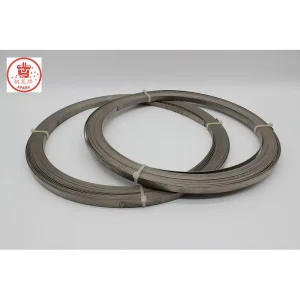
Recommended Material: 0Cr25Al5 & 0Cr20Al6 Strip/Wire formed into heavy-duty radiant tube heating elements capable of resisting carbon soot buildup and thermal cycling fatigue.
2. Heavy Metallurgy & Steel Processing
Location Focus: Košice Industrial Zone & Eastern Slovakia
Process: Steel strip annealing, wire rod tempering, ladle preheating, and foundry holding furnaces.
Recommended Material: SGHYZ & HRE High-Temp Wires engineered to maintain high surface electrical resistance without structural distortion at continuous operating zones above 1300°C.
3. Technical Glass & Ceramic Kilns
Location Focus: Trenčín & Central Slovakia Regional Works
Process: Crystal glass annealing, technical porcelain firing, and refractory material sintering.
Recommended Material: SGHT Powder Metallurgy Alloy providing complete freedom from ceramic particle contamination, extended creep resistance, and extreme dimensional stability.
4. Commercial HVAC & Industrial Heating Tubes
Location Focus: Nationwide Appliance & Equipment Assembly Plants
Process: Tubular heating element fabrication for duct heaters, air curtains, and process water vessels.
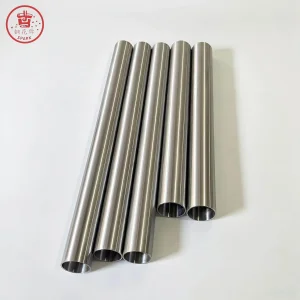
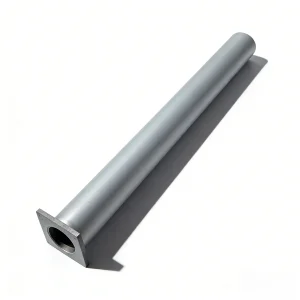
Recommended Material: China High-Quality Electric Heating Tubes & Cr15Ni60 Wires tailored for high dielectric strength, uniform heat distribution, and rapid mass production assembly.
Technology Roadmap & Future Outlook (2025–2035)
As thermal processing standards advance, Beijing Shougang Gitane continues to lead through metallurgical innovation. Our ongoing R&D efforts focus on next-generation materials tailored for advanced automated manufacturing environments:
Traditional ingot melting can yield uneven grain growth at temperatures above 1300°C. Our PM technology (SGHT grade) synthesizes ultra-fine, homogeneous alloy powders, virtually eliminating high-temperature grain boundary coarsening and dramatically extending element operating cycles.
By integrating artificial intelligence into our vacuum induction melting (VIM) process, we achieve micro-dosing precision for rare-earth elements like Yttrium (Y), Zirconium (Zr), and Cerium (Ce). This optimizes scale adhesion and prevents premature oxide spallation under intense thermal shock.
In response to Europe’s transition toward hydrogen-fueled industrial furnaces, SPARK alloys are tested to withstand high-flow pure $\text{H}_2$ dry atmospheres without suffering catastrophic hydrogen embrittlement or surface scaling breakdown.
Macro Turnkey Solutions for Wholesale Buyers in Slovakia
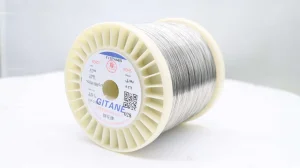
We go beyond simply supplying raw spooled wire or coiled ribbon. Our engineering office provides full-scope macro technical support to ensure seamless integration into existing Slovakian manufacturing infrastructure:
Custom Surface Load Design ($\text{W/cm}^2$)
Applying excessive watt density is the primary cause of premature element failure. Our engineering team calculates exact surface power loading tailored to your furnace insulation, atmosphere, and target ramp rate, maximizing alloy operating life.
Custom Element Winding & Fabrication
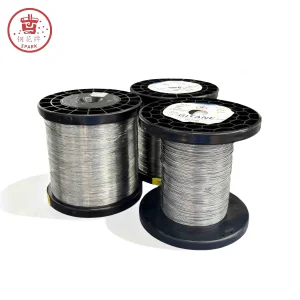
We deliver ready-to-install pre-coiled spirals, meander elements, radiant tube cores, and mounted ceramic elements engineered directly to your factory's electrical schematics and dimensional drawings.
Streamlined EU Logistics & Customs Support
With optimized export packaging, complete mill test certificates (MTC) according to EN 10204 3.1, and flexible freight options to major Slovak industrial zones (DDP/CIF Bratislava, Košice, Žilina), we make direct factory procurement straightforward and dependable.
Partner with Beijing Shougang Gitane New Materials for factory-direct pricing, custom engineering consultation, and reliable direct delivery to Slovakia.
Send Inquiry NowFrequently Asked Questions (Engineering FAQ)
Clear technical answers to common procurement and engineering questions regarding electrothermal alloys for Slovak industrial projects.