
Featured Turkish Market Hot Products
High-demand electric heating elements, alloy wires, and thermal tubes custom-engineered for Turkey's growing industrial furnace, steel, and automotive sectors.



1. Turkey’s Industrial & Thermal Manufacturing Landscape
Turkey has evolved into an indispensable transcontinental manufacturing hub bridging Europe, the Middle East, and Central Asia. Driven by robust industrial zones in Istanbul, Kocaeli, Bursa, İzmir, Ankara, and Gaziantep, the demand for precision heat-treatment components, high-temperature resistance alloys, and custom electrothermal elements has grown exponentially over the past decade.
As a leading exporter of automotive parts, heavy machinery, white goods (appliances), ceramics, and structural steel, Turkey’s local manufacturing sector relies heavily on continuous heat treatment operations. Turkish furnace OEMs (Original Equipment Manufacturers) and end-use industrial plants require resistance wire, strip, and heating elements that offer long service lifespans, minimal thermal creep, and superior oxidation resistance up to 1425°C.
Automotive & OEM Clusters
Centered in Bursa and Kocaeli, Turkey’s automotive heat treatment lines demand rapid-cycle annealing, carburizing, and tempering wire elements that withstand cyclic thermal stress without embrittlement.
Ceramics & Glass Hubs
Eskişehir, Kütahya, and Bilecik represent major European ceramic tile and sanitaryware centers. Roller kilns operating continuous profiles from 1100°C to 1380°C depend on advanced FeCrAl alloys (such as 0Cr25Al5 and SGHYZ) to prevent SAG and element deformation.
Steel & Metallurgy Sector
From İskenderun to Gebze, Turkish steel mills and pipe manufacturing facilities utilize heavy-duty resistance alloys for stress-relieving furnaces, pipe seam heating, and billet pre-heating applications.
With global sustainability mandates driving the decarbonization of thermal processing, Turkish manufacturers are rapidly transitioning from fossil-fuel-fired burners to high-efficiency, zero-emission electric furnace architectures. Partnering with certified international manufacturers that provide guaranteed chemical purity, ISO 9001 compliance, and direct factory pricing is critical to maintaining competitive margins in the Turkish export market.
2. Global Thermal Alloys Industry Status & Material Dynamics
The global electrothermal alloy market is broadly categorized into two main metallurgical families: Ferritic Iron-Chromium-Aluminium (FeCrAl) alloys and Austenitic Nickel-Chromium (NiCr) alloys. Each alloy family fulfills distinct industrial thermal requirements based on operating atmosphere, maximum service temperature, and electrical resistivity parameters.
| Alloy Grade | Alloy Family | Max. Temp (°C) | Resistivity (μΩ·m) | Primary Surface Scale | Key Turkish Application |
|---|---|---|---|---|---|
| 0Cr25Al5 | FeCrAl | 1250°C | 1.42 ± 0.07 | Alpha-Al2O3 (Alumina) | Industrial Furnaces, Kilns, Radiant Heaters |
| 0Cr23Al5 | FeCrAl | 1250°C | 1.35 ± 0.06 | Alpha-Al2O3 (Alumina) | Tempering Furnaces, Commercial Appliances |
| SGHT / SGHYZ | PM FeCrAl | 1400°C - 1425°C | 1.45 ± 0.07 | Adherent Al2O3 + RE Micro-Scale | Semiconductor, High-Temp Powder Metallurgy |
| Cr20Ni80 | NiCr | 1200°C | 1.09 ± 0.05 | Cr2O3 (Chromia) | Precision Automotive Heaters, Cycling Units |
| Cr15Ni60 | NiCr | 1150°C | 1.11 ± 0.05 | Cr2O3 (Chromia) | Domestic Appliances, Medical Sterilizers |
| Cr20Ni40 | NiCr | 1100°C | 1.04 ± 0.05 | Cr2O3 + Fe Oxides | Cost-Effective Heat Treatment Elements |
FeCrAl vs. NiCr Metallurgical Performance Breakdown
Understanding the microstructural evolution during high-temperature exposure is fundamental to specifying the correct alloy for industrial projects:
- FeCrAl Alloys (Fe-Cr-Al System): When heated above 1000°C, FeCrAl alloys form a dense, electrically insulating protective layer of pure alpha-alumina ($\alpha\text{-Al}_2\text{O}_3$). This alumina scale acts as a formidable oxidation barrier, allowing FeCrAl to reach continuous working temperatures up to 1425°C. Furthermore, FeCrAl features a higher electrical resistivity and a ~15% lower density compared to NiCr, meaning procurement managers purchase significantly less physical weight of raw alloy to generate equivalent electrical resistance output.
- NiCr Alloys (Ni-Cr System): NiCr alloys form a protective chromium oxide ($\text{Cr}_2\text{O}_3$) scale. While their upper temperature limit is lower (typically 1200°C), NiCr alloys exhibit superior hot strength, excellent ductility after long-term aging, non-magnetic properties, and exceptional resistance to cyclic heating/cooling without spalling or structural distortion.
Manufacturing Excellence & Global Benchmark Metrics
Decades of metallurgical development back our production output, empowering buyers in Turkey and worldwide with certified reliability.
3. Localized Application Scenarios & Macro Engineering Solutions
Case Scenario 1: Automotive Heat Treatment Lines (Bursa Cluster)
Challenge: A major tier-1 automotive supplier in Bursa experienced premature element failures in their gas-carburizing pit furnaces due to carbon deposition (green rot) and thermal fatigue from 24/7 continuous operation.
Solution: Implementation of high-nickel Cr30Ni70 and customized SG140 alloy wire elements. The dense protective oxide layer inhibited carbon penetration, extending furnace element service life from 8 months to over 26 months, reducing plant downtime by 65%.
Case Scenario 2: Continuous Ceramic Kilns (Kütahya Region)
Challenge: Heavy sagging and resistance drift in 0Cr25Al5 elements deployed in 1300°C ceramic tile roller hearth kilns, leading to uneven temperature profiles across ceramic slabs.
Solution: Transition to SPARK Ultra-High Temperature SGHYZ wire coils featuring rare-earth Yttrium/Zirconium micro-alloying. The addition of RE dopants pinned crystal grain boundaries, eliminating element sag at elevated temperatures and ensuring uniform thermal yield.
Turnkey Industry Solutions for Turkish Procurement Engineers
Whether you operate an established OEM assembly plant or manage large-scale industrial maintenance contracts, our technical team provides macro engineering support tailored to Turkish manufacturing standards:
- Surface Load Calculation ($W/\text{cm}^2$ Optimization): Matching thermal output to chamber atmosphere to prevent alloy thermal runaway.
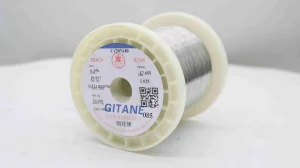
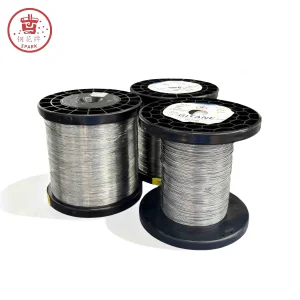
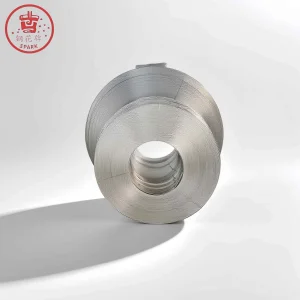
- Precision Drawing & Ribbon Rolling: Wire diameters from 0.05mm ultra-fine gauge up to 12.0mm heavy industrial rods, as well as precision cold-rolled strip/ribbon (0.05mm–4.0mm thickness $\times$ 0.5mm–200mm width).
- Pre-Oxidized Ready-to-Install Elements: Factory pre-formed spirals, meander elements, and tubular heating assemblies ready for immediate installation into industrial furnaces.
4. Technology Roadmap & 2030 Future Outlook
As global thermal engineering moves towards higher efficiency and zero carbon footprints, electrothermal alloy metallurgy is undergoing radical technological innovation. The timeline below outlines the development trajectory driving our product engineering through 2030:
Phase 1: 2025–2026
Advanced Powder Metallurgy (PM) Scale-Up: Mass adoption of SGHT powder metallurgy FeCrAl alloys. PM processes overcome traditional casting limitations, eliminating coarse grain boundaries and boosting hot yield strength at temperatures up to 1425°C.
Phase 2: 2027–2028
Nanoscale Reactive Element Addition: Incorporation of Hafnium (Hf), Cerium (Ce), and Lanthanum (La) via precision vacuum induction melting (VIM), resulting in self-healing alumina scales capable of surviving extreme thermal shocks.
Phase 3: 2029–2030+
Smart Thermal Systems Integration: Embedded resistance sensors inside alloy elements for real-time temperature tracking, predictive failure monitoring, and AI-driven predictive maintenance in smart European factories.
5. Technical & Procurement FAQ for Wholesale Buyers
Detailed responses to critical engineering, quality control, and international shipping questions commonly asked by procurement directors in Turkey.
Complete Wholesale Product Portfolio for Industrial Manufacturers
Explore our complete range of specialized electric resistance wires, high-temp alloy strip, industrial furnaces, and SGHT steel tubes available for Turkish and international buyers.






Request Factory-Direct Pricing & Technical Specifications Today
Partner with a trusted world-class electrothermal alloy manufacturer. Speak directly with our metallurgical application engineers to receive custom pricelists, material samples, or technical consultations for your project in Turkey.